
PDF Channel: A Cropped Denim Jacket with a Graphic Cape Twist

March 14, 2026
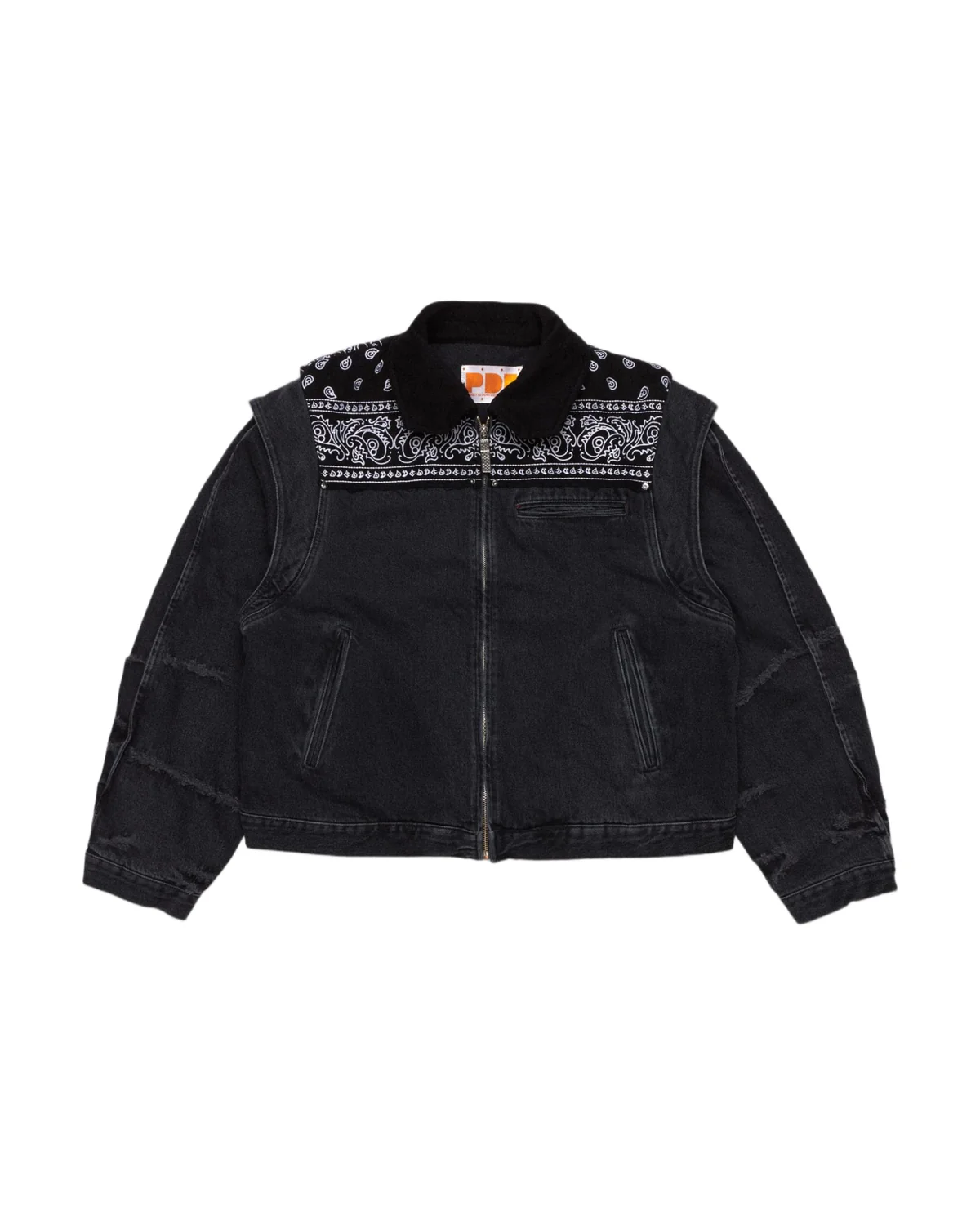

In the language of contemporary streetwear, certain visual motifs carry decades of cultural meaning. The paisley bandana pattern is one of them. It has traveled through American workwear, West Coast street culture, hip-hop iconography, and opulent reinterpretations. The PDF Channel Cape Jacket in Black builds directly on that lineage, transforming the familiar graphic into a structural design element rather than merely decorative print.
At first glance, the jacket appears like a cropped black denim piece—clean, understated, and practical. Yet the moment the garment is seen from behind, the design reveals its core identity: a wide cape-like shoulder panel printed with an intricate bandana motif. The panel stretches across the upper back and shoulders, creating a silhouette that feels architectural while remaining rooted in streetwear aesthetics.
Rather than treating the bandana pattern as surface decoration, the jacket integrates it into the garment’s construction. The graphic becomes structure, and the structure becomes identity.
a motif
To understand the appeal of the Cape Jacket, it helps to trace the cultural journey of the bandana pattern itself. Paisley motifs originated centuries ago in Persian and South Asian textiles, where teardrop-shaped designs symbolized fertility and life. When European textile mills began reproducing the pattern in the 18th and 19th centuries—particularly in the Scottish town of Paisley—the design spread widely through Western fashion.
In the United States, the bandana became a utilitarian accessory used by workers, farmers, and cowboys. Over time it evolved into a symbol of rebellion and identity within urban subcultures. By the late twentieth century, the bandana motif had entered hip-hop fashion and skate culture, often associated with both street symbolism and graphic expression.
Streetwear brands later adopted the motif in new contexts. Designers began enlarging the pattern, slicing it into panels, or layering it across garments to create visual tension between heritage and modern design.
The PDF Channel Cape Jacket continues this trajectory, presenting the bandana not as nostalgia but as contemporary graphic architecture.
flow
The silhouette of the jacket reveals its conceptual ambition. While the base garment resembles a cropped denim jacket, the addition of the shoulder cape dramatically shifts the visual balance.
The cape panel extends horizontally across the upper torso, giving the garment a slightly squared profile. This design element subtly widens the shoulder line, creating a more assertive presence when worn. Yet because the panel sits flat against the back, the jacket maintains mobility and everyday practicality.
The cropped hem reinforces the modern streetwear proportion. Cropped jackets have become increasingly prominent in contemporary fashion because they pair naturally with high-waisted trousers and layered fits. In this case, the shortened length elicits the bandana panel to dominate the visual field without overwhelming the entire garment.
The result is a piece that feels simultaneously experimental and wearable.
mat
The jacket’s black denim fabric forms the structural foundation of the garment. Denim has long been one of fashion’s most democratic materials—durable, adaptable, and universally recognizable.
By choosing black denim rather than indigo, the designers shift the garment into a more urban aesthetic territory. Black denim tends to absorb light rather than reflect it, allowing the white paisley graphics to stand out sharply.
This contrast is essential to the jacket’s visual identity. The bandana panel appears almost like a graphic banner across the shoulders, drawing immediate attention without resorting to loud colors or excessive embellishment.
Functional details further reinforce the jacket’s practicality:
-
front zipper closure
-
side hand pockets
-
chest welt pocket
-
reinforced seams along sleeves
-
structured collar
Each of these elements keeps the jacket grounded in everyday wearability, even as the cape panel introduces a conceptual twist.
view
The cape element of the jacket deserves particular attention. Capes have appeared periodically in fashion history, often associated with theatrical or ceremonial clothing. In contemporary streetwear, however, cape structures are relatively rare.
By introducing a cape panel to a denim jacket, the designers create an unexpected intersection between traditional outerwear and experimental tailoring.
The panel does not function as a separate layer but rather as an integrated design component. It flows across the shoulders like a protective shield while maintaining the jacket’s compact shape.
This approach reflects a broader trend in modern streetwear: reimagining familiar garments through subtle structural interventions.
Rather than inventing entirely new forms, designers modify existing silhouettes in ways that feel both recognizable and surprising.
culture
Streetwear often thrives on symbols—logos, patterns, and visual codes that communicate identity within subcultural communities. The bandana motif carries particular resonance because of its layered cultural associations.
For decades the pattern has been used in fashion to signal authenticity, rebellion, or affiliation with street culture. Yet its visual complexity also makes it appealing from a purely aesthetic standpoint.
The PDF Channel Cape Jacket uses the motif in a restrained but impactful way. Instead of covering the entire garment with paisley graphics, the designers isolate the pattern within the shoulder panel. This controlled placement allows the motif to stand out without overwhelming the design.
The graphic becomes a focal point rather than a background texture.
contempo
One of the most compelling aspects of the Cape Jacket is its versatility. Despite its distinctive design, the piece remains adaptable to multiple styling contexts.
In a minimalist streetwear outfit, the jacket can serve as the centerpiece. Paired with black trousers, simple sneakers, and a plain T-shirt, the garment becomes the visual anchor of the look.
Alternatively, the jacket can be integrated into more layered fits. Oversized hoodies, cargo trousers, or textured knitwear all complement the structured silhouette of the piece.
Because the jacket’s color palette remains monochromatic, it blends easily with other garments while still maintaining a strong identity.
wear
The Cape Jacket reflects a broader movement within contemporary streetwear toward structural experimentation. In earlier phases of the genre, branding and graphics often dominated design.
Today, many designers are exploring shape, volume, and construction as central elements of their work.
This shift mirrors developments in high fashion, where structural garments have long been a hallmark of avant-garde design. Streetwear brands are increasingly merging those ideas with everyday clothing, producing pieces that feel both conceptual and accessible.
The Cape Jacket sits comfortably within this evolution. It introduces a sculptural element without sacrificing functionality.
craft
Close inspection of the garment reveals careful attention to detail. The stitching around the bandana panel ensures that the fabric lies flat and maintains its crisp outline. Reinforced seams along the sleeves provide durability, while subtle distressing along the arms adds texture.
The collar design balances the jacket’s proportions, anchoring the wide shoulder panel with a clean neckline. Meanwhile, the front zipper closure contributes to the garment’s streamlined appearance.
Even the pocket placement has been carefully considered. By positioning the hand pockets slightly higher on the torso, the designers maintain the cropped profile while ensuring practicality.
These small choices collectively elevate the jacket from novelty to thoughtfully engineered garment.
min
Streetwear sometimes leans toward maximalism—oversized logos, bright colors, and complex graphics. The Cape Jacket takes a different approach.
Its design relies on a single strong idea: the transformation of the bandana pattern into a structural cape panel. Everything else remains restrained.
This balance allows the garment to function as a statement piece without becoming visually overwhelming. The wearer can incorporate it into everyday outfits while still enjoying its distinctive character.
In that sense, the jacket reflects a mature phase of streetwear design—one where subtlety and construction carry as much importance as branding.
garment
As streetwear continues to evolve, garments like the Cape Jacket point toward new possibilities for graphic design in fashion. Rather than simply printing patterns onto fabric, designers are increasingly embedding graphics into the structure of garments.
This approach transforms clothing into three-dimensional canvases.
The bandana panel on the Cape Jacket exemplifies this idea. The graphic is not merely visible—it defines the shape of the garment itself.
Such experimentation suggests that future streetwear may rely less on logos and more on architectural design elements.
fin
The PDF Channel Cape Jacket in Black represents a thoughtful intersection of heritage motifs and contemporary design. By integrating the bandana pattern into a structural shoulder panel, the garment transforms a familiar symbol into a striking visual statement.
At the same time, the jacket remains grounded in the practical qualities that have always defined streetwear: durability, versatility, and everyday usability.
No comments yet.


