PEN CAP – Distressed Long Sleeve

December 12, 2025

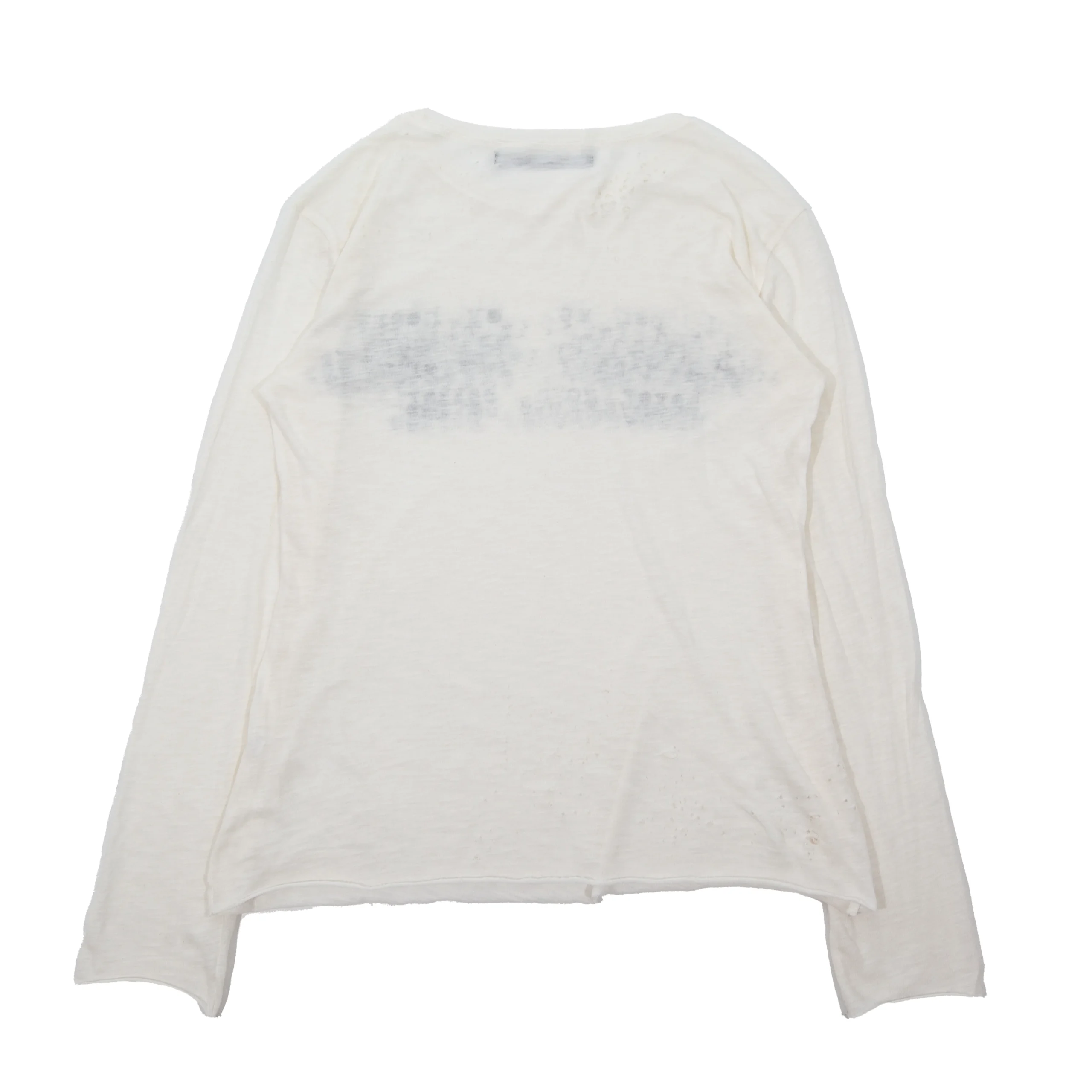
The PEN CAP Distressed Long Sleeve exists in the quiet territory where wear, memory, and intention overlap. At first glance, it appears almost plain: an off-white long-sleeve top with a relaxed silhouette, softened edges, and subtle discolorations that feel more lived than designed. But the longer you look, the clearer it becomes that this garment isn’t about surface appeal. It’s about time.
Distressing here is not decorative—it’s narrative. The fabric shows signs of abrasion, faint staining, and tonal inconsistency, as if it has absorbed years of use, movement, and environment. Rather than mimicking destruction, the piece suggests survival. It feels archival, like something pulled from a personal history rather than a seasonal rack. This approach places the PEN CAP long sleeve closer to artifact than trend.
The construction reinforces that sensibility. The cut is intentionally unforced, allowing the garment to drape naturally on the body. Sleeves fall long and slightly loose, encouraging stacking and natural creasing at the wrists. The hemline is raw and uneven, resisting symmetry and polish. These details remove any sense of mass production, replacing it with a feeling of individuality—no two wears, and no two bodies, will shape it the same way.
Color conjures a critical role. The off-white tone isn’t crisp or sterile; it’s muted, warm, and imperfect. Subtle tonal variations across the surface recall aged cotton or sun-exposed fabric, evoking garments that have lived outdoors, been washed countless times, or stored away and rediscovered. This chromatic restraint allows the piece to function as a foundation—something that anchors an outfit rather than commands it.
What makes the PEN CAP Distressed Long Sleeve compelling is its refusal to perform. In a fashion landscape saturated with overt statements and logo-driven messaging, this garment operates almost anonymously. There’s confidence in that restraint. It assumes the wearer understands nuance, values texture over graphics, and prefers clothes that reveal themselves slowly.
Styling-wise, the long sleeve is remarkably adaptable. Worn alone, it reads introspective and deliberate—an outfit reduced to its essentials. Layered under outerwear or over a tank, it becomes textural, adding depth without distraction. It pairs naturally with denim, workwear trousers, or tailored pants, blurring the line between casual and considered. Footwear can shift the narrative entirely, from worn-in sneakers to boots that echo the garment’s utilitarian undertones.
There’s also an emotional resonance embedded in the design. Distressed clothing often speaks to rebellion or decay, but here it feels reflective instead. The wear marks don’t shout; they whisper. They suggest time passing, routines forming, and identity shaped through repetition. It’s clothing that aligns with people who see style as an accumulation rather than a reset every season.