Picnic UV Charger Combines Wireless Power and Phone Sanitizing in One Portable Design

January 23, 2026
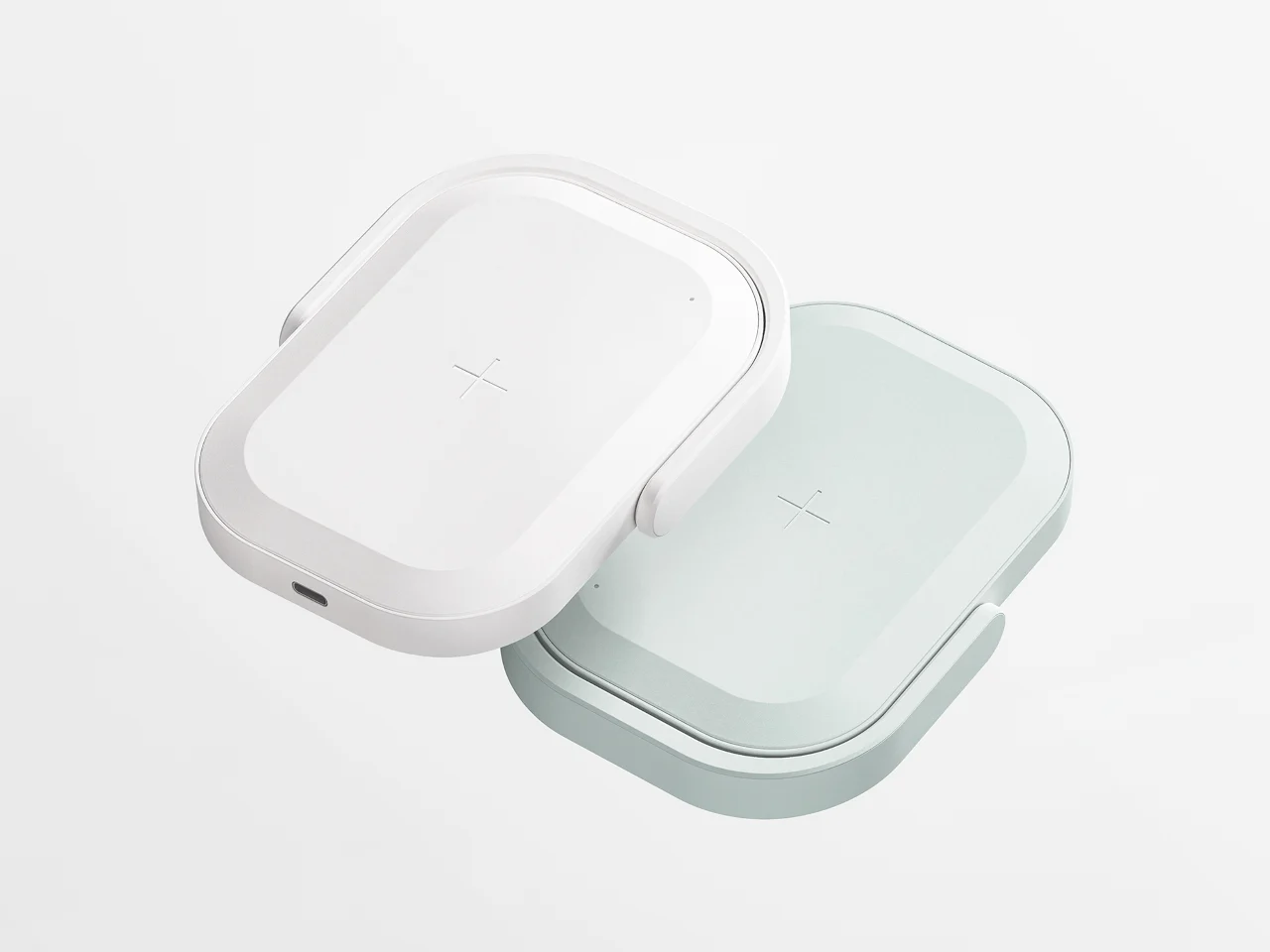
Phones became both lifelines and germ magnets during the pandemic: objects we handled hundreds of times a day yet rarely cleaned with any consistency. Screens were wiped on shirt sleeves, cases scrubbed with alcohol wipes, and UV sterilization boxes briefly enjoyed a moment in the spotlight—until people realized they were bulky, inconvenient, and easy to forget at home. Wireless chargers posed a similar problem. Useful, yes, but rarely portable enough to justify carrying around. The ideal of a cleaner phone often collapsed under the weight of too many separate accessories.
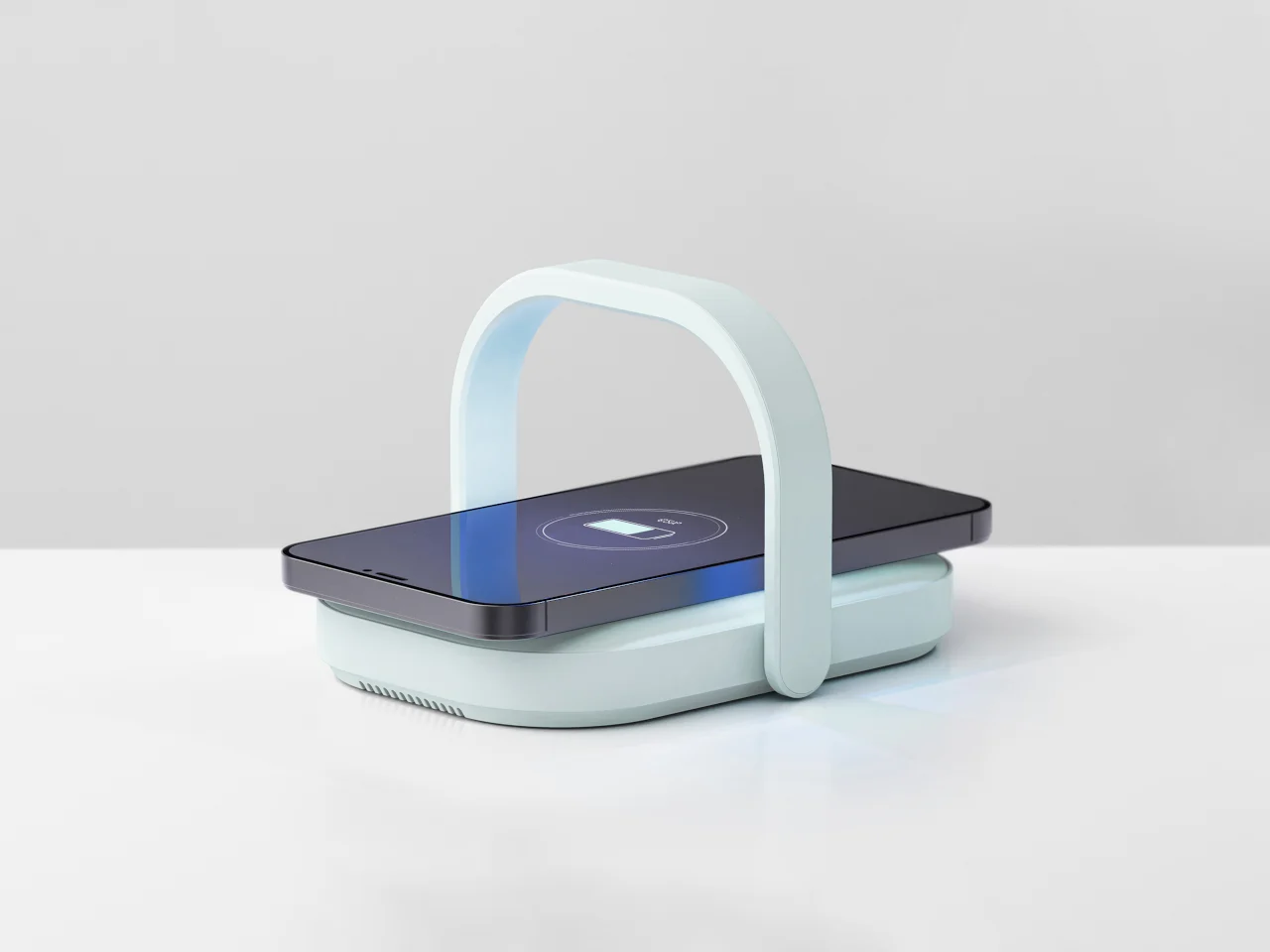
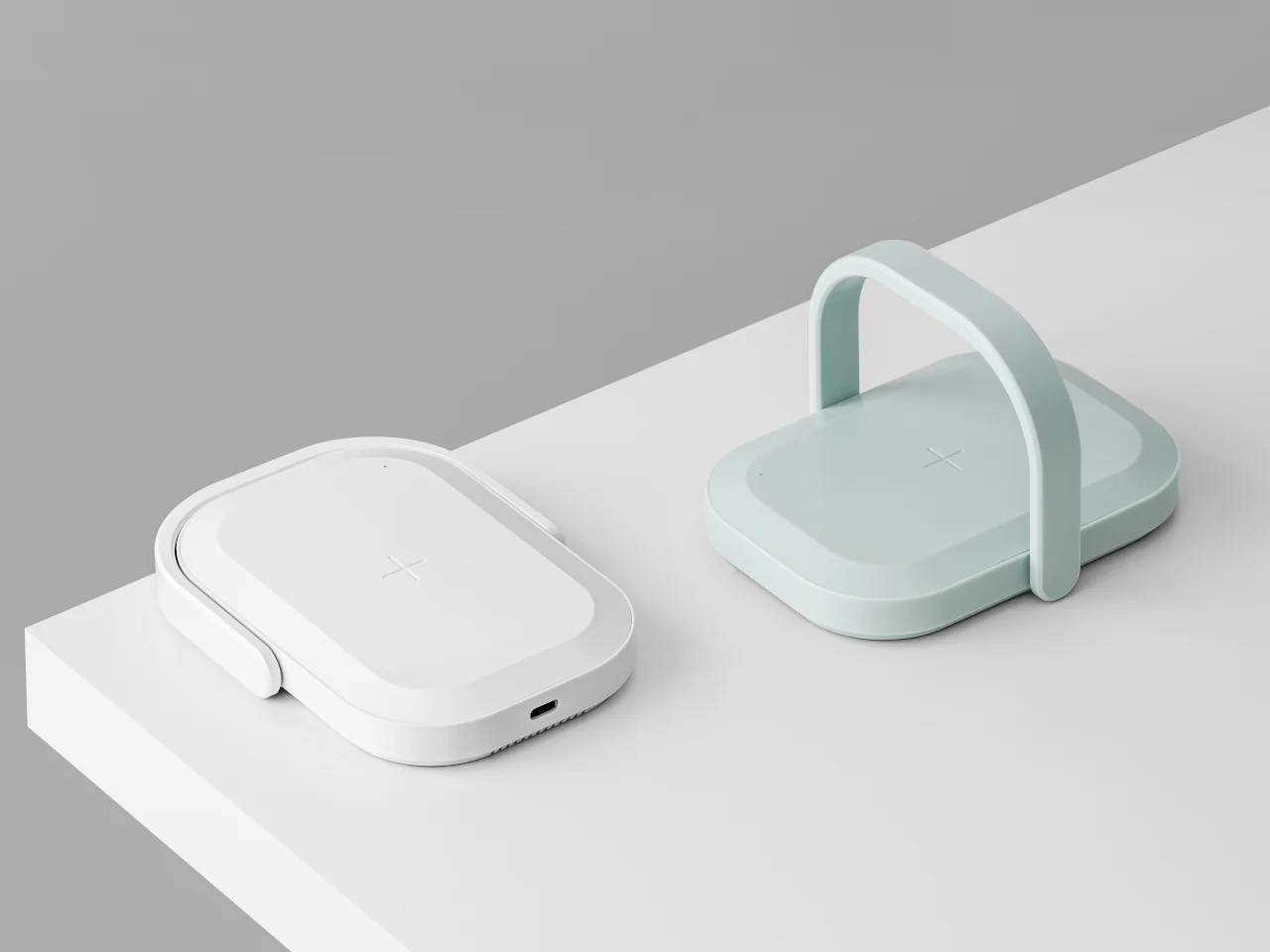
Picnic UV Charger reframes that daily friction by merging two necessities—power and hygiene—into a single, quietly playful object. Designed by SWNA Office, the device functions as a wireless charger, a UV sanitizer, and a 10,000 mAh power bank housed inside a compact body shaped like a miniature picnic bag. A soft handle lets it slip easily into a tote or backpack, while its pastel palette and rounded proportions steer it away from the sterile look that defined many pandemic-era gadgets. Instead of resembling clinical equipment, it reads more like a lifestyle accessory you would naturally keep close.
The premise is deceptively simple: if people are already reaching for a charger, why not clean the phone at the same time? Rather than asking users to adopt a new ritual—placing devices into a dedicated UV box for several minutes—the Picnic UV Charger integrates sanitization into a habit that already exists. You set your phone down to recharge, and the disinfecting process happens in the background, almost unnoticed.
residual
Even as public concern around surface transmission has softened, awareness of hygiene has not vanished. Smartphones travel everywhere: public transit rails, café tables, gym lockers, bathroom counters, airplane tray tables. They are pressed to cheeks, slid into pockets, handed to friends, and tapped constantly throughout the day. The notion that they accumulate bacteria is now widely accepted, even if few people have maintained the meticulous cleaning routines they briefly adopted in 2020.
The Picnic UV Charger positions itself as an answer to that contradiction. Instead of amplifying fear, it normalizes care. Its form is deliberately approachable—closer to a toy or a cosmetic pouch than a piece of lab equipment. By disguising technical functions inside a soft silhouette, SWNA Office taps into a broader design trend that has gained momentum in recent years: making technology feel domestic, friendly, and emotionally neutral rather than intimidating.
That design language matters. During the pandemic, many hygiene products leaned into stark whites, sharp edges, and glowing blue lights—visual cues borrowed from hospitals and laboratories. Those aesthetics signaled seriousness, but they also reminded users of crisis. The Picnic UV Charger does the opposite. Its rounded body and muted hues suggest calm normalcy, as though cleanliness were simply another part of everyday maintenance, no more dramatic than charging a phone or topping up a water bottle.
one
Functionally, the Picnic UV Charger consolidates a small ecosystem of gadgets into one piece of hardware. At its core is a 10,000 mAh battery, roughly the size that has become standard for portable power banks. That capacity typically allows two to three full smartphone charges, making it suitable for day trips, commuting, or travel. On top sits a wireless charging surface, eliminating the need to carry cables for most modern phones.
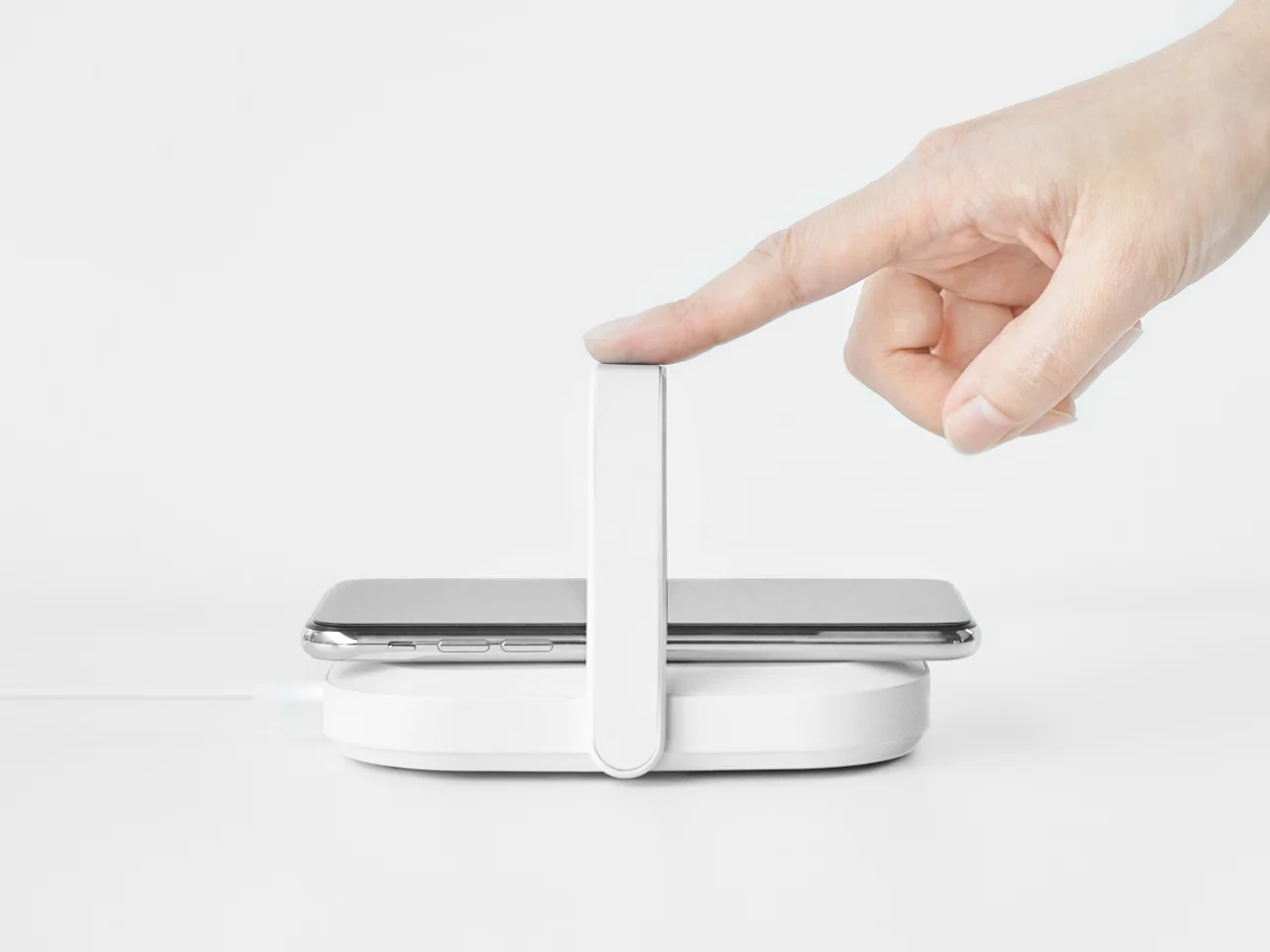
Embedded within that same surface are UV LEDs intended to disinfect the device while it charges. The idea is that the phone rests in a shallow cradle, positioned close enough for ultraviolet light to reach the screen and case. Rather than requiring a separate lid or enclosed box, the system is integrated into the charging platform itself, keeping the interaction simple: place phone, walk away.
The handle on top—an unusual feature for a power bank—reinforces the metaphor of a picnic bag or small tote. It transforms what is usually a dense, brick-like accessory into something more tactile and personal. You can hook it over a wrist, slide it onto a café table, or pull it from a backpack without fumbling. In practical terms, it also signals that this is meant to travel, not live permanently on a nightstand.
phil
SWNA Office, the studio behind the Picnic UV Charger, has built a reputation for objects that blur the line between electronics and lifestyle products. Rather than emphasizing exposed circuitry or aggressive, performance-driven forms, the studio often gravitates toward gentle geometries and playful metaphors. The picnic-bag silhouette fits squarely within that approach.
By choosing a metaphor associated with leisure, outdoor meals, and casual social rituals, the designers reframe the act of disinfecting a phone. It becomes less about contamination and more about care—an act of looking after something you rely on every day. The charger does not demand attention through flashing lights or warning symbols; it simply sits there, quietly doing its work.
This attitude reflects a broader shift in consumer-tech design. As devices have become ubiquitous, designers increasingly focus on how they fit emotionally into daily life. Phones, earbuds, chargers, and smart-home gadgets are no longer novelties; they are personal belongings that live on desks, in kitchens, and beside beds. Soft edges, warm colors, and approachable forms help those objects blend into domestic spaces rather than dominate them.
port
Portability is where many earlier UV sanitizers fell short. During the early pandemic period, numerous products appeared that promised to disinfect phones, keys, or masks using ultraviolet light. Most took the form of small boxes with hinged lids—effective in theory, but awkward in practice. They required their own power sources, occupied valuable bag space, and offered only a single function.
The Picnic UV Charger tackles that problem by aligning itself with an accessory people already accept as necessary. Power banks are common travel companions, especially for commuters, festivalgoers, and anyone who spends long days away from an outlet. By embedding sanitization into that same form factor, the designers avoid asking users to carry something extra.
The result is an object that earns its place in a bag through utility first, with cleanliness as a secondary benefit. That hierarchy is subtle but important. People are far more likely to adopt a product that solves an existing problem—low battery—than one that introduces a new task, even if that task is theoretically good for them.
idea
One of the more compelling aspects of the Picnic UV Charger is how it treats its most distinctive feature—the UV sanitizer—as something that does not need to be foregrounded. There is no elaborate ceremony required, no countdown timer that forces you to stand nearby. You set your phone down to charge, and the system takes care of the rest.
This design philosophy echoes a growing preference for “calm technology,” a concept that argues devices should fade into the background of daily life rather than constantly demand attention. In that sense, the Picnic UV Charger is less about novelty and more about smoothing out small frictions in routine. It assumes that users do not want to think about germs every time they pick up their phones, but they might appreciate knowing that cleanliness is being handled passively.
By removing the spectacle from sanitation, the object also avoids perpetuating the anxiety that drove the initial surge of UV gadgets. It does not dramatize the problem; it simply offers a gentle, practical response.
access
Visually, the Picnic UV Charger occupies a space somewhere between consumer electronics and fashion accessory. Its color palette and proportions suggest something you might find in a lifestyle store rather than an electronics aisle. That positioning is deliberate. Chargers and batteries are typically black or metallic rectangles designed to disappear, but SWNA Office instead gives the object personality.
The handle becomes a key expressive element, turning a technical product into something almost handbag-like. It invites being carried openly rather than hidden at the bottom of a bag. In doing so, it challenges the idea that tech accessories must be visually neutral. The charger becomes part of a user’s personal ecosystem, not just a functional tool.
That approach aligns with the way people increasingly curate the objects they carry. Water bottles, headphones, phone cases, and even power banks are chosen not just for performance but for how they reflect taste and identity. By leaning into softness and charm, the Picnic UV Charger positions itself within that culture.
impression
Ultimately, the Picnic UV Charger is less about introducing a radical new technology than about recombining existing ones in a thoughtful way. Wireless charging, UV sanitization, and portable batteries are all familiar. What is new is the insistence that they belong together in one friendly, portable form.
In a world where smartphones remain central to work, social life, navigation, and entertainment, accessories that reduce friction are likely to endure long after the crisis that inspired them. The Picnic UV Charger acknowledges that people may no longer obsessively wipe down every surface they touch, but they still value small gestures of care—especially when those gestures cost no extra effort.
By embedding cleanliness into the act of charging, and wrapping both in an object that feels lighthearted rather than medical, SWNA Office offers a glimpse of how post-pandemic design might evolve. Not through alarms and warnings, but through quiet integration—turning once-urgent precautions into ordinary, almost invisible parts of everyday routines.