A Review: Pole to Pole With Will Smith Observing The World From Antarctica To Arctic

January 9, 2026
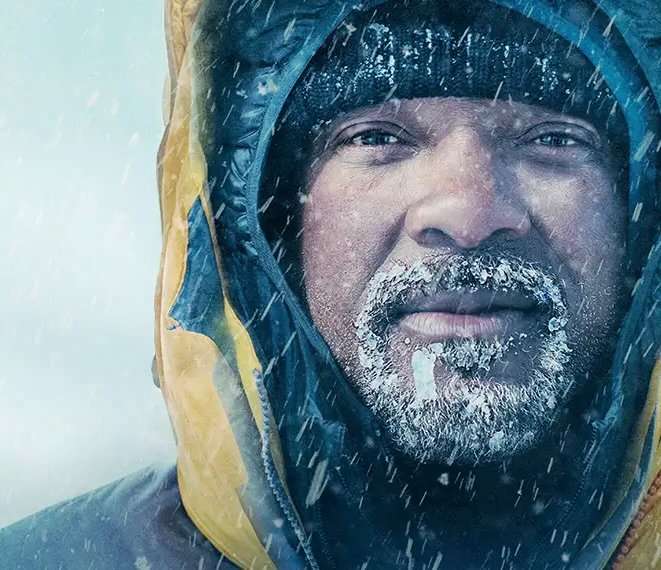
Pole to Pole with Will Smith is structured around an elegant idea: travel the Earth vertically, from Antarctica to the Arctic, following the 180th meridian. Yet the geographic conceit is less about cartography than contrast. The series uses extremes of climate, culture, and environment to explore how humans adapt, endure, and redefine their relationship with the planet.
From the outset, the show makes clear that this is not a luxury travelogue. There are no indulgent detours or postcard moments designed to flatter the viewer. Instead, the camera emphasizes scale and vulnerability. Ice fields stretch endlessly. Jungles press inward. Cities pulse with density and urgency. The Earth is presented not as a backdrop, but as an active force—one that shapes behavior, belief, and survival.
smith
One of the series’ most notable achievements is how it positions Will Smith. Rather than centering him as a charismatic guide or omniscient narrator, Pole to Pole casts him as a participant—often unsure, frequently challenged, and visibly learning. This choice is critical. Smith’s global fame could easily overwhelm the environments he enters, but the show resists that gravitational pull.
In Antarctica, Smith confronts isolation and physical discomfort, stripped of any performative bravado. In Southeast Asia, he follows scientists and locals whose expertise dwarfs his own. Across Africa and Europe, he listens more than he speaks. These moments of restraint lend the series credibility, transforming Smith from celebrity host into connective tissue between the audience and the people who actually inhabit these landscapes.
flow
At its core, Pole to Pole is deeply rooted in science. Climate research, conservation biology, volcanology, and marine ecology are not treated as abstract concepts but as lived realities. Each location introduces experts whose work reveals how environmental change manifests on the ground—or in the water, ice, and air.
In island nations facing rising sea levels, the crisis is not theoretical. Homes are already moving inland. Traditions tied to specific coastlines are under threat. In volcanic regions, danger is constant but normalized, shaping communities built around risk rather than avoidance. The show excels at translating data into human consequence, allowing science to function as narrative rather than exposition.
culture
Travel documentaries often struggle with representation, especially when moving through Indigenous or historically marginalized communities. Pole to Pole approaches these encounters with care. The series avoids reducing cultures to visual texture or symbolic shorthand. Instead, it foregrounds voices—elders, guides, activists—who articulate their own histories and futures.
Smith’s role in these exchanges is notably secondary. He does not speak for communities or summarize their experiences into neat conclusions. The camera frequently lingers after conversations end, allowing silence and context to breathe. This pacing reinforces the idea that understanding cannot be rushed, and that presence itself can be a form of respect.
show
The physical demands placed on Smith are not incidental. Diving in rough waters, trekking through dense terrain, enduring extreme cold—these experiences function as metaphors for the broader themes of adaptation and resilience. The series repeatedly asks what it means to be uncomfortable, and how growth often begins at that threshold.
Smith’s candid reactions—fear, hesitation, fatigue—are left intact. The show resists editing them into triumphal arcs. There is no montage of instant mastery. Instead, challenge is presented as ongoing, unresolved, and sometimes humbling. This honesty anchors the series emotionally, preventing it from slipping into motivational cliché.
enviro
Pole to Pole addresses climate change directly, but it avoids the paralyzing tone of doom that often accompanies the subject. Rather than relying on catastrophic imagery alone, the series emphasizes agency. Viewers meet people actively responding to environmental pressure: scientists innovating, communities reorganizing, conservationists rebuilding fragile systems.
The message is clear without being preachy. The planet is changing rapidly, but human response is not monolithic. Adaptation takes many forms, shaped by geography, resources, and culture. By showing solutions alongside consequences, the series encourages engagement rather than despair.
myth
There is an unspoken subtext running through the entire project: this is a quieter, more reflective phase of Will Smith’s public life. Pole to Pole does not reference controversy or personal history explicitly, but it does present a man less interested in dominance than understanding. Curiosity replaces confidence. Listening replaces performance.
This shift feels intentional. The series benefits from Smith’s willingness to let the environment—and the people within it—take precedence. In doing so, he reframes his own presence, suggesting that relevance today may come not from being the loudest voice, but from being the most attentive one.
cin
Visually, Pole to Pole is restrained and elegant. Sweeping aerial shots are balanced by intimate close-ups. The camera often holds wide frames long enough to emphasize human smallness against natural scale. There is beauty, but it is never ornamental. Every image serves context, reinforcing the relationship between people and place.
Sound design follows a similar philosophy. Ambient noise—wind, water, footsteps—often replaces music, grounding scenes in physical reality. When a score does appear, it is subtle, reinforcing mood rather than dictating emotion.
why
In an era saturated with content, Pole to Pole stands out by slowing down. It asks viewers to consider not just where we travel, but how and why. It reframes exploration as responsibility rather than conquest, curiosity rather than consumption.
For audiences accustomed to spectacle-driven documentaries, the series offers something rarer: attentiveness. It reminds us that the most meaningful journeys are not defined by distance alone, but by the willingness to be changed along the way.
fin
Pole to Pole with Will Smith succeeds because it understands its limits. It does not pretend to solve the planet’s problems, nor does it claim definitive insight into every culture it encounters. Instead, it models a way of moving through the world with humility, openness, and respect.
In tracing a line from the bottom of the Earth to the top, the series ultimately draws a different kind of map—one that charts curiosity, accountability, and the quiet power of listening.