Prada Opens a New Boutique in Cortina d’Ampezzo

December 28, 2025
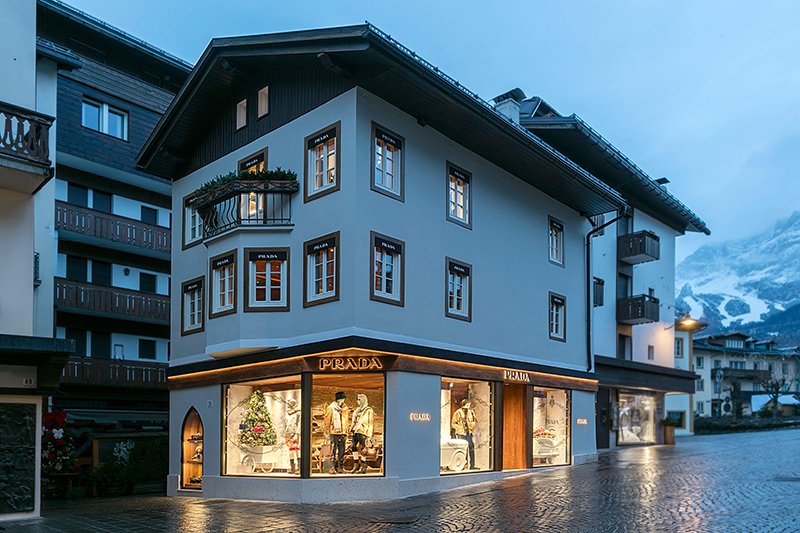
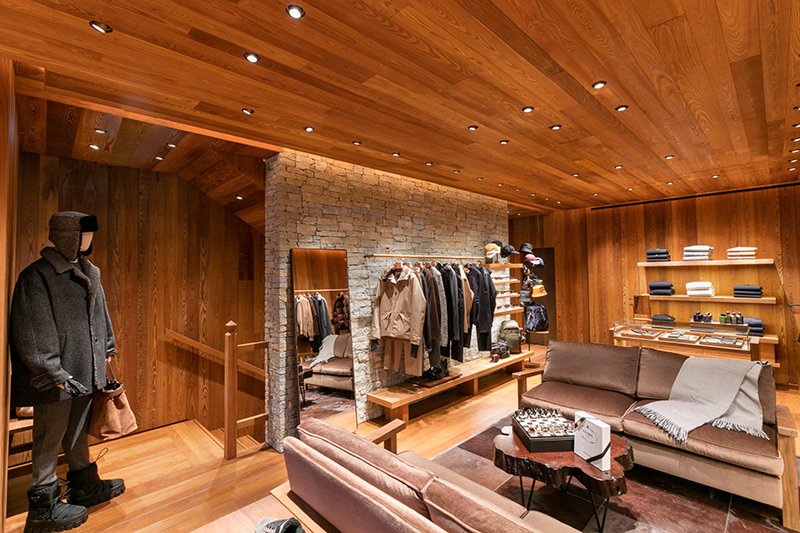
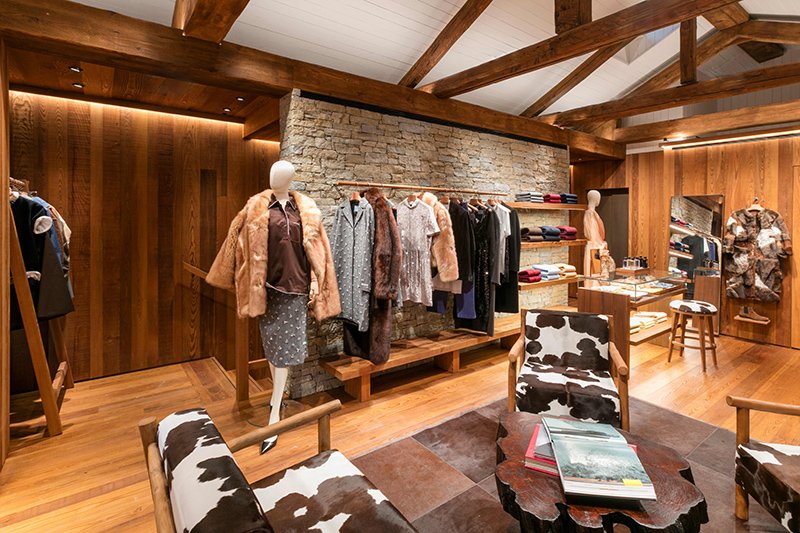
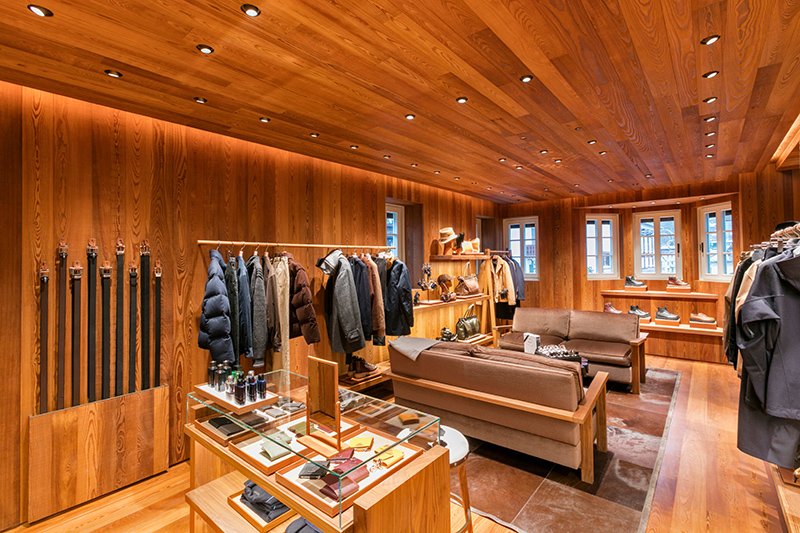
Prada has opened a new boutique in Cortina d’Ampezzo, quietly embedding itself within one of Italy’s most emblematic mountain towns. Located at Corso Italia 55, in the very center of Cortina, the store occupies a prominent yet understated position, surrounded by historic Alpine architecture and framed by the sharp silhouettes of the Dolomites. Spanning approximately 200 square meters across three floors, the boutique houses Prada’s men’s and women’s collections alongside an exclusive selection of new items created specifically for this location. Rather than arriving as a seasonal statement or a transient luxury outpost, the store signals a long-term commitment—one rooted in place, materiality, and cultural continuity.
Cortina d’Ampezzo is not merely a destination; it is a symbol. Long associated with winter sports, cinema, and European high society, the town has cultivated an image of elegance shaped by geography and tradition. Prada’s arrival feels less like an expansion and more like a natural extension of this identity. The brand’s measured approach to luxury—intellectual, architectural, and resistant to excess—finds an ideal counterpart in Cortina’s balance of refinement and restraint.
lang
Often referred to as the “Queen of the Dolomites,” Cortina has long existed at the intersection of performance and leisure. Its history is marked by moments of international attention, from the 1956 Winter Olympics to its upcoming role as co-host of the 2026 Games, yet its enduring appeal lies in something quieter. Cortina is defined by a way of life shaped by seasonality, craft, and an unspoken understanding of quality. Prada’s boutique enters this context with sensitivity, recognizing that true luxury in such a setting is expressed through coherence rather than spectacle.
Corso Italia, Cortina’s central promenade, carries its own rhythm. It is both social artery and architectural archive, lined with cafés, historic hotels, and carefully curated boutiques. Prada’s placement at number 55 situates the brand within this flow, allowing the store to engage directly with the town’s daily life. Large windows open the interior to the street, ensuring the boutique participates in the visual and social exchange that defines Cortina’s center.
flow
The boutique unfolds vertically across three levels, a configuration that mirrors the town’s compact scale and layered architectural history. At approximately 200 square meters, the store feels intimate yet expansive, designed to encourage gradual discovery rather than immediate impact. Movement through the space is deliberate, with each floor offering a distinct atmosphere while maintaining a cohesive architectural language.
Prada’s design approach prioritizes material honesty and spatial clarity. Rather than imposing a standardized retail concept, the brand has allowed Cortina’s Alpine character to inform the interior architecture. This sensitivity is evident in the choice of materials, proportions, and the way light is handled throughout the store. The result is a boutique that feels anchored rather than imported—a space that belongs to its surroundings.
show
The ground floor serves as the boutique’s point of connection with the street. Large windows allow natural light to flood the interior, blurring the boundary between inside and outside while offering glimpses of the collections to passersby. This openness reinforces Prada’s understated confidence, positioning luxury as something to be encountered rather than announced.
The space is structured by display partitions crafted from natural larch wood, a material deeply rooted in Alpine building traditions. Larch is valued for its durability and warmth, and here it is used with precision, its grain and tone adding depth without ornamentation. Against this backdrop, leather goods, accessories, and women’s footwear are presented with sculptural clarity. Handbags are spaced generously, allowing form and material to take precedence, while shoes are elevated from functional objects to design statements through careful placement and lighting.
mat
Throughout the boutique, Prada demonstrates a nuanced understanding of how materials communicate meaning. The use of larch wood is not a decorative gesture but a structural one, grounding the interior in its geographic context. Stone elements further reinforce this connection, introducing texture and weight that echo the surrounding mountains.
These materials are balanced by Prada’s characteristic restraint. Surfaces are clean, proportions are controlled, and details are purposeful. The effect is a space that feels warm without becoming rustic, contemporary without feeling detached from tradition. It is a reflection of Prada’s broader philosophy—innovation rooted in respect for context and history.
wear
Ascending to the upper levels, the boutique transitions into areas dedicated to women’s and men’s ready-to-wear. These floors feel more private, encouraging a slower, more considered engagement with the collections. The architecture here emphasizes comfort and flow, allowing garments to be experienced in relation to the space rather than as isolated displays.
Women’s ready-to-wear is presented against a backdrop of stone and wood, creating a dialogue between Prada’s refined silhouettes and the tactile environment. Technical outerwear, tailored pieces, and seasonal garments resonate naturally in a mountain setting, where performance and elegance often intersect. The space allows these dualities to unfold quietly, without overt messaging.
sect
The men’s floor continues this narrative with a focus on structure, material, and adaptability. Knitwear, tailored outerwear, and accessories are arranged to highlight versatility—clothing designed to move between urban and alpine contexts. The warmth of the wooden interiors softens the precision of the garments, reinforcing the idea that Prada’s menswear is as much about lived experience as it is about form.
Furniture elements, including seating and display tables, introduce moments of pause. These are not purely functional additions but integral parts of the spatial experience, encouraging visitors to linger and engage with the collections at their own rhythm.
trad
Prada’s relationship with mountain culture extends well beyond this boutique. Through technical outerwear, performance-driven design, and lines that blur the boundary between sport and fashion, the brand has long explored how clothing functions in demanding environments. Cortina d’Ampezzo, with its history of winter sports and alpine craftsmanship, provides a natural stage for this ongoing dialogue.
The boutique does not explicitly reference sport, yet the influence is present in the emphasis on functionality, durability, and comfort. This subtlety reflects Prada’s belief that performance need not be overt to be meaningful—it can exist quietly within design.
extent
Unlike temporary pop-ups or experiential installations, Prada’s Cortina boutique is designed with permanence in mind. There is no reliance on spectacle or digital theatrics. Instead, the experience is shaped by proportion, material, and light—elements that age gracefully rather than date quickly.
This approach aligns with a broader shift in luxury retail, where brands increasingly prioritize spaces that reward repeat visits and long-term engagement. In a town like Cortina, where visitors often return season after season, this philosophy feels particularly relevant.
fin
Prada’s new boutique in Cortina d’Ampezzo is ultimately a study in restraint. It does not seek to dominate its setting or redefine the town’s identity. Instead, it listens—to the architecture, the materials, and the cultural rhythms of Cortina—and responds with precision.
In a place defined by peaks and panoramas, Prada chooses intimacy over spectacle, material intelligence over excess, and permanence over novelty. The result is a boutique that feels both contemporary and timeless, offering a refined expression of luxury at altitude.