
Review: Prince William Shares Rare Childhood Photo of Princess Diana

March 16, 2026
Every year, Mother’s Day carries layers of sentiment—joy for many, reflection for others, and for some, the quiet ache of absence. For Prince William, the Prince of Wales, the day has long been intertwined with the memory of his mother, Diana, Princess of Wales.
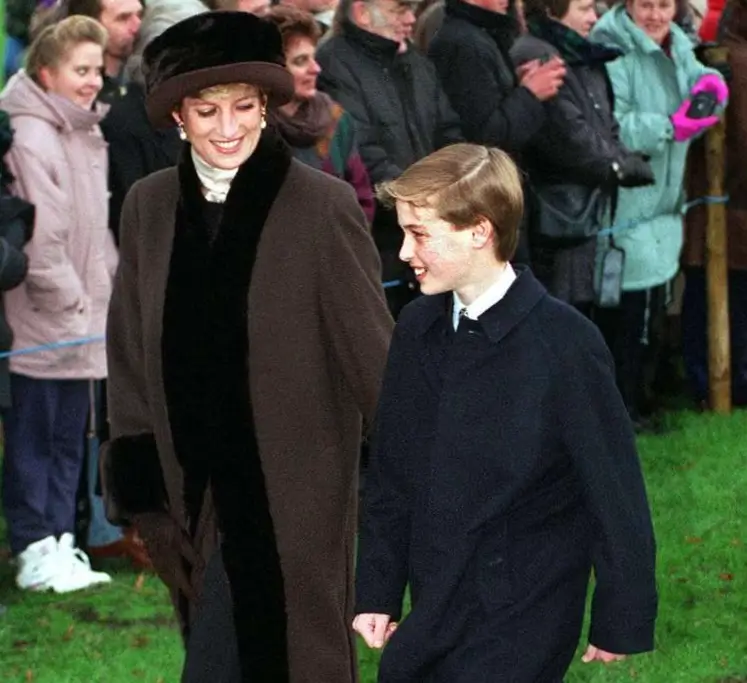
In March 2026, he offered the public a deeply personal glimpse into that memory by sharing a previously unseen photograph of himself with Diana. Posted on social media to mark the United Kingdom’s Mothering Sunday, the image showed a two-year-old William holding his mother’s hand in a meadow of flowers at the family’s Highgrove home in 1984.
Accompanying the photograph was a brief message written in William’s own understated style:
“Remembering my mother, today and every day. Thinking of all those who are remembering someone they love today. Happy Mother’s Day.”
The simplicity of the tribute echoed the tone that has come to define William’s public reflections on Diana—quiet, personal, and grounded in remembrance rather than spectacle.
But the unseen photograph carried significance beyond sentiment. It reopened a window into a mother-son relationship that shaped the modern British monarchy and continues to influence the future king nearly three decades after her death.
View this post on Instagram
archive
The photograph shared by William is believed to come from the royal family’s private collection and had not been publicly released before.
Taken in 1984 at Highgrove House in Gloucestershire, the image captures a fleeting moment of calm in a life that would soon become intensely scrutinized by the world. Diana kneels in a field of poppies and wildflowers while the young prince—barely two years old—holds her hand and gazes curiously at the plants around him.
The scene is disarmingly ordinary:
-
Diana wearing casual clothing rather than royal formality
-
A countryside meadow instead of palace interiors
-
A toddler exploring flowers while his mother watches
In many ways, it reflects the private side of Diana’s life that she fiercely protected for her sons. She often sought moments away from cameras where William and his younger brother, Prince Harry, could experience childhood without the weight of monarchy.
The photograph’s warmth lies precisely in that normalcy. It portrays Diana not as a global icon, but as a mother kneeling beside her son in a garden of wildflowers.
flow
The tribute coincided with Mothering Sunday, the British observance of Mother’s Day. Unlike the American holiday celebrated in May, the U.K. tradition is tied to the Christian calendar and falls on the fourth Sunday of Lent.
Historically, Mothering Sunday was a day when people returned to their “mother church,” often visiting family at the same time. Over centuries, it evolved into a celebration of mothers similar to Mother’s Day in other countries.
For the British royal family, the day frequently becomes an occasion for personal reflection shared publicly with the nation. In 2026, multiple members of the royal family participated:
-
King Charles III and Queen Camilla shared photographs honoring their mothers.
-
William marked the day with his personal tribute to Diana.
-
The royal household used social media to highlight family memories across generations.
Yet it was William’s photograph that resonated most strongly with the public, largely because it offered something new: a never-before-seen moment between Diana and her eldest son.
the endure
Nearly three decades after her death, Diana remains one of the most influential figures in modern royal history.
She died on August 31, 1997, in a car crash in Paris while being pursued by paparazzi. William was fifteen years old at the time; Harry was twelve.
The shock of her death reverberated around the world. Millions mourned a princess who had redefined royal public life by embracing causes often avoided by the monarchy.
Her work included advocacy for:
-
AIDS awareness and HIV patients
-
Landmine removal campaigns
-
Mental health discussions
-
Homelessness outreach
But perhaps her most enduring influence was her approach to motherhood. Diana was determined that William and Harry would experience life beyond palace walls. She famously took them to homeless shelters, amusement parks, and fast-food restaurants—experiences meant to ground them in everyday reality.
Royal observers often note that many of William’s current initiatives echo those early lessons.
view
William has spoken repeatedly about the influence his mother continues to exert on his life and work.
Diana introduced her sons to social issues at a young age. Visits to shelters and hospitals were not symbolic gestures but formative experiences designed to cultivate empathy. Royal commentators frequently point to those experiences as the foundation for William’s humanitarian focus today.
One of the clearest examples is his Homewards initiative, an ambitious project aimed at ending homelessness in the United Kingdom. The effort reflects the same issue Diana highlighted when she took her sons to shelters during their childhood.
Her approach was personal rather than distant. Instead of formal engagements, she sat beside people, listened to them, and touched those others were afraid to approach—particularly during the height of the AIDS crisis.
William has carried forward that philosophy. In public appearances he often emphasizes empathy, mental health awareness, and community-based solutions.
Even his parenting style appears influenced by Diana’s example.
gen
Although Diana never met her grandchildren, her presence continues within the Wales family.
William and his wife, Catherine, Princess of Wales, frequently ensure their children understand the role Diana played in their lives. Prince George, Princess Charlotte, and Prince Louis refer to her affectionately as “Granny Diana.”
In previous years, Kensington Palace has shared Mother’s Day cards created by the children in her memory. The cards often include handwritten messages expressing love and gratitude to a grandmother they know only through stories and photographs.
This practice has become a quiet family tradition—one that keeps Diana present in the household despite the decades that have passed.
The unseen photograph posted in 2026 serves the same purpose on a broader scale. It introduces the world to another fragment of the past while preserving the continuity of family memory.
idea
Photographs occupy a unique place in royal storytelling.
Unlike official portraits or ceremonial images, private family photographs reveal the emotional texture of royal life. They remind the public that behind institutional roles are ordinary relationships—parents and children, siblings and partners.
The Highgrove image shared by William belongs to this category.
Several elements contribute to its resonance:
-
Natural setting: A field of flowers rather than palace interiors
-
Unscripted posture: Diana crouched casually beside her son
-
Childlike curiosity: William examining the flowers
-
Maternal presence: Diana’s hand gently guiding him
The photograph mirrors the qualities that made Diana beloved worldwide—warmth, informality, and genuine connection.
In the digital era, such images also function as powerful storytelling tools. Social media allows members of the royal family to share moments from personal archives directly with millions of viewers.
William’s tribute was quickly amplified across news outlets and social platforms, becoming one of the most widely circulated royal images of the day.
show
The response to the tribute was immediate and emotional.
Across social media, many people responded not only to Diana’s memory but also to William’s acknowledgement of shared grief. His message included a line addressed to others missing loved ones on the holiday—a gesture that broadened the tribute beyond his personal story.
For many viewers, the photograph represented several overlapping narratives:
-
nostalgia for Diana’s era
-
empathy for William’s loss
-
admiration for the quiet dignity of the tribute
Royal historians often note that Diana’s legacy remains uniquely powerful because it transcends monarchy itself. She is remembered as a humanitarian figure, a fashion icon, and a symbol of emotional openness in an institution traditionally defined by reserve.
William’s tribute tapped directly into that collective memory.
commune
The 2026 tribute also illustrates how royal communication has changed in the digital age.
Historically, royal family messages were delivered through formal statements or televised broadcasts. Today, platforms like Instagram and X allow royals to communicate directly with global audiences.
William’s post exemplified this shift:
-
a personal photograph
-
a brief handwritten-style caption
-
direct publication through official social media channels
This approach allows the monarchy to maintain relevance in an era of rapid media cycles.
It also aligns with William’s broader effort to modernize the royal image—balancing tradition with transparency and personal storytelling.
grief
William has spoken candidly about the long-term nature of grief.
In interviews and documentaries, he has described losing his mother as a defining moment that shaped both his childhood and his adult life. The passage of time, he has suggested, does not erase the loss—it simply transforms how it is experienced.
Mother’s Day is one of those moments when that transformation becomes visible.
Each year brings a different expression:
-
unveiling a statue of Diana on what would have been her 60th birthday
-
speaking about her humanitarian work
-
sharing family stories with his children
-
posting a simple photograph and message
These gestures collectively form a living memorial, one that evolves alongside William’s own life as a father and future king.
leg
For historians of the British monarchy, Diana’s legacy can be understood in two dimensions.
The first is public influence. Her activism changed how royal figures engage with social causes, emphasizing empathy and direct human connection.
The second is institutional transformation. Her sons have carried forward many of the values she championed, integrating them into the monarchy’s contemporary identity.
William’s priorities—mental health advocacy, environmental initiatives, and homelessness prevention—echo the humanitarian instincts Diana demonstrated decades earlier.
Even the emotional tone of his tribute reflects her approach. Diana often spoke openly about vulnerability and compassion, qualities not traditionally associated with royal communication.
In sharing a photograph from his private childhood, William continues that shift toward authenticity.
hx
Royal history is often written through coronations, treaties, and public ceremonies. Yet the moments that endure most vividly are sometimes the smallest ones: a family photograph, a handwritten card, a short message posted online.
The unseen photograph of Diana and William belongs to that category.
It does not depict statecraft or royal protocol. Instead, it captures a mother guiding her child through a field of flowers—an image that feels almost timeless.
For William, the photograph is a fragment of personal memory. For the public, it is another reminder of the woman who transformed perceptions of the British monarchy.
fin
In the end, the power of the tribute lies in its restraint.
William did not deliver a speech or release an elaborate statement. He shared a photograph and a sentence.
Yet those few words—“remembering my mother, today and every day”—carried the weight of nearly three decades of memory and reflection.
And for William himself, the photograph was something simpler still—a reminder of childhood, of a hand held in a meadow, and of a mother whose influence continues to shape the future of the British crown.

No comments yet.


