
Jose Manuel Albesa Takes the Helm at Puig — Steering Premium Beauty Forward

March 18, 2026
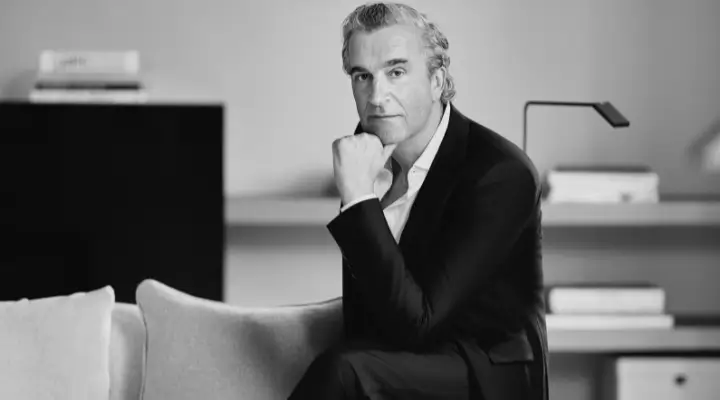
intro
Global premium beauty company Puig has appointed Jose Manuel Albesa as its new Chief Executive Officer, marking a significant evolution in the company’s leadership structure. Albesa will work alongside chairman and former CEO Mark Puig, a move that signals both continuity and transformation at a moment when the global beauty industry is entering a new phase of competition, consolidation, and cultural recalibration.
The appointment is not merely a succession decision. It reflects Puig’s broader ambition to strengthen its position as a premium, culturally relevant, and innovation-driven beauty group—one capable of competing with global giants while maintaining its distinctive identity rooted in heritage, creativity, and selective brand curation.
flow
Jose Manuel Albesa arrives at Puig with a reputation shaped by decades of leadership within the global beauty sector. His career has been defined by an ability to scale brands internationally while preserving their core identity—a balancing act that has become increasingly critical in an era where authenticity and storytelling are as important as distribution and pricing power.
Albesa’s expertise spans fragrance, skincare, and cosmetics, with a particular strength in navigating premium positioning. He has consistently operated at the intersection of brand-building and operational discipline, helping companies expand into new markets while maintaining control over image and perception. This dual capability makes him a natural fit for Puig, whose portfolio thrives on strong creative identities paired with disciplined business execution.
His leadership style is often described as collaborative yet decisive, aligning well with Puig’s hybrid governance structure, where family ownership and corporate strategy intersect. Working alongside Mark Puig, Albesa is expected to bring an external perspective while respecting the company’s long-standing cultural DNA.
evolve
Mark Puig’s transition from CEO to chairman is a carefully calibrated move rather than a departure. Under his leadership, Puig transformed from a regional European player into a globally recognized premium beauty group with a strong presence in fragrance and fashion.
By remaining actively involved as chairman, Mark Puig ensures continuity in vision and values. At the same time, the appointment of Albesa allows the company to introduce fresh strategic thinking without disrupting its core identity. This dual leadership model reflects a broader trend among family-controlled luxury and beauty companies, where governance structures are evolving to accommodate global scale while preserving legacy.
The collaboration between Albesa and Mark Puig will likely define Puig’s next chapter—one that balances heritage with innovation, and control with expansion.
the sil
Puig’s strength lies in its curated portfolio of premium brands, many of which have become cultural touchstones in the fragrance world. These include Carolina Herrera, Jean Paul Gaultier, Rabanne, and Nina Ricci.
Each brand operates with a distinct identity, from Carolina Herrera’s polished elegance to Jean Paul Gaultier’s provocative aesthetic and Rabanne’s futuristic edge. This diversity allows Puig to capture multiple segments of the premium market while avoiding internal cannibalization.
Albesa’s challenge—and opportunity—will be to further amplify these identities in a global market where differentiation is increasingly difficult. The goal is not simply to grow sales, but to deepen cultural relevance, ensuring that Puig’s brands remain aspirational in an age of rapid trend cycles and digital saturation.
infra
The global beauty industry is undergoing a period of structural change. Premiumization continues to drive growth, but the definition of “premium” is evolving. Consumers are increasingly drawn to brands that offer authenticity, sustainability, and a clear point of view.
At the same time, digital platforms have transformed how beauty products are discovered and consumed. Social media, influencer ecosystems, and direct-to-consumer channels have disrupted traditional marketing models, forcing established companies to rethink their strategies.
In this context, Puig’s leadership transition is particularly timely. Albesa’s experience in navigating complex market dynamics positions him to guide the company through this shifting landscape, leveraging both traditional strengths and emerging opportunities.
idea
While Puig has not publicly outlined a detailed roadmap under Albesa’s leadership, several strategic priorities are likely to shape the company’s direction.
First, geographic expansion will remain a key focus, particularly in high-growth markets such as Asia and the Middle East. These regions offer significant potential for premium beauty brands, driven by rising incomes and a growing appetite for luxury experiences.
Second, digital transformation will be critical. Puig has already made strides in this area, but the pace of change in consumer behavior demands continuous innovation. Albesa is expected to accelerate investments in e-commerce, data analytics, and digital storytelling.
Third, sustainability and ethical practices will play an increasingly important role. Consumers are demanding greater transparency and accountability from beauty companies, and Puig will need to ensure that its operations and products align with these expectations.
Finally, brand storytelling will remain at the heart of Puig’s strategy. In a crowded market, the ability to create compelling narratives around products and identities is a key differentiator. Albesa’s track record suggests that he understands the importance of this dimension.
strad
One of Puig’s defining characteristics is its hybrid structure as a family-controlled company with global ambitions. This model offers unique advantages, including long-term strategic focus and a strong sense of identity. However, it also presents challenges, particularly as the company scales and competes with larger, publicly traded rivals.
Albesa’s role will involve navigating this balance, ensuring that Puig retains its distinctive culture while operating with the efficiency and agility required at a global level. His ability to work alongside Mark Puig will be crucial in achieving this equilibrium.
relev
Beyond financial performance, Puig’s future will depend on its ability to remain culturally relevant. The beauty industry is increasingly influenced by broader cultural trends, from fashion and art to music and technology.
Puig has historically excelled in this area, leveraging creative collaborations and distinctive brand identities to capture attention. Under Albesa’s leadership, this focus is likely to intensify, with an emphasis on connecting with younger audiences while maintaining appeal to established consumers.
This will require a nuanced approach, balancing innovation with authenticity and ensuring that each brand’s voice remains clear and consistent.
fwd
Puig operates in a highly competitive environment, alongside industry leaders such as L’Oréal, Estée Lauder Companies, and Coty Inc.. These companies have significant resources and global reach, making differentiation essential for Puig.
Rather than competing on scale alone, Puig has focused on building a portfolio of distinctive brands with strong identities. This strategy has proven effective, allowing the company to carve out a unique position in the premium segment.
Albesa’s task will be to build on this foundation, ensuring that Puig continues to stand out in a crowded market while expanding its global footprint.
sum
The appointment of Jose Manuel Albesa as CEO represents a pivotal moment for Puig. It signals a willingness to evolve, to bring in new perspectives, and to adapt to a rapidly changing industry landscape.
At the same time, the continued involvement of Mark Puig ensures that the company’s core values and vision remain intact. This combination of continuity and change positions Puig well for the challenges and opportunities ahead.
As the beauty industry continues to evolve, Puig’s ability to navigate complexity, embrace innovation, and maintain its distinctive identity will determine its success. Under Albesa’s leadership, the company is poised to enter a new phase—one defined not just by growth, but by relevance, resilience, and creative ambition.





![The Audemars Piguet [RE]Master02 luxury dress watch, featuring rose gold accents, vintage-inspired design, and modern movement](https://drypht.co/wp-content/uploads/2024/12/IMG_0599-300x200.jpeg)
