Ray Gunn First Look: Brad Bird’s Sci-Fi Noir With Rockwell and Johansson

April 10, 2026
1 hour ago
shh
There are directors who arrive with noise, and then there are those who return with intent. Brad Bird has always belonged to the latter category. His films—either animated or live-action—rarely chase attention. They build systems, construct internal logic, and then allow the audience to discover their velocity over time. Ray Gunn, his long-gestating sci-fi noir, appears to follow that same discipline.
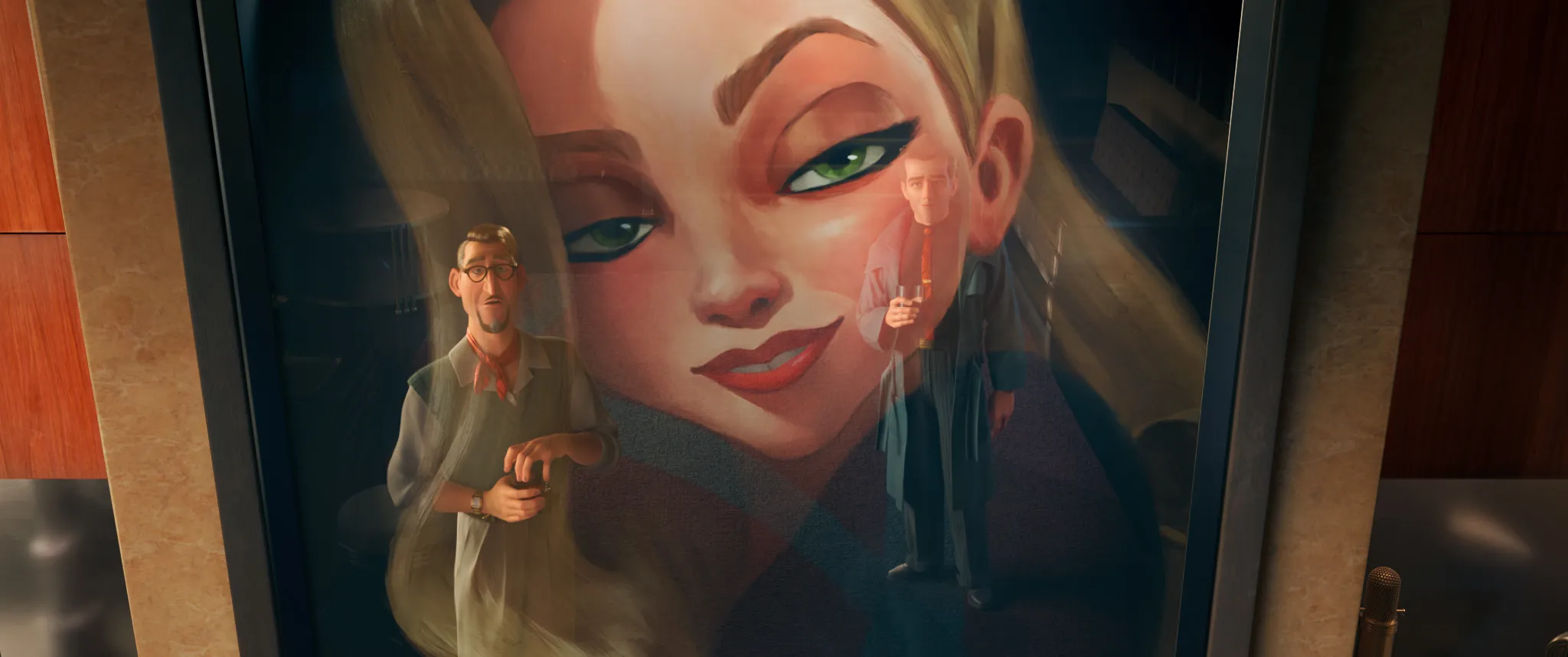
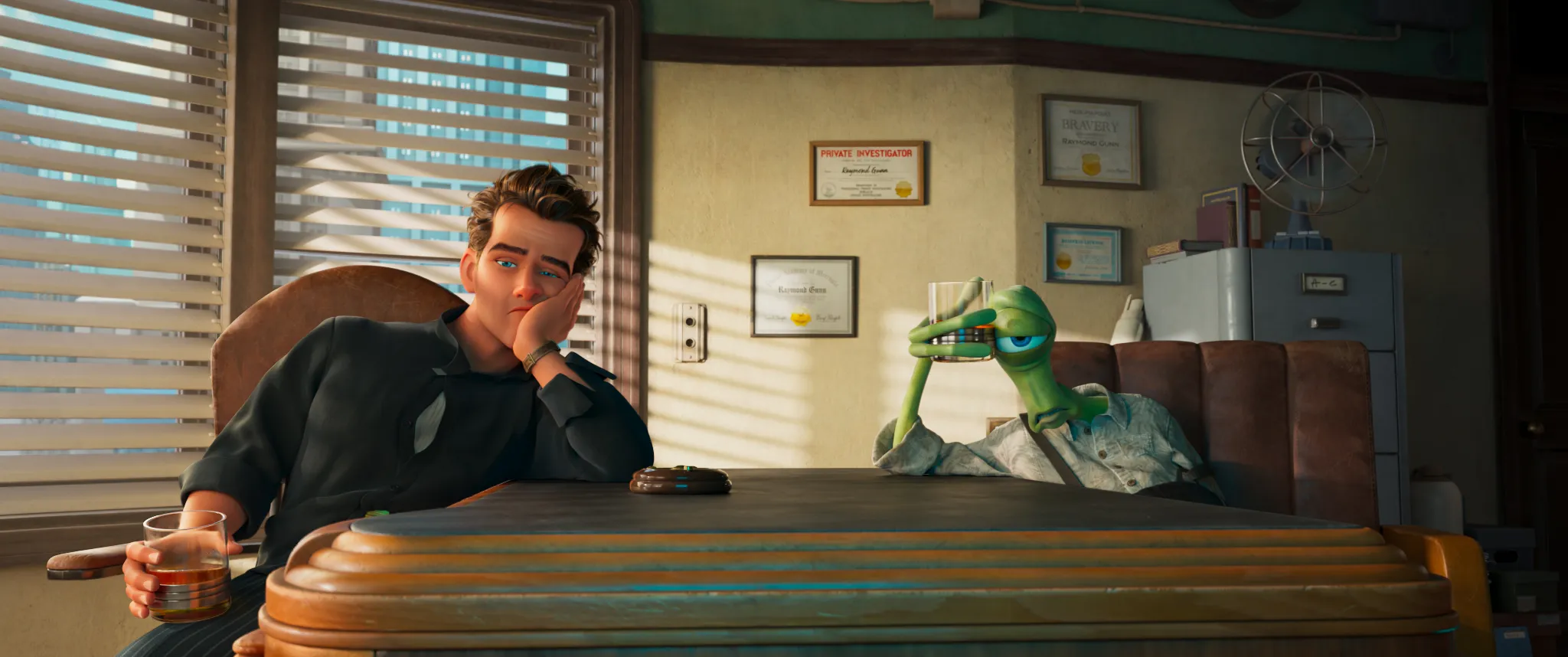
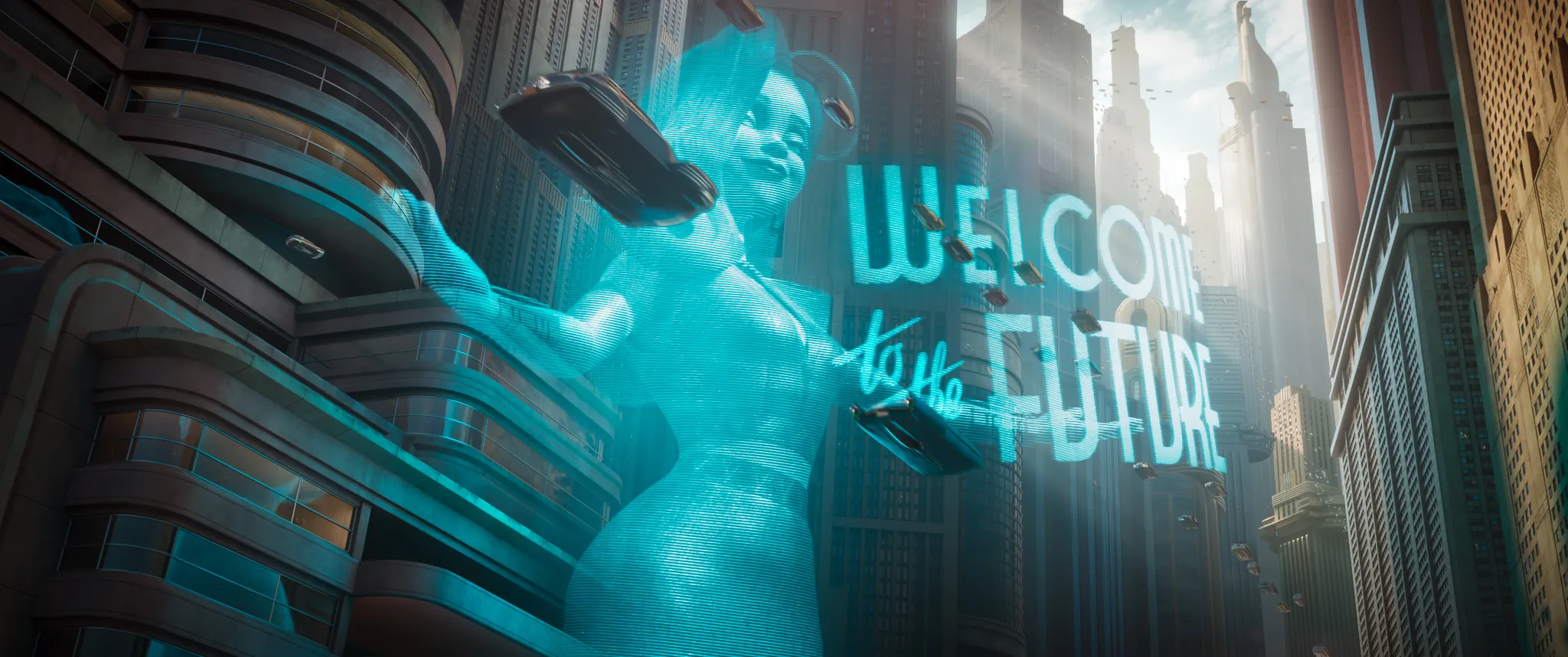
The first look does not overwhelm. It suggests. A dimly lit future, neither fully dystopian nor optimistic, sits somewhere between decay and design. There are traces of chrome, reflections that feel too clean to belong to a broken world, yet too worn to signal utopia. This is not the future as spectacle. It is the future as residue.
And in the center of it, two figures: Sam Rockwell and Scarlett Johansson. Not posed as heroes, not framed as opposites. Simply placed within a system that looks like it will test the limits of both performance and perception.
flow
The phrase “sci-fi noir” is often used too easily—reduced to neon lighting, rain-soaked streets, and a vague sense of existential extent. But Bird’s interpretation, even at first glance, appears more controlled. There is noir here, but it is not borrowed. It is internalized.
Instead of replicating the grammar of classic noir, Ray Gunn seems to translate it into structure. The backgrounds are not decorative; they define space. The lighting is not atmospheric alone; it establishes hierarchy—who is seen, who is obscured, who exists in between.
This is where the project distinguishes itself from its contemporaries. Many modern sci-fi films lean into maximalism—dense worldbuilding, layered lore, constant exposition. Bird, historically, prefers clarity. Even in complexity, there is always a line you can follow.
If Ray Gunn holds to that acknowledge, then its noir elements will not exist as homage. They will function as a framework—a way of organizing narrative tension rather than simply evoking it.
char
Sam Rockwell has built a career on instability—on characters who seem to shift beneath your understanding of them. He moves differently, speaks with a rhythm that resists predictability, and often carries a sense of internal contradiction that never fully resolves.
Placed within a sci-fi noir setting, that quality becomes more than performance. It becomes structural.
In a genre that often relies on archetypes—the detective, the fugitive, the artificial being—Rockwell introduces friction. He complicates the expected trajectory. His presence suggests that Ray Gunn will not rely on fixed identities. Characters may not remain what they appear to be. Motivations may evolve not as twists, but as natural extensions of a world that refuses stability.
There is also a physicality to Rockwell’s work that aligns with Bird’s direction. Bird’s films, even in animation, are defined by movement—precise, intentional, often revealing character through action rather than dialogue. Rockwell operates within that same logic. He communicates through motion, through timing, through absence as much as presence.
In Ray Gunn, that alignment could become one of the film’s defining strengths.
View this post on Instagram
ctrl
Scarlett Johansson, by contrast, brings a different kind of precision. Her performances often operate within restraint. She holds information back, allowing the audience to sense depth without fully accessing it.
In a noir framework, that quality becomes essential. The genre depends on ambiguity—not just in plot, but in character. Who knows what? Who reveals what, and when? Johansson’s ability to maintain control while suggesting complexity positions her as a natural fit for this environment.
What is particularly compelling about her placement in Ray Gunn is the absence of clear categorization. She is not immediately framed as ally or antagonist, victim or architect. Instead, she exists within the same uncertain space as Rockwell’s character.
That parity matters. It suggests a narrative that does not rely on simple oppositions, but rather on shifting alignments—relationships that evolve in response to the world rather than predetermined roles.
stir
To comprehend Ray Gunn, it helps to return to Bird’s broader body of work. Whether directing animated features or stepping into live-action, Bird consistently approaches storytelling as a system.
His films are not built on isolated moments. They are constructed through interlocking components—character, environment, action, theme—all functioning in relation to one another. Remove one element, and the structure destabilizes.
This approach is particularly suited to science fiction. The genre, at its best, is not about spectacle alone. It is about systems—technological, social, psychological—and how individuals navigate them.
Bird’s interest has always been in that navigation. How does a character move through a world that is larger than them? How do they adapt, resist, or reshape it?
Ray Gunn appears to extend that inquiry into a darker register. The noir framework introduces constraint. It limits visibility, restricts information, and forces characters to operate within uncertainty.
For Bird, that constraint is not a limitation. It is an opportunity to refine.
idea
Skydance Animation producing Ray Gunn is a detail that invites closer consideration. The studio has positioned itself as a space for ambitious projects—films that aim to balance accessibility with innovation.
What makes Ray Gunn particularly interesting in this context is its tonal direction. Sci-fi noir is not traditionally associated with mainstream animation or hybrid productions. It occupies a more niche space, often leaning toward adult audiences and complex narratives.
By backing this project, Skydance is signaling a willingness to expand its scope—to engage with genres that require a different kind of audience engagement. This is not about broad appeal alone. It is about depth, atmosphere, and sustained tension.
The partnership with Netflix further reinforces this direction. Netflix has consistently supported projects that might not fit within traditional theatrical frameworks, allowing for greater experimentation in tone and structure.
For Ray Gunn, that environment could prove crucial. It provides the space to develop without the pressure of conforming to established genre expectations.
lang
What stands out in the initial imagery is not scale, but control.
The compositions are deliberate. Lines are clean, but not sterile. Surfaces reflect light in ways that suggest use, history, wear. There is a sense that this world has been lived in—not just designed.
Color is restrained. Where many sci-fi films lean into saturated palettes, Ray Gunn appears to favor a narrower range—muted tones punctuated by selective highlights. This creates contrast without overwhelming the frame.
Light behaves with intention. It reveals selectively, guiding attention without dictating it. Backdrops are not empty; they hold information, inviting the viewer to look closer rather than simply observe.
This view discipline aligns with Bird’s broader philosophy. Every frame serves a purpose. Nothing is incidental.
exposit
One of the most striking aspects of the first look is what it withholds.
There is no clear plot outline, no immediate sense of stakes or direction. Instead, the focus remains on tone, on environment, on the positioning of characters within space.
This restraint is increasingly rare. In an industry that often prioritizes immediate clarity—explaining concepts, establishing stakes quickly—Ray Gunn appears to resist that impulse.
It trusts the audience to engage with ambiguity.
This does not mean the narrative will be obscure. Rather, it suggests that understanding will emerge through experience rather than exposition. The audience will not be told how to read the film. They will be invited to interpret it.
how
The phrase “long-awaited” is often used loosely, but in the case of Ray Gunn, it carries weight. Projects that remain in development over extended periods often risk losing momentum, becoming artifacts of an earlier vision.
But sometimes, the delay allows for refinement.
In Bird’s case, the extended timeline suggests a process of calibration—aligning concept, execution, and connection until the project reaches a point where it can sustain itself.
There is also the question of timing. Sci-fi noir, as a genre, has gone through cycles of prominence and retreat. Its resurgence now feels less like revival and more like recontextualization.
The world has changed. Technology has evolved. The boundaries between physical and digital spaces have blurred. In that context, a film that explores uncertainty, identity, and perception feels particularly relevant.
close
There is a tendency to look for resolution, even in early glimpses. To ask what a film will ultimately say, how it will conclude, what it will leave behind.
Ray Gunn, at least in its first look, offers none of that.
Instead, it presents a world in motion. Characters in transition. A system that is still revealing itself.
And perhaps that is the point.
Not to arrive at an answer, but to remain within the question—long enough to stand its shape.
In a landscape saturated with certainty, that alone feels like a deliberate choice.