Reimagined: How Mattel and OpenAI Are Building the Smart Toys of Tomorrow

June 13, 2025
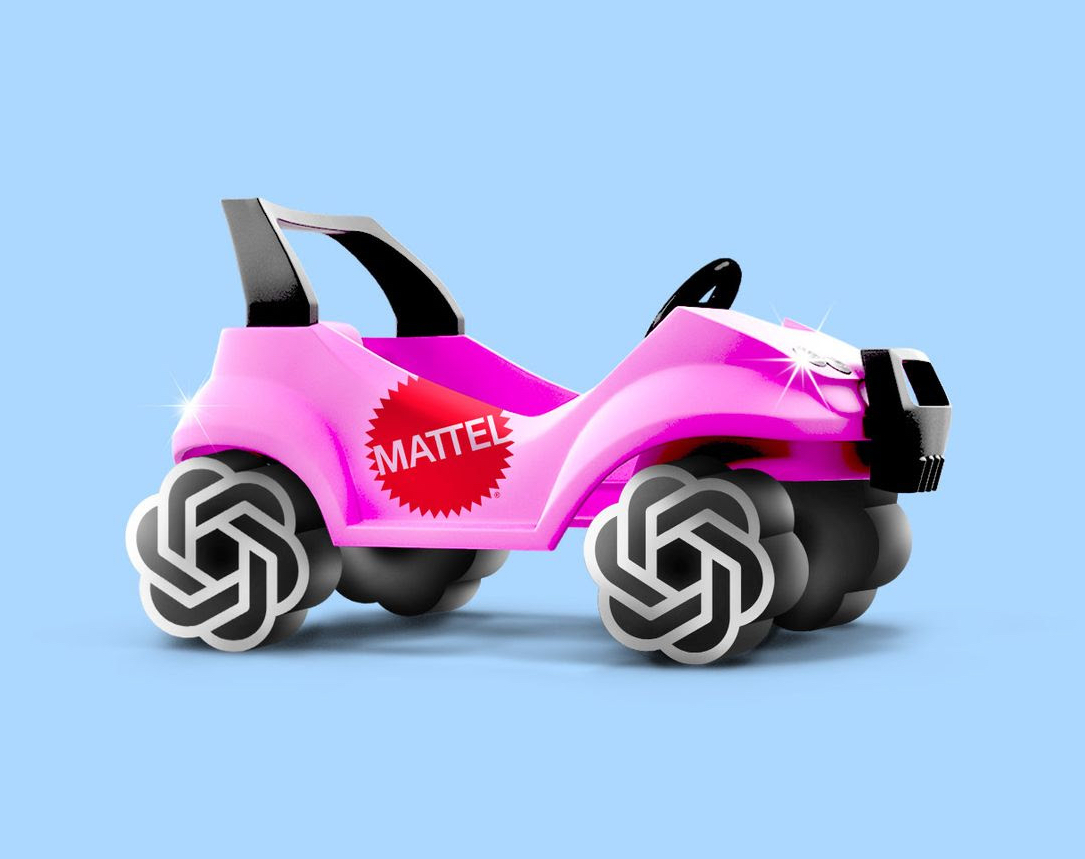
In a moment that feels equal parts revolutionary and uncanny, Mattel—the 79-year-old toy titan behind Barbie, Hot Wheels, and Fisher-Price—has announced a strategic partnership with OpenAI to bring artificial intelligence into children’s toys and immersive brand experiences. On June 12, 2025, both companies confirmed that they are collaborating not only to create AI-powered products, but to embed OpenAI’s tools directly into the creative design and development of future toys.
At first glance, the idea of a talking Fisher-Price See ’n Say that can hold a conversation—or an UNO deck that outwits you in strategy—sounds like a scene from a near-future sci-fi film. But for Mattel, this is no gimmick. It’s a focused, inculcated move in a larger transformation: from toy manufacturer to digital entertainment empire.
A New Era for Play: The Mattel–OpenAI Alliance
Mattel’s decision to partner with OpenAI is both timely and forward-looking. After the blockbuster success of 2023’s Barbie film, which grossed over $1.4 billion globally, CEO Ynon Kreiz has made no secret of his ambition to diversify the company’s IP beyond toys and toward broader entertainment, film, mobile gaming, and branded experiences. In this context, the OpenAI deal represents a natural progression.
The announcement was framed around “age-appropriate AI,” promising that new toys and digital experiences will prioritize child safety, privacy, and responsible innovation. While details are limited, Mattel confirmed that the first AI-powered product will likely debut later in 2025.
Brad Lightcap, COO of OpenAI, suggested possibilities ranging from AI-integrated versions of UNO or the Magic 8 Ball to reimagined Fisher-Price toys like the See ’n Say. Each of these ideas hints at a deeper potential: toys that evolve with children, respond with personality, and create experiences that are dynamic, educational, and emotionally resonant.
The Promise of AI in Toys: Beyond Talking Dolls
AI in toys is not new. Mattel itself experimented with this almost a decade ago with “Hello Barbie,” a Wi-Fi-enabled doll that could engage in scripted conversations. The product faced criticism over privacy concerns, lagging responses, and robotic delivery—and was eventually pulled.
But in 2025, AI has evolved. Where Hello Barbie was a series of audio prompts and canned responses, ChatGPT and its successors offer contextual awareness, memory, and natural language generation. These aren’t just talking toys—they’re toys that listen, learn, and grow.
Consider an AI-powered Magic 8 Ball that not only delivers randomized answers, but picks up on your tone, habits, or prior questions. Or a See ’n Say that becomes a child’s first learning companion—able to describe not just what a cow says, but how cows live, where they’re raised, and why they matter.
This is the frontier Mattel is now stepping into: play experiences that are intelligent, adaptive, and deeply personal.
AI Barbie, UNO Tactics & the Rise of Interactive Play
The opportunities span across all of Mattel’s iconic brands:
- Barbie could become an evolving friend—able to converse about the weather, help with homework, or even tell bedtime stories, all while remembering a child’s favorite colors or career aspirations.
- UNO, transformed by AI, could offer a strategic opponent who changes its tactics, makes jokes, and even references past games.
- Hot Wheels might allow for voice-guided track design or racing AI that interacts with kids as they drive their cars.
- Fisher-Price toys, tailored to preschoolers, could become companions that coach vocabulary, soothe with stories, or support emotional development with gentle, responsive dialogue.
The implications are vast—not just for entertainment, but for learning, parenting, and even early childhood education. Toys could become co-educators. Dolls could offer social-emotional modeling. Board games could adapt to skill level.
Privacy, Safety, and the Risks of Sentient Toys
Despite the awe surrounding these advancements, concerns are inevitable—and well-founded.
Parents and privacy experts worry about children’s data being collected, stored, or misused. Chatbots, even the most advanced, can occasionally “hallucinate,” providing incorrect or inappropriate responses. The idea of a toy that listens constantly—even with on-device processing—raises fundamental questions: Who owns the data? What happens if the toy makes a mistake? Can a parent audit what’s been said?
Mattel insists that safety is paramount. Any AI-powered toy will comply with the Children’s Online Privacy Protection Act (COPPA) and similar global regulations. OpenAI, for its part, is investing heavily in alignment and safety research, working to create models that are reliable, predictable, and contextually sensitive—especially for children.
But it’s not enough to design for compliance. The bar for children’s products is higher: trust. If Mattel wants AI in the toy chest of tomorrow, it must lead with transparency, parent controls, and fail-safes. A child shouldn’t be misinformed or emotionally harmed by a toy meant to guide them through their most formative years.
Entertainment Meets Ecosystem: Mattel’s Bigger Strategy
The partnership with OpenAI isn’t just about smarter toys—it’s about a more connected, immersive Mattel universe.
Already, the company is building Mattel Adventure Parks, rolling out across the U.S. over the next three years. Imagine a scenario where kids who’ve played with an AI Barbie at home visit a theme park where that same AI character appears in a show or digital display—remembering their name, referencing things they’ve said, or continuing a story they started at home.
This is transmedia storytelling at its most intimate: toys, apps, games, parks, and media, all synchronized by shared AI identities. The toy becomes a gateway—not just to imagination, but to a fully curated world.
Mattel is not licensing its characters to OpenAI. Instead, it’s designing AI within the confines of its own IP. This allows it to retain brand integrity while experimenting with the most cutting-edge tools in artificial intelligence.
The Competitive Landscape: Who Else Is in the Race?
While Mattel leads the charge, other toy and tech companies are experimenting with AI-enhanced experiences:
- Hasbro has dabbled in app-based interactivity with Furby Connect and Transformers toys that respond to voice prompts.
- LEGO offers educational tools like Mindstorms and SPIKE, encouraging coding through physical play.
- Amazon introduced a kid-friendly version of Alexa with smart speaker devices designed for children’s rooms.
- Startups like Cognimates and Miko offer AI companions focused on educational conversations and multilingual learning.
But Mattel’s scale, library of beloved characters, and newfound cinematic momentum give it a unique advantage. Barbie is not just a doll—she’s a cultural institution. If Mattel gets this right, it could redefine what play looks and feels like for the next generation.
The Emotional Terrain: What AI Can and Can’t Replace
At the heart of this innovation lies a question: Can a machine be a friend?
For many children, especially in early development, the bond with toys is deeply emotional. A teddy bear offers comfort. A Barbie offers aspiration. A Hot Wheels track is a canvas for storytelling.
Introducing AI doesn’t necessarily displace this magic—but it changes the rules. A toy that responds to you, that asks follow-up questions, that remembers your favorite color or pet’s name, can feel more real than any static figure. But is that realness safe? Can a machine simulate affection? Can it teach empathy without feeling?
The challenge for Mattel and OpenAI is not just technical—it’s emotional. They must design for trust, delight, and emotional nuance. They must ensure that toys enhance childhood, not complicate it.
Looking Ahead: A Vision for 2030
By the end of the decade, AI-enhanced toys could be as common as Bluetooth speakers or touchscreen tablets. We may see:
- Dolls that grow with children, adapting to their learning stage, interests, and emotional needs.
- Toys that collaborate, creating multi-character stories in real time with groups of children.
- Adaptive games, that shift difficulty and personality based on a child’s strengths or struggles.
- Parent dashboards, offering insights into how their child plays, what they’re learning, and how their moods shift.
Mattel’s announcement may sound like science fiction, but it is grounded in a very real vision for the future: one where AI and conjuring sense are not opposing forces, but corresponding to potentially work with other. In that vision, a See ’n Say doesn’t just repeat facts—it helps a child ask better questions. A Barbie doesn’t just wear clothes—she instructs empathy. A Magic 8 Ball doesn’t just guess—it becomes a spark for curiosity.