Return to the Cathedral: Caitlin Clark, the Indiana Fever, and the Sacred Theatre of Carver-Hawkeye Arena

May 5, 2025
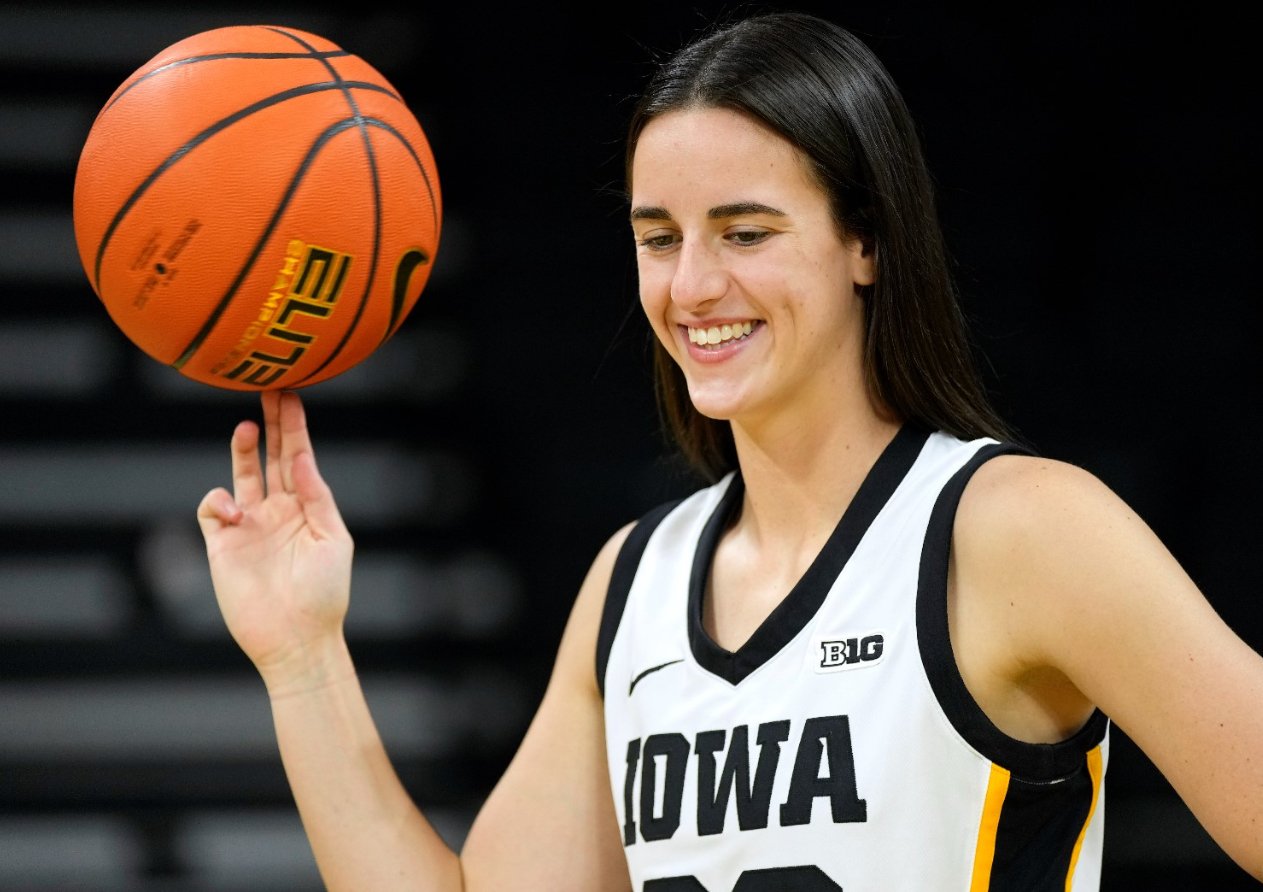
It is rare that a preseason basketball game carries the weight of myth. Rarer still that such a game is played not in the gleaming arenas of the WNBA, but on a college court nestled in the heartland, where rafters still hum with memory and seats still hold the warmth of a legend. But when Caitlin Clark returned to Carver-Hawkeye Arena on a Sunday in early May—this time not as a Hawkeye but as a member of the Indiana Fever—it felt less like a scrimmage and more like a coronation.
The opponent? Brazil’s national women’s basketball team. The stakes? Minimal. The crowd? Maximal. The narrative? Everything.
Clark, who had missed the Fever’s preseason opener against the Washington Mystics due to a precautionary holdout for a minor leg injury, suited up in her professional debut on a floor that will never stop echoing her name. And in doing so, she transformed an otherwise ordinary exhibition game into something sacred: the first chapter of a new story written on familiar wood.
The Court as Canvas
Carver-Hawkeye Arena is not just a venue. For many, it is a memory palace. It is where Clark shattered records with almost academic precision—surpassing Kelsey Plum, Pete Maravich, and every ghost that came before her. It is where three-pointers from the logo became routine, where transition assists blurred into choreography, and where Iowa’s women’s basketball team became a national conversation.
But on this day, she wore different colors. The yellow and black were gone, replaced by the crisp scarlet and navy of the Indiana Fever. Her number remained—22—but everything else had shifted: the league, the pace, the expectation. What had once been collegiate dominance was now poised to become professional evolution.
The Fever, fresh off a narrow 79-74 overtime win against the Mystics, entered the matchup with Brazil with optimism but uncertainty. The team is rebuilding. It is young. And Clark, with all her magnetism and pressure, is expected not merely to join, but to lead.
Her presence alone shifted the tone of the game. Every time she touched the ball, the crowd surged. Every shot attempt, every defensive switch, was met with the kind of rapture usually reserved for championship games. But this wasn’t a title run. This was something more intimate: a return, a closing of a loop, a woman facing the origin of her legend in new shoes.
A Game of Transitions
Against the Brazilian squad—known for its physical play and seasoned international depth—Clark looked both at home and slightly untethered. It is one thing to dominate college defenses. It is another to navigate the spacing, size, and strategic elasticity of seasoned pros. Yet, even in moments of rhythm adjustment, the flashes were unmistakable.
Step-back threes with improbable arc. Cross-court lasers that defied geometry. Off-ball movement that turned defenders into spectators. She finished the night with solid, if not gaudy, numbers—but her impact went beyond the box score. The arena did not cheer for performance alone. It cheered for possibility. It cheered for memory. It cheered for the future in real time.
The Fever’s gameplay oscillated between structured sets and free-flowing instincts, trying to find tempo amid chemistry still forming. Aliyah Boston, last year’s Rookie of the Year, provided the post gravity, while Clark stretched the defense into vulnerable fragments. The blueprint is clear: inside-out play, driven by Clark’s range and Boston’s poise. If the Fever can refine the in-between—those midcourt traps, those transition decision points—they could become more than a young team. They could become dangerous.
The Burden of Becoming
It’s impossible to ignore the weight Clark carries. No rookie, perhaps since Diana Taurasi or Candace Parker, has entered the WNBA with this level of cultural capital. She’s not just a player—she’s a brand, a beacon, a battleground for conversations around viewership, equity, and the commercialization of women’s sports.
The crowd at Carver-Hawkeye didn’t just show up because she’s good. They showed up because she is theirs. She is Iowa. She is Midwest virtuosity wrapped in grit and grace. And now, she’s embarking on a journey where allegiance will no longer be geographical but philosophical.
What does it mean to belong when you are suddenly everywhere?
That question hovered in the rafters of Carver-Hawkeye like a spiritual draft. For many, this may have been the last time to see Clark play here. There were no postgame tears, no elaborate send-offs. Just a quiet reverence. An acknowledgment that something rare had occurred—not just on this night, but over the past four years.
WNBA Spectacle, College Intimacy
There is something deeply poignant about a professional game played in a college arena. The WNBA, which has often struggled with arena access and scheduling during its preseason stretch, made a choice here that transcended logistics. By staging the Fever’s game in Iowa, they weren’t just accommodating a narrative—they were honoring it.
The energy inside CHA was unlike any other preseason environment. It wasn’t about scouting rotations or minutes load. It was about emotional density. Parents brought daughters not just to see basketball, but to see what women’s sport can be. They saw the line between NCAA history and WNBA emergence blur into a continuum.
It is also a sign of evolving strategy within the WNBA itself: lean into narrative, location, and personality. Clark represents a bridge, and Carver-Hawkeye is the footbridge’s beginning. To ignore that intimacy would be to ignore the audience entirely.
Legacy in Motion
Caitlin Clark’s professional career is just beginning. And yet, everything she does is already under scrutiny. Will her game translate? Will she win? Will she challenge the old guard of veterans like Breanna Stewart, A’ja Wilson, and Jewell Loyd? Will she redefine how rookies enter the league—not as prospects but as franchise phenomena?
The game against Brazil offered hints, not answers. It revealed her instincts, her vision, her desire to elevate those around her. It also revealed her humanity: moments of miscommunication, rushed passes, and the understandable lag of adapting to a new system.
But more than anything, it revealed her magnetism. That rare quality of making the air shift when the ball enters your hands. That is not coached. That is not manufactured. That is authentic stardom.
The Fever Ahead
The Indiana Fever are not expected to win the 2025 title. They are not even guaranteed a playoff berth. But they are now the most watched team in the league. The Clark effect is real—not just in jerseys sold, but in cameras redirected, coverage amplified, and arenas filled.
Their game against Brazil—a friendly, a formality—was played on sacred ground. But it is what they do after, on harder nights in Atlanta or Phoenix or Brooklyn, that will define their evolution. Clark will be studied. Defended. Doubled. There will be losses. There will be doubts. But if her return to Iowa is any indication, there will also be brilliance.
Closing the Loop
There are few perfect alignments in sports. They are rare, fleeting, accidental. But Sunday’s game at Carver-Hawkeye was one of them. Caitlin Clark, in a professional uniform, playing for a Midwestern franchise, stepping onto the same floor where she rewrote NCAA history, was not just a good story—it was a perfect return.
The ball bounced differently. The stakes shifted. But the floor, the light, the angles—they all knew her. And for one more afternoon, so did the crowd.
The arena will go quiet again. Iowa’s next great hope will rise someday. But for now, the story belongs to Clark. And the echoes of her game—past and future—will live on in Carver’s timbers.