There are vehicles that move through time quietly, adapting, shedding, reappearing. And then there are those that refuse to let go of their original idea. The MOKE sits firmly in the latter category—a machine that has never tried to be more than it is, yet somehow becomes more with each iteration. With the GEN 1 EV, that idea—open-air freedom, compact mobility, and a distinctly British sense of play—has been translated into the language of the present.
Engineered and manufactured in Britain since 1964, the MOKE was never conceived as a haute object. It was utilitarian, almost improvised in spirit. A stripped-back vehicle originally intended for military use, it found its real identity not in conflict but in leisure—coastal roads, island terrains, and sunlit streets where its openness felt less like a compromise and more like a statement.
The GEN 1 EV doesn’t overwrite that history. It preserves it, carefully, while shifting the mechanics underneath.
flow
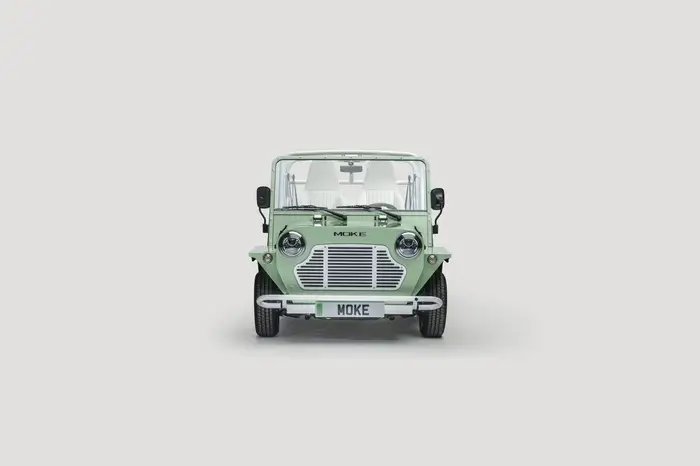
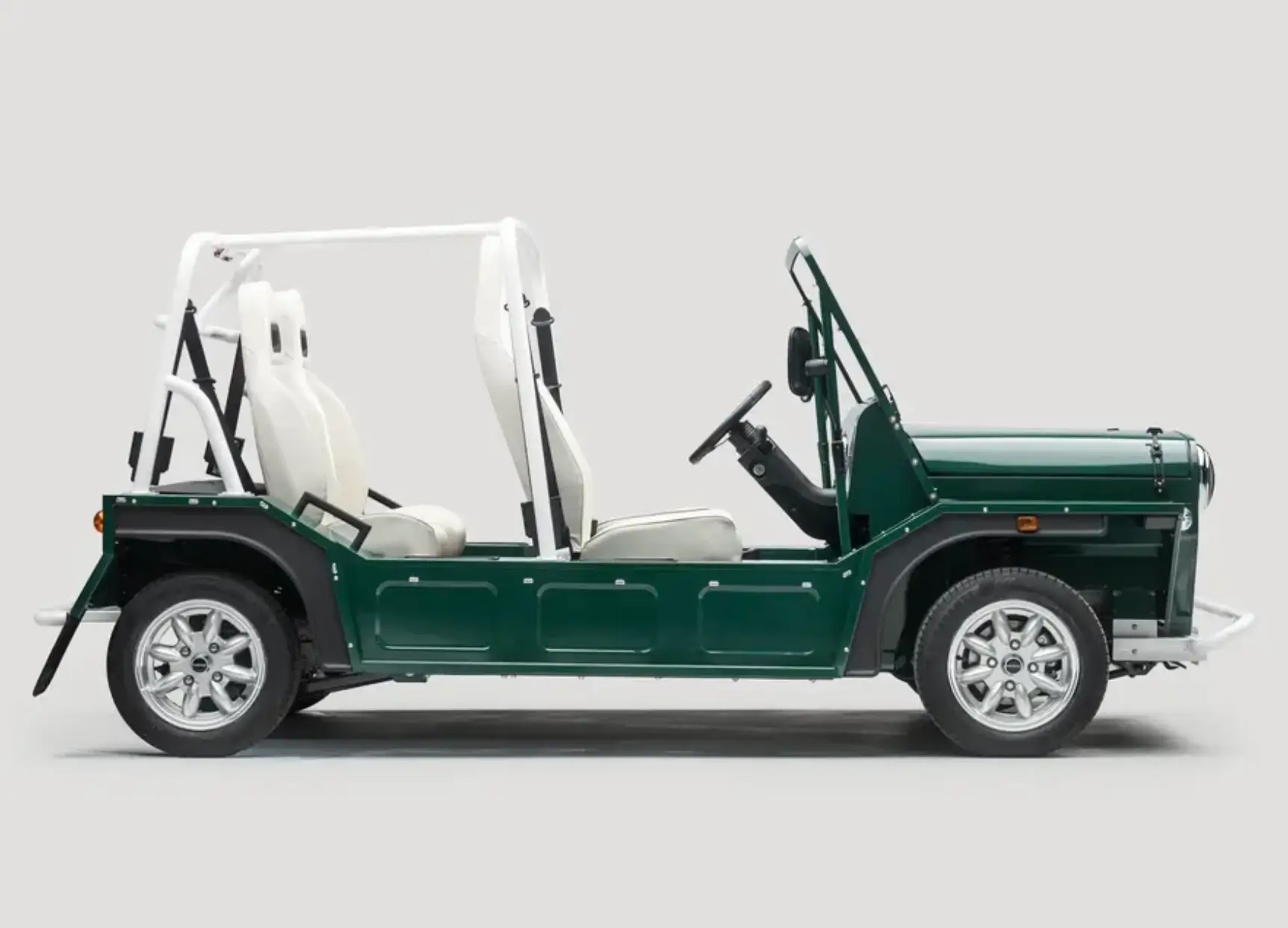
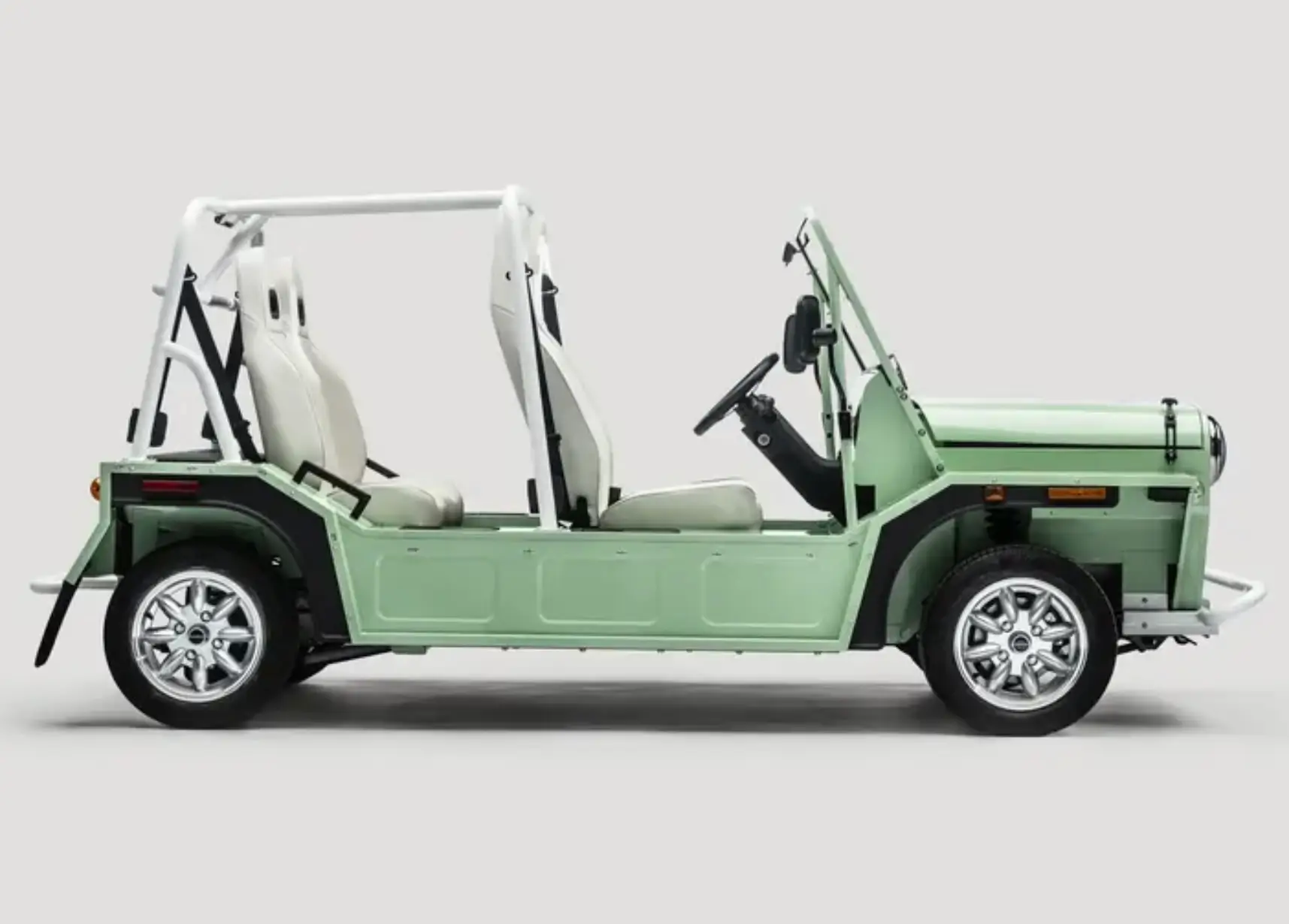
The MOKE remains unmistakable. Flat panels, exposed hinges, minimal overhangs—there’s an honesty to the construction that feels increasingly rare. In a landscape of hyper-sculpted electric vehicles, where aerodynamics often dictate form, the MOKE resists optimization. It doesn’t chase efficiency through invisibility. It presents itself plainly.
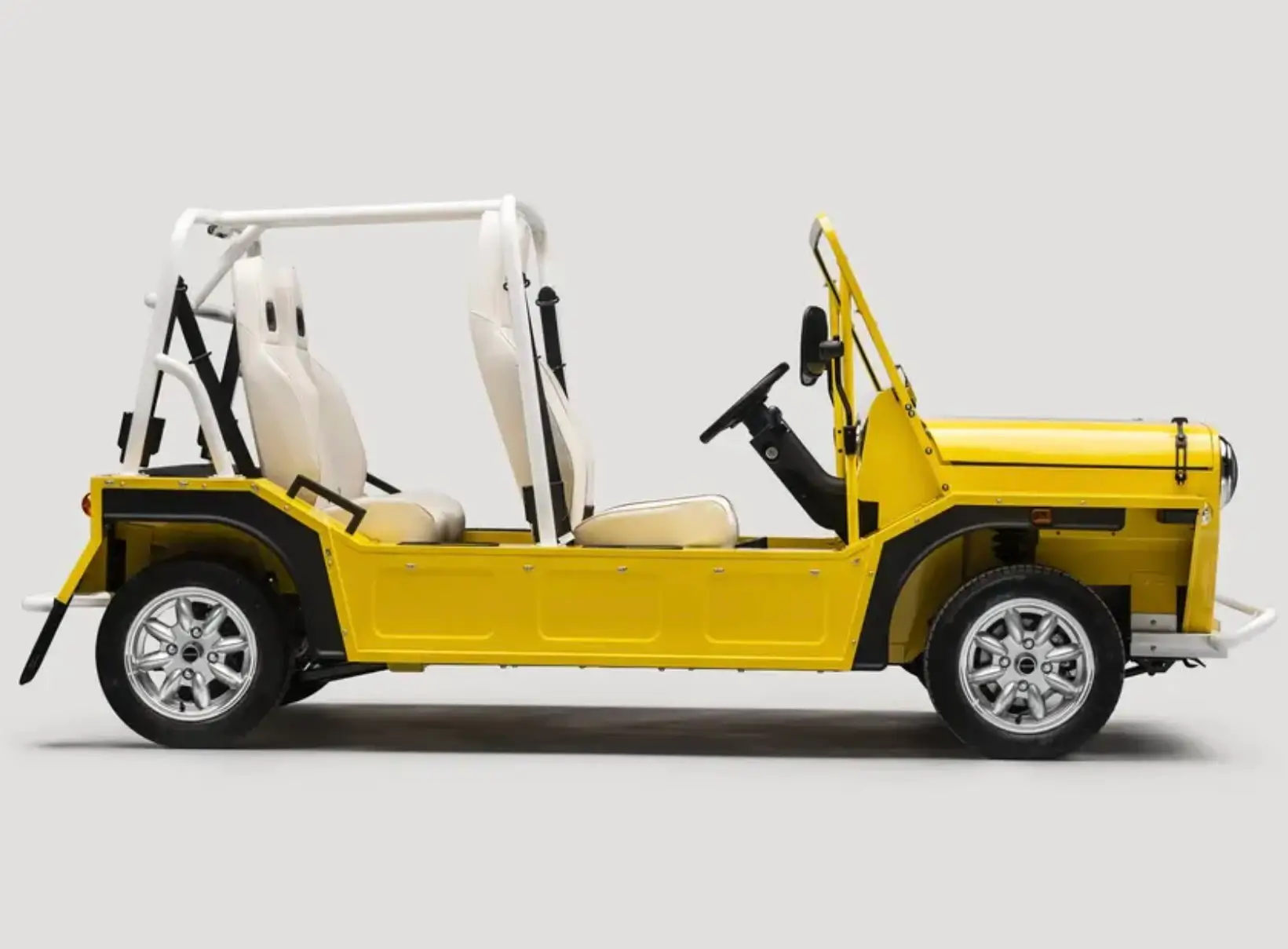
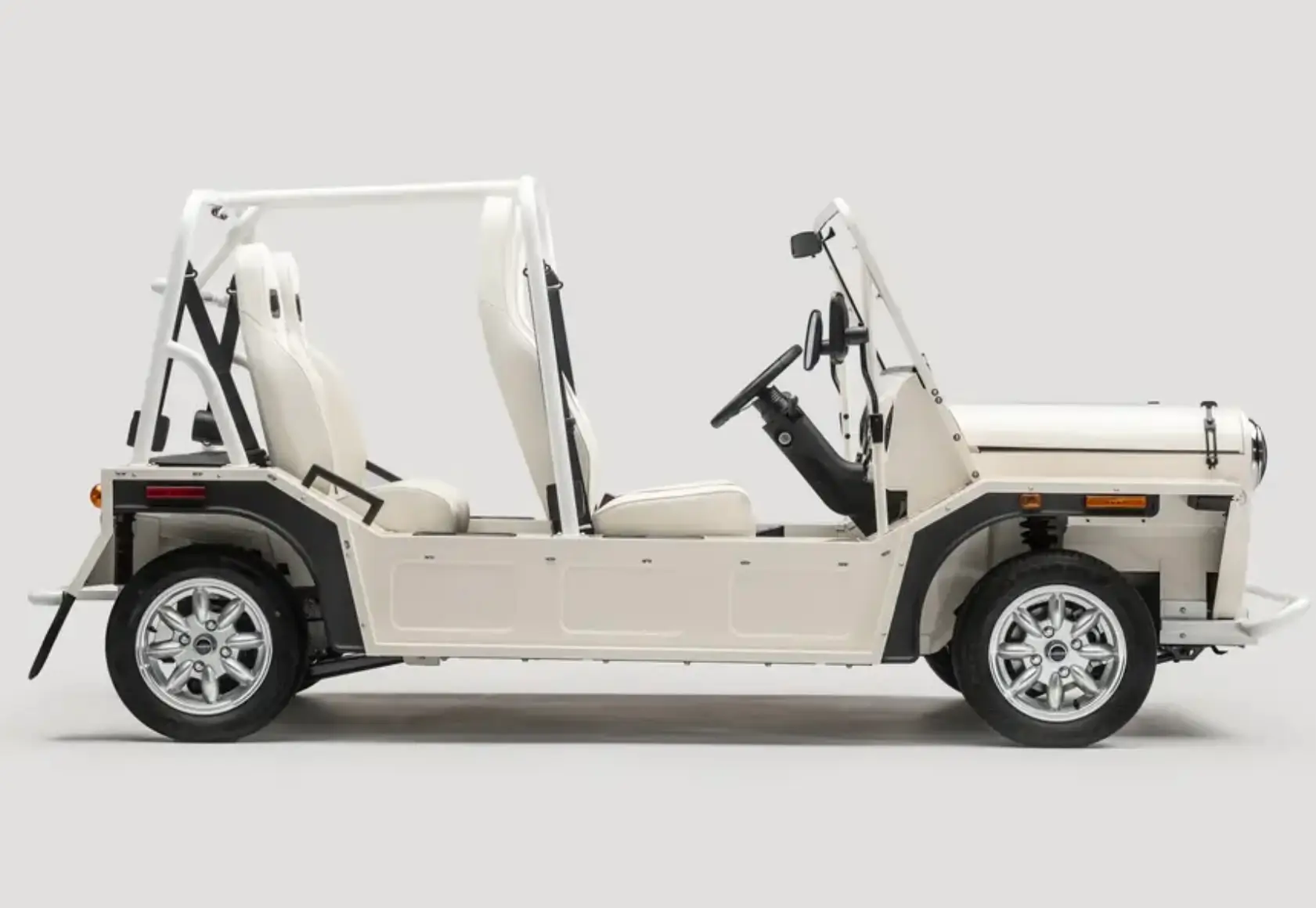
The silhouette is almost diagrammatic. You can read it in seconds. Wheels at the corners, upright stance, open cabin. No excess, no theatricality. And yet, that simplicity becomes its signature.
The GEN 1 EV retains this clarity. The proportions are familiar, but the finish is more refined. Surfaces are cleaner. Edges are more deliberate. It feels less improvised, more resolved.
Still, it never loses the sense that it could be anywhere—parked outside a beach café, navigating narrow coastal roads, or simply existing as part of a slower, more tactile rhythm of movement.
idea
Electric vehicles often arrive with a sense of declaration—range figures, acceleration metrics, futuristic interiors. The MOKE GEN 1 EV takes a different route. It doesn’t perform electrification as spectacle. It integrates it.
The electric powertrain is quiet, immediate, and unobtrusive. There’s no attempt to dramatize speed or capability. Instead, the focus is on usability—short distances, urban navigation, resort mobility. It aligns with how the MOKE has always been used, rather than forcing it into a new category.
This is where the transition feels most natural. The original MOKE was never about long-distance travel or high-speed performance. It was about access—getting from one place to another in a way that felt direct and unfiltered. The electric system enhances that. Instant torque replaces mechanical strain. Silence replaces engine noise. The experience becomes lighter.
Charging, too, fits within this rhythm. It’s not designed for cross-country infrastructure planning. It’s designed for daily use—plug in, recharge, repeat.
interior
Step inside, and the absence of excess becomes even more apparent. There is no attempt to replicate the digital density of modern EV interiors. No expansive screens dominating the dashboard. No layered interfaces demanding attention.
Instead, the cabin remains focused. Essential controls. Clear layout. Materials that feel durable rather than decorative.
This restraint is not a limitation. It’s a choice.
The GEN 1 EV understands that its value doesn’t come from technological immersion. It comes from physical presence—the feeling of air, light, and movement. The interior supports that by staying out of the way.
Seating is straightforward, upright, functional. The open sides mean that the environment becomes part of the experience. You’re not insulated from the outside. You’re connected to it.
It’s a rare inversion in contemporary automotive design: less technology, more sensation.
style
The materials used in the GEN 1 EV reflect its dual identity—heritage and modernity. There’s a subtle refinement in finishes, but nothing that feels overly precious.
Metal surfaces carry a clean, almost industrial quality. Upholstery is practical, resistant, suited to varied conditions. This is a vehicle that anticipates sand, salt, and sun as much as city streets.
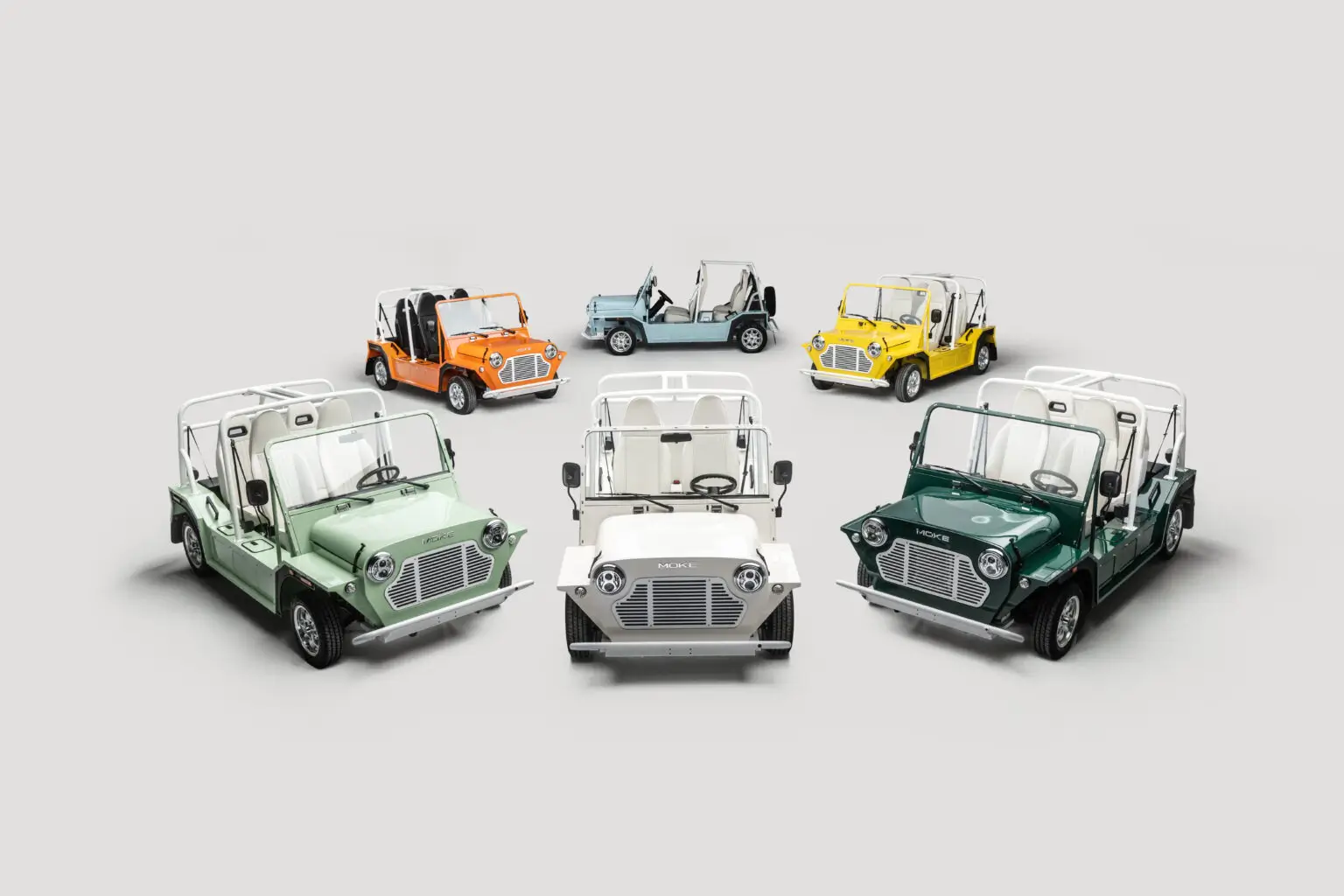
Tincture conjures a role, too. MOKE has always embraced a certain brightness—tones that feel aligned with leisure rather than restraint. The GEN 1 EV continues that, offering palettes that sit comfortably in coastal environments.
But even in more neutral finishes, the vehicle retains its character. The shape does the work. The color simply amplifies it.
show
In a market increasingly defined by excess—more features, more screens, more performance—the MOKE GEN 1 EV proposes a different idea of haute.
Not accumulation, but reduction.
Not isolation, but exposure.
Not speed, but immediacy.
There’s a quiet confidence in that approach. It doesn’t try to compete on the same terms as larger, more complex electric vehicles. It defines its own space.
This is not a car for highways or long commutes. It’s a car for specific contexts—places where movement is less about efficiency and more about experience. Islands. Resorts. Small cities. Environments where the journey itself remains visible.
In those spaces, the MOKE doesn’t feel like a compromise. It feels perfectly calibrated.
origin
Referencing 1964 could easily become an exercise in nostalgia. Many brands lean heavily on their past, reproducing forms without rethinking their relevance.
The GEN 1 EV avoids that trap.
It doesn’t attempt to recreate the past exactly. It uses it as a framework. The design remains recognizable, but the execution is contemporary. The electric powertrain is the most obvious shift, but the refinement extends beyond that—into build quality, finish, and usability.
This balance is difficult to achieve. Too much adherence to heritage, and the product feels outdated. Too much deviation, and it loses its identity.
MOKE finds a middle ground. The vehicle feels current without feeling disconnected from its origin.
emotive
Perhaps the most defining aspect of the MOKE GEN 1 EV is how dependent it is on context.
Unlike most vehicles, which are designed to function across a wide range of environments, the MOKE is highly specific. It belongs to certain places. It makes sense within certain rhythms.
This specificity is not a weakness. It’s what gives the vehicle its clarity.
In the right setting, the MOKE feels inevitable—as though it has always been there. It integrates into its surroundings without friction.
In the wrong setting, it feels out of place. But that’s part of its integrity. It doesn’t try to adapt to everything. It remains itself.
xp
Driving the MOKE GEN 1 EV is less about control and more about awareness. Without the enclosure of a traditional cabin, the boundaries between driver and environment dissolve.
Wind becomes part of the experience. Sound shifts. Temperature registers more directly.
This openness changes how movement is perceived. Speeds feel different. Distances feel shorter. The act of driving becomes more immediate.
Electric propulsion enhances this. Without engine noise, the surrounding environment becomes more audible. The vehicle doesn’t dominate the space. It moves through it.
It’s a subtle shift, but a meaningful one.
subtle
The GEN 1 EV doesn’t position itself as the future of mobility in a universal sense. It doesn’t attempt to redefine transportation at scale.
Instead, it offers a more focused proposition: that certain ideas—simplicity, openness, directness—still have value, even as technology evolves.
By integrating electric power into a form that predates most contemporary automotive conventions, MOKE creates a dialogue between past and present.
The result is not a contradiction. It’s a continuation.
clue
In an era where vehicles are increasingly defined by what they add—features, layers, complexity—the MOKE GEN 1 EV is defined by what it chooses to keep.
The shape stays. The openness stays. The sense of ease stays.
Everything else adjusts around that.
It doesn’t try to be everything. It doesn’t need to.
It simply holds its ground.