Roger Vivier: New Flagship on Faubourg Saint-Honoré – Paris

April 2, 2026
2 hours ago
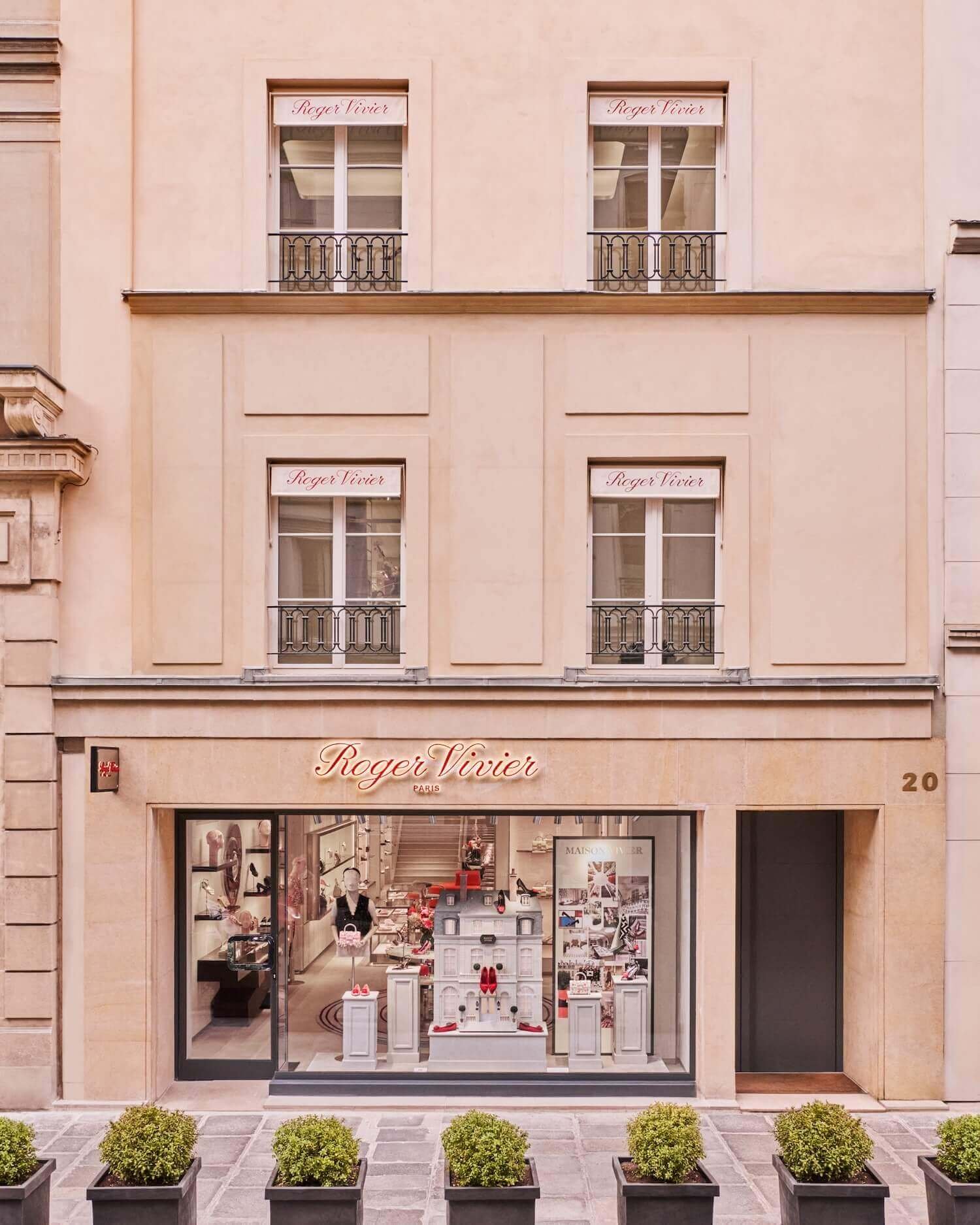
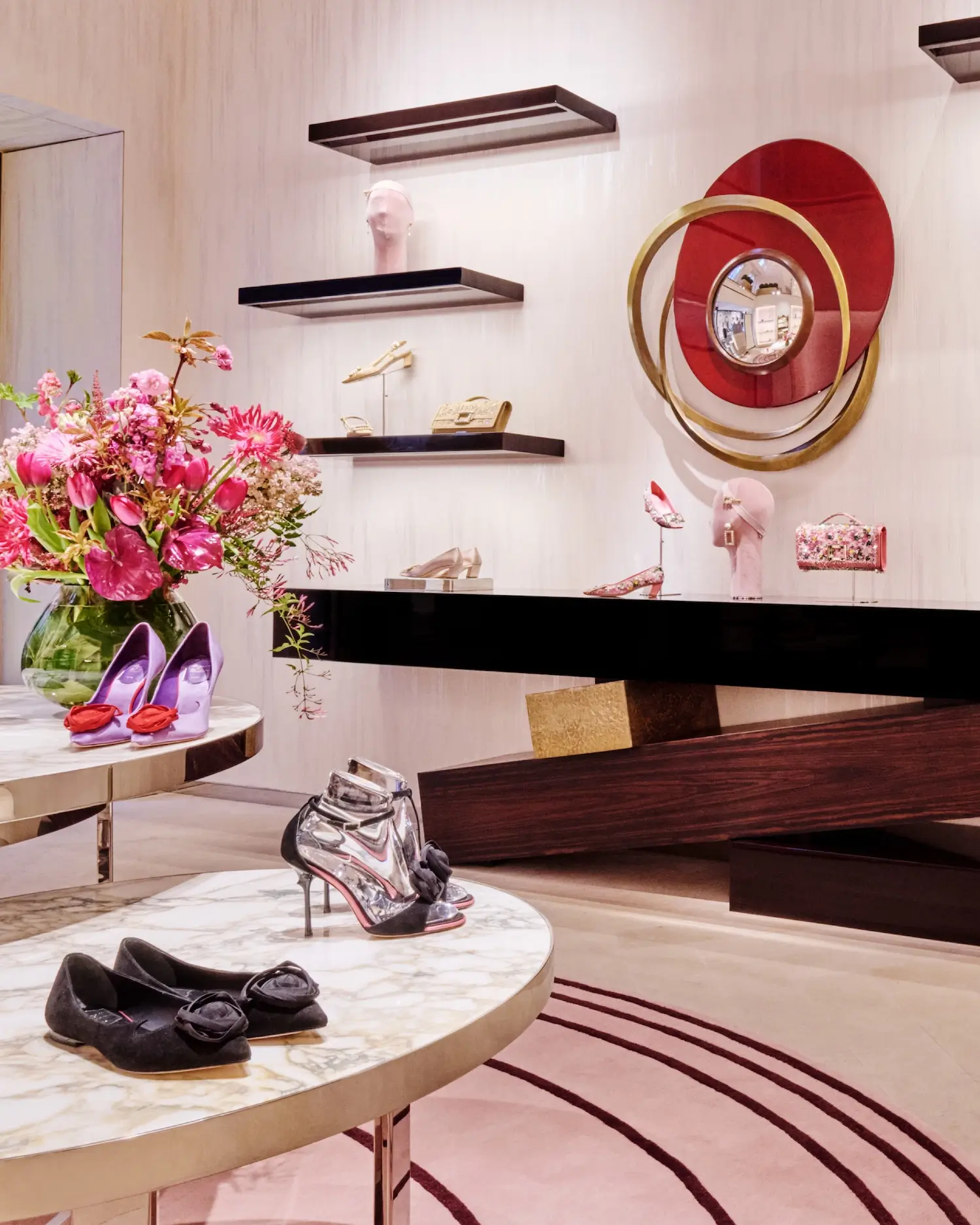
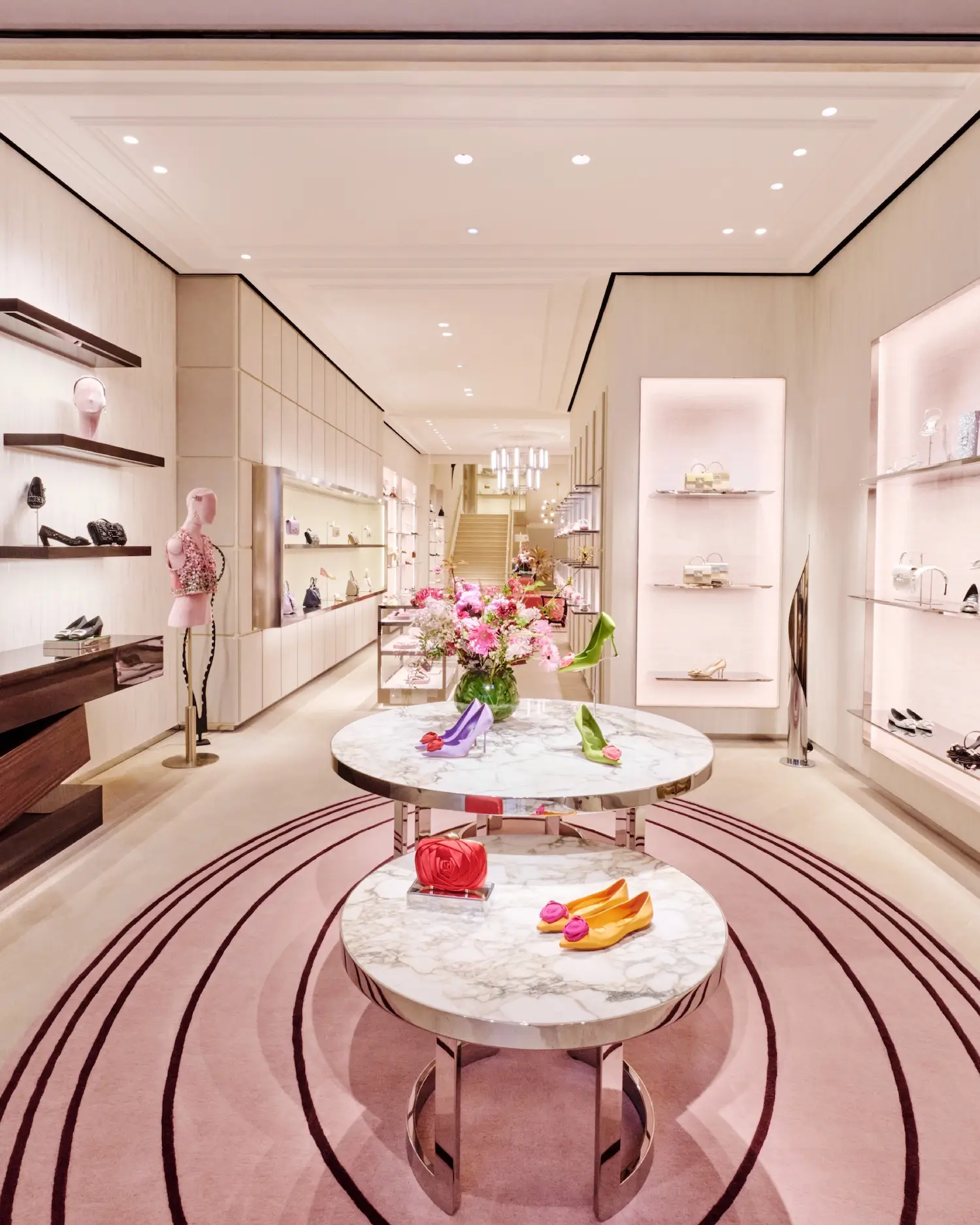
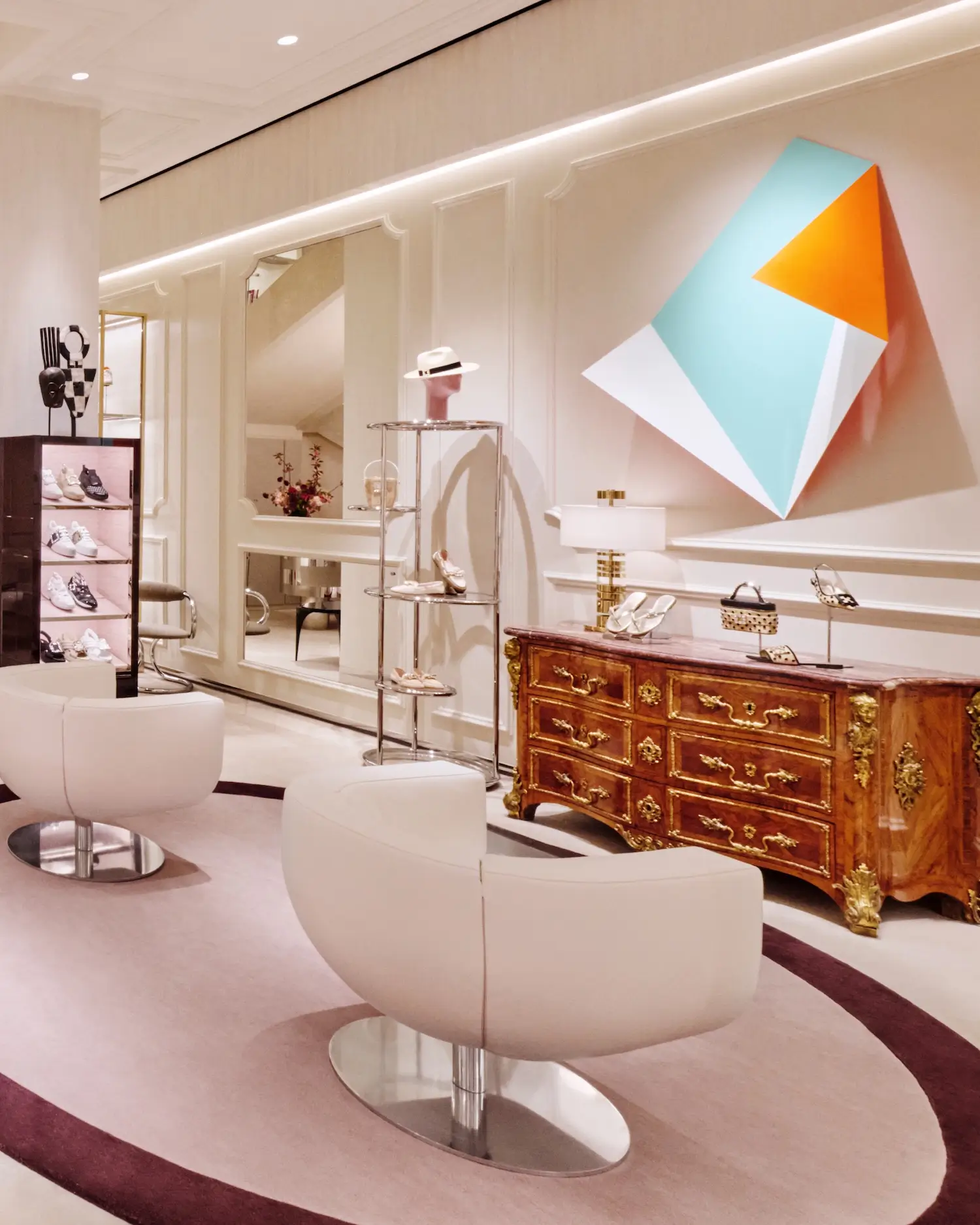
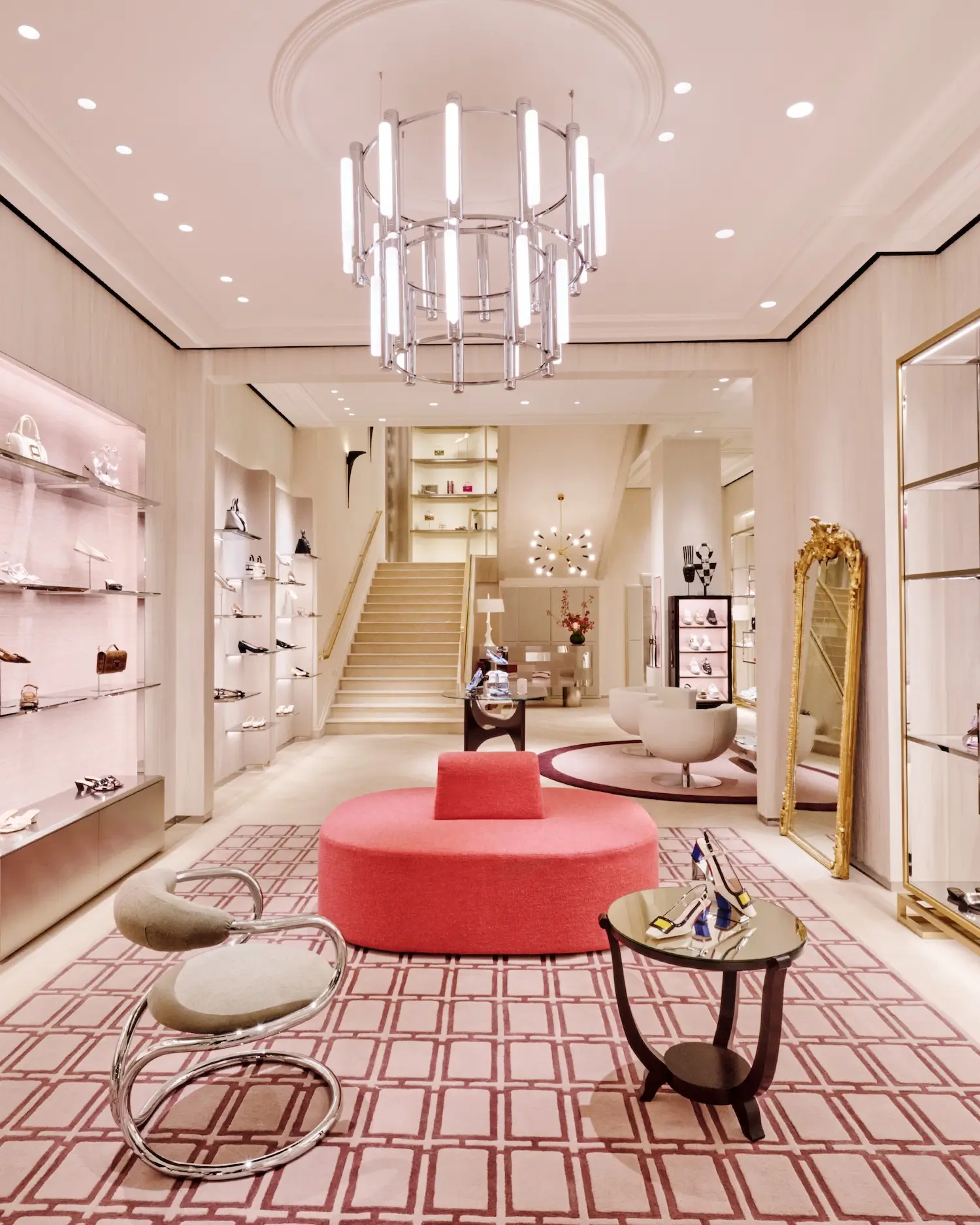
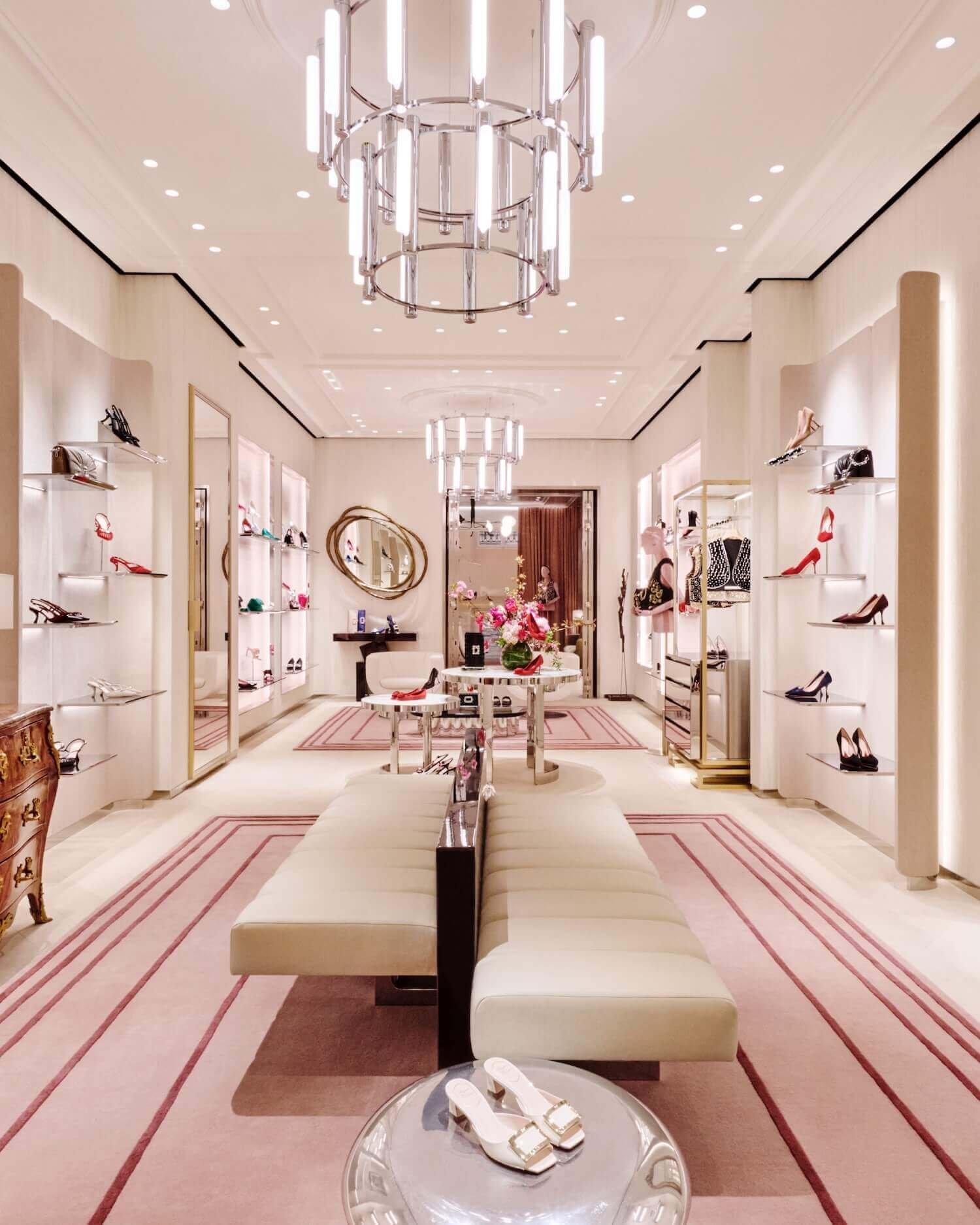
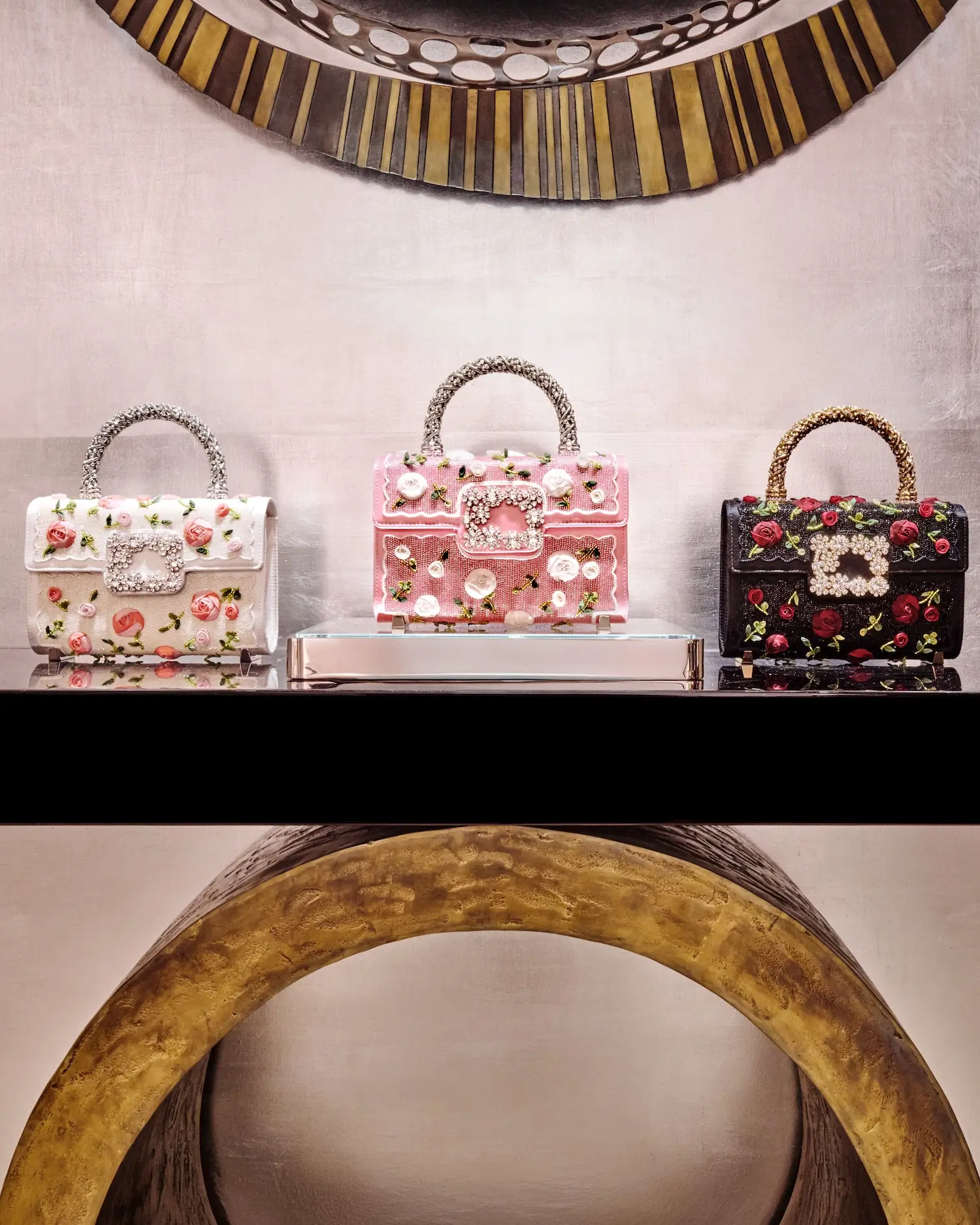
There are addresses that function less as locations and more as declarations. Rue du Faubourg Saint-Honoré is one of them—an artery where the cadence of Parisian opulence has been written, revised, and preserved across centuries. It is here, within this dense geography of maisons and ministries, that Roger Vivier has opened a new flagship boutique, reasserting not only its retail presence but its proximity to origin.
The opening is neither incidental nor purely commercial. It arrives as a deliberate repositioning within Paris, a city where the brand’s identity was first shaped. Just a short remove from its original 1937 atelier on Rue Royale, the new space forms a spatial dialogue with the past while articulating a contemporary mode of luxury—one rooted in intimacy, materiality, and narrative continuity.
flow
Paris, for heritage houses, is not simply a backdrop; it is a living archive. For Roger Vivier, whose name has long been synonymous with sculptural footwear and the elevation of accessories into objets d’art, the return to this axis carries particular weight.
The Faubourg Saint-Honoré location situates the maison among a lineage of cultural and commercial institutions that have shaped global perceptions of French luxury. Yet the move does not operate in isolation. It follows the opening of Maison Vivier on Rue de l’Université, establishing a dual presence that subtly divides—and connects—two philosophies: one oriented toward heritage immersion, the other toward contemporary retail engagement.
Together, these spaces form a network rather than a hierarchy. The Right Bank flagship communicates scale, visibility, and immediacy; the Left Bank address leans into narrative, reflection, and archival resonance. The result is a bifurcated yet cohesive Parisian strategy—less about expansion for its own sake, more about rearticulating identity through geography.
struct
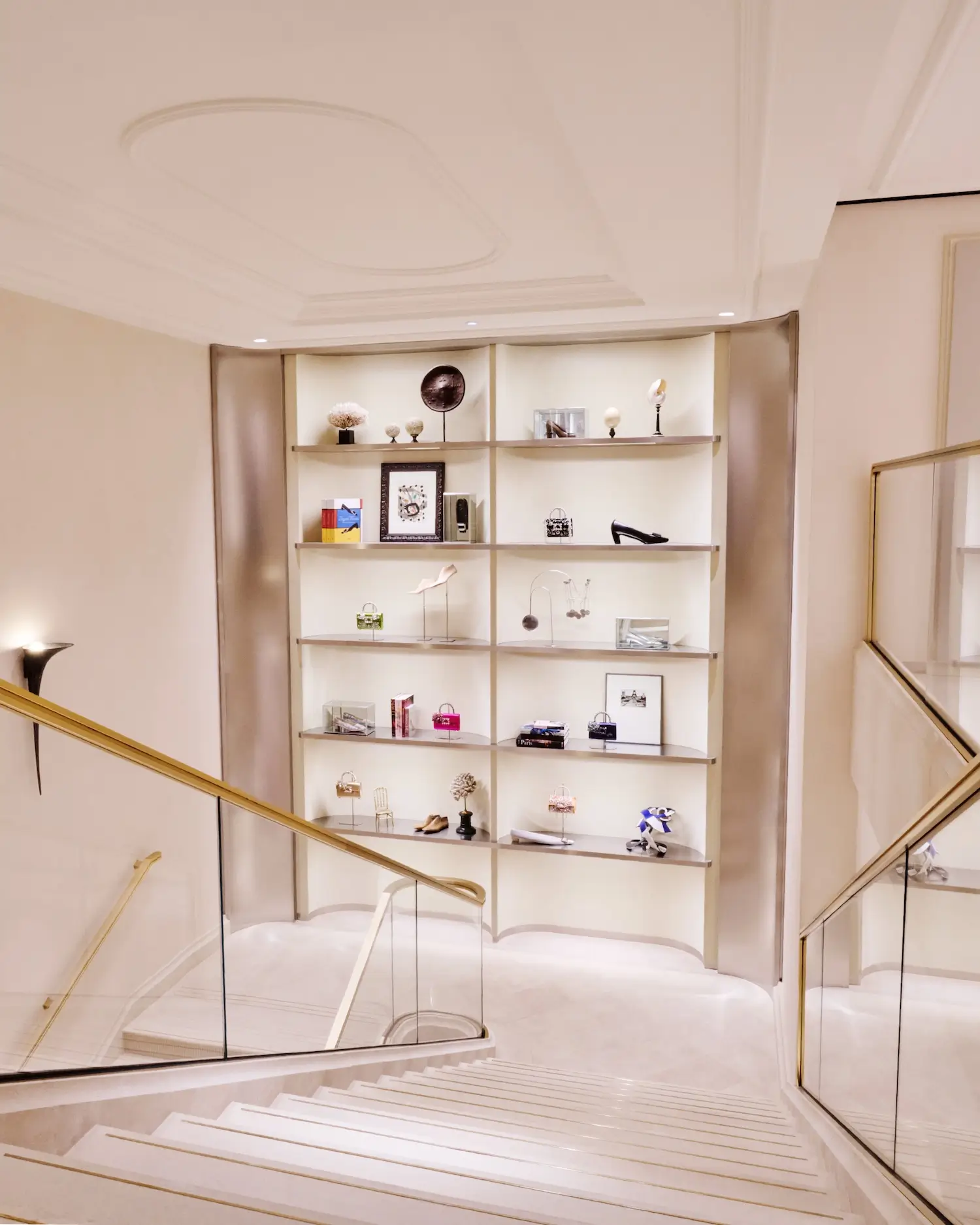
Set across two floors, the flagship stands as one of the maison’s largest boutiques globally. Yet its scale is tempered by a deliberate resistance to spectacle. Instead of overwhelming the visitor, the design unfolds gradually—room by room, surface by surface—mirroring the layered construction of couture itself.
French materials anchor the interior vocabulary: stone, wood, and metal deployed with a sense of restraint rather than excess. These are not neutral choices but cultural signifiers, referencing a lineage of craftsmanship that predates contemporary retail architecture. The effect is less showroom, more salon.
Furniture and objects operate as both functional elements and narrative devices. Antiques sit alongside contemporary pieces, not in contrast but in conversation. Artworks punctuate the space, offering moments of pause rather than distraction. Each element contributes to an atmosphere that feels assembled over time, rather than installed in a single gesture.
This approach reflects a broader shift within luxury retail, where the emphasis has moved away from monolithic branding toward environments that suggest lived experience. The boutique becomes not just a place to purchase, but a place to inhabit—even briefly.
View this post on Instagram
art
At the pithy of the new flagship lies Atelier Vivier, a dedicated space for made-to-order services. This is not an ancillary feature but a conceptual anchor, repositioning craftsmanship as the central experience rather than a peripheral offering.
Here, clients are invited into a more private dialogue with the brand. Footwear and accessories can be customised—materials selected, colours adjusted, details refined—within an environment that emphasizes process over product. The transaction becomes collaborative, unfolding over time rather than concluding at the point of sale.
This emphasis on customisation aligns with a broader recalibration within luxury. As scale increases globally, the need for intimacy becomes more pronounced. The atelier responds to this tension, offering a counterpoint to mass visibility through individual attention.
There is also a symbolic dimension. Roger Vivier’s legacy has always been tied to innovation within form—the curved heel, the sculptural buckle, the transformation of the shoe into a site of experimentation. By foregrounding the atelier, the brand reconnects with this ethos, framing creation as an ongoing practice rather than a completed history.
idea
The boutique’s interior does not merely display products; it constructs a narrative around them. Shoes and accessories are positioned less as isolated items and more as components within a broader visual language.
This language is built through juxtaposition. A pair of crystal-embellished pumps might sit against a backdrop of aged wood, their contemporary sheen tempered by historical texture. A structured handbag might rest beneath a painting whose palette echoes its tones, creating a subtle visual rhyme.
Such arrangements encourage a slower mode of looking. Rather than scanning for novelty, the visitor is invited to trace connections—between materials, between eras, between object and context. The boutique becomes a space of interpretation as much as acquisition.
This approach reflects an understanding that luxury today is as much about meaning as it is about material. Objects derive value not only from their construction but from the narratives that surround them.
level
The relationship between the Faubourg Saint-Honoré flagship and Maison Vivier on the Left Bank is central to understanding the brand’s current trajectory.
On one level, the two spaces serve distinct functions. The flagship operates as a point of visibility, positioned within one of the most trafficked luxury corridors in the world. Maison Vivier, by contrast, offers a more contemplative environment, oriented toward storytelling and archival exploration.
On another level, however, the distinction is less rigid. Both spaces share a commitment to material richness, to layered interiors, and to the integration of art and design. They differ not in essence but in emphasis.
This duality allows Roger Vivier to engage multiple modes of consumption. The passerby on Faubourg Saint-Honoré encounters the brand within a broader urban rhythm, while the visitor to Rue de l’Université enters a more insulated world. Each experience reinforces the other, creating a feedback loop between immediacy and reflection.
region
It would be reductive to view this expansion purely through the lens of retail strategy. Paris itself functions as an active participant in the narrative.
The city’s geography—its division between Left and Right Bank, its layering of historical periods, its dense network of cultural institutions—provides a framework within which the brand’s identity can be articulated. By occupying multiple points within this framework, Roger Vivier positions itself not just as a brand within Paris, but as a brand of Paris.
This distinction matters. In an era where opulent is increasingly globalized, the ability to anchor identity within a specific place becomes a form of differentiation. The Faubourg Saint-Honoré flagship, with its proximity to the original atelier, reinforces this anchoring, creating a tangible link between past and present.
mat
A closer reading of the interior reveals a nuanced approach to material selection. The use of French materials is not merely a nod to national identity; it is a strategy of coherence.
Stone surfaces carry a sense of permanence, grounding the space within a historical continuum. Wood introduces warmth, softening the architectural lines and inviting touch. Metal elements—often in brass or polished finishes—add moments of reflection, both literal and metaphorical.
These materials are not presented in isolation. Their interactions—how light moves across them, how textures contrast or align—create a dynamic environment that shifts throughout the day. Morning light might emphasize the grain of wood, while evening illumination draws attention to reflective surfaces.
Such sensitivity to material behavior reflects a broader design philosophy, one that prioritizes experience over spectacle. The boutique does not seek to impress through scale alone but through the cumulative effect of its details.
shh
There is a restraint to the flagship that feels intentional. In a district where visibility often equates to volume—larger façades, brighter displays, more immediate impact—the boutique adopts a quieter stance.
Its presence is defined not by excess but by precision. The façade does not compete aggressively for attention; instead, it invites recognition. Those who know, know. Those who enter discover.
This approach aligns with a broader shift within luxury, where understatement has regained value. In a saturated visual landscape, discretion becomes a form of distinction.
fin
The opening of the Faubourg Saint-Honoré flagship marks a moment of consolidation rather than expansion. It brings together multiple threads—heritage, craftsmanship, materiality, and geography—into a single, coherent expression.
At the same time, it points forward. The integration of customisation, the emphasis on experiential design, and the dual presence within Paris all suggest a model for how heritage brands might navigate the present.
Roger Vivier’s new flagship does not attempt to redefine haute outright. Instead, it refines it—subtly, deliberately, and with an awareness of the weight of its own history. In doing so, it repositions the boutique not as a destination alone, but as part of an ongoing narrative—one that continues to unfold along the streets where it began.