review: The Rolls-Royce Coachbuild, A Singular Act Rather Than a Repeated

April 5, 2026
7 hours ago
esoteric
There are systems of haute built on tiers—access, scarcity, hierarchy. And then there are systems that remove tiers altogether, replacing them with something quieter, more absolute. The Coachbuild program from Rolls-Royce Motor Carsdoes not scale upward; it narrows inward.
Only a small circle of individuals is invited. Even within that circle, participation is not a guarantee but a moment—offered once, exercised once, closed permanently. The premise is simple and unforgiving: one client, one car, one outcome that will never be repeated.
What emerges is not a product. It is a decision made irreversible.
Coachbuild does not produce vehicles in the conventional sense. It produces singularities—objects that resist comparison because they eliminate the possibility of equivalence. In a market saturated with limited editions, numbered plaques, and controlled scarcity, this is something else entirely. This is the end of duplication as a category.
View this post on Instagram
recall
When Rolls-Royce Motor Cars began, the automobile was not yet a complete object. It was a platform—a mechanical proposition awaiting interpretation. Clients did not select from finished models; they commissioned forms. Independent coachbuilders translated personal preference into structure, material, and proportion.
A car, at that time, functioned less like a commodity and more like architecture.
Coachbuild reactivates that condition, but without reenactment. There is no attempt to replicate the past. Instead, Rolls-Royce absorbs the historical logic—authorship, individuality, irreversibility—and executes it within a contemporary system where design, engineering, and fabrication exist under one roof.
The difference is not aesthetic. It is structural. The fragmentation of early coachbuilding is replaced by total control. Every surface, every seam, every mechanical articulation belongs to a single, continuous process.
The past is not referenced. It is resumed.
stir
Each Coachbuild commission begins with a constant: a Rolls-Royce architecture, precise and pre-engineered, carrying within it the invisible guarantees of performance, safety, and refinement. This foundation—often derived from the Phantom’s aluminum spaceframe—remains untouched.
Everything above it does not.
The body is reconsidered from zero. Proportions extend or contract. Rooflines dissolve into new geometries. Surfaces become less about aerodynamic compliance and more about narrative intention. The car ceases to resemble any existing model because it is no longer bound to one.
The chassis is the only memory of standardization.
This separation—fixed base, unfixed expression—creates a peculiar tension. The car is both deeply engineered and radically free. It is stable beneath, speculative above. And within that tension, form becomes something closer to authorship than design.
flow
To commission a Coachbuild car is to enter into a prolonged conversation that resists linearity. There is no catalogue, no starting template, no fixed direction. Instead, there is accumulation—of references, of impressions, of fragments that do not initially resolve.
A client might begin with something non-automotive: a boat, a watch, a memory of light on water. The design team listens, translates, proposes, retracts, reinterprets. Months pass. Sometimes years. The process is iterative not because it is inefficient, but because precision at this level requires slow convergence.
Nothing is rushed because nothing can be replaced.
The result is not simply customized—it is authored collaboratively, where authorship itself is negotiated. The client does not dictate; the atelier does not impose. Between them, a language forms—part aesthetic, part technical, part psychological.
The car becomes the final sentence.
idea
Materials in Coachbuild are not selected for surface appeal alone. They are treated as atmospheric agents—elements that shape how the interior is perceived over time, under shifting light, through repeated contact.
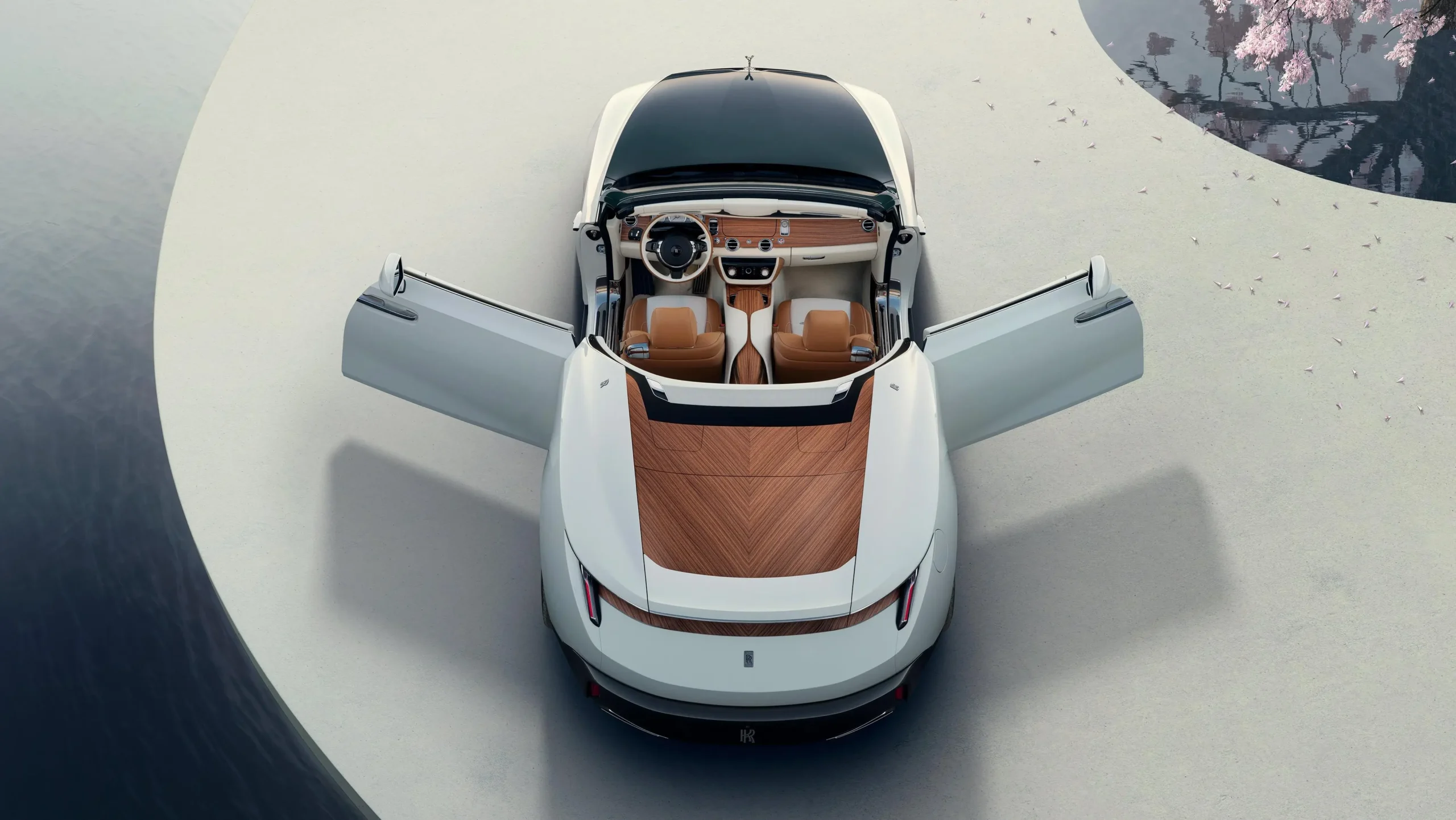
Wood becomes composition. Veneers are cut and assembled into marquetry that reads less like trim and more like a constructed landscape. Grain direction is considered as carefully as pattern. Continuity is engineered across panels so that surfaces align not just physically, but visually.
Leather is calibrated beyond color. It is tuned for tactility, for temperature response, for the way it will age over decades. Stitching becomes both structural and expressive—visible enough to register, restrained enough to avoid declaration.
Even paint—often dismissed as exterior finish—is treated as depth. Layers accumulate. Light refracts differently depending on angle and time of day. The car does not simply have a color; it holds one.
Material, here, is not decoration. It is behavior.
archetype
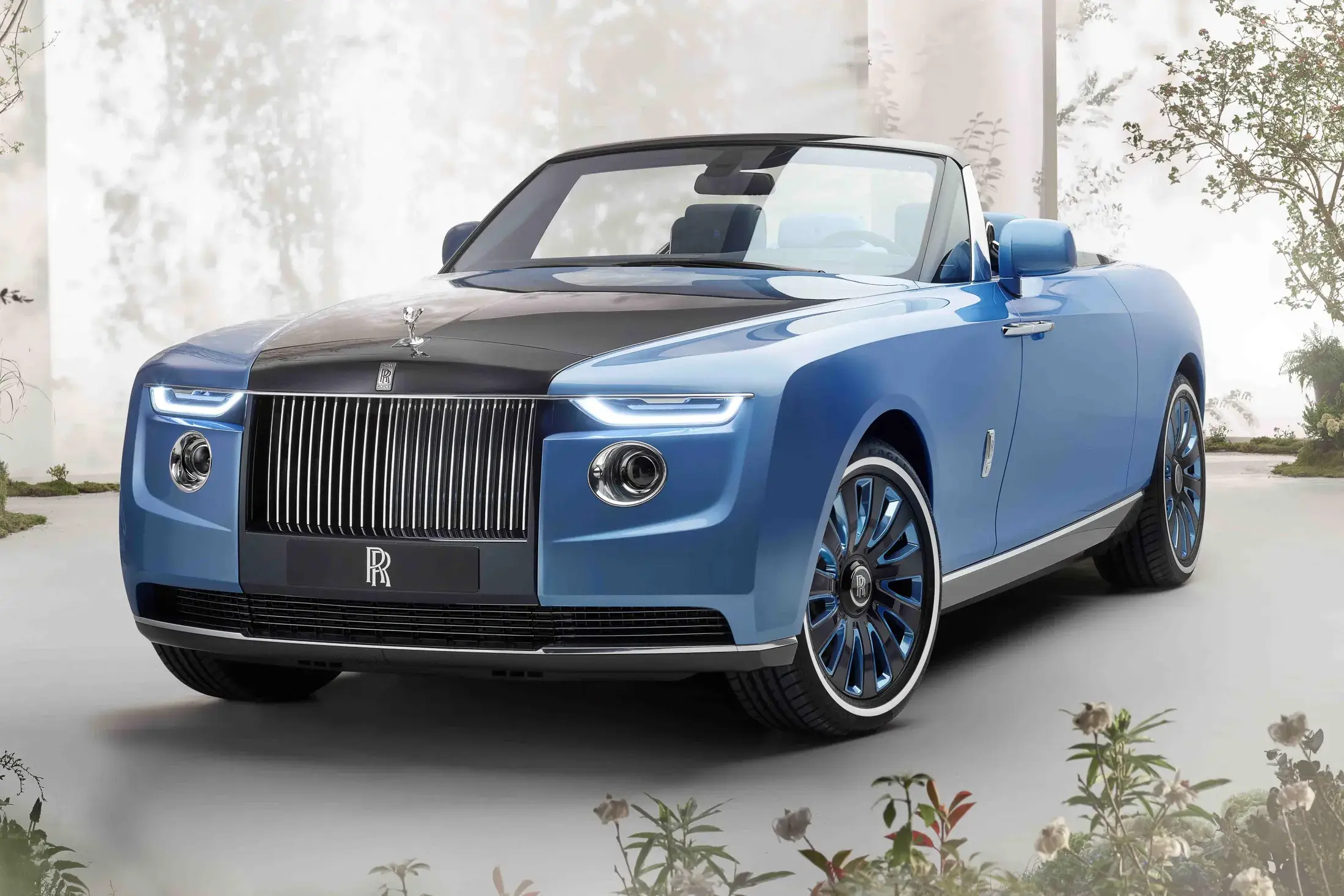
The Rolls-Royce Boat Tail is often cited as the most visible articulation of Coachbuild’s ambition, though visibility is relative. Its presence is known more through description than encounter.
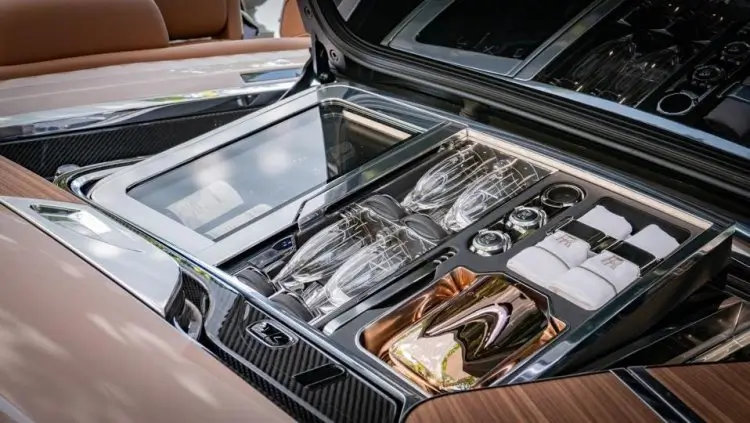
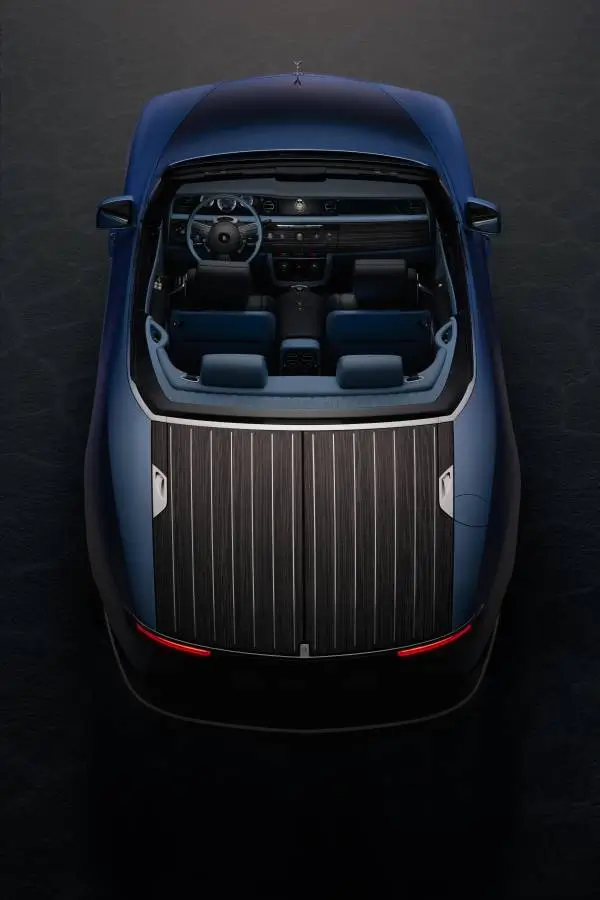
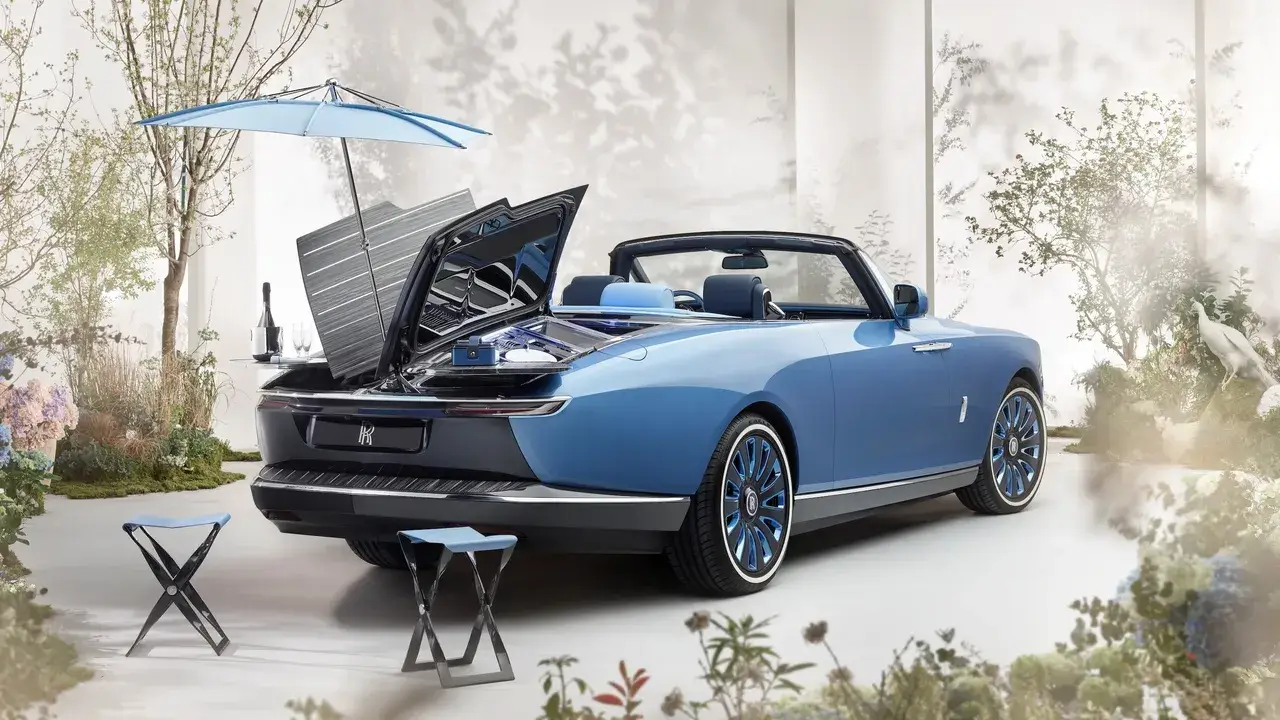
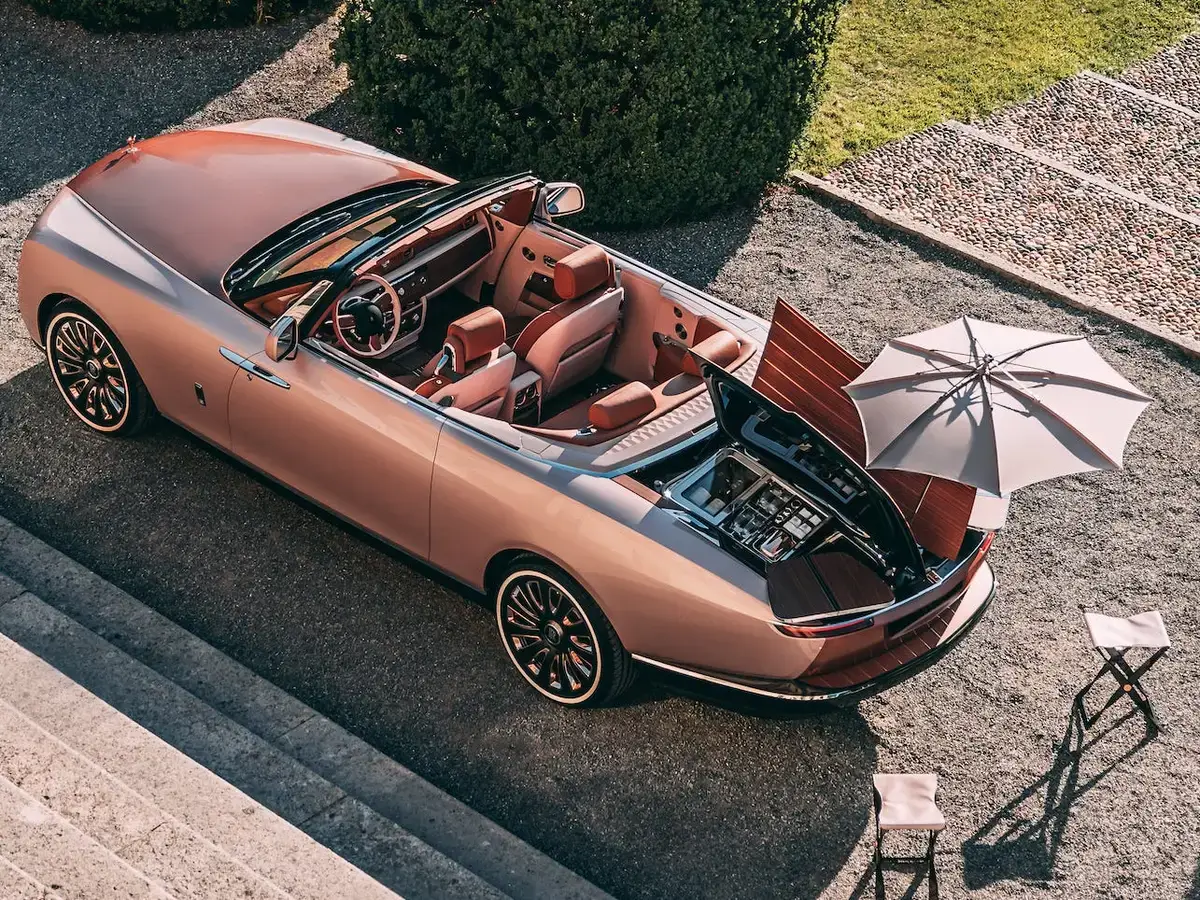
Inspired by maritime forms, the Boat Tail extends the car into something else—part vehicle, part object, part environment. Its rear deck opens in a symmetrical gesture, revealing a hosting suite that includes bespoke tableware, refrigeration, and parasols engineered to deploy with controlled precision.
The gesture is deliberate. The car does not end where the body stops. It continues outward, into use, into ritual.
What is striking is not the extravagance of the feature, but its integration. Nothing feels appended. The mechanical choreography of the opening panels aligns with the viewable language of the exterior. The woodwork continues seamlessly. The experience is cohesive, not additive.
The Boat Tail does not introduce excess. It redistributes function.
View this post on Instagram
extent
Time within Coachbuild is not tracked in the conventional sense. It is not compressed, optimized, or reduced. It expands.
A commission may take years, but the duration is not experienced as delay. It is experienced as necessity. Complexity requires iteration. Precision requires reconsideration. Each decision must be made once, correctly, because repetition is not available as correction.
In this way, time becomes less of a metric and more of a condition—something that surrounds the object rather than measures it.
The finished car contains that time. Not visibly, but structurally. In the alignment of surfaces, in the silence of mechanisms, in the absence of compromise.
challenge
Haute objects often exist within systems of comparison—this model versus that one, this edition versus another. Coachbuild removes that system entirely.
There is nothing to compare.
A Coachbuild car does not sit alongside alternatives because alternatives do not exist. It cannot be benchmarked. It cannot be ranked. Even valuation becomes abstract, because price is no longer tied to market equivalence but to process, material, and singularity.
This creates a different kind of ownership. The car is not acquired within a field of options. It is entered into as a unique condition.
Ownership becomes custodial rather than consumptive.
engine
For all its artistic freedom, Coachbuild is not exempt from engineering reality. Every surface must be structurally viable. Every mechanism must function reliably. Every material must meet durability standards.
This is where the process becomes most complex.
Design proposes. Engineering tests. Constraints emerge. Adjustments follow. The cycle repeats until the object satisfies both expression and performance.
Constraint, here, is not an obstacle. It is a shaping force. Without it, the object would remain conceptual. With it, the object becomes real.
The final car is not the elimination of constraints, but their resolution.
shh
There is an absence at the core of Coachbuild that defines its presence.
These cars do not announce themselves through aggressive design language. They do not rely on overt branding or visual noise. Their impact is quieter, more controlled, more sustained.
This aligns with a broader philosophy within Rolls-Royce: that true haute does not need to declare itself immediately. It unfolds. It reveals itself incrementally, through detail, through interaction, through time.
The first impression is not the final one.
view
Coachbuild cars occupy a peculiar position within culture visibility. They are known, discussed, circulated—but rarely encountered.
They do not appear in showrooms. They are not displayed at scale. Many remain within private collections, seen only by a limited audience.
This creates a form of presence without exposure. The cars exist within discourse, within imagery, within description—but their physical reality remains largely inaccessible.
They are visible as ideas, less so as objects.
fwd
Traditional haute operates within controlled production—limited runs, exclusive access, elevated pricing. Coachbuild removes production altogether.
Each project begins from zero. No carryover. No templates. No repetition.
This is not inefficient—it is intentional. Efficiency would imply optimization. Coachbuild is not optimizing for scale; it is optimizing for singularity.
The result is a system that cannot expand without losing its definition.
quest
It is difficult to discuss Coachbuild without acknowledging the broader context in which it exists. Extreme opulence carries with it questions—of relevance, of responsibility, of alignment with contemporary values.
Rolls-Royce responds in part through material sourcing, longevity, and a focus on durability over disposability. But these responses do not resolve the tension entirely.
Nor do they attempt to.
Coachbuild exists within that tension, not outside it. It reflects a reality where objects can be both extraordinary and problematic, where craftsmanship can coexist with excess.
The contradiction is not hidden. It is embedded.
fin
A Coachbuild Rolls-Royce does not lead to another version of itself. It does not evolve into a new model. It does not generate a lineage.
It ends where it begins—with a single commission, a single realization.
This is perhaps its most defining characteristic.
In a culture built on iteration, update, and continuous release, Coachbuild offers something else: an object that completes itself fully, without the need for continuation.
Not a prototype. Not a series. Not a preview.
A conclusion.