Kith – Ronnie Fieg Turns 15 Years of RF Footwear Into a Book, Arriving Fall

April 9, 2026
9 hours ago
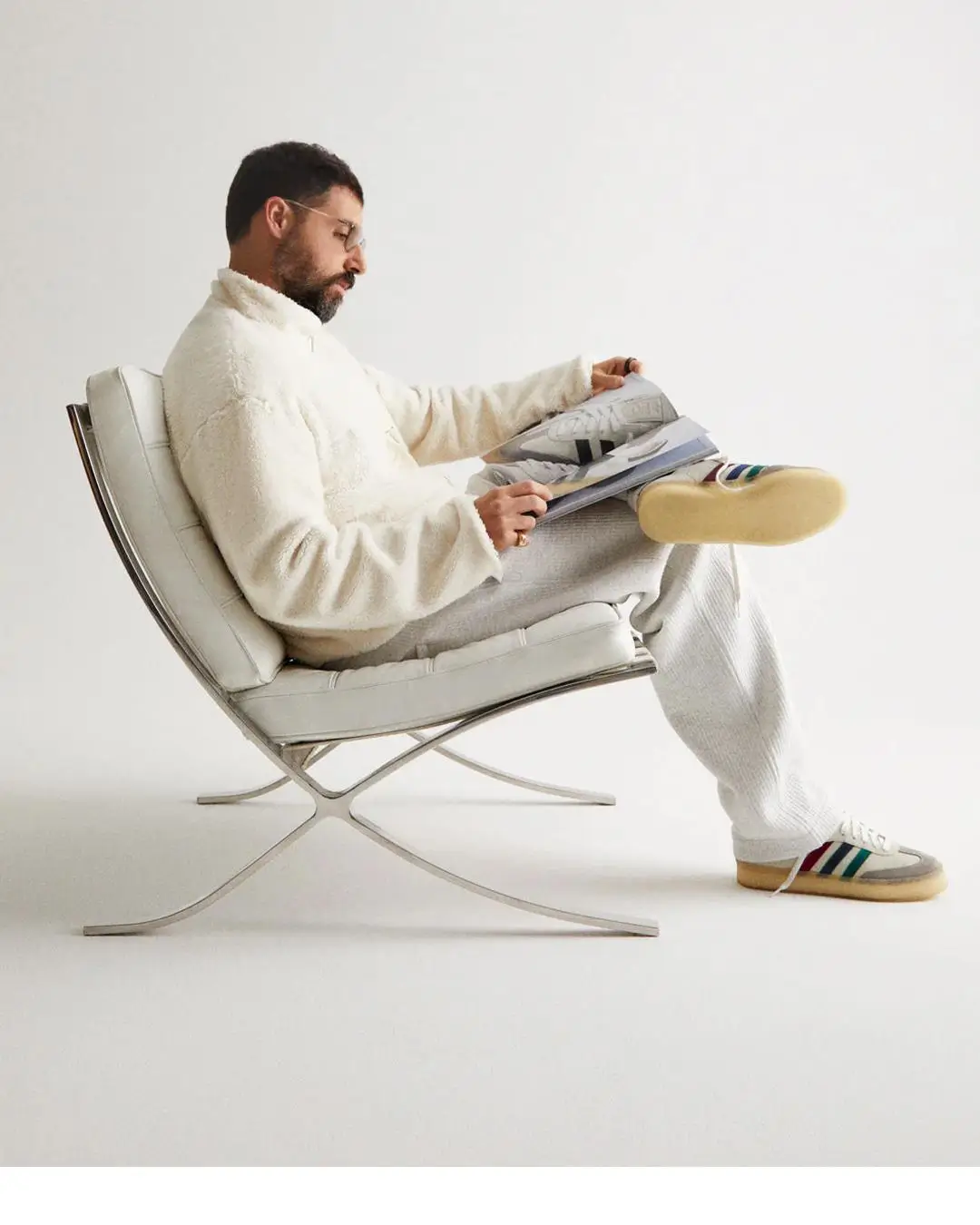
It didn’t arrive like a campaign. There was no teaser sequence, no layered rollout, nothing that tried to build anticipation in the usual way. Just a sentence, posted without ceremony: 15 Years of RF Footwear. Book coming, 9.30.2026.
That kind of announcement only works when the work has already done its job. When it doesn’t need explanation, just recognition. Ronnie Fieg has spent the last decade and a half building exactly that kind of presence—one that doesn’t rely on volume to be understood.
It reads less like news and more like acknowledgment. Not something new, but something that has been forming for a while, now made visible.
stir
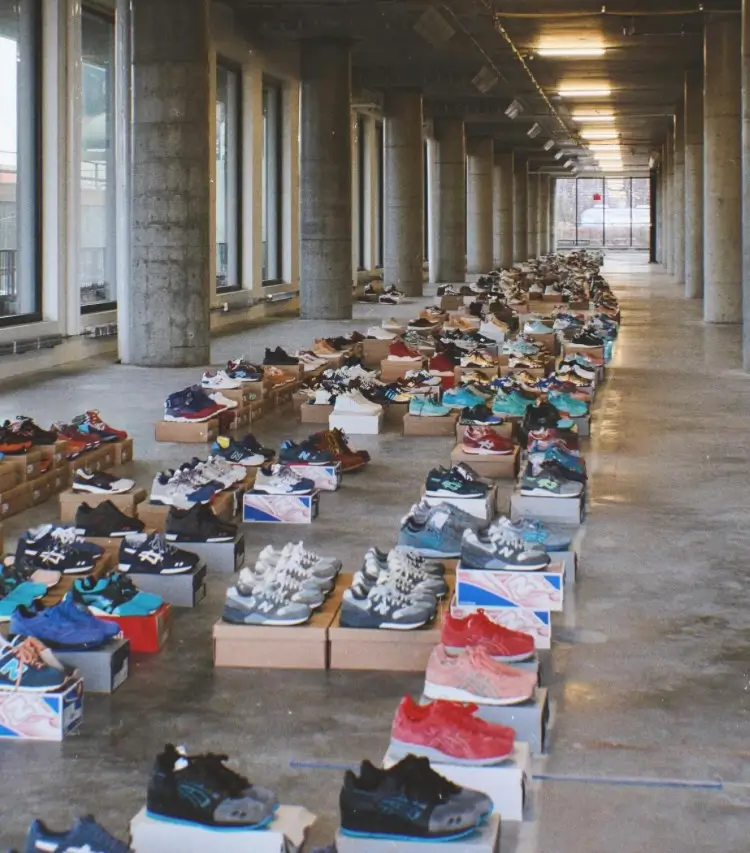
It’s easy to try and map RF Footwear through its biggest releases. The early ASICS collaborations, the shift into New Balance, the broader scale that came with adidas—all of those moments matter.
But none of them explain the whole picture.
Because this body of work doesn’t sit on a single breakthrough. It doesn’t hinge on one defining sneaker or one turning point. Instead, it builds slowly, almost quietly, through repetition that becomes refinement.
Same tones, revisited.
Same materials, slightly reworked.
Same ideas, adjusted instead of replaced.
Over time, that repetition stops feeling repetitive. It starts to feel intentional.
flow
What becomes clear, looking across fifteen years, is that RF Footwear operates like a language. Not one that’s loudly declared, but one that reveals itself through use.
There’s a consistency in palette—muted neutrals, soft contrasts, colors that sit close to each other rather than pulling apart. There’s a material sensitivity, especially in how suede and mesh are handled, that prioritizes texture over shine. And there’s a proportion logic that keeps everything grounded, even when silhouettes shift.
Through Kith, those elements have been repeated often enough that they’ve become recognizable without needing to be labeled.o.p.
You don’t always notice it immediately. But you recognize it when it’s there.
w.i.p.
A book does something different. It interrupts.
RF Footwear has always been in motion—one release leading into another, one adjustment folding into the next. There’s never really been a pause long enough to take it all in at once.
A book creates that pause.
It gathers what was meant to be experienced over time and places it in a single frame. It asks the work to sit still, even if just for a moment. And that changes how it’s read.
Because when you see everything together, patterns become clearer. Decisions that felt small at the time start to connect. The repetition becomes visible as structure.
differ
It would be easy to call this a retrospective, but that word feels slightly off.
Retrospectives tend to look back with a sense of completion. They organize the past into something resolved, something that can be understood from a distance.
This doesn’t feel like that.
Fifteen years is enough to document, but it’s not enough to close anything out. The work is still ongoing. The language is still evolving. If anything, the book feels more like a checkpoint—a way of taking stock before continuing forward.
Not an ending. Just a moment of clarity.
idea
One of the defining aspects of RF Footwear is how it handles collision.
Working with brands like ASICS, New Balance, and adidas could easily lead to fragmentation. Different partners, different audiences, different expectations.
But the opposite has happened.
Each collaboration feels like an extension of the same core language rather than a departure from it. The silhouettes may change, but the tone remains consistent. The materials shift, but the handling stays familiar.
It’s less about adapting to each brand and more about applying the same perspective across different contexts.
move
It’s impossible to separate RF Footwear from Kith, but not just because it’s the place where the products are sold.
Kith functions more like an environment than a store.
The spaces, the campaigns, the way releases are presented—they all contribute to how the footwear is understood. It’s not just about the object itself, but the context it sits within.
That context has been carefully built over time, and it plays a big role in why the work feels cohesive. Everything exists within the same ecosystem, reinforcing the same set of ideas.
held
In a space that often rewards excess—louder colors, bigger statements, faster cycles—RF Footwear has stayed relatively restrained.
That restraint isn’t a limitation. It’s a choice.
There’s a confidence in not needing to push everything to its extreme. In letting materials speak for themselves. In allowing subtle differences to carry weight.
It’s what makes the work feel consistent without feeling repetitive, and distinct without needing to be loud.
medium
Over fifteen years, the audience has evolved alongside the work.
What started as a niche following has expanded, but the core relationship hasn’t changed. There’s still a level of familiarity, an understanding of the codes that define each release.
People recognize the shifts, even when they’re small. They notice the adjustments, even when they’re subtle.
That kind of engagement doesn’t happen overnight. It’s built through consistency, through a body of work that rewards attention over time.
show
If the book is indeed being produced with Assouline, it suggests a particular kind of object.
Not something quick or disposable, but something designed to last. A physical counterpart to a body of work that has largely existed in motion.
That shift—from product to object—is significant.
Because it changes how the work is experienced. It slows it down. It asks for a different kind of attention, one that isn’t tied to release cycles or availability.
theory
Every book is defined as much by what it excludes as what it includes.
Fifteen years of work can’t be captured in full, which means decisions have to be made. Certain releases will be highlighted, others will be absent. Certain moments will be emphasized, others will fade into the background.
Those choices will shape the narrative.
And given how RF Footwear has always resisted over-explanation, it’s possible the book won’t try to resolve everything. It may present the work without fully interpreting it, leaving space for the reader to navigate it on their own.
fin
What comes after the book is probably more important than the book itself.
Because RF Footwear has never been about looking back. It’s always been about continuing, about refining, about letting ideas evolve over time.
Fifteen years is just a point along that trajectory.
And if the announcement felt understated, that’s probably intentional. The work doesn’t need to announce itself loudly anymore. It just needs to keep moving.