SFFILM Unveils Its 2026 Festival Program Across San Francisco, Oakland, and Berkeley

April 5, 2026
38 minutes ago
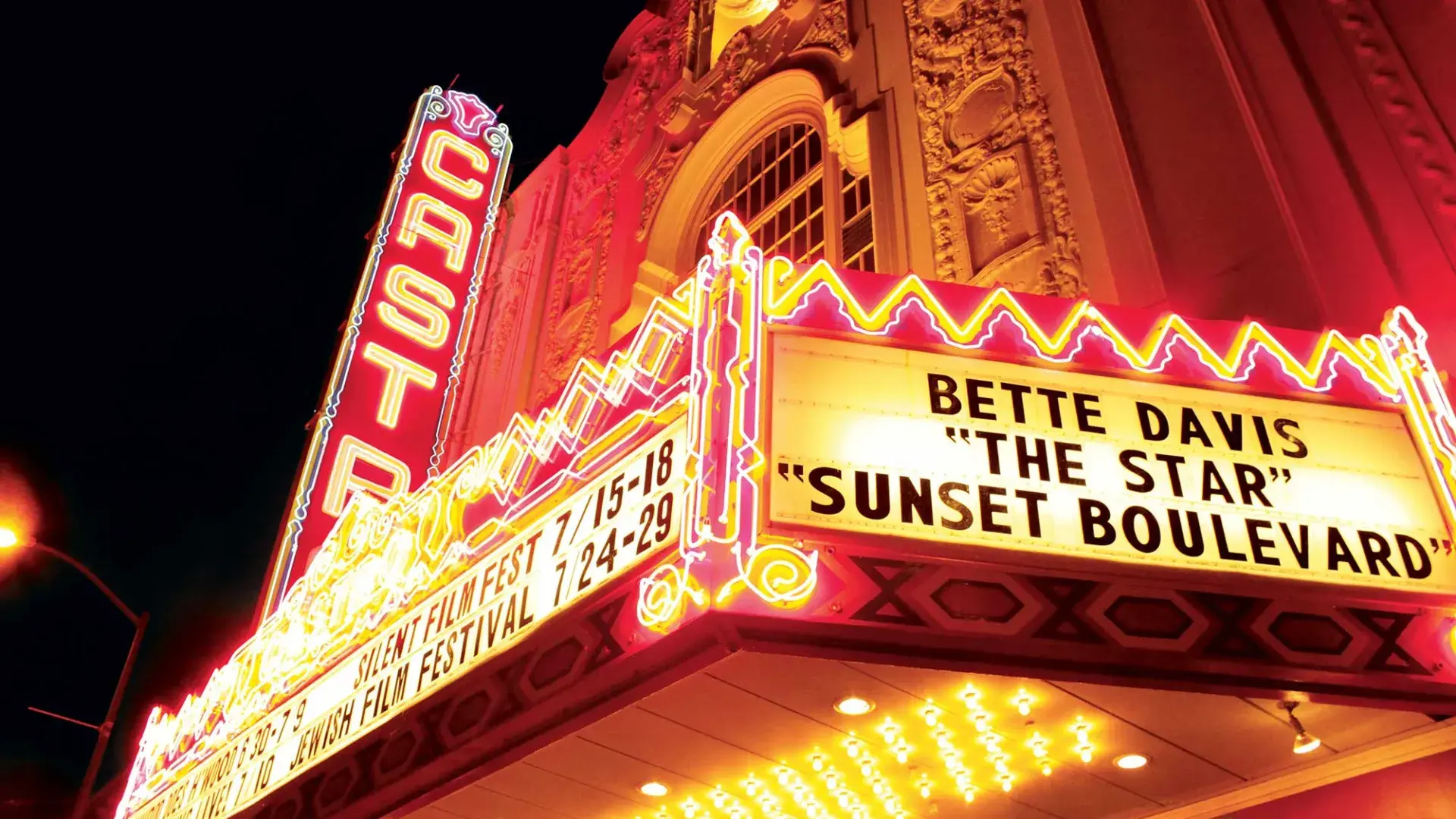
There are festivals that arrive with noise, and then there are those that persist with gravity. The San Francisco International Film Festival—running from April 24 through May 4, 2026—belongs firmly to the latter. Not merely because it is the longest-running film festival in the Americas, but because it has quietly shaped the conditions under which cinema is seen, discussed, and remembered.
Across San Francisco, Oakland, and Berkeley, the festival unfolds less like a singular event and more like a dispersed cultural system. It occupies theaters, yes—but also conversations, sidewalks, lobbies, and the intangible space between expectation and encounter.
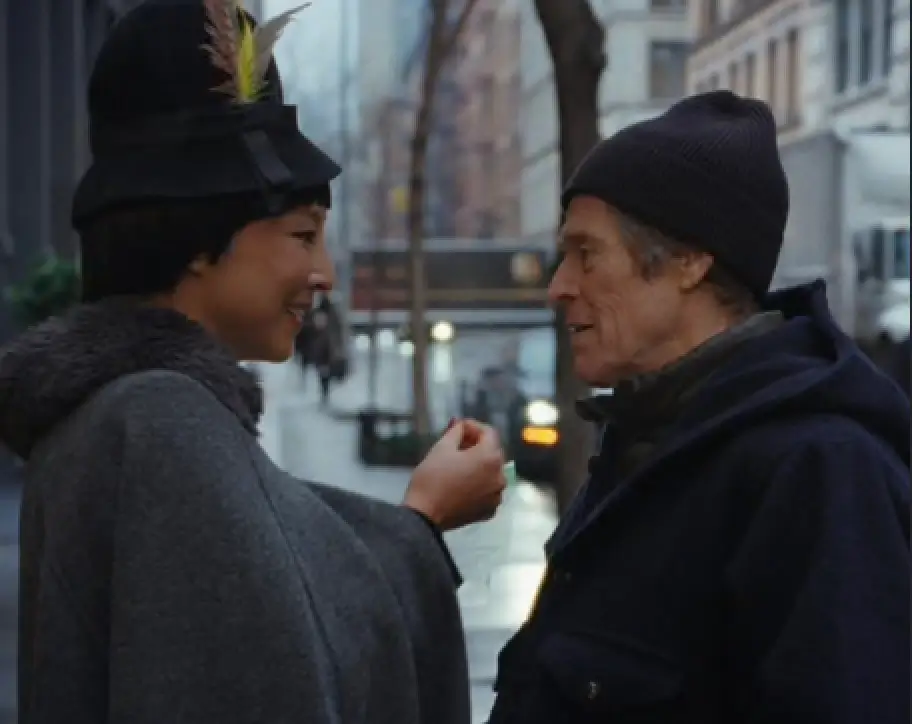
This year, the programming signals a careful calibration rather than a dramatic shift. The opening selections—The Invitedirected by Olivia Wilde and Late Fame by Kent Jones starring Greta Lee—suggest a duality that has long defined the festival: intimacy alongside intellectual rigor, contemporary immediacy paired with archival awareness.
The question is not what the festival shows. It is how it frames seeing itself.
stir
Opening films are rarely neutral. They are declarations—of taste, of direction, of institutional mood.
With The Invite, Wilde appears to lean further into her interest in social choreography—the subtle power dynamics that unfold in controlled environments. If her earlier work played with tone and audience expectation, this film is positioned as something quieter, perhaps more observational. The title itself implies both access and exclusion, a threshold moment that cinema is uniquely equipped to hold in suspension.
In contrast, Late Fame operates from a different register entirely. Jones, whose background in film criticism lends his work an inherent reflexivity, crafts narratives that seem aware of their own afterlife. Casting Greta Lee is not incidental. Her presence carries a precision—an ability to inhabit roles that feel both contemporary and slightly out of time, as if aware of the cultural memory they will eventually enter.
Together, these films do not compete. They converse.
One examines the immediacy of social space; the other contemplates legacy. One moves inward; the other looks back. The pairing is less about contrast than about range—an articulation of what cinema can still do when it resists flattening itself into content.
View this post on Instagram
geo
Unlike festivals that centralize themselves within a single district, SFFILM disperses its presence across the Bay Area. This geographic spread is not logistical—it is philosophical.
In San Francisco, screenings often carry the weight of history. The theaters themselves—ornate, aging, still resonant—function as participants in the act of viewing. A film shown here is never entirely contemporary; it is layered with the memory of what has been projected before.
In Oakland, the atmosphere shifts. The audiences feel different—less bound by tradition, more open to disruption. Films land differently here, not because they change, but because the context does.
And in Berkeley, the intellectual dimension sharpens. Post-screening discussions extend beyond reaction into analysis, situating films within broader cultural and theoretical frameworks.
What emerges is not a unified festival experience, but a triangulated one. Each city refracts the same films through a different lens. To attend SFFILM fully is to move—not just physically, but perceptually.
extent
The phrase “longest-running film festival in the Americas” risks sounding like a statistic. But longevity, in this context, is not passive endurance. It is active recalibration.
Since its founding in 1957, the festival has navigated multiple cinematic epochs: the collapse of the studio system, the rise of New Hollywood, the globalization of independent film, the digital turn, the streaming era. At each stage, it has adjusted—not by abandoning its identity, but by refining it.
What distinguishes SFFILM is its resistance to urgency. Where other festivals chase premieres and headlines, this one often privileges duration—films that reveal themselves slowly, works that may not dominate immediate discourse but linger beyond it.
This approach is not without risk. It requires audiences willing to engage without the promise of instant payoff. But it also allows the festival to function as something rarer: a site of sustained attention.
View this post on Instagram
gen
To speak about a film festival in 2026 is to confront the altered conditions of cinema itself.
Streaming has not replaced theatrical viewing—it has reframed it. The act of going to a screening is no longer default; it is intentional. Festivals, therefore, carry a new responsibility: to justify presence.
SFFILM’s answer appears to lie in curation that emphasizes experience over access. The films selected are not merely viewed; they are situated. Introductions, discussions, and contextual programming transform screenings into events that cannot be replicated at home.
This is particularly evident in the festival’s embrace of what might be called “slow attention.” Films that demand patience—long takes, minimal dialogue, ambiguous structures—find space here not as niche curiosities but as central offerings.
In a culture increasingly defined by acceleration, the festival becomes a countermeasure. A place where time is not compressed, but expanded.
show
Greta Lee’s role in Late Fame is emblematic of a broader shift within contemporary acting.
Her performances often resist overt declaration. Instead, they operate through calibration—small adjustments in tone, gesture, and timing that accumulate into something quietly forceful. In a festival context, this kind of acting gains clarity. The large screen amplifies nuance, allowing subtlety to register with unexpected intensity.
Lee’s casting also reflects the festival’s ongoing engagement with performers who navigate multiple cultural registers. Her work exists at the intersection of independent cinema and broader visibility, making her presence particularly resonant within a program that values both.
In this sense, she is not just part of the opening lineup. She is part of the festival’s argument.
idea
Wilde’s trajectory as a director has been marked by an interest in environments that shape behavior. Rooms, houses, gatherings—spaces where individuals perform versions of themselves under observation.
The Invite appears to extend this preoccupation. The notion of invitation implies structure: who is included, who is excluded, and what is expected once inside. Cinema, in this framework, becomes a means of examining the invisible rules that govern interaction.
For a festival opening, this is a precise choice. It mirrors the experience of the audience itself—invited into a space, aware of being part of a collective, negotiating their own role within it.
flow
Beyond the films, SFFILM operates as a social structure.
Lines form. Conversations begin between strangers. Recommendations circulate informally, shaping viewing decisions more effectively than official guides. The festival becomes a temporary community, defined not by fixed relationships but by shared attention.
This aspect is often overlooked in discussions of programming, yet it is central to the festival’s impact. Films do not exist in isolation; they are experienced within a network of reactions, interpretations, and disagreements.
In this sense, the festival is less a showcase than a catalyst.
recept
What distinguishes the 69th edition is not a radical departure, but a subtle repositioning.
The inclusion of filmmakers like Jones—whose work is deeply informed by film history—alongside directors like Wilde—who engage with contemporary cultural dynamics—creates a dialogue between past and present. The festival does not choose between them; it holds both.
This dual orientation is increasingly important. As cinema becomes more fragmented—split across platforms, formats, and audiences—institutions like SFFILM provide continuity. They remind us that film is not just a medium, but a lineage.
shape
It would be incomplete to discuss the festival without acknowledging its setting.
The Bay Area has long functioned as both backdrop and participant in cinematic culture. Its landscapes—urban, coastal, transitional—offer a visual vocabulary that resonates with the kinds of films the festival tends to favor.
More importantly, the region’s intellectual and artistic history informs the audience itself. Viewers arrive not as passive consumers, but as engaged participants. This shapes the atmosphere of the festival in ways that cannot be programmed.
fin
At 69, the San Francisco International Film Festival does not need to prove its relevance. It demonstrates it through continuity.
The decision to open with The Invite and Late Fame is not about spectacle. It is about tone. About establishing a space where cinema can be encountered without simplification.
In an era where images are constant and attention is fragmented, the festival offers something increasingly rare: duration, context, and the possibility of sustained engagement.
It does not promise transformation. It offers something quieter, and perhaps more lasting—the chance to see, and to keep seeing, differently.