SANT ROCH Opens in Paris with Saunas and Cold Plunge Pools

March 15, 2026
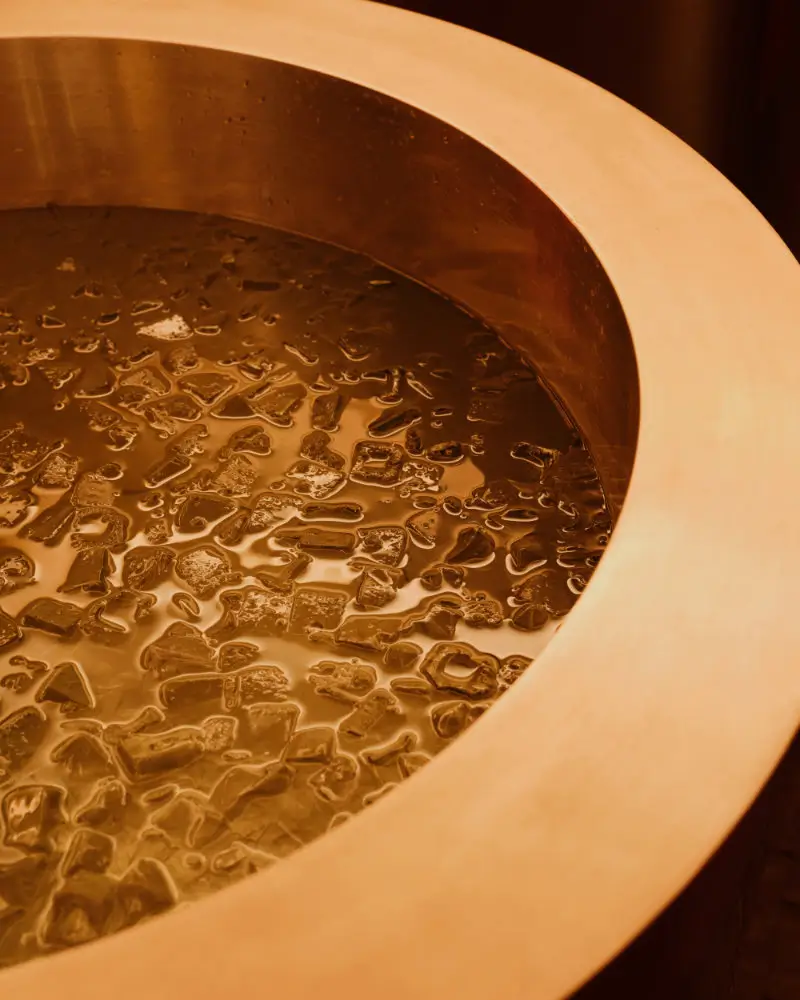
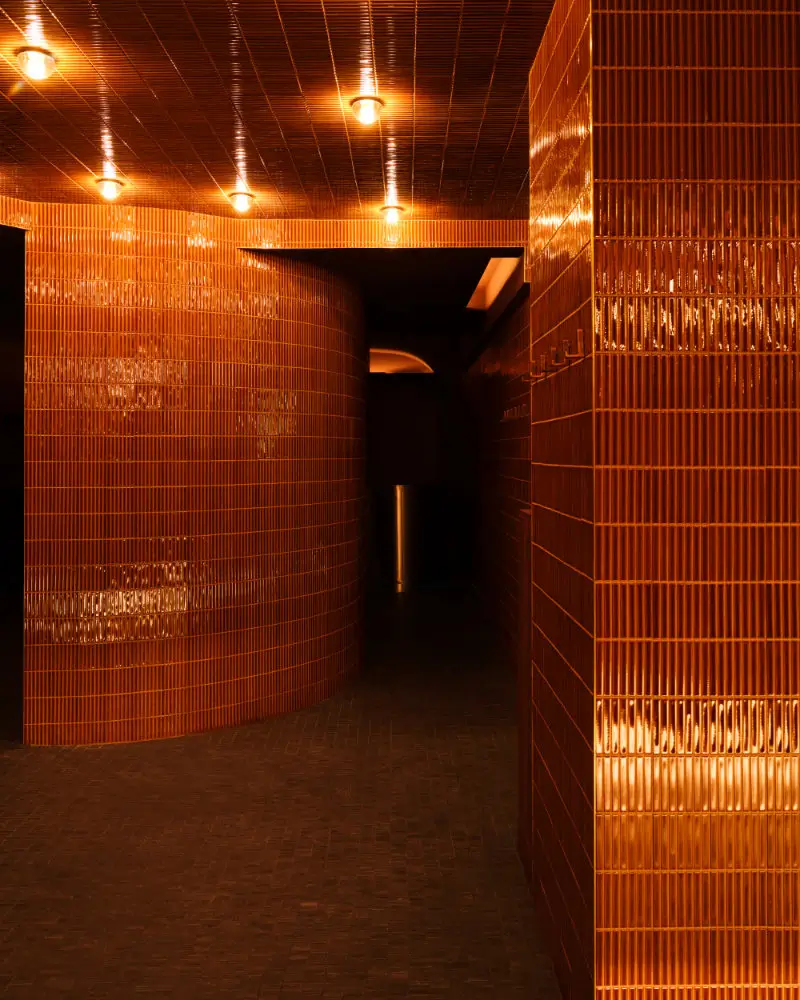
Paris has always cultivated rituals. The city thrives on them—morning coffee at a marble counter, slow promenades along the Seine, long lunches that stretch into the afternoon light. For centuries, these habits have shaped the rhythm of urban life. Yet when it comes to wellness, Paris has traditionally favored subtle indulgence: the spa tucked inside a palace hotel, the hammam infused with eucalyptus steam, the discreet institut offering treatments designed to soothe rather than challenge.
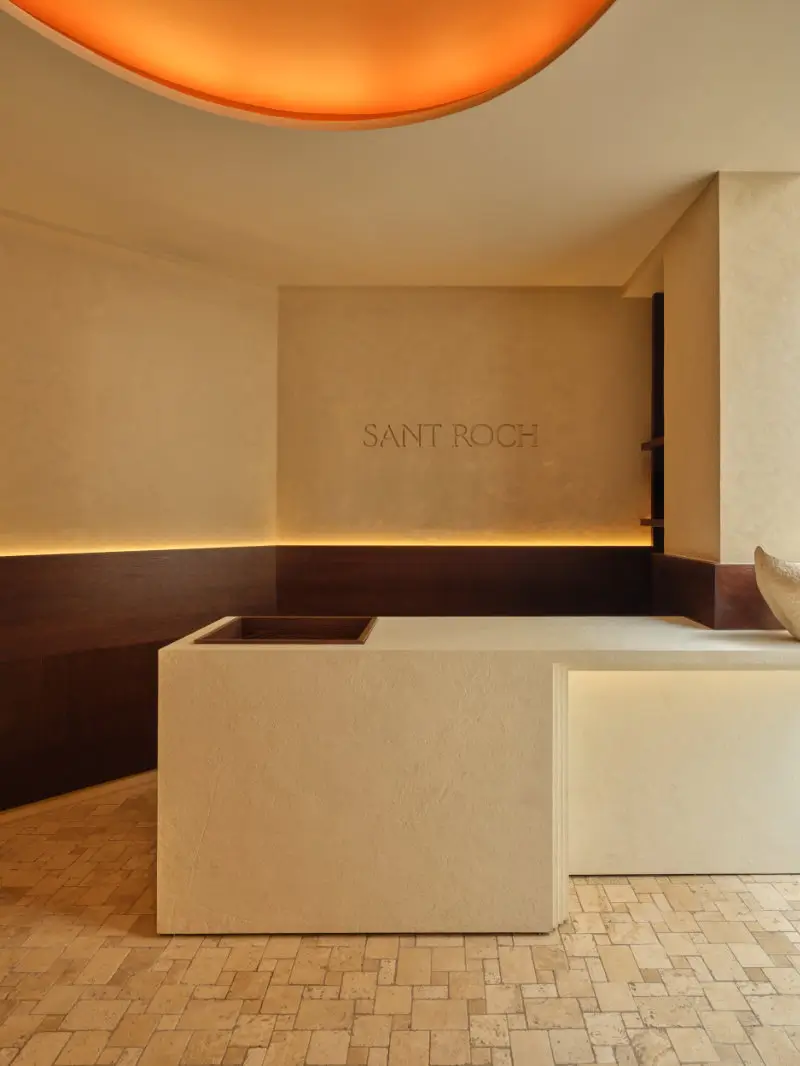
A new concept arriving in the French capital suggests that wellness may be evolving into something more elemental. On March 2, 2026, a striking new wellness destination opened at 8 rue Saint-Roch in the 1st arrondissement. Called SANT ROCH, the space faces the Tuileries Garden and introduces a growing global practice to the Parisian landscape: contrast therapy.
Unlike traditional spa rituals built on passive relaxation, contrast therapy is deliberately physical. It asks participants to move between intense heat and near-freezing cold, repeating the cycle in order to stimulate the body’s circulation, regulate the nervous system, and promote recovery. In cities such as New York, London, Copenhagen, and Los Angeles, the practice has rapidly moved from elite athletic training rooms into the wider culture of haute wellness. Now, with the opening of SANT ROCH, Paris has its own architectural interpretation of the phenomenon.
View this post on Instagram
the sci
At the core of the SANT ROCH experience is a deceptively simple sequence: heat, cold, rest, repeat.
Participants begin with exposure to high temperatures in a dry sauna environment, where heat opens blood vessels and increases circulation. The body responds by sweating, releasing tension from muscles and activating the cardiovascular system. After several minutes, guests step directly into cold water immersion pools where temperatures drop dramatically.
The cold shock forces blood vessels to constrict, pushing oxygenated blood back toward vital organs. This rapid shift—from dilation to constriction—creates a pumping effect through the circulatory system. Advocates of contrast therapy argue that the process accelerates muscle recovery, reduces inflammation, improves mental clarity, and enhances overall resilience.
Athletes have relied on these techniques for decades. Professional sports teams often maintain ice baths and heat rooms in their training facilities. Recently, however, the ritual has expanded beyond elite performance environments and entered the mainstream wellness conversation.
Part of the appeal lies in its immediacy. While many wellness trends promise gradual transformation through supplements or long routines, contrast therapy delivers an instant sensory experience. The heat envelops the body in calm heaviness. The cold triggers alertness, breath, and adrenaline. Moving between the two states feels almost like pressing a physiological reset button.
SANT ROCH is built entirely around this oscillation between extremes.
stir
Occupying roughly 400 square meters across two levels, SANT ROCH has been designed as a modern sanctuary dedicated to the ritual of contrast. The project is not simply a small studio with a few ice baths; it is an immersive environment where architecture reinforces the experience of transformation.
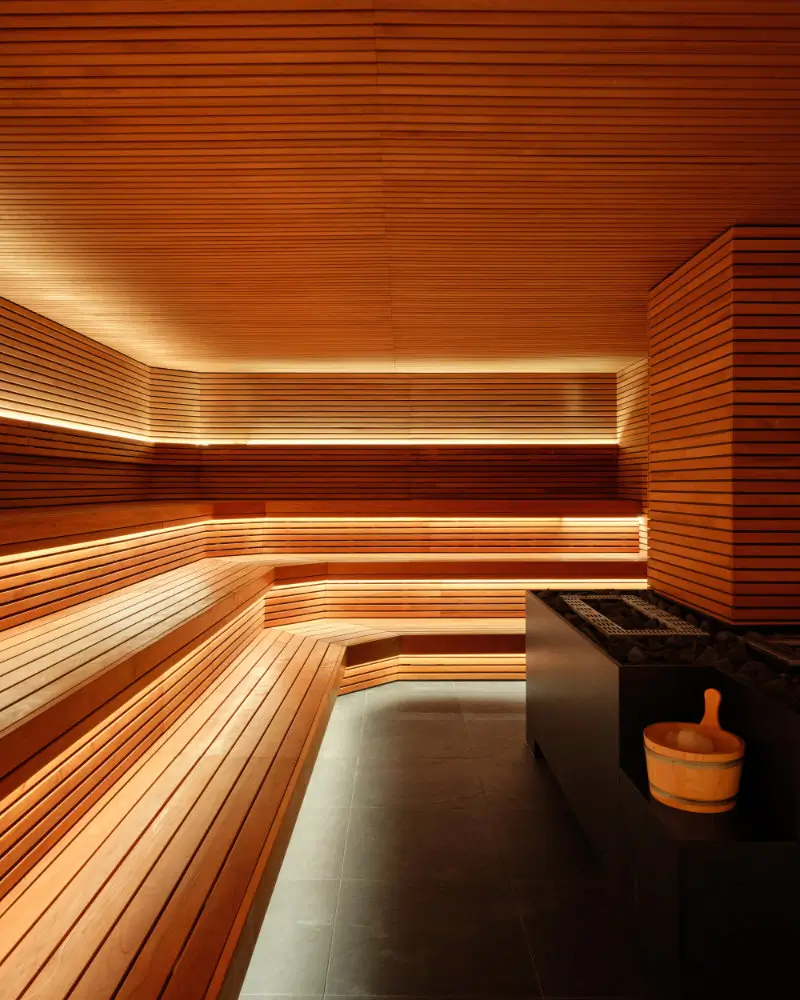
The centerpiece is an expansive sauna reported to be among the largest in France, capable of accommodating large groups simultaneously. The room’s warm wood interior evokes Nordic sauna culture while maintaining a minimalist aesthetic consistent with contemporary Parisian design. Soft lighting and natural materials encourage a quiet, meditative atmosphere rather than the ornamental excess often associated with traditional spas.
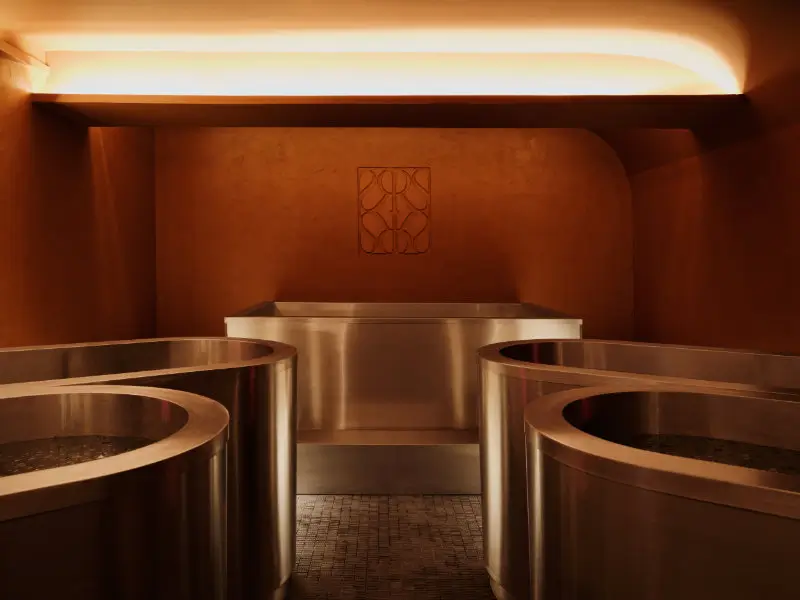
Surrounding the sauna are several cold plunge pools maintained at temperatures ranging roughly between three and eight degrees Celsius. These pools provide the defining moment of the ritual: the instant when heat gives way to icy immersion.
The layout encourages movement between zones. Guests circulate from heat to cold to rest areas, repeating the cycle several times during a session. This choreography of the body becomes part of the architecture itself.
Unlike the solitary treatment rooms common in spas, the environment here is collective. Participants share the experience of stepping into cold water, catching their breath, and emerging with flushed skin and renewed energy. The communal nature of the ritual creates a subtle sense of camaraderie among strangers.
In this way, SANT ROCH transforms wellness into something social as well as personal.
idea
The people behind SANT ROCH come from the world of fitness rather than traditional hospitality. The space was founded by Jules and Chloé Bouscatel, the couple responsible for Monday Sports Club, a Paris-based fitness group known for innovative training concepts including Dynamo cycling studios, Punch boxing workouts, and RIISE high-intensity classes.
Their background reveals a broader shift occurring within wellness culture. For years, fitness and recovery existed in separate worlds: one focused on exertion, the other on relaxation. Increasingly, however, the two are merging.
Modern athletes understand that recovery is not simply a reward after effort—it is an essential part of performance itself. The same principle now extends to urban professionals, creatives, and travelers who view wellness not as escape but as maintenance.
By bringing contrast therapy to the center of Paris, the founders position recovery as an integral part of daily life. A session at SANT ROCH might follow a morning workout, a long day at the office, or even a leisurely walk through nearby museums.
The idea is simple: the body requires cycles of stress and restoration. Contrast therapy provides both.
move
Although contrast therapy may feel new in France, its roots stretch across several cultures.
In Finland, sauna rituals have been practiced for centuries, often followed by plunges into icy lakes or rolls in snow during winter months. The rhythm of heat and cold forms part of everyday life, woven into family traditions and community gatherings.
In Japan, onsen bathing culture similarly incorporates variations in water temperature, encouraging the body to adapt to shifting sensations. Russian banyas also involve alternating between steam rooms and cold immersion.
What has changed in recent years is the global reinterpretation of these traditions within contemporary wellness spaces. Design-focused studios now combine elements from multiple cultures, presenting contrast therapy as a modern lifestyle ritual rather than a regional custom.
Cities such as New York and London have embraced the concept through boutique facilities that blend sauna culture with minimalist architecture and guided breathwork sessions. These spaces often become cultural hubs where wellness intersects with community, design, and even nightlife.
SANT ROCH brings that ethos to Paris, translating an international wellness movement into a distinctly Parisian context.
theory
Beyond the physiological benefits, contrast therapy carries an important psychological dimension.
Stepping into cold water requires intention. The body instinctively resists the shock of icy immersion. Breathing becomes rapid, muscles tense, and the mind searches for escape. Yet after a few seconds, the body begins to adapt. Breathing slows. The initial panic dissolves into a strange calm.
This moment of adaptation is part of the ritual’s appeal. Many participants describe it as a mental reset—a moment when the noise of daily life fades and focus returns to the simple act of breathing.
In an era defined by constant digital stimulation, such experiences have particular resonance. The intense physical sensations of heat and cold create a form of mindfulness that feels more visceral than traditional meditation.
Rather than sitting quietly in stillness, contrast therapy invites individuals to confront the body’s limits and then move beyond them.
The reward is clarity.
culture
Another notable aspect of SANT ROCH is its collective atmosphere.
Historically, spas emphasized privacy and solitude. Treatments occurred behind closed doors, separated from the energy of the outside world. Contrast therapy, by contrast, often unfolds in shared environments where strangers participate in the same ritual.
This communal dynamic changes the emotional tone of the experience. Guests encourage one another before stepping into cold pools. Conversations begin between cycles of heat and rest. What might otherwise be an intimidating challenge becomes a shared adventure.
In this sense, SANT ROCH resembles the social energy of fitness studios or running clubs more than the hushed quiet of luxury spas.
The model reflects a broader cultural shift in wellness. Increasingly, people seek experiences that combine health, connection, and design. The most successful wellness spaces function as communities rather than isolated retreats.
Located near the Tuileries Garden, SANT ROCH places that community directly within the fabric of Parisian life.
the evolve
Paris has historically approached wellness through the lens of beauty and refinement. French pharmacies, skincare institutes, and thermal spa traditions emphasize elegance and gentle restoration.
Contrast therapy introduces a different vocabulary—one built around intensity, endurance, and physiological challenge. Its arrival in the city signals that Parisian wellness culture is evolving alongside global trends.
Younger generations, particularly those influenced by athletic training and digital wellness communities, are increasingly drawn to experiences that feel dynamic and transformative. They want rituals that engage both body and mind.
Spaces like SANT ROCH reflect that desire. They combine minimalist design with structured routines, offering something that sits between gym, spa, and social club.
This hybrid identity may define the next era of urban wellness.
custom
A typical session at SANT ROCH follows a carefully structured rhythm.
Guests begin by entering the sauna, where temperatures rise high enough to encourage deep sweating and relaxation of muscles. After several minutes, they step out and prepare for the cold plunge.
The moment of immersion delivers an immediate shock. Cold water envelops the body, forcing a sharp inhale. After a short period, participants exit and move into a rest area where the body stabilizes.
The cycle repeats several times.
With each repetition, the contrast between heat and cold becomes less intimidating and more invigorating. Circulation increases, the skin flushes, and the mind grows clearer.
By the end of the ritual, participants often describe a sensation of profound calm combined with heightened alertness—a rare balance between relaxation and energy.
It is this paradoxical state that defines the experience.
set
The location of SANT ROCH adds another layer to its identity.
Situated in the 1st arrondissement, the space occupies one of Paris’s most historic districts. Just steps away lie the Tuileries Garden, the Louvre Museum, and the elegant arcades of the Rue de Rivoli. The neighborhood is traditionally associated with art, fashion, and cultural institutions.
Introducing a contemporary wellness destination into this environment creates an intriguing contrast. Visitors might spend the morning exploring museums, the afternoon walking through gardens, and the evening resetting their bodies through heat and cold immersion.
In that sense, SANT ROCH becomes part of the broader rhythm of the city rather than a remote escape from it.
Paris does not ask people to retreat from life to find wellness. Instead, it integrates wellness directly into the flow of urban culture.
fwd
The arrival of SANT ROCH suggests that contrast therapy may soon become a defining feature of the modern wellness landscape.
As awareness grows around recovery, nervous system regulation, and holistic health, practices once reserved for elite athletes are increasingly accessible to everyday individuals. Heat and cold therapy offer a rare combination of simplicity and effectiveness.
They require no complicated equipment beyond water, temperature, and time. Yet the results—improved circulation, reduced inflammation, heightened mental clarity—can feel transformative.
For cities like Paris, the challenge lies in adapting these rituals to local culture without losing their intensity. SANT ROCH appears to embrace that challenge, blending Nordic sauna traditions with Parisian design and social sensibility.
If the concept succeeds, it may inspire similar spaces across Europe.
fin
SANT ROCH represents more than a wellness studio. It reflects a broader shift in how cities think about health, architecture, and community.
In an age of digital overload and constant movement, people increasingly seek experiences that reconnect them with their physical senses. The extremes of heat and cold provide exactly that—an encounter with the body that cannot be ignored or mediated by screens.
Paris has always excelled at turning everyday rituals into cultural moments. With the opening of SANT ROCH, the city adds another ritual to its repertoire: the deliberate dance between fire and ice.
For those willing to step into freezing water after the heat of the sauna, the reward is simple but profound.
A moment of reset.


No comments yet.