Saucony Berlin 10K 2026: Running the Tempelhofer Feld Runway

April 3, 2026
9 minutes ago

“Safety briefing, complete. Cleared for takeoff.”
The language arrives before the movement. Before the first stride, before the body finds its rhythm, the event establishes a narrative that reframes expectation. The Saucony Berlin 10K is not introduced as a race in the traditional sense. It is positioned as a departure.
That distinction matters. A race implies competition, hierarchy, outcome. A departure suggests process, transition, movement through space with an implied direction rather than a singular objective. It’s a subtle shift, but one that reorganizes how the participant enters the experience.
The invocation of aviation is not merely aesthetic. It functions as a conceptual overlay, asking runners to inhabit a different mindset—one that prioritizes momentum over measurement, sensation over result. In this framing, the start line becomes less a point of comparison and more a threshold.
idea
The choice of Tempelhofer Feld is not incidental. It is foundational.
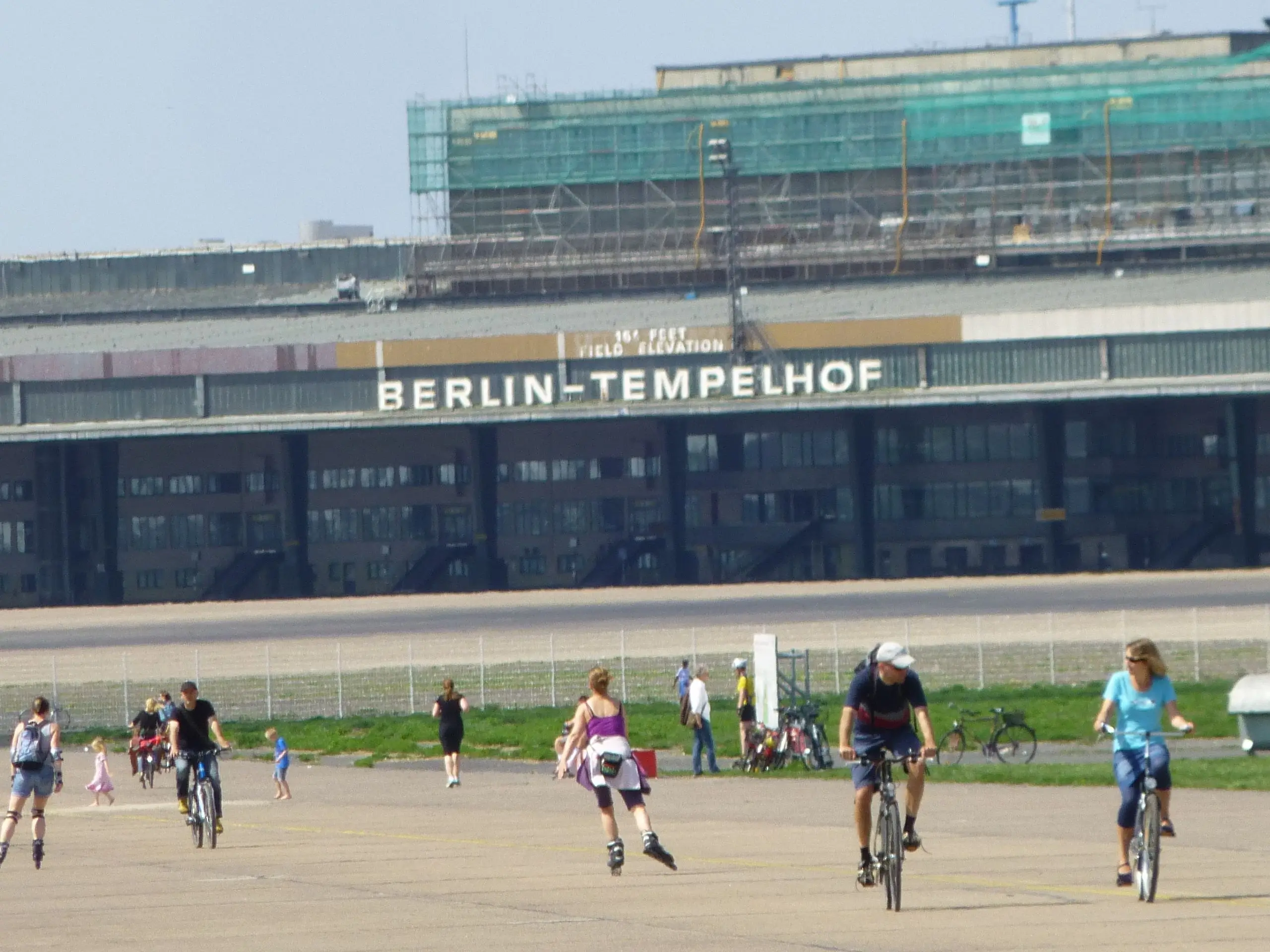
Tempelhof carries with it a layered historical weight. Once a functioning airport, it operated as a node of transit, a space designed for controlled acceleration and regulated departure. Its transformation into a public park represents a recontextualization of that infrastructure—what was once exclusive and mechanical becomes open and communal.
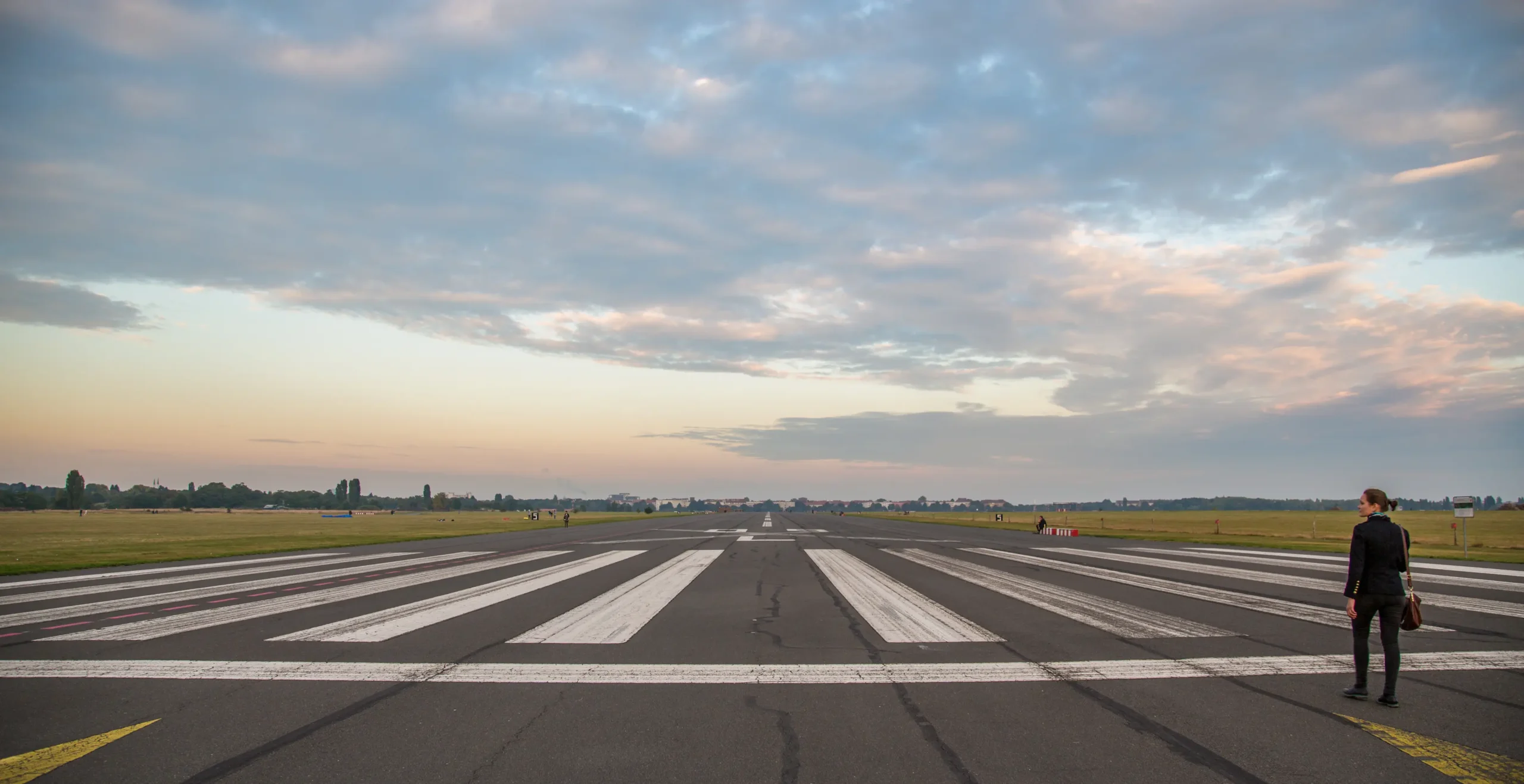
Running across this surface introduces a dialogue between past and present. The runway, originally intended for aircraft, is repurposed for human movement. The scale remains, but the function shifts. Where planes once required speed to achieve lift, runners engage the same space through endurance and repetition.
This inversion is critical. It collapses the distance between industrial design and human experience, allowing participants to occupy a space that was never originally intended for them in this way. The result is not just a race route, but a spatial narrative.
View this post on Instagram
area
To situate the event within Berlin is to engage with a city that resists simplification. Berlin’s identity is not singular; it is accumulative, built from layers of history, culture, and continuous reinvention.
The phrase “a 10K through Berlin’s culture, energy, and attitude” operates less as a literal description of the route and more as an atmospheric claim. The run does not traverse multiple neighborhoods or landmarks in the conventional sense. Instead, it condenses the city’s ethos into a single, expansive site.
This condensation is significant. It suggests that Berlin’s character is not confined to its geography but can be expressed through its modes of gathering, its patterns of movement, its collective behaviors. The race becomes a microcosm—a temporary configuration of the city’s broader dynamics.
Participants bring with them different relationships to the city: locals who understand its rhythms, visitors who experience it as spectacle, athletes who engage it through performance. These perspectives intersect within the event, producing a layered experience that mirrors Berlin’s own complexity.
flow
The use of aviation terminology—“safety briefing,” “cleared for takeoff,” “not a normal flight”—operates as more than stylistic flourish. It constructs a framework through which the event is interpreted.
Aviation is associated with precision, control, and sequence. Every flight follows a structured progression: preparation, clearance, acceleration, ascent. By borrowing this language, the race inherits a sense of order and anticipation.
Yet, the phrase “this is not a normal flight” introduces a deliberate disruption. It acknowledges the framework while simultaneously destabilizing it. The participant is invited to enter a system that is familiar in structure but altered in execution.
This tension between structure and deviation is central to the event’s identity. It mirrors the broader cultural tendencies of Berlin, where systems exist but are often reinterpreted, subverted, or expanded.
show
Traditional running events are often governed by quantifiable outcomes. Time, distance, pace—these metrics define success and structure the participant’s engagement.
The Saucony Berlin 10K does not eliminate these elements, but it reframes their importance. The emphasis shifts from measurement to experience, from optimization to immersion.
This shift is not absolute. Competitive runners will still pursue personal bests. Timing systems will still record performance. But the surrounding narrative encourages a broader interpretation of value.
What does it mean to run across a former runway? How does the openness of the space affect perception of distance? How does the presence of others alter the internal experience of effort?
These questions introduce a qualitative dimension to the run, one that exists alongside, rather than in opposition to, quantitative metrics.
uniform
“Run As One.”
The phrase appears simple, almost expected within the context of a public event. Yet, within this specific framework, it carries additional weight.
Running is inherently paradoxical. It is both individual and collective. Each participant occupies their own body, their own limits, their own internal dialogue. At the same time, they move within a shared environment, influenced by the presence and pace of others.
The concept of unity here does not imply uniformity. It does not suggest that all runners move at the same speed or with the same intention. Instead, it proposes a synchronization of presence—a shared engagement with the same space, the same moment.
On a runway as expansive as Tempelhofer Feld, this collective movement becomes visible. The field of runners stretches, compresses, disperses, and regathers. Patterns emerge, dissolve, and reconfigure.
From a distance, the race resembles a dynamic system rather than a linear procession. Each individual contributes to the overall motion, creating a collective form that is constantly in flux.
stir
One of the defining characteristics of the event is its view openness. Unlike urban races that navigate through dense street networks, the runway offers an uninterrupted horizon.
This openness alters perception in several ways.
First, it changes the relationship between distance and view. Runners can see far ahead, observing the movement of others across a wide plane. The finish line, when sawn, appears both distant and accessible.
Second, it reduces sensory interruption. There are fewer turns, fewer changes in terrain, fewer external distractions. The experience becomes more continuous, more sustained.
Third, it introduces a sense of scale that is uncommon in running events. The width of the runway allows for lateral movement, for spacing that is not dictated by narrow streets or barriers.
These factors combine to create an environment that feels less constrained, more expansive. The runner is not navigating a path as much as inhabiting a field of motion.
reason
Tempelhofer Feld’s history cannot be separated from its current function. The site’s past as an airport informs its present as a public space.
Running here engages with that history, even if implicitly. The act of moving across the runway echoes its original purpose, while simultaneously redefining it.
This duality—past function, present use—creates a layered experience. Participants are not just moving through space; they are moving through time, through a site that has been reinterpreted and reclaimed.
In this sense, the event aligns with broader urban trends that emphasize adaptive reuse. Spaces are not discarded when their original function becomes obsolete. They are transformed, repurposed, integrated into new forms of public life.
The Saucony Berlin 10K becomes part of that process, temporarily activating the site in a way that highlights both its history and its current role.
position
The involvement of Saucony is also significant. As a brand rooted in running, Saucony operates within a space that is both performance-driven and increasingly lifestyle-oriented.
By framing the event through culture and experience, the brand aligns itself with a broader understanding of running—one that extends beyond competition into identity, community, and urban engagement.
This positioning reflects a shift within the industry. Running is no longer solely about athletic achievement. It is also about participation in a cultural moment, about being part of a collective experience that carries meaning beyond the act itself.
The Berlin 10K, with its emphasis on atmosphere and narrative, serves as a platform for this expanded definition.
frame
Perhaps the most subtle yet impressionable aspect of the event is its psychological framing.
Lang shapes expectation. Expectation shapes experience.
By introducing the concept of a “flight,” the event encourages participants to think in terms of progression, elevation, and movement beyond the ordinary. Even if no physical ascent occurs, the perception of departure alters how the run is felt.
The start becomes more than a beginning. It becomes a release.
The middle becomes more than endurance. It becomes sustained motion.
The finish becomes more than completion. It becomes arrival.
This reframing does not change the physical reality of the run. It changes the interpretive lens through which that reality is experienced.
bal
For many participants, running is a routine activity. It is integrated into daily life, structured by habit and repetition.
Events like the Saucony Berlin 10K disrupt that routine. They introduce a heightened context, a temporary reorganization of space and time that distinguishes the experience from everyday runs.
The aviation metaphor amplifies this distinction. It signals that this is not a continuation of routine but a departure from it.
Yet, the core activity remains the same. Running is still running. The body moves, breath regulates, muscles engage.
The tension between familiarity and novelty is what gives the event its resonance. It is both recognizable and reimagined.
consider
In the end, the Saucony Berlin 10K does not fundamentally alter what running is. It does not change the mechanics, the physiology, or the measurable outcomes.
What it changes is the context.
By situating the run within a narrative of departure, by placing it on a runway with historical weight, by framing it as a collective experience within a culturally complex city, the event expands the meaning of a 10K.
It becomes more than distance covered.
More than time recorded.
More than individual effort.
It becomes a moment of shared movement, shaped by space, language, and perception.
A departure without leaving.
A flight without ascent.
A run that, for a brief interval, feels like something else entirely.