Shawn Stüssy and the Unfinished Archive: Reclaiming the Origins of Streetwear

April 9, 2026
1 hour ago



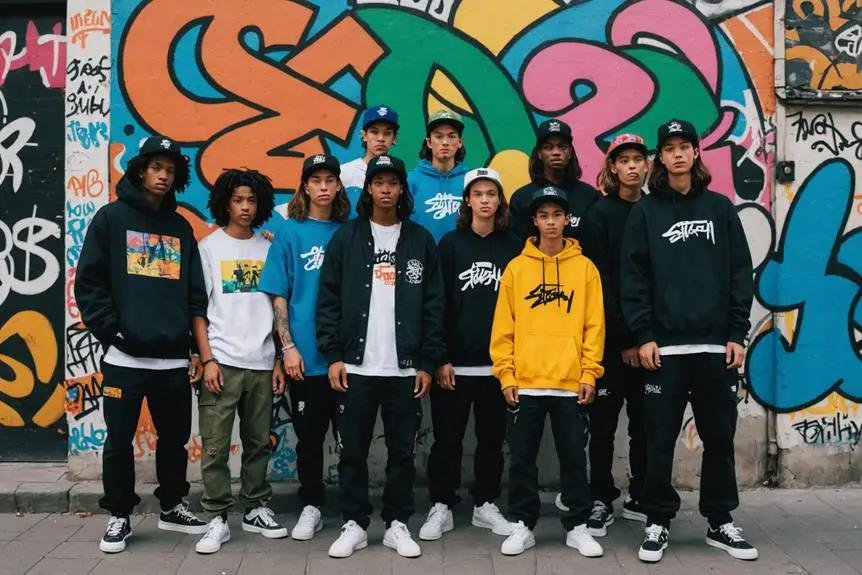



There is something unresolved at the center of streetwear’s origin story. Not a gap exactly, but a distortion—like a signal that has been replayed too many times, flattened into something convenient, repeatable, and ultimately incomplete.
Shawn Stüssy seems to know this.
His recent suggestion that he wants to tell the “real and accurate” story of the brand he founded is less a nostalgic gesture and more a correction. Because if streetwear today is a global industry, a billion-dollar ecosystem of drops, collide, and cultural leverage, its beginnings were far less calculated. They were improvised. Local. Physical. Often accidental.
And above all, they were authored.
stir
In the early 1980s, on the coast of Laguna Beach, Shawn Stüssy was shaping surfboards. His now-iconic signature—scrawled in thick, marker-like strokes—was never designed as a logo in the modern sense. It was a tag, a personal mark, something closer to authorship than branding.
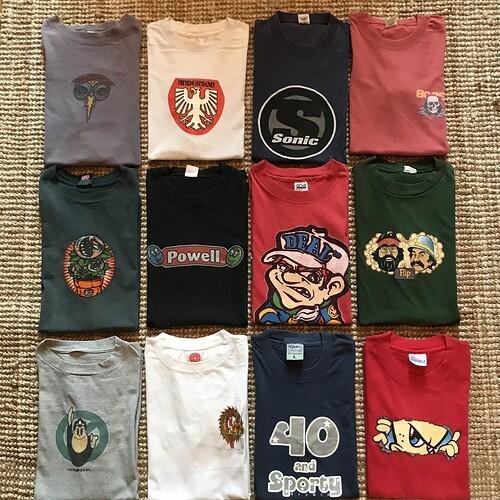
The move from surfboards to T-shirts was not a pivot; it was an extension. Screen-printed tees were simply another surface. Another way to carry the mark.
What emerged was not a “collection” or a “line,” but a circulation of objects—shirts sold out of a car trunk, alongside boards, within a loose network of surfers, skaters, and local creatives. There was no strategy for scale. No roadmap for global expansion.
And yet, the conditions were already there.
Because what Stüssy was producing wasn’t just merchandise. It was identity—portable, visible, and replicable.
sig
It’s easy, in hindsight, to reduce the Stüssy signature to a logo. But that misses its significance.
The mark functioned as a kind of code. It was legible but not overly explained. It carried a sense of belonging without requiring explicit affiliation. You either recognized it or you didn’t.
This ambiguity was crucial. It allowed the brand to move across subcultures—surf, skate, punk, hip-hop—without being confined to any single one. The signature became a unifying element, a visual shorthand for a broader, undefined community.
In many ways, it prefigured what we now understand as streetwear branding: graphic, immediate, and culturally fluid.
But at the time, it was simply personal.
And that distinction matters. Because the difference between a personal mark and a brand identity is the difference between expression and strategy.
View this post on Instagram
flow
The transition from a local operation to an international presence is often framed as inevitable. But in Stüssy’s case, it was anything but.
The brand’s early expansion into cities like Tokyo, New York City, and London was not driven by traditional retail logic. It was driven by relationships.
The formation of the “International Stüssy Tribe”—a loose collective of DJs, artists, and tastemakers—was less about marketing and more about recognition. These were individuals who embodied the brand’s ethos, who wore it not as consumers but as participants.
This network became the infrastructure through which Stüssy traveled. Not through campaigns, but through people.
In Tokyo, the brand intersected with emerging street fashion scenes. In New York, it connected with hip-hop and downtown culture. In London, it aligned with club and rave aesthetics.
Each city interpreted Stüssy differently. And instead of enforcing consistency, the brand absorbed those variations.
This was not globalization as we understand it today. It was something more organic—more porous.
idea
By the mid-1990s, Shawn Stüssy sold his stake in the company. The reasons have been discussed, speculated upon, and often simplified. But what matters more is what that moment created: a split narrative.
On one side, there is the founder’s story—the early years, the improvisation, the authorship. On the other, there is the brand’s continued evolution under new management—its growth into a global entity, its collaborations, its institutionalization within fashion.
Both are valid. Both are real.
But they are not the same.
And this is where the idea of a “real and accurate” story becomes complicated. Because accuracy, in this context, is not just about facts. It’s about perspective.
Whose version of the story is being told? And for whom?
myth
Over time, streetwear has developed its own mythology.
Origin stories are streamlined. Timelines are clarified. Key figures are elevated into symbols. The messiness of the early years is often smoothed over in favor of a more coherent narrative.
Stüssy, as one of the foundational brands, sits at the center of this mythology. It is frequently cited as the beginning—the moment where street culture and fashion intersected in a way that would define decades to come.
But mythology, by definition, simplifies.
It turns a series of contingent events into something inevitable. It replaces complexity with clarity.
Shawn Stüssy’s desire to revisit the story suggests a resistance to that simplification. A recognition that what has been lost in the retelling is not just detail, but texture.
challenge
When a brand becomes an institution, its origins are often reinterpreted through the lens of its current status.
The early Stüssy operation—small-scale, improvisational, rooted in specific communities—can be retroactively framed as the first step in a larger, inevitable trajectory toward global dominance.
But that framing imposes a kind of logic that didn’t exist at the time.
There was no guarantee that the brand would succeed. No clear path from surfboards to international retail. No blueprint for what would later be called streetwear.
What existed instead was a set of conditions: a distinctive visual language, a network of communities, and a willingness to move between them.
To tell a “real and accurate” story, then, is to resist the urge to impose hindsight. To allow the past to remain uncertain, open-ended.
authorship
At its core, this is also a story about authorship.
Shawn Stüssy’s name is still on the brand. His signature is still the defining visual element. And yet, he has not been involved in its direction for decades.
This creates a unique dynamic. The brand continues to evolve, to generate new meanings, to engage with new audiences. But its origin remains tied to a single individual.
Who, then, is the author of Stüssy today?
Is it the founder, whose mark still defines the brand?
Or is it the collective of designers, collaborators, and communities that have shaped it since?
The answer is not straightforward. And perhaps it doesn’t need to be.
But it does complicate the idea of a singular, authoritative narrative.
why
The timing of Shawn Stüssy’s comments is not incidental.
Streetwear, as a category, has reached a point of saturation. What was once subcultural has become mainstream. What was once local is now global. The aesthetics that defined the movement have been absorbed into luxury fashion, fast fashion, and everything in between.
In this context, the question of origins takes on new significance.
Not as a matter of nostalgia, but as a way of understanding how we arrived here. What was gained. What was lost.
A more accurate account of Stüssy’s beginnings could serve as a corrective—not just to the brand’s own narrative, but to the broader story of streetwear.
It could reintroduce elements that have been overlooked: the importance of place, the role of community, the value of improvisation.