Review: The Infinix Note 60 Ultra Emerges as Pininfarina’s Defining Gesture

March 21, 2026
There is a subtle but decisive shift happening in product design. The most compelling objects today are no longer defined purely by function, nor even by form, but by the emotional suggestion of movement—of energy held in suspension. It is this exact sensibility that defines the connect between Pininfarina and Infinix, culminating in the Infinix Note 60 Ultra.
Unveiled at Mobile World Congress in Barcelona, the device arrives not as a typical flagship contender, but as a conceptual pivot. It asks a more ambitious question than most smartphones dare to: what if a phone could feel fast?
Not faster in terms of processing speed—though it promises that—but fast in the way a sculpted machine communicates velocity before it even moves. In this sense, the Note 60 Ultra is less a gadget and more an industrial artifact, shaped by a studio whose identity has long been tied to motion itself.
NOTE 60 Ultra Design by Pininfarina is officially launched.
Iconic Italian aesthetics
Flagship-level imaging.
All-day power that keeps up.Together, we step into a new premium era.
Let’s NOTE the Way You Shine.#NOTE60Ultra #ProSuitUp #INFINIXxPininfarina #InfinixNOTE60xYUNA pic.twitter.com/u1AF29napO— Infinix Mobile (@Infinix_Mobile) March 13, 2026
pininfarina
Established in 1930, the studio did not merely design cars—it defined how performance should look, how it should be felt, and how it should be remembered.
Its connects with Ferrari remain among the most iconic in automotive history, shaping silhouettes that have become cultural shorthand for speed. But equally important are its contributions to Alfa Romeo, Peugeot, and Fiat—brands that each carry distinct identities, yet all benefited from Pininfarina’s singular ability to translate engineering into emotion.
The studio’s philosophy has always been rooted in reduction and flow. Surfaces are never arbitrary; they are guided by invisible forces—air, momentum, tension. This is what gives a Pininfarina object its sense of inevitability, as if it could not have been designed any other way.
Applying that philosophy to a smartphone is not an act of branding. It is an act of reinterpretation.
#NOTE60Ultra Design by Pininfarina
Co-engineered with Italian design legend Pininfarina, featuring a supercar-inspired design, a 200MP ultra-clear camera, and a massive 7000mAh battery.
One glance. Endless possibilities.
Total power in your hands. 💚#NOTE60Series #ProSuitUp pic.twitter.com/wvQ2dZ9SyO— Infinix Mobile (@Infinix_Mobile) March 14, 2026
infinix
For Infinix, this rely represents something equally significant: a repositioning. Historically known for delivering high-value devices in emerging markets, Infinix has spent the past few years steadily ascending toward the flagship tier.
The Note 60 Ultra is a declaration of that ascent.
It arrives equipped with specifications designed to compete at the highest level—a 200-megapixel camera system, advanced imaging algorithms, and what the company describes as a “self-healing” battery. Yet, specifications alone do not define this device. What distinguishes it is the decision to anchor those features within a design narrative that feels authored, not assembled.
In a market saturated with glass slabs differentiated primarily by camera bumps and colorways, the Note 60 Ultra attempts to reintroduce authorship into smartphone design.
sculpt
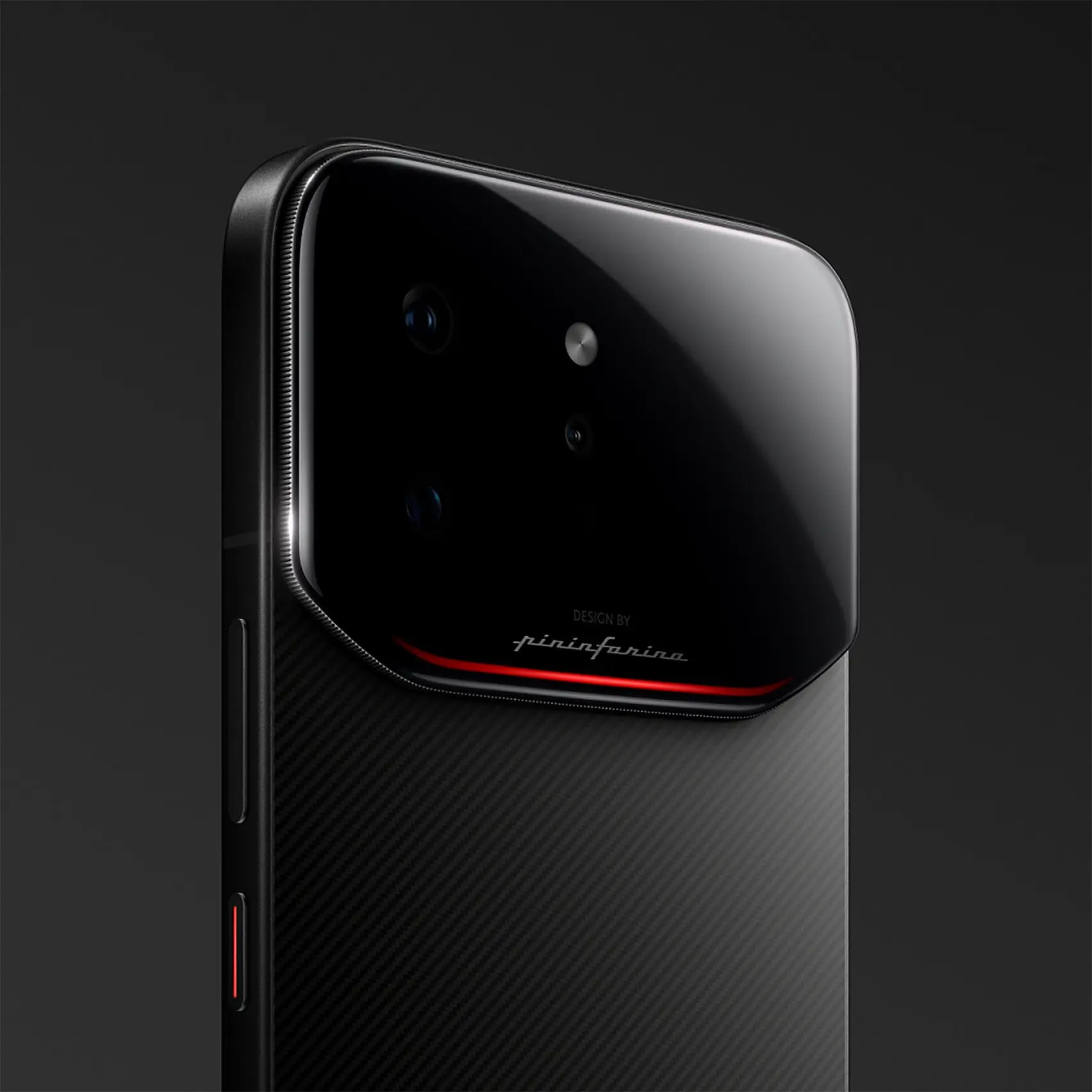
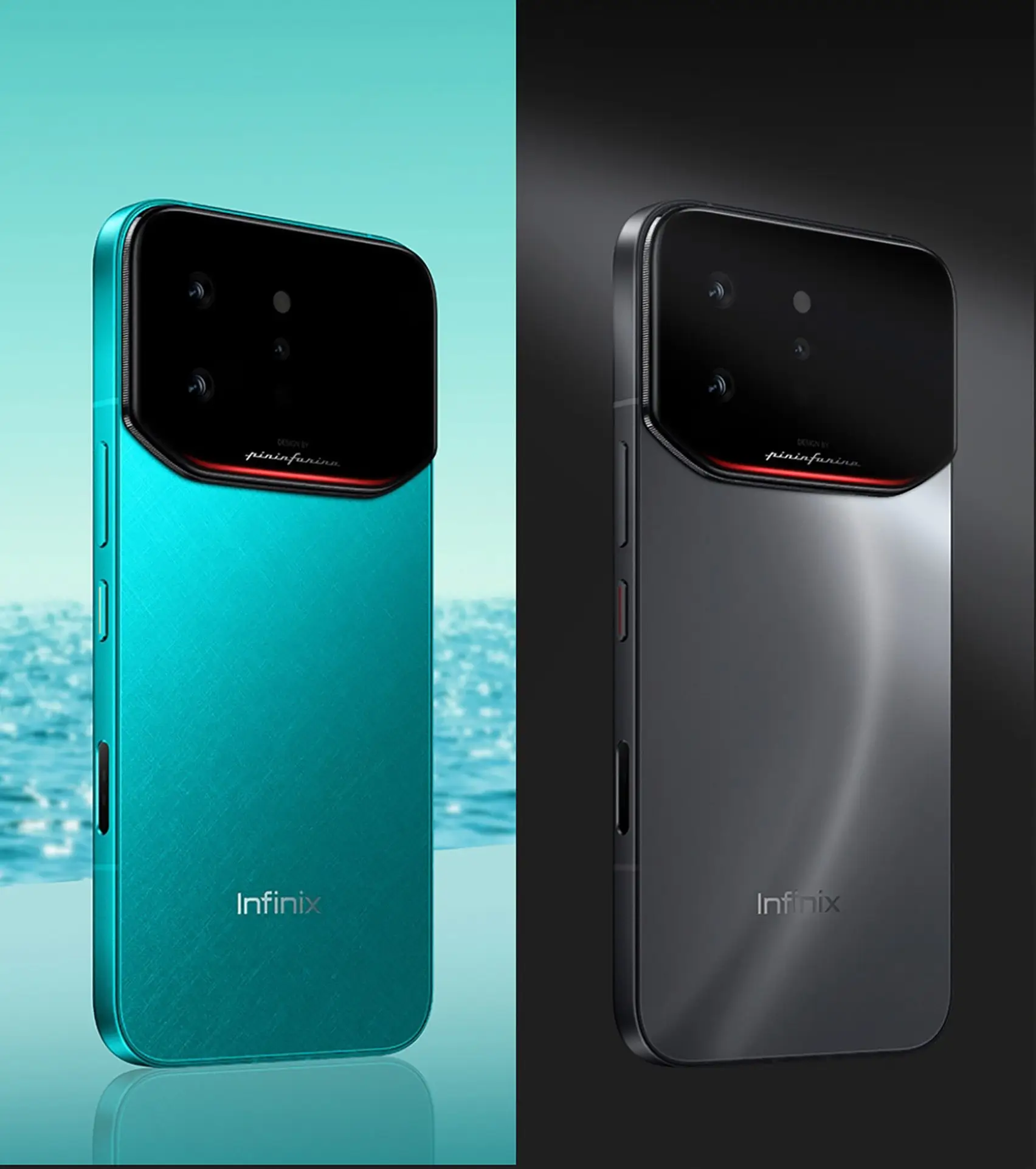
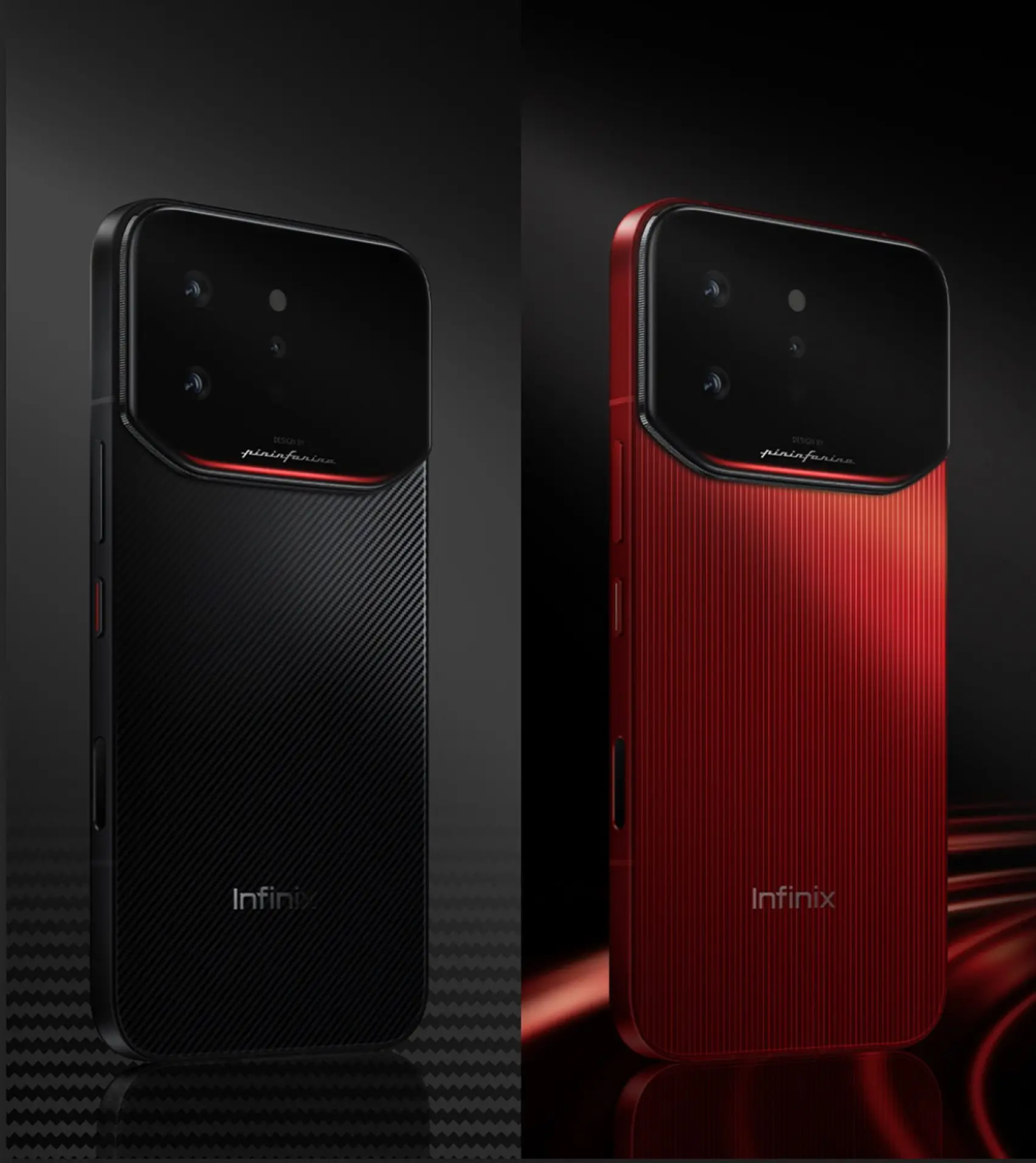
The most immediate impression of the Note 60 Ultra is not its size or its screen, but its surface. There is a directional quality to the design—lines that do not simply decorate but guide the eye, much like the bodywork of a performance car.
These lines appear to originate from a central axis, radiating outward in a controlled, almost aerodynamic flow. The effect is subtle but deliberate: the device seems to be in motion even when stationary.
This is a hallmark of Pininfarina’s approach. In automotive design, such lines are often dictated by airflow and structural necessity. Here, they are reinterpreted as visual cues—suggestions of speed translated into texture and geometry.
The camera module, housing the 200-megapixel system, becomes an integral part of this composition. Rather than interrupting the surface, it is embedded within it, treated as a continuation of the design rather than an appendage. The result is a sense of cohesion that is rare in contemporary smartphones, where camera arrays often dominate without integration.
Materials, too, acquire a critical role. The finish appears engineered to catch light dynamically, shifting in tone depending on angle and environment. This interplay between light and surface further enhances the impression of movement, echoing the way a car’s bodywork comes alive under changing conditions.
perform
At the core of the Note 60 Ultra’s technical offering is its 200-megapixel camera—a specification that, on paper, signals ambition. But megapixels alone do not define photographic excellence. What matters is how those pixels are utilized.
Infinix positions the system as a hybrid of hardware and computational photography, leveraging AI-driven processing to enhance detail, dynamic range, and low-light performance. The goal is not simply resolution, but clarity—images that retain fidelity even when cropped or enlarged.
There is a parallel here with automotive engineering. Just as horsepower figures alone do not determine a car’s performance, camera specifications require careful calibration and integration. The connection with Pininfarina does not extend directly into imaging technology, yet the shared emphasis on refinement and balance is evident.
The camera system is not presented as a feature, but as part of a holistic experience—one that aligns with the device’s broader narrative of precision and control.
phil
Perhaps the most intriguing aspect of the Note 60 Ultra is its so-called “self-healing” battery. While details remain partially opaque, the concept suggests a system designed to mitigate degradation over time—potentially through advanced materials or software optimization.
In an industry where battery longevity is a persistent concern, this feature represents a shift toward durability as a defining characteristic. It echoes a principle long embedded in automotive design: that performance must be sustained, not just achieved.
For Pininfarina, whose work often balances aesthetics with engineering integrity, this alignment is significant. A beautifully designed object that fails to endure is ultimately incomplete. The inclusion of a self-healing battery, therefore, is not merely a technical innovation—it is a philosophical one.
erg
Smartphones occupy a unique position among designed objects. Unlike cars, which are experienced at a distance as much as from within, phones are held, touched, and interacted with constantly. Their success depends not only on how they look, but on how they feel.
The Note 60 Ultra appears to address this through careful attention to ergonomics. The curvature of the edges, the distribution of weight, and the texture of the materials all contribute to a sense of comfort and control.
This is where Pininfarina’s influence becomes particularly nuanced. Automotive interiors are designed with similar considerations—how a driver’s hand rests on a steering wheel, how controls are positioned for intuitive access. Translating that sensitivity into a smartphone requires a different scale, but the underlying principles remain consistent.
The result is a device that seeks to engage the user not just visually, but physically.
a stance
The decision to debut the Note 60 Ultra at Mobile World Congress is telling. MWC has long been a platform for technological announcements, but increasingly it has become a stage for narrative—where brands present not just products, but visions.
In this context, the collaboration between Infinix and Pininfarina stands out. It is not a demonstration of incremental progress, but a statement of intent. It signals a willingness to engage with design at a deeper level, to move beyond specifications and into storytelling.
Among a sea of devices competing on similar metrics, the Note 60 Ultra differentiates itself through authorship. It carries the imprint of a design studio with a distinct identity, and in doing so, it invites comparison not just with other phones, but with objects across disciplines.
show
The smartphone market has reached a point of maturity where technological advancements, while still significant, are increasingly incremental. Screens are brighter, processors faster, cameras more capable—but the differences between flagship devices are often marginal.
In this environment, design becomes a primary axis of differentiation.
Brands have experimented with materials, colors, and form factors, yet few have fully embraced the idea of cross-disciplinary collaboration at the level seen here. The partnership with Pininfarina suggests a new direction—one in which smartphones are treated as designed objects in the same way as cars, furniture, or architecture.
This approach carries risks. It requires a clear vision and the ability to execute consistently across every aspect of the product. But when successful, it has the potential to elevate a device from commodity to artifact.
culture
The emergence between Pininfarina and Infinix is also emblematic of a broader cultural shift. Boundaries between industries are becoming increasingly fluid, with design serving as a common language.
Automotive studios collaborate with fashion houses. Technology brands partner with artists. The result is a landscape in which products are no longer confined to their categories, but exist within a network of influences.
For consumers, this creates new forms of engagement. A smartphone can carry the DNA of a sports car. A watch can reference architecture. A sneaker can embody sculpture. These intersections enrich the narrative of objects, making them more than the sum of their parts.
fwd
While the Note 60 Ultra presents a compelling vision, its ultimate success will depend on execution. Design, no matter how sophisticated, must be supported by performance, reliability, and user experience.
The integration of Pininfarina’s design language is promising, but it must translate into tangible benefits—durability, usability, and coherence. The 200-megapixel camera must deliver consistent results. The self-healing battery must prove effective over time.
There is also the question of identity. Infinix, as a brand, is still in the process of defining its position within the global market. The collaboration with Pininfarina offers a powerful narrative, but it must be sustained beyond a single device to have lasting impact.
end
The Infinix Note 60 Ultra represents more than a new smartphone. It represents a shift in how technology is conceived and presented. By collaborating with Pininfarina, Infinix has signaled its intention to engage with design as a core component of its identity.
In doing so, it challenges the industry to reconsider what a smartphone can be.
Not just a tool.
Not just a platform.
But an object—carefully shaped, emotionally resonant, and informed by disciplines far beyond its own.
If the trajectory continues, the future of consumer technology may look less like a race for specifications and more like a dialogue between industries. A space where automotive design, architecture, fashion, and engineering converge.
And in that space, the Note 60 Ultra stands as an early, compelling example of what is possible when velocity is not just measured—but designed.