Socially Awkward t-shirt: A Space Between Presence and Withdrawal

March 26, 2026
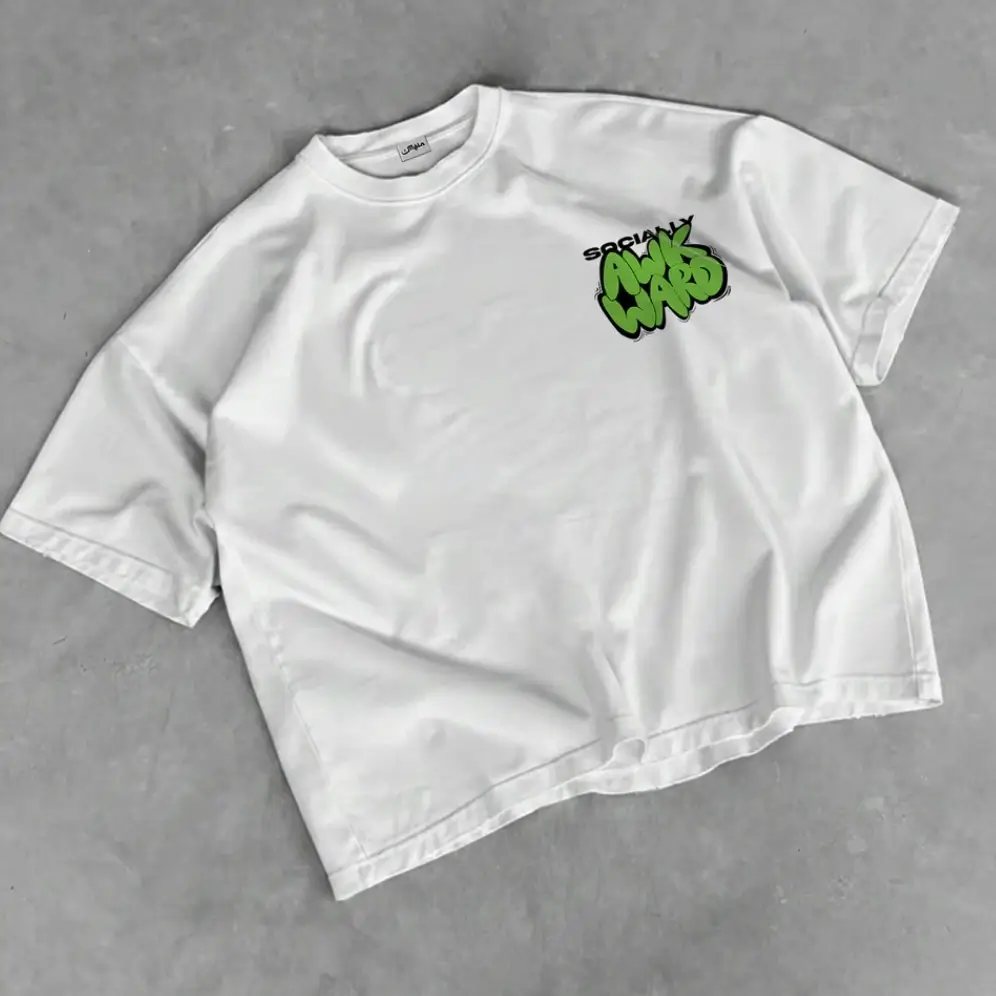
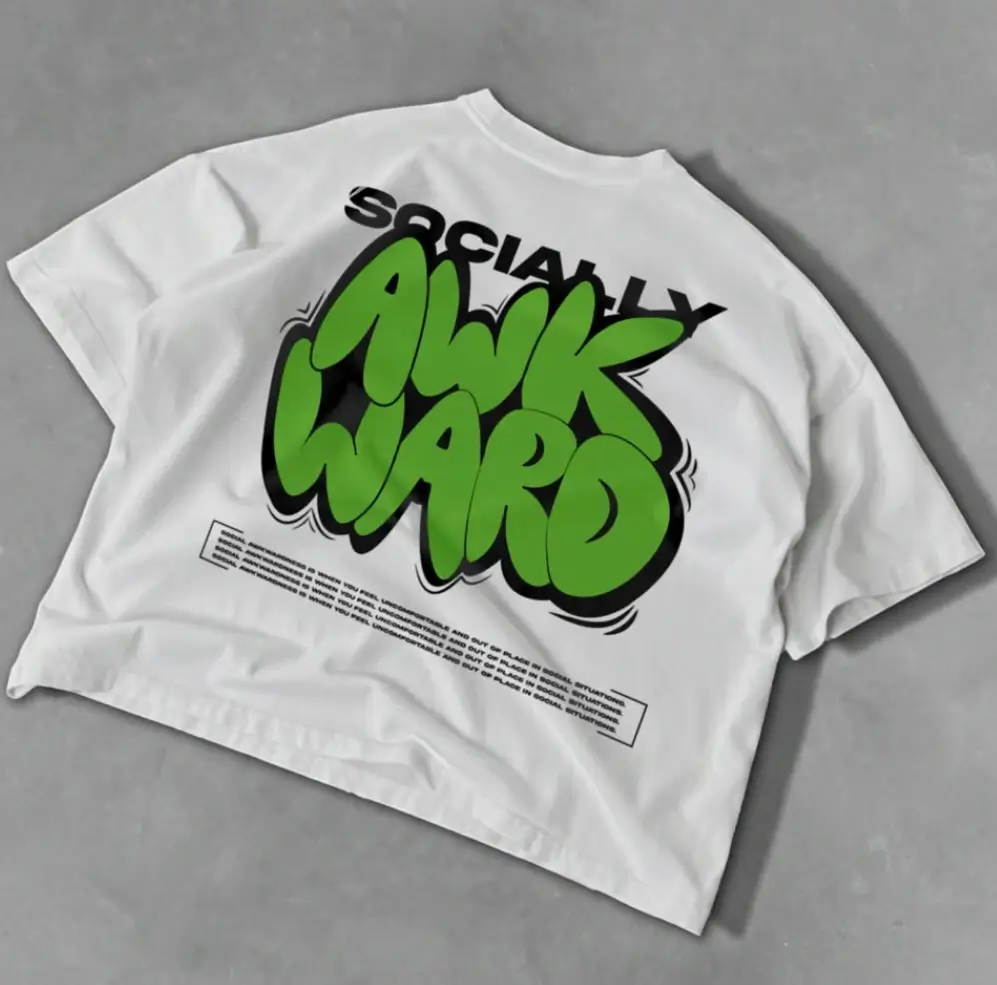
There is a quiet confidence in choosing to say less—especially when what’s printed across your chest does the speaking for you. The “Socially Awkward” oversized T-shirt sits precisely in that tension, where self-awareness meets style, and understatement becomes its own form of communication. It’s less a punchline than a posture: an acknowledgment of distance, delivered without apology.
stir
Oversized silhouettes have long moved beyond trend cycles into a kind of default language for contemporary dress. The looseness is not accidental—it creates space, both physically and psychologically. In the case of a slogan like “Socially Awkward,” that space becomes part of the message. The fabric hangs away from the body, diffusing attention, softening presence. It suggests comfort over performance, a refusal to conform to sharper, more assertive outlines.
typo
Typography matters here. Whether rendered in stark sans-serif or softened into a faded, almost hesitant print, the phrase reads as both literal and ironic. It operates as a preemptive gesture—disarming, even humorous—but also as a boundary. In an era shaped by hyper-visibility, constant sharing, and algorithmic exposure, declaring awkwardness becomes a subtle act of control. It reframes discomfort as identity rather than deficiency.
culture
The cultural context is difficult to ignore. Post-2020, fashion has leaned further into emotional signaling—garments that articulate mood states rather than affiliations. Where logos once projected status, text now often reveals interiority. The “Socially Awkward” tee aligns with this shift, echoing a generation more fluent in irony, self-diagnosis, and quiet contradiction. It is both sincere and performative, a statement that knows it is being read.
style
Styling tends to follow suit. The shirt rarely stands alone; it is layered, partially tucked, or paired with equally relaxed garments—wide-leg trousers, washed denim, or technical cargos. Footwear often anchors the look: understated sneakers or worn-in boots that maintain the balance between effort and indifference. Nothing feels overworked. That is the point.
wear
Material choice subtly reinforces the narrative. Heavier cottons lend structure, preventing the oversized cut from collapsing into shapelessness, while softer, pre-washed finishes introduce a lived-in familiarity. The shirt feels as though it has already existed somewhere else—worn, understood, and now recontextualized.
sum
What emerges is not simply a graphic tee, but a coded object. The phrase “Socially Awkward” reads differently depending on who encounters it. For some, it is humor. For others, recognition. And for many, it is a small assertion of autonomy within a culture that often demands constant articulation.
In that sense, the oversized T-shirt becomes more than clothing. It becomes a controlled disclosure—visible, legible, but still guarded.