SSStuff Patchwork Shorts: A Discipline of Disorder

March 29, 2026
2 hours ago
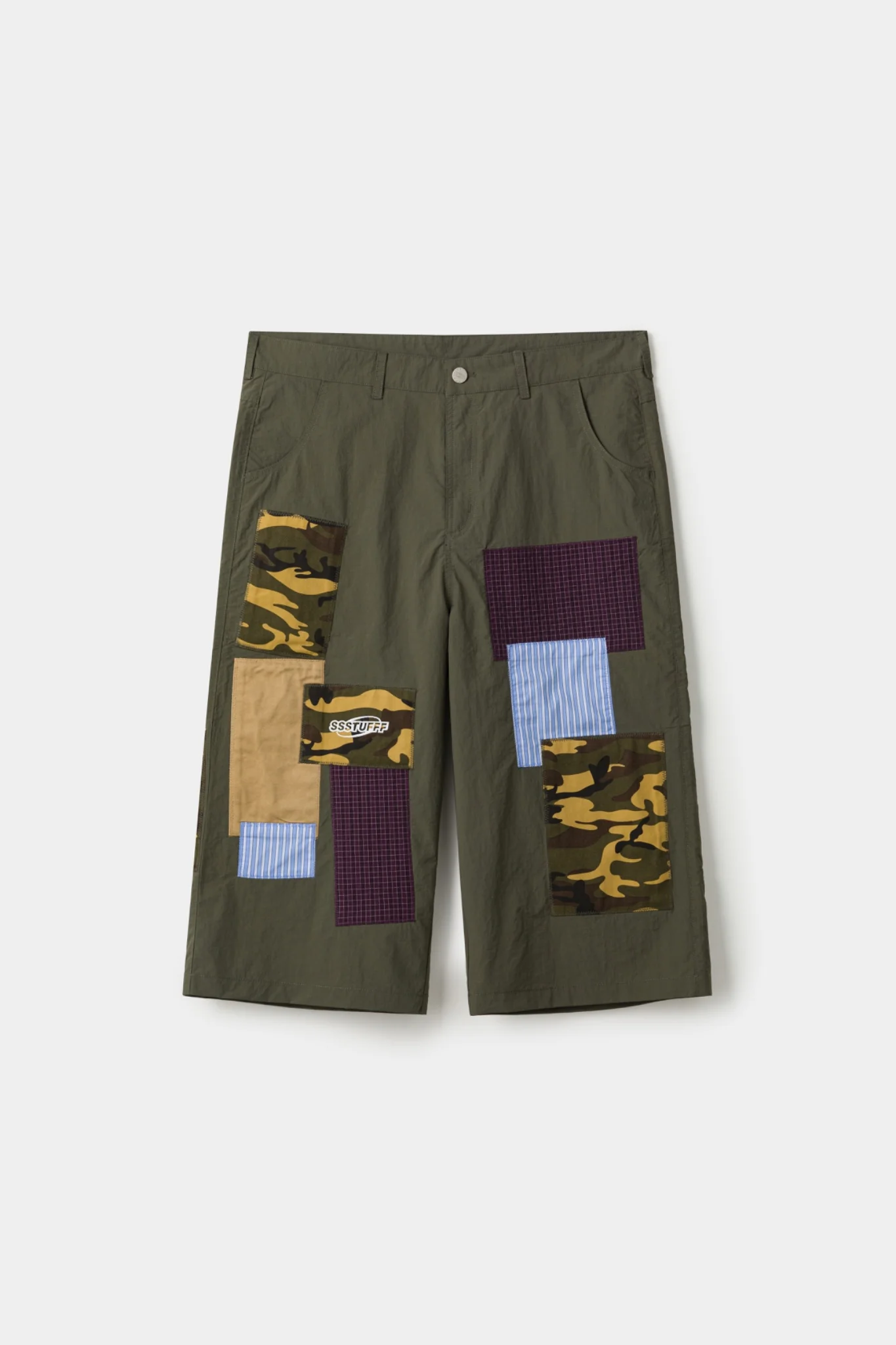
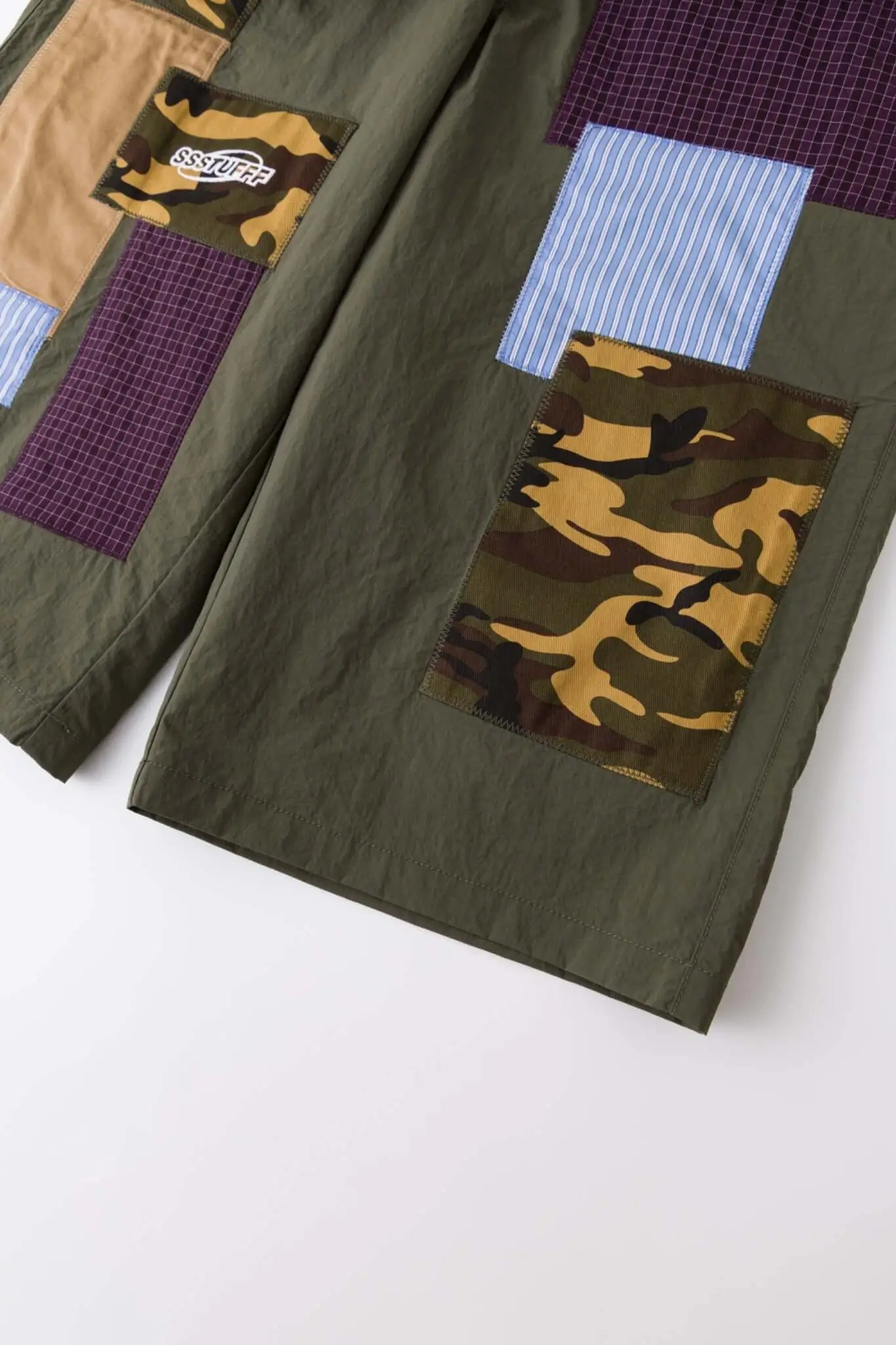
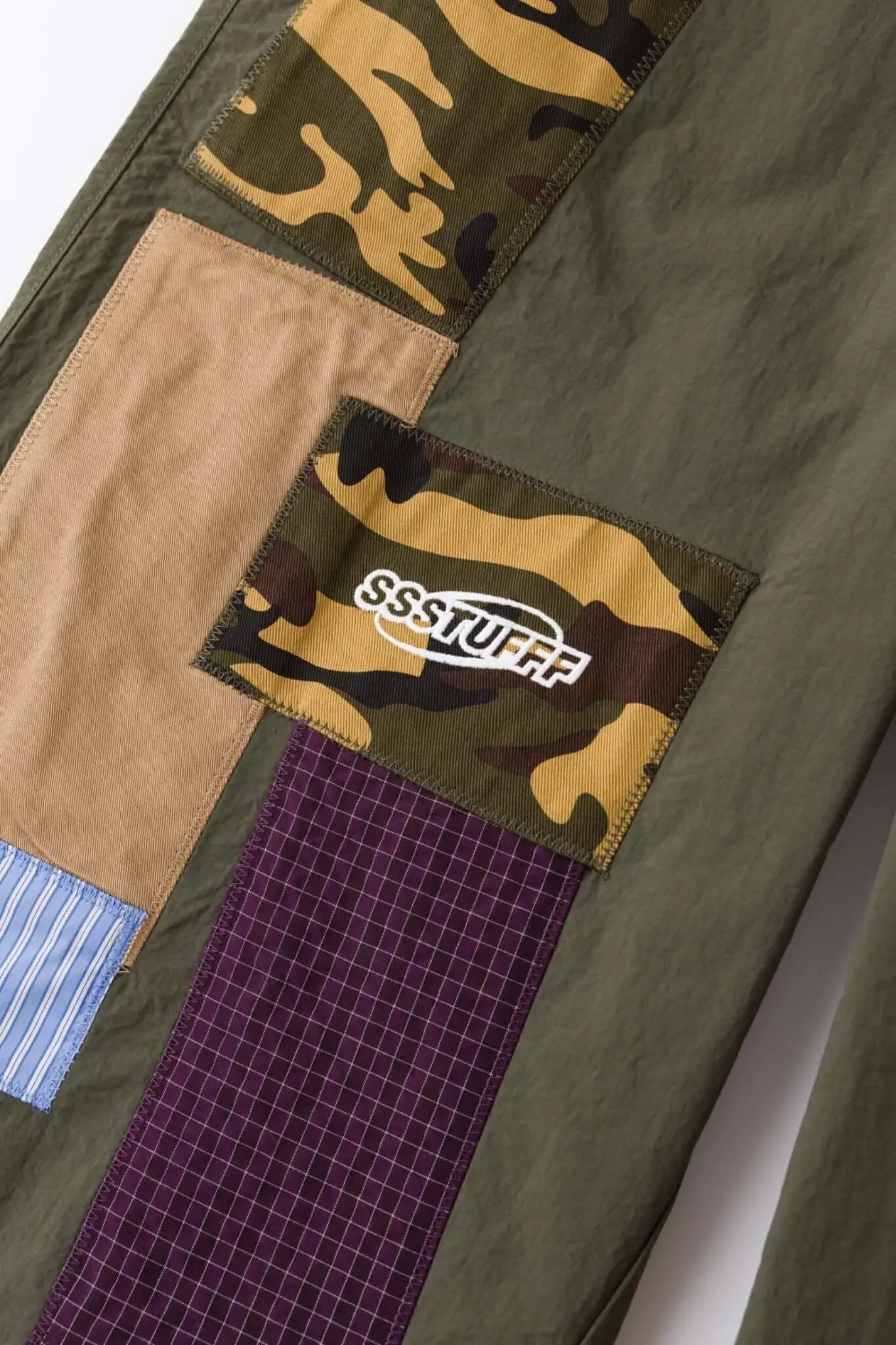
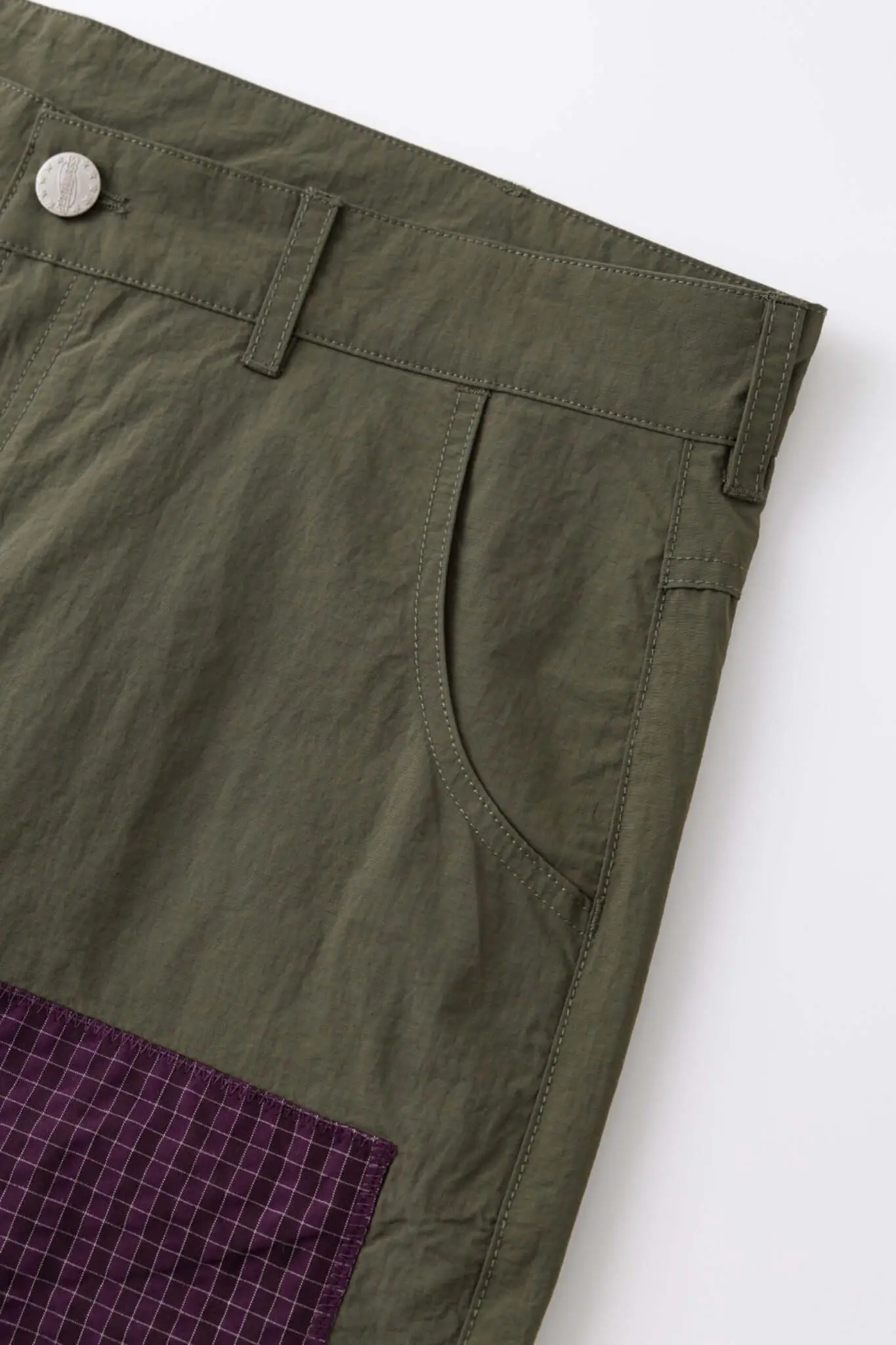
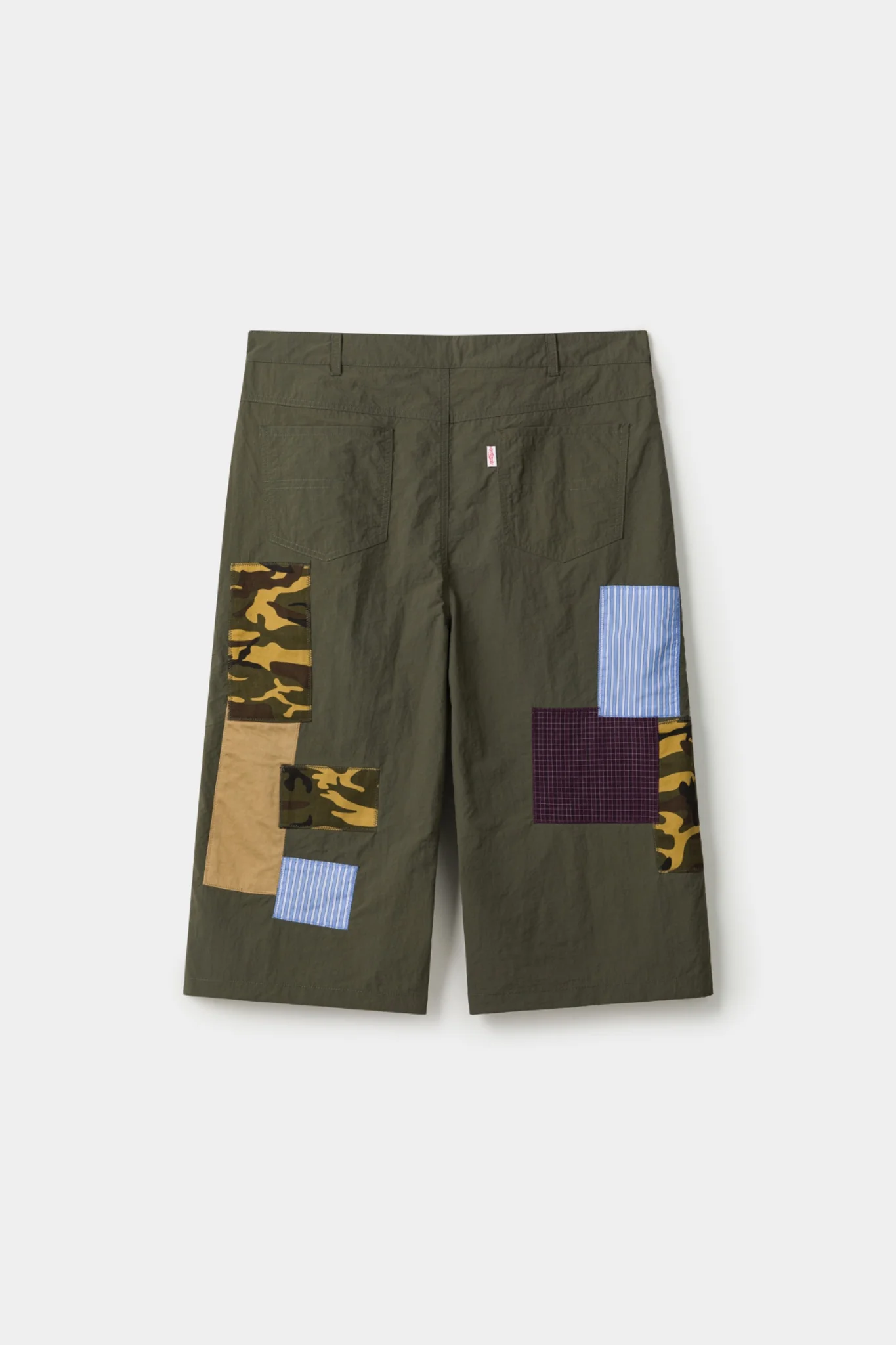
There is a quiet refusal embedded in garments that don’t resolve neatly. SSSTUFF, as a maker, has built its identity in that refusal—operating less like a conventional label and more like a studio of fragments, where garments feel discovered, rearranged, and re-authored rather than simply designed. The Patchwork Shorts sit within that lineage, but they also open the door to alternative readings—other directions the same philosophy might take, other garments that could exist within the same system of thought.
At its core, SSSTUFF appears to approach clothing as a form of editing. Not creation from nothing, but recomposition. Materials are not neutral—they carry memory, reference, and implication. Camouflage is never just camouflage. Shirting stripes are never just decorative. A grid is never purely technical. Each fabric arrives with a past, and SSSTUFF’s role is to interrupt that past, to reposition it.
The Patchwork Shorts become a kind of thesis for that approach.
But what if the same logic expanded differently?
flow
Imagine a version where the olive base disappears entirely—replaced by a tonal gradient of greys, from washed charcoal to pale ash. The patches, instead of contrasting through color, begin to differentiate through texture alone: matte ripstop against brushed cotton, smooth nylon against coarse twill. Camouflage might still appear, but desaturated, almost ghosted into the composition.
The result would be quieter, more architectural—less about visual collision, more about material conversation. It would shift the garment closer to industrial design language, where contrast is subtle and hierarchy is flattened. A piece like this wouldn’t announce itself immediately; it would reveal itself slowly, through proximity.
assembly
Or consider a more aggressive iteration, where the patchwork extends beyond the surface and begins to alter the structure itself. Panels could overlap instead of sitting flush, creating slight ridges and dimensional shifts across the garment. Pockets might emerge from these layers, partially concealed, integrated into the patchwork rather than placed on top of it.
In this version, the shorts move closer to object than garment—something sculptural, almost topographical. The act of wearing becomes an interaction with form, not just fabric. Movement would activate the layers, creating shifting silhouettes as the panels respond to the body.
pattern
There’s also the possibility of inversion. Instead of stitching patches onto a stable base, the entire garment could be constructed from interlocking panels with no dominant field. Every piece equal, every seam exposed. The olive disappears, replaced by a mosaic of fabrics that never settle into hierarchy.
It would be more chaotic, certainly—but also more honest in its fragmentation. A garment like this would reject the idea of a “main” fabric entirely, positioning itself as a pure composition of parts. It would feel less like a pair of shorts and more like a wearable collage.
extent
Even within the current design, there are subtle cues toward these alternate directions. The grid panel hints at a more technical future—one where SSSTUFF leans further into performance fabrics, into garments that straddle the line between streetwear and utilitarian gear. The striped panel suggests another path entirely, one that pulls from tailoring, from shirting traditions, from a softer, more domestic language.
SSSTUFF doesn’t choose between these paths. It lets them coexist.
The olive base acts as a stabilizer, holding together the visual tension created by camouflage, grid, stripe, and khaki. Each panel introduces a different rhythm, but none overwhelms the composition. There’s pacing here—an understanding of when to disrupt and when to pause.
View this post on Instagram
novel
This is where the brand’s origin—or at least its implied origin—becomes important. While not overtly defined, SSSTUFF feels rooted in a post-streetwear moment, where the codes of skate, military, and workwear have already been absorbed and are now being reconsidered.
It’s not about introducing new references, but about destabilizing existing ones.
There’s a sense that the maker operates with a collector’s mindset. Not in the sense of accumulation, but in the sense of selection. Each fabric feels chosen, not for harmony, but for tension. The act of placing a camouflage panel next to a fine stripe is not arbitrary—it’s a deliberate misalignment, a way of forcing the eye to reconsider both elements.
style
This openness extends into how the shorts are worn. They don’t dictate a single direction—they invite interpretation.
Paired with a clean white tee, they become the focal point—an anchor of visual complexity against a neutral field. Styled with a similarly fragmented top, they dissolve into a larger composition, part of a broader narrative of assembly. Even with something as simple as a lightweight knit, the contrast in texture begins to activate different aspects of the garment.
They are adaptable, but not passive.
fin
And yet, there remains a certain distance. A subtle conceptual layer that prevents them from becoming purely functional. You are always aware, on some level, that these shorts are thinking. That they are asking questions about construction, about reference, about the role of the garment itself.
What does it mean to wear something that acknowledges its own making?
SSSTUFF doesn’t answer directly. Instead, it offers variations. Iterations. Possibilities.
The Patchwork Shorts, in this sense, are not a final statement. They are one version among many. A snapshot of a process that could continue indefinitely, shifting with each new combination of fabric, each new arrangement of panels.