Stockholm Surfboard Club SS26

March 25, 2026


Stockholm Surfboard Club’s Spring/Summer 2026 collection does not begin with a wave. It begins after it. There is no immediate spectacle, no cinematic coastline or sun-drenched performance of surf culture. Instead, SS26 works through what lingers—fabric softened by repetition, color altered by exposure, silhouettes shaped by use rather than intention. The collection reads less like a seasonal drop and more like a wardrobe that has quietly accumulated over time.
Operating out of Stockholm, the brand has always occupied a deliberate distance from traditional surf geographies. That distance is not a limitation—it is the point. In SS26, surf is not treated as location-specific authenticity, but as a transferable condition. It becomes a way garments age, move, and settle into the body. The result is a collection that feels neither coastal nor urban, but suspended between the two.
lang
The most immediate shift in SS26 is its resistance to overt signaling. There are no dominant graphics, no heavy-handed references, no reliance on nostalgia as a visual shortcut. Instead, Stockholm Surfboard Club constructs its narrative through material and finish.
Cotton jerseys appear slightly dulled, as if washed repeatedly in salt and sun. Denim carries a softened structure, broken in without losing integrity. Knits—often striped, subtly maritime—avoid crispness in favor of a lived-in irregularity. These are not garments designed to look new. They are designed to feel as though they have already passed through time.
This approach separates the brand from traditional surfwear counterparts like Quiksilver or Billabong, where identity has historically been tied to performance and visual immediacy. SS26 rejects both. It proposes that surf culture, at its most compelling, is not about the act itself but about its imprint—how it changes the things that come into contact with it.
story
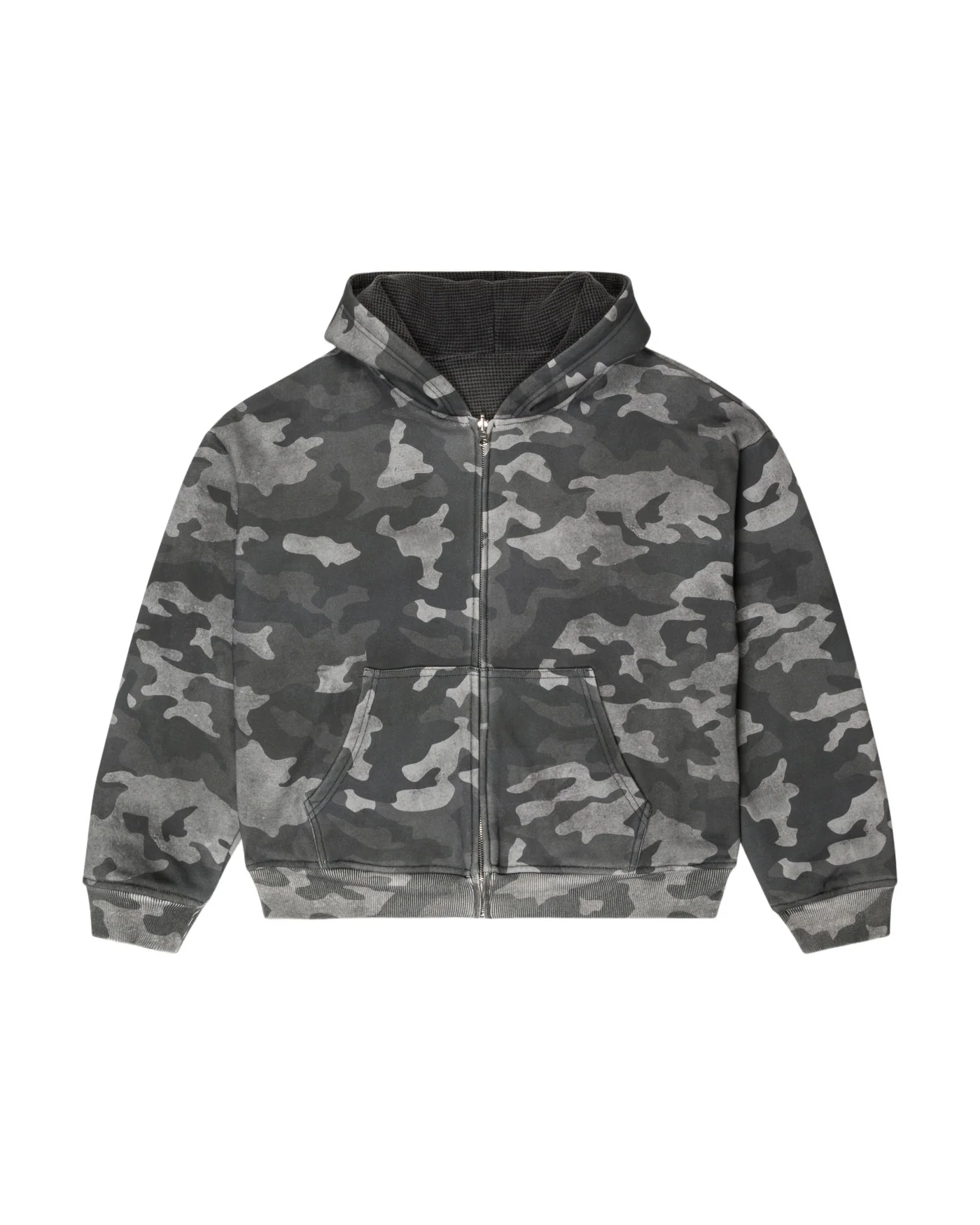
Material becomes the central storytelling device. The collection leans into techniques that simulate natural processes: sun-fading, salt wear, gradual softening. Airbrushed gradients echo the uneven bleaching of fabric left outdoors. Lightweight cottons collapse slightly at the seams, losing the rigidity associated with newness. Even structured pieces—jackets, overshirts—carry a sense of prior life.
There is a growing movement within fashion that privileges tactility over image, seen in the work of labels like Lemaireand The Row. Stockholm Surfboard Club aligns with this shift, but introduces a distinct framework: surf as a process that alters material over time. The garments are not simply designed—they are imagined as already lived in.
View this post on Instagram
flow
The silhouettes in SS26 are relaxed, but never excessive. This distinction is key. At a time when oversized proportions often dominate contemporary fashion, Stockholm Surfboard Club opts for calibration.
Trousers fall straight with a slight looseness, avoiding both tightness and exaggeration. Jackets are boxy, but retain structure through the shoulder and body. Tees extend marginally, referencing vintage surf uniforms without slipping into costume. The overall effect is one of controlled ease—clothing that allows for movement without losing clarity.
This restraint reflects a Scandinavian design sensibility, one that values proportion over statement. It also hints at the founders’ background within Acne Studios, where silhouette is often treated as a system rather than an experiment.
show
Color in SS26 is handled with similar restraint. Rather than presenting hues at full saturation, the collection filters them through the lens of time and environment.
Neutrals dominate: washed whites, muted greys, soft beiges. When color appears, it does so in a faded register—blues that feel weathered, reds that appear sun-softened, greens that sit closer to dust than pigment. Nothing feels freshly dyed. Everything suggests interaction.
This treatment transforms color from decoration into evidence. Each tone feels like the result of exposure, reinforcing the collection’s central idea: clothing as a record of experience.
around
One of the defining strengths of Stockholm Surfboard Club is its ability to exist between contexts. SS26 does not commit fully to the beach or the city. Instead, it moves fluidly between both.
This is reflected not only in design, but in distribution. The presence of the collection in spaces like Dover Street Market Ginza positions the brand within a global fashion conversation, rather than confining it to a niche category. The garments feel equally plausible in a coastal setting or an urban environment, reinforcing the idea that surf is not a place, but a sensibility.
idea
Compared to previous seasons, SS26 feels more distilled. Earlier collections often layered references—music, sport, archival imagery—into broader narratives. Here, the storytelling is reduced to its essential components: fabric, silhouette, color.
This shift suggests a brand moving toward clarity. Rather than expanding its vocabulary, Stockholm Surfboard Club refines it. The result is a collection that feels cohesive without being repetitive, subtle without being indistinct.
View this post on Instagram
position
Stockholm Surfboard Club occupies a unique position within contemporary fashion. It is not a surf brand in the traditional sense, nor is it fully aligned with luxury fashion. Instead, it operates in a hybrid space where cultural references are filtered through design discipline.
SS26 reinforces this positioning by avoiding extremes. It does not chase authenticity through geography, nor does it detach entirely from functional roots. Instead, it proposes a middle ground—one where surf culture is interpreted as a set of conditions rather than a fixed identity.
This approach resonates within a broader shift in fashion toward nuance and hybridity. As boundaries between categories continue to dissolve, brands that can navigate multiple contexts without losing coherence become increasingly relevant.
fin
What kind of defines SS26 is its relationship to time. The collection is less concerned with how garments appear at the moment of purchase and more with how they will evolve. It invites a slower engagement, one that values aging, adaptation, and continuity.
In this sense, Stockholm Surfboard Club offers an alternative to fashion’s prevailing tempo. It suggests that clothing does not need to announce itself to be meaningful. It can exist quietly, gathering significance through use.
SS26 does not attempt to redefine surf culture. It reframes it. Not as spectacle, but as residue. Not as image, but as experience embedded into material.
And in doing so, it presents a wardrobe that feels less like a collection and more like a lived-in archive—one that continues to change long after it leaves the rack.