
Stone Island Deconstructs Denim With a New Wave of Textile Innovation

March 7, 2026



the lab
For decades, denim has stood as one of fashion’s most democratic fabrics. It is both universal and deeply personal, worn across cultures, generations, and social classes. Yet within the hands of certain designers, denim becomes something far more radical. In the case of Stone Island, the material is not simply worn—it is interrogated.
Through its ongoing Denim Research program, the Italian label continues to push the boundaries of what denim can be. Rather than treating the fabric as a fixed archetype, Stone Island approaches it as an evolving material system—one capable of transformation through engineering, dye innovation, and textile experimentation.
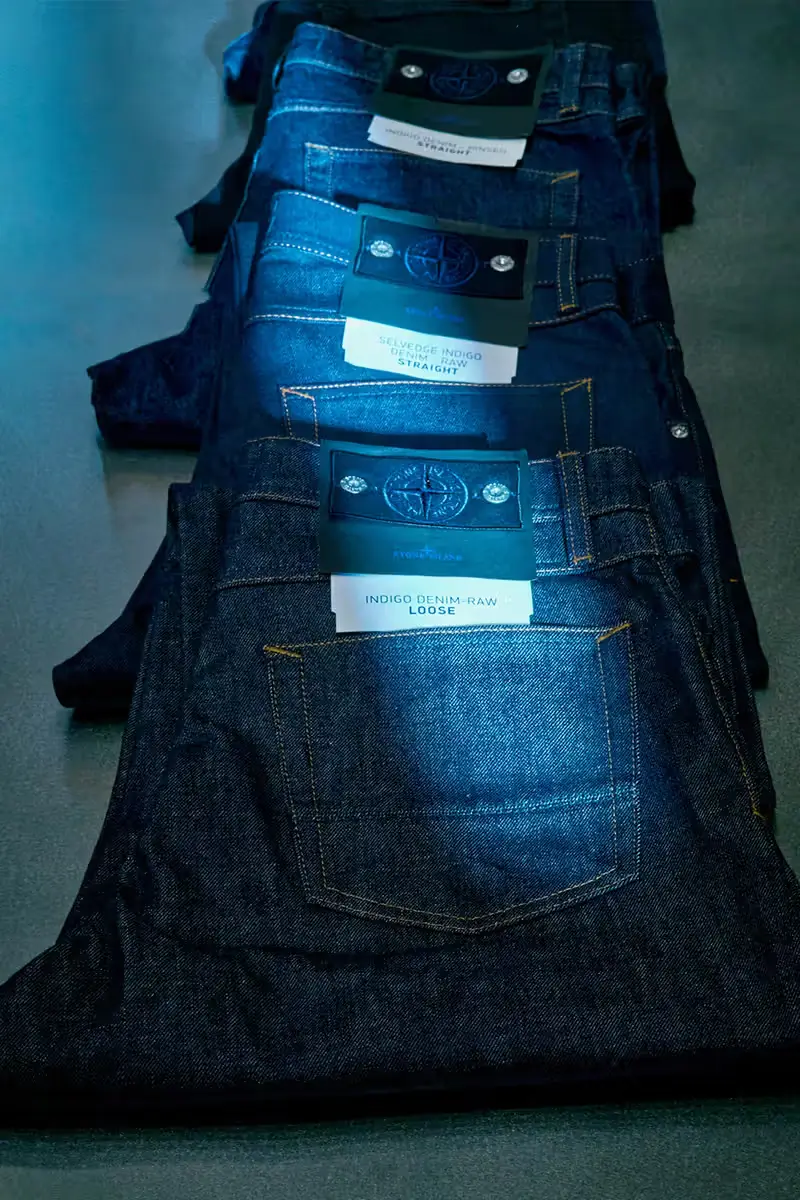
The latest Denim Research exploration revisits some of the most recognizable codes of indigo workwear while simultaneously destabilizing them. Traditional Japanese raw selvedge denim—long considered the pinnacle of heritage craftsmanship—is placed alongside unexpected technological materials such as Indigo Polypropene Denim, David Light Indigo-TC, and Micro Corduroy. The result is not simply a reinterpretation of denim, but a full re-engineering of its structural language.
This tension between tradition and technological experimentation lies at the heart of Stone Island’s identity. Since its founding in 1982, the brand has treated clothing as a laboratory—a space where chemistry, fabric science, and industrial processes intersect with fashion design.
Denim Research represents one of the most intriguing chapters in that ongoing investigation.
flow
To understand the significance of Stone Island’s experiments, it is important to first consider the historical weight of denim itself.
Denim originated in the 19th century as a durable workwear fabric. Its tightly woven twill structure—traditionally composed of indigo-dyed warp threads and undyed weft threads—made it exceptionally resistant to abrasion. The material’s association with labor, mining, and manual work defined its early identity.
By the mid-20th century, denim underwent a cultural transformation. It migrated from factories and fields to youth culture, becoming synonymous with rebellion, freedom, and individuality. Subcultures from rock ‘n’ roll to punk adopted denim as a visual symbol of resistance.
Yet within the world of textile production, denim remained largely unchanged. While washes, cuts, and finishing techniques evolved, the fundamental construction of the fabric stayed relatively constant.
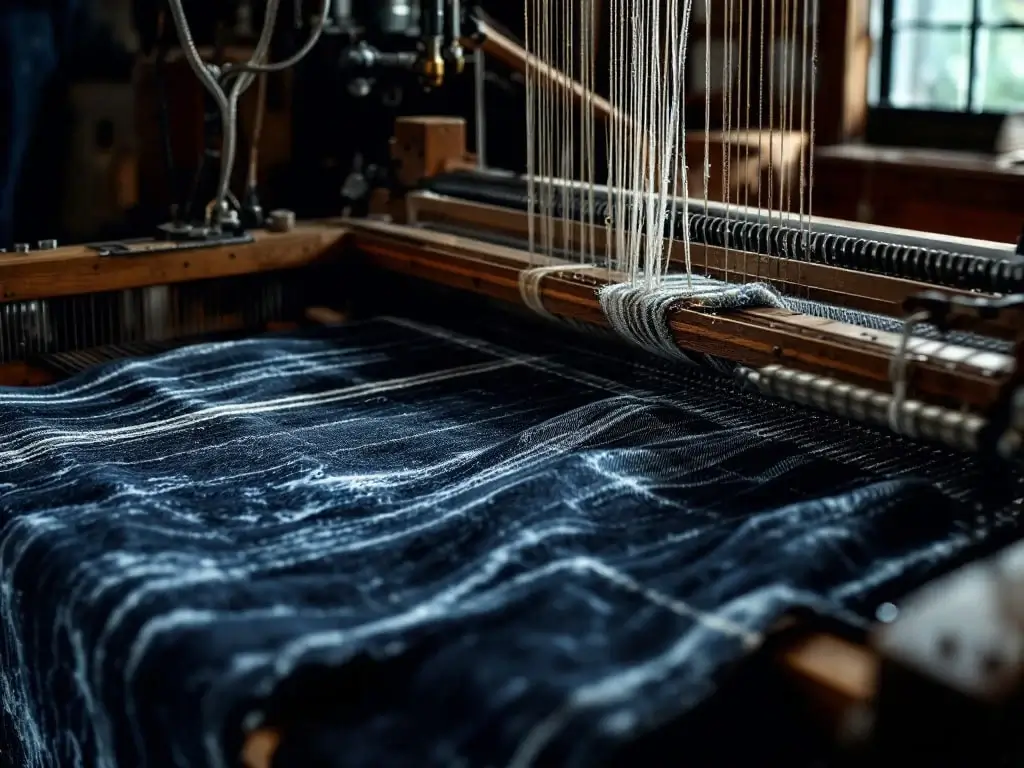
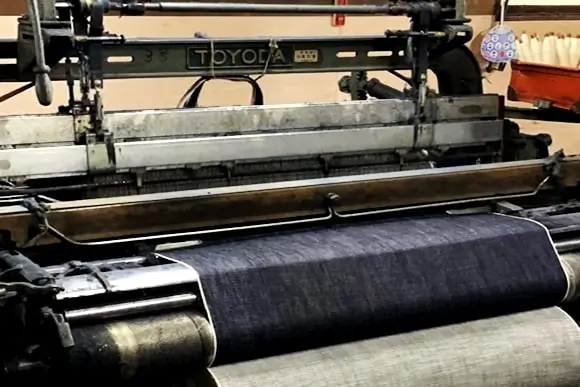
Japanese selvedge denim emerged in the late twentieth century as the gold standard of craftsmanship. Produced on vintage shuttle looms, these fabrics emphasize slow weaving, dense textures, and deep indigo saturation. The red-lined selvedge edge—once a practical feature preventing fraying—became a marker of authenticity and quality.
Stone Island’s Denim Research begins precisely at this intersection: acknowledging denim’s heritage while refusing to treat it as static.
Instead, the brand asks a radical question.
What happens when the world’s most traditional fabric meets the mindset of material science?
phil
Few fashion houses approach clothing with the same scientific intensity as Stone Island.
From the beginning, the brand’s founder, Massimo Osti, envisioned garments as experimental objects. Osti pioneered techniques such as garment dyeing, fabric coating, and material hybridization long before these processes entered mainstream fashion.
Stone Island’s now-iconic compass badge became synonymous with innovation—representing garments engineered through experimentation rather than seasonal trend cycles.
Over the decades, the brand developed an archive of textile breakthroughs: reflective jackets, heat-reactive fabrics, monofilament nylon constructions, and bio-engineered materials. Each collection functioned like a field report from a laboratory dedicated to pushing clothing beyond conventional limits.
Denim Research continues that tradition.
Rather than designing denim garments and then applying aesthetic treatments, Stone Island begins with the material itself. The research process examines fiber composition, dye absorption, surface behavior, and environmental performance.
The result is denim that behaves differently—lighter, more resistant, more dimensional, or unexpectedly tactile.
In essence, Stone Island treats denim not as heritage but as potential.
imagine
One of the most intriguing innovations within Denim Research is Indigo Polypropene Denim.
Polypropylene is rarely associated with traditional denim. It is a lightweight synthetic polymer commonly used in industrial textiles due to its resistance to moisture, chemicals, and abrasion.
Integrating polypropylene fibers into denim dramatically alters the fabric’s physical properties.
First, the material becomes significantly lighter. Traditional denim relies on cotton fibers that absorb water and retain weight. Polypropylene, by contrast, repels moisture. The result is a fabric that maintains the visual character of indigo denim while behaving more like a technical performance textile.
Second, the dyeing process becomes more complex.
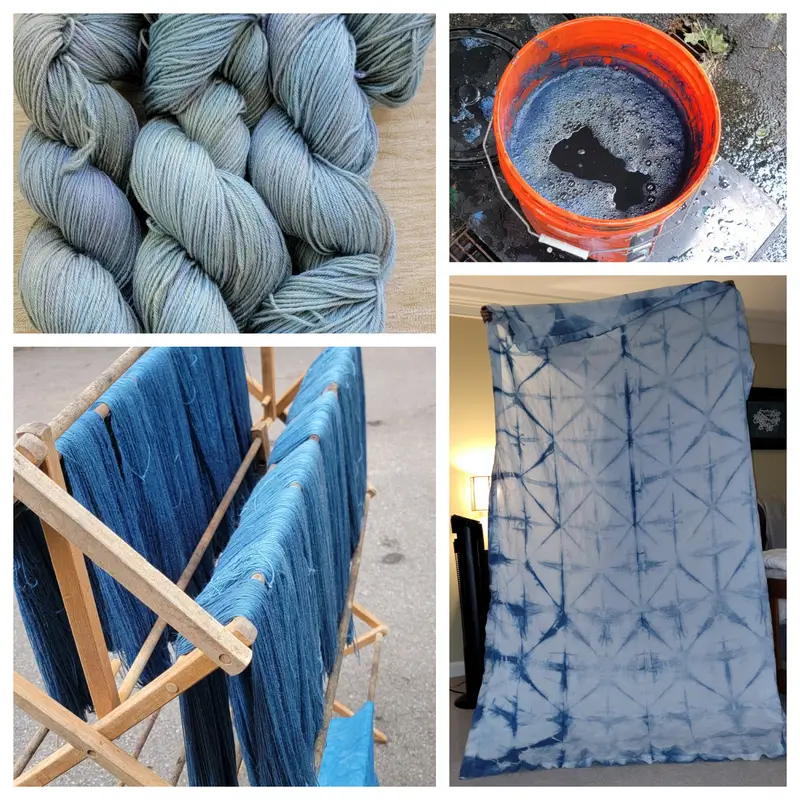
Indigo traditionally bonds well with cotton fibers, but synthetic polymers require specialized treatments to achieve similar saturation. Stone Island’s approach involves advanced dye techniques that allow indigo pigments to interact with the polypropylene surface while maintaining the distinctive fading patterns associated with classic denim.
The visual result is fascinating.
At first glance, Indigo Polypropene Denim appears familiar—deep indigo tones, twill texture, subtle irregularities. But when worn, the fabric reveals its technological DNA. It feels lighter, more breathable, and unexpectedly resilient.
It is denim designed not just for style, but for modern environments.
style
Another cornerstone of the Denim Research project is David Light Indigo-TC.
The name references Stone Island’s long-running David textile platform—a fabric that blends lightweight cotton with synthetic fibers to achieve strength without bulk. The “TC” designation refers to the process of garment dyeing.
Garment dyeing is one of Stone Island’s most influential innovations. Instead of dyeing fabric before construction, garments are assembled first and then dyed as finished pieces. This technique allows colors to penetrate unevenly across seams, stitching, and fabric surfaces, creating subtle tonal variations impossible to achieve through conventional methods.
When applied to indigo, the results are particularly compelling.
Unlike traditional denim, which is woven from indigo yarns, David Light Indigo-TC garments receive their color after construction. This produces a softer, more atmospheric indigo tone—one that feels closer to a washed sky than the dense darkness of raw denim.
The material also carries a slightly technical sheen due to the synthetic fibers embedded within the weave.
It is denim interpreted through modern textile engineering rather than historical reproduction.
stir
While denim remains the conceptual center of the project, Stone Island expands the conversation by introducing Micro Corduroy.
Corduroy shares historical roots with denim. Both fabrics emerged within the realm of workwear and utilitarian clothing. Yet their textures diverge dramatically.
Where denim offers diagonal twill structure, corduroy presents vertical ribbing created by raised yarn piles.
Stone Island’s micro version refines this ribbing into extremely fine channels, producing a surface that feels almost velvety. When dyed in indigo tones, the fabric acquires remarkable depth.
Light moves across the ribs differently than it does across denim twill. Shadows gather in the channels while the raised surfaces catch highlights, creating subtle optical movement.
Placed alongside denim fabrics, micro corduroy introduces a tactile contrast. The garments feel cohesive through color while remaining texturally distinct.
It is a dialogue between surfaces.
show
Despite its emphasis on experimentation, Stone Island does not abandon denim’s heritage.
At the core of the Denim Research initiative lies Japanese raw selvedge denim—one of the most revered materials in contemporary fashion.
Produced on vintage shuttle looms, selvedge denim is woven slowly and deliberately. The narrower loom width creates a clean edge known as the selvedge, preventing fraying and adding structural integrity.
Japanese mills have become legendary for their ability to produce dense, richly textured denim with deep indigo saturation. These fabrics age beautifully, developing unique fading patterns shaped by the wearer’s movements and habits.
Stone Island’s use of selvedge denim acknowledges the enduring importance of craftsmanship within textile culture.
But rather than treating it as a relic, the brand situates selvedge alongside experimental materials.
In doing so, Stone Island creates a fascinating contrast: centuries-old weaving traditions coexisting with modern polymer engineering.
struct
Beyond fabrics, Denim Research also investigates garment structure.
Stone Island has long treated clothing as engineered equipment rather than purely aesthetic objects. Jackets, overshirts, trousers, and outerwear pieces are designed with functional precision.
Pocket placements are calculated for ergonomics. Stitching patterns reinforce areas of stress. Closures and hardware are selected for durability.
Within the Denim Research collection, this architectural mindset becomes especially evident.
The fabrics themselves influence the garments’ silhouettes. Lightweight polypropylene denim allows for fluid shapes, while raw selvedge denim supports more structured forms.
Micro corduroy introduces softness and tactile richness, making certain garments feel almost sculptural.
Each piece becomes a study in how material properties shape design outcomes.
culture
Denim’s cultural relevance has never disappeared, but its meaning continues to evolve.
In recent years, fashion has witnessed renewed interest in craftsmanship, material transparency, and technical innovation. Consumers increasingly seek garments that tell stories—not just through branding, but through the fabrics themselves.
Stone Island’s Denim Research responds directly to this shift.
Rather than relying on nostalgia or vintage replication, the brand proposes a future-facing vision of denim. The material becomes a platform for research, innovation, and experimentation.
In this sense, Stone Island occupies a unique space within contemporary fashion.
It bridges heritage and technology.
fin
Denim has survived for more than a century because of its adaptability. It has moved from labor uniforms to youth rebellion, from haute fashion to everyday essentials.
Yet the fabric’s next chapter may depend on experimentation.
Stone Island’s Denim Research suggests that indigo textiles are far from exhausted. By combining Japanese selvedge craftsmanship with innovative fibers like polypropylene and advanced garment dyeing techniques, the brand demonstrates how tradition can coexist with progress.
The future of denim may not lie in repeating the past.
Instead, it may emerge from laboratories where chemistry, design, and culture intersect.
For Stone Island, the investigation continues.
And indigo—once a symbol of labor and rebellion—remains a canvas for discovery.
No comments yet.


