Nintendo’s Super Mario Bros. Wonder Switch 2 Edition Sparks Bellabel Park
developer
March 15, 2026
2
0
share
flow
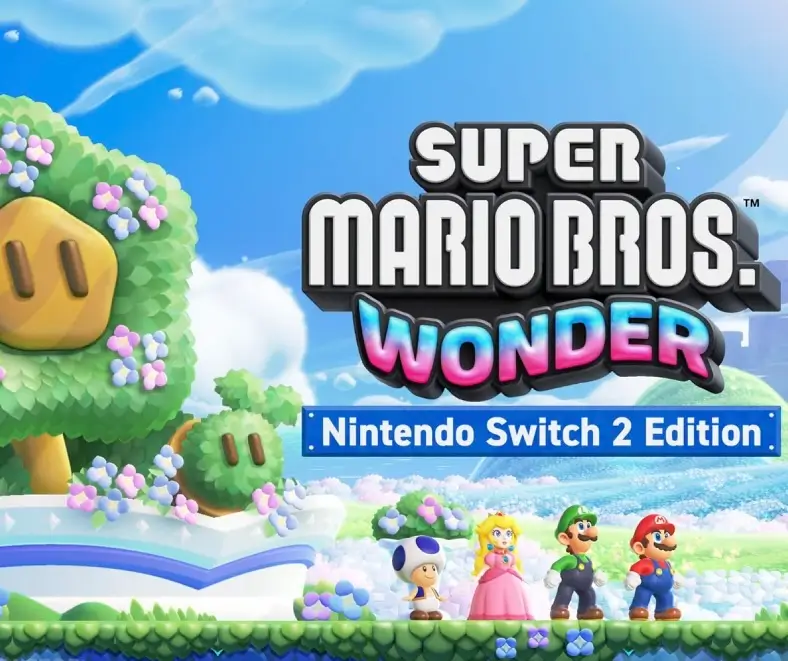
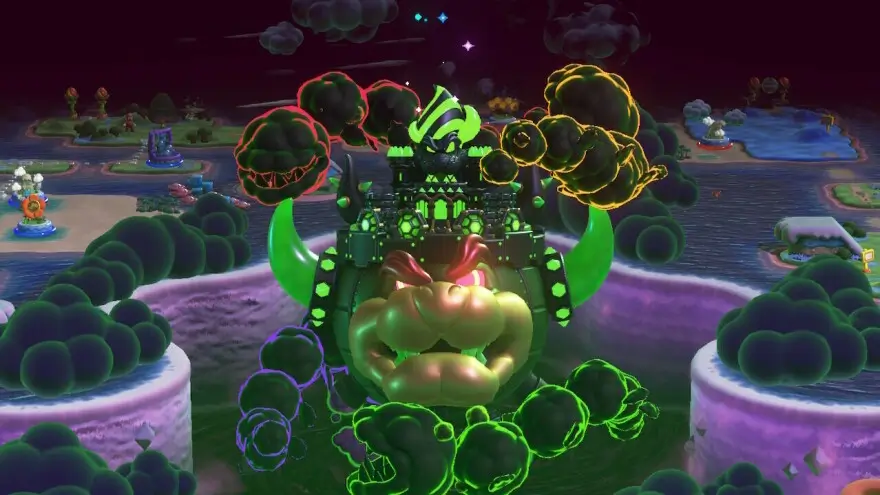
The mythology surrounding Mariohas always been larger than the character himself. Since his early pixelated leaps across arcade screens in the 1980s, the mustachioed plumber has evolved into a global shorthand for imaginative play. With the arrival of Super Mario Bros. Wonder – Nintendo Switch 2 Edition, Nintendorevisits one of its most inventive platformers and expands it for a new generation of hardware.
The updated edition enhances the acclaimed 2023 title Super Mario Bros. Wonder—originally designed for the Nintendo Switch—with performance upgrades and community-focused features designed to flourish on the anticipated Nintendo Switch 2 ecosystem.
More than a technical revision, however, the release functions as a cultural moment. On March 26, players will gather outdoors for a community gaming meetup at Bellabel Park, transforming an ordinary public space into a living extension of the Flower Kingdom itself. Laptops, handheld consoles, and portable screens will replace living-room televisions. Strangers will become co-players. And Mario’s strange, elastic universe will spill into the physical world.
To celebrate the March 26 release of Super Mario Bros. Wonder – Nintendo Switch 2 Edition + Meetup in Bellabel Park, an event with themed missions is happening now in the Super Mario Run app!
Clear the missions during the active period get in-game statues! Event ends April 3 at… pic.twitter.com/PsUN7YO2l3
— Nintendo of America (@NintendoAmerica) March 7, 2026
stir
In Super Mario Bros. Wonder, the setting abandons familiar geography in favor of something more expressive.
Rather than the castles and grassy plains that defined earlier Mario adventures, the Flower Kingdomoperates like an animated dreamscape. The environment bends, sings, and transforms with theatrical flair. Each stage feels designed not merely as a test of reflexes but as a stage performance where the scenery itself becomes a participant.
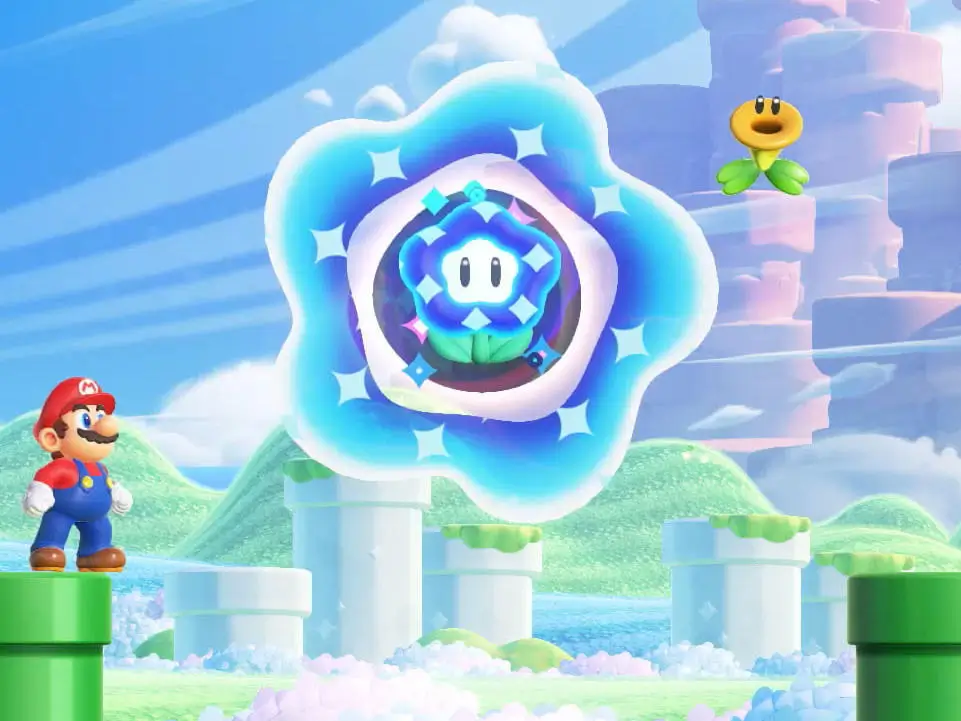
This dynamism emerges through the game’s defining mechanic: the Wonder Flower.
Touching a Wonder Flower triggers unpredictable transformations. Entire levels mutate in real time. Pipes begin crawling across the ground. Gravity flips unexpectedly. Enemies break into musical choreography. Sometimes the player’s own character morphs into a new form altogether.
These moments resemble surreal cartoons more than conventional platform stages, reinforcing Nintendo’s commitment to coltishnessas a design philosophyrather than an aesthetic garnish.
new
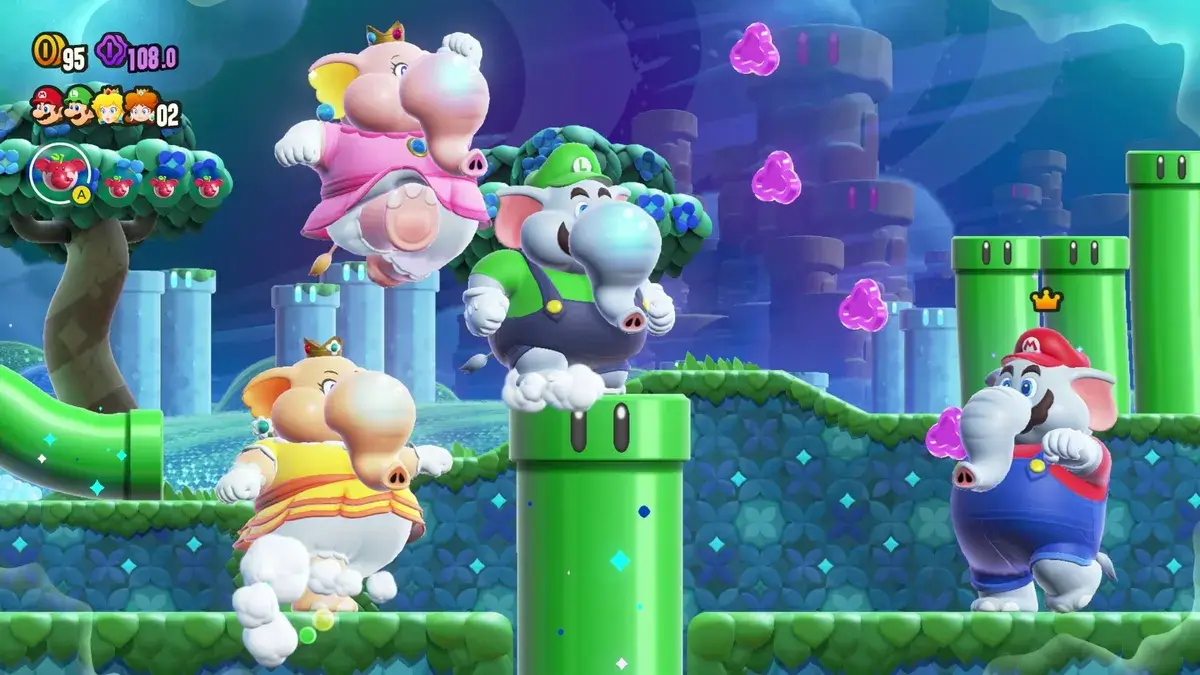
One of the most memorable additions introduced in Super Mario Bros. Wonderis the Elephant Mario transformation.
When Mario collects the Elephant Fruit power-up, the hero expands into a towering, cartoonishly powerful form. The transformation allows him to smash blocks, swing his trunk to clear obstacles, and interact with the environment in ways impossible in his normal state.
The effect is humorous, exaggerated, and deliberately absurd. Nintendo leans into the surrealism rather than resisting it. In doing so, the company embraces a design ethos that has guided Mario games since their inception: delight through surprise.
What might have been a gimmick becomes an extension of the game’s central philosophy—platforming as an evolving stage where the rules constantly reshape themselves.
tech
The Nintendo Switch 2 Editionof Super Mario Bros. Wonderis not a complete redesign. Instead, it refines the original game’s visual and mechanical language to better utilize the upcoming hardware.
Players can expect several improvements:
Enhanced resolution and color depth
Improved lighting and environmental animation
Faster load times between stages
Increased stability for local and online multiplayer sessions
The Flower Kingdom’s vibrant palette benefits particularly from these upgrades. Background animations—fluttering petals, shifting clouds, dancing terrain—gain clarity and motion fluidity that feel almost painterly.
In essence, the updated version transforms a vibrant world into something even more animated.
media
The architecture of Super Mario Bros. Wonderencourages shared experiences rather than solitary mastery.
Players can explore the game with a roster of beloved characters including Luigi, Princess Peach, Toad, and Yoshi.
The multiplayer system removes punitive mechanics often associated with cooperative platforming. Instead of restarting when a player fails, the fallen character becomes a floating spirit. Teammates can revive them simply by touching the ghost form.
This mechanic shifts the emotional tone of multiplayer sessions. Instead of frustration, the game promotes collaborative improvisation. Mistakes become moments of humor rather than obstacles.
For Nintendo, this philosophy aligns with a long tradition of designing games that welcome players of varying skill levels.
show
On March 26, the whimsical spirit of Super Mario Bros. Wonderwill spill into the real world during a fan meetup at Bellabel Park.
The event will transform the park into an informal gaming festival. Attendees will gather with their consoles, portable displays, and controllers to experience the Nintendo Switch 2 edition together.
Expect to see:
Multiplayer sessions unfolding under open skies
Friendly competitions between teams
Cosplayers dressed as Mario characters
Fans trading strategies and discoveries
Such gatherings illustrate an enduring truth about Nintendo culture: the games are designed to spark shared joyrather than isolated consumption.
culture
Mario’s continued relevance after nearly four decades raises an intriguing question: why has the character endured while many gaming icons fade into nostalgia?
Part of the answer lies in Nintendo’s willingness to reinterpret its own traditions.
Each major Mario title subtly reshapes the formula. Platforming remains central, but the surrounding mechanics shift constantly. Gravity changes. Power-ups evolve. Entire worlds behave unpredictably.
In Super Mario Bros. Wonder, that evolution manifests through environmental transformation. Instead of static levels, the game constructs stages that behave almost like living organisms.
The result feels less like revisiting a franchise and more like discovering a new form of animated storytelling.
commune
Modern gaming culture often unfolds behind private screens.
Online matchmaking, streaming platforms, and digital storefronts dominate the contemporary landscape. Yet events like the Bellabel Park meetup highlight an alternative tradition: public gaming gatherings.
Before high-speed internet defined multiplayer experiences, arcades and local tournaments functioned as social spaces. Players learned techniques by watching each other. Rivalries developed organically. Communities formed around shared enthusiasm.
The March 26 meetup revives that spirit. Rather than anonymous online competition, players encounter each other face-to-face. Laughter spreads quickly. Victories feel communal.
In this sense, the event represents more than a promotional moment. It becomes a reminder of gaming’s social origins.
phil
Across decades of hardware innovation—from cartridges to motion controls to hybrid consoles—Nintendo has pursued a guiding principle: play should feel joyful and surprising.
This philosophy appears everywhere in Super Mario Bros. Wonder. Enemy animations exaggerate personality. Music reacts dynamically to player movement. Environments transform into unexpected shapes.
Even the game’s difficulty design reflects that approach. Challenges escalate gradually, but failure rarely carries harsh consequences. Instead, the game nudges players to experiment, explore, and laugh.
The Switch 2 edition amplifies that experience through technical refinement rather than structural overhaul.
gen
Although details surrounding the Nintendo Switch 2 remain closely guarded, its arrival marks the beginning of a new technological chapter for the company.
The original Switch redefined portable gaming by merging handheld and console functionality into a single system. Its successor appears poised to build on that foundation while introducing improved graphical capabilities and processing power.
Titles like Super Mario Bros. Wonder – Nintendo Switch 2 Editionfunction as a bridge between generations. They demonstrate how familiar gameplay can flourish when supported by new hardware.
rel
When players gather at Bellabel Park on March 26, they will carry pieces of the Flower Kingdom with them—handheld consoles glowing beneath tree canopies, controllers passing between friends, laughter echoing across the park.
In that moment, the boundary between digital world and physical space will blur.
Mario will leap across vibrant stages on portable screens while real players cheer beside them. The unpredictable transformations triggered by Wonder Flowers will mirror the spontaneous interactions happening around the park itself.
clue
Super Mario Bros. Wonder – Nintendo Switch 2 Editionrepresents more than a technical update.
It demonstrates Nintendo’s enduring commitment to creativity, experimentation, and community.
Through the surreal landscapes of the Flower Kingdom, players rediscover the thrill of unpredictability. Through cooperative gameplay, they experience the pleasure of shared discovery. And through gatherings like the Bellabel Park meetup, those digital adventures expand into real-world celebrations.
Mario’s world has always been elastic—stretching beyond screens, consoles, and generations. On March 26, that elasticity will become visible once again as players step outside, connect their devices, and allow the whimsical logic of the Flower Kingdom to unfold beneath the open sky.
We use cookies to improve your experience on our site. By using our site, you consent to cookies.
This website uses cookies
Websites store cookies to enhance functionality and personalise your experience. You can manage your preferences, but blocking some cookies may impact site performance and services.
Essential cookies enable basic functions and are necessary for the proper function of the website.
Name
Description
Duration
Cookie Preferences
This cookie is used to store the user's cookie consent preferences.
30 days
Statistics cookies collect information anonymously. This information helps us understand how visitors use our website.
Google Analytics is a powerful tool that tracks and analyzes website traffic for informed marketing decisions.
ID used to identify users for 24 hours after last activity
24 hours
_gat
Used to monitor number of Google Analytics server requests when using Google Tag Manager
1 minute
_gali
Used by Google Analytics to determine which links on a page are being clicked
30 seconds
_ga_
ID used to identify users
2 years
__utmx
Used to determine whether a user is included in an A / B or Multivariate test.
18 months
_ga
ID used to identify users
2 years
__utmz
Contains information about the traffic source or campaign that directed user to the website. The cookie is set when the GA.js javascript is loaded and updated when data is sent to the Google Anaytics server
6 months after last activity
__utmv
Contains custom information set by the web developer via the _setCustomVar method in Google Analytics. This cookie is updated every time new data is sent to the Google Analytics server.
2 years after last activity
__utmb
Used to distinguish new sessions and visits. This cookie is set when the GA.js javascript library is loaded and there is no existing __utmb cookie. The cookie is updated every time data is sent to the Google Analytics server.
30 minutes after last activity
__utmc
Used only with old Urchin versions of Google Analytics and not with GA.js. Was used to distinguish between new sessions and visits at the end of a session.
End of session (browser)
__utma
ID used to identify users and sessions
2 years after last activity
__utmt
Used to monitor number of Google Analytics server requests
10 minutes
_gac_
Contains information related to marketing campaigns of the user. These are shared with Google AdWords / Google Ads when the Google Ads and Google Analytics accounts are linked together.