The DSNY Home Waste Basket: Industrial Poetry for the Urban Dweller

May 15, 2025
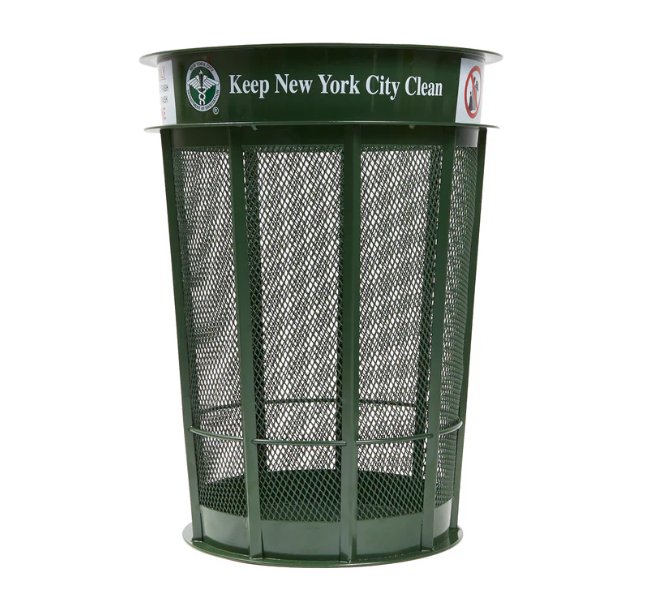

In New York City, where every square foot is accounted for and the line between infrastructure and identity is often blurred, even trash bins can become emblems of civic pride. The newly launched DSNY Home Waste Basket, a collaboration between the Department of Sanitation (DSNY) and cult-favorite retailer OnlyNY, reimagines the domestic utility object as an aesthetic vessel of social intention. Slim, structured, and unmistakably urban, it’s a product that redefines what “homeware” can mean in the metropolitan consciousness.
Available for $95 and instantly sold out on release, the basket is not merely a receptacle for refuse—it’s a small-scale design revolution in galvanized steel. It manages to merge form, function, and narrative with the restraint of Bauhaus and the grit of borough life. This is the New York garbage can recontextualized: less about disposal, more about deliberate design and sustainable ethos.
Rebuilding Waste from the Inside Out
Sized at 14” x 10” x 18”, the waste basket is an exercise in thoughtful proportion. Compact enough to disappear under kitchen counters or bathroom sinks, it nods to the unforgiving scale of NYC apartments. Its powder-coated steel body offers the durability of municipal gear with the finish of boutique furniture. And yet, it doesn’t scream for attention. Instead, its subtle DSNY logo—embossed, not emblazoned—functions like a secret handshake between design nerds and native New Yorkers.
It’s this tension—between the anonymous and the iconic, between infrastructure and intimacy—that defines the DSNY Home Waste Basket’s aesthetic gravity. You’re not just buying a bin. You’re participating in a civic dialogue.
Function as Language
If the object feels poetic, it’s because it is. The bin speaks the same visual language as NYC’s ubiquitous wire-mesh corner trash cans—but translated for domestic life. It preserves the industrial soul of public service but reengineers it with interior minimalism in mind. Jessica Tisch, DSNY Commissioner, described it best: “A Trojan horse for behavior change—one that doesn’t sacrifice style for sustainability.” The design invites New Yorkers to rethink how they relate to waste, not with guilt or regulatory fatigue, but with care and intention.
Functionally, the basket’s clean lines and tight corners serve a practical purpose: preventing cross-contamination between recycling and landfill streams. The integration of color-coded bag compatibility and space for custom labeling helps address one of the city’s biggest environmental challenges—stream contamination due to recycling confusion. In an apartment where a three-bin system might feel impossible, this basket offers a sleek compromise, encouraging separation through spatial logic.
The Subtle Politics of Aesthetics
Objects like the DSNY waste basket carry political weight, whether or not they declare it. By embedding municipal identity into personal space, they collapse the boundary between the individual and the system. And that’s precisely the point. New Yorkers are no strangers to street-level pride: the bodega tote, the MTA tee, the FDNY baseball cap. What’s different here is the recontextualization of sanitation—long ignored or aestheticized only in graffiti-strewn trucks and ironic tees—as a lifestyle to be integrated and honored.
OnlyNY, known for its archival obsession with municipal iconography, brings authenticity to the project. Their past collaborations with the Parks Department, MTA, and NYPD have proven their ability to translate civic codes into wearable or livable statements. But this is arguably their most intimate release—meant to live not on a chest or tote, but in the corner of a kitchen or bathroom, quietly shaping behavior.
Municipal Design as Movement
The DSNY Home Waste Basket joins a growing lineage of municipal design objects that double as culture-shifters. In Los Angeles, Alchemy Goods has partnered with the city to produce benches, bins, and furniture made from reclaimed inner tubes and fire hoses. Tokyo’s designer compost bins, developed in collaboration with Nendo, have made food waste chic in urban apartments. In both cases, these objects work because they’re not just functional—they’re aspirational.
What’s at stake is not just sanitation, but the ability of design to rewire civic values. New York City’s Zero Waste by 2030 initiative, long mired in logistical complications and community skepticism, needs interventions like these—small, tangible artifacts that make abstract goals visible and personal.
This is what design historian Alice Rawsthorn might call “design as an attitude”—a way of seeing and shaping the world not just through grand architectural gestures or luxury interiors, but through humble interventions. A waste bin can, in this light, become a manifesto.
The Aesthetics of Infrastructure
What elevates the DSNY basket isn’t just its material pedigree—it’s the cultural fluency with which it engages the city. It mirrors the architecture of scaffolding, echoes the subway’s steel grammar, and aligns with the visual codes of NYC’s functional core. The powder-coated matte finish almost recalls fire escapes or bridge underbellies. This isn’t Scandinavian minimalism—it’s Gotham brutalism made domestic.
The product’s success also reveals something deeper about our relationship with infrastructure. In an era when so much municipal effort is underfunded, underappreciated, or outright vilified, the waste basket becomes a small symbol of reconciliation. To bring DSNY into the home is to acknowledge its presence not just as a service, but as part of the city’s identity.
The symbolism of this object resonates even further when considered in contrast to the invisibility of sanitation labor. This collaboration doesn’t just glorify the system—it humanizes it. It offers a design-forward celebration of the workers who keep the city clean, often at great personal risk, especially in a post-pandemic reality where frontline labor has finally earned overdue recognition.
Selling Out—and What That Means
That the DSNY basket sold out almost immediately is less a surprise than a reflection of evolving consumer values. In an environment where aesthetics meet ethics, products like these become avatars for a new kind of urban living—one where sustainability is branded not as sacrifice but as identity. Like the Compostable Bag Carrier that made headlines in Copenhagen or Solar Mason Jars lighting up Parisian terraces, this waste basket becomes both tool and totem.
The swift sellout also reflects OnlyNY’s mastery of scarcity and cultural timing, a retail strategy borrowed from streetwear but now deployed in the name of civic engagement. It’s a reminder that design-driven sustainability doesn’t have to live in Whole Foods aisles or TED Talks. It can emerge from a Lower East Side boutique, anchored in real city grit.
The Future of Everyday Objects
As cities look for new ways to meet environmental targets and shift citizen behavior, the DSNY Home Waste Basket could be a case study in how modest objects can trigger meaningful change. It doesn’t claim to save the world. It simply makes it easier for New Yorkers to make better decisions—habitually, stylishly, and without friction.
If form follows function, then the DSNY Home Waste Basket is function reimagined as form—and perhaps more crucially, as culture. In a world where sustainability often comes with a visual tax, this object suggests something radical: maybe, just maybe, waste can be beautiful.


No comments yet.