The Future Is Engineered Emotion: CUPRA Introduces Design House at Milan Design Week

April 10, 2025
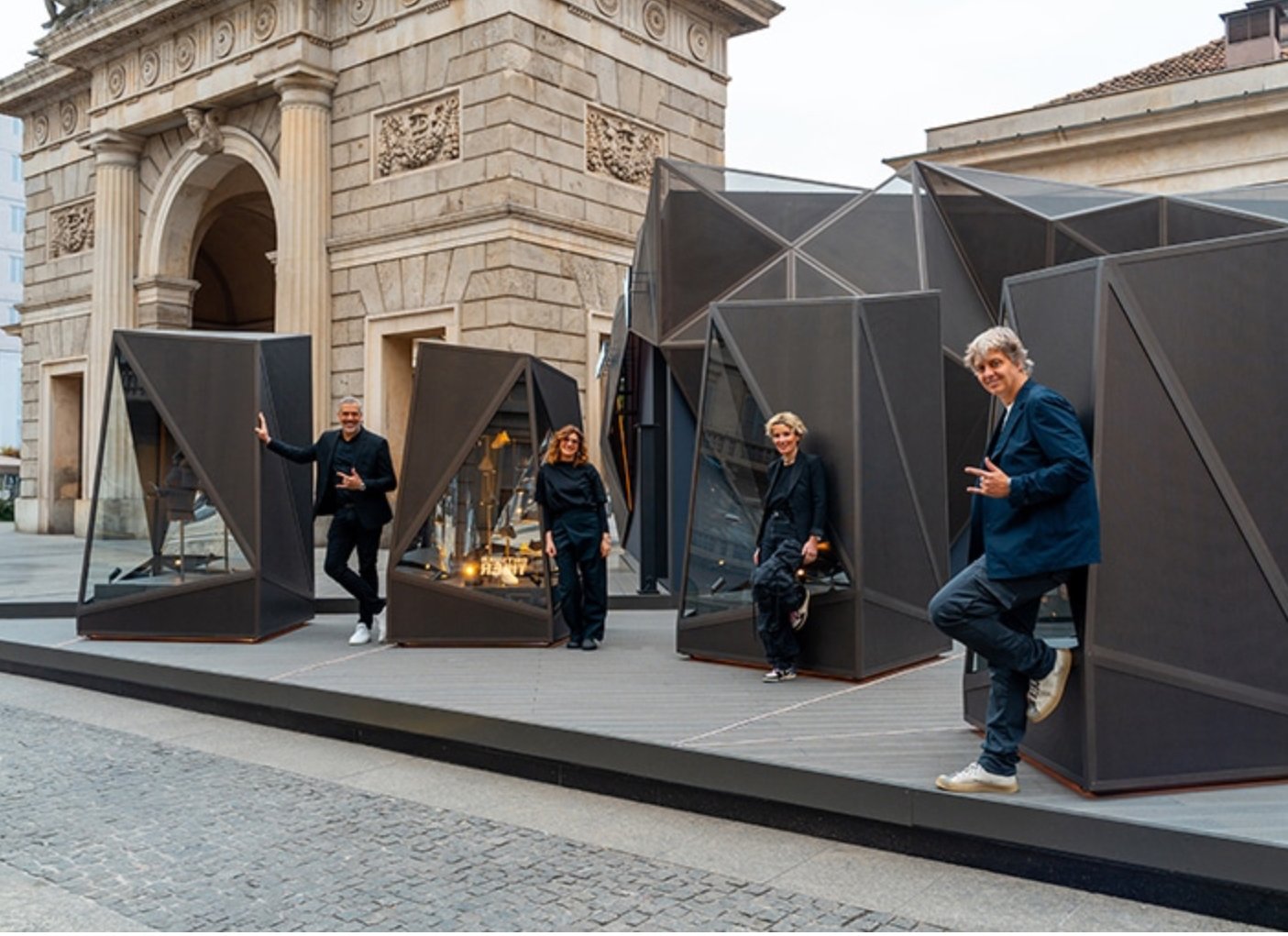
In a city famed for couture, lighting, and architectural fantasies, it’s not often that an automotive brand makes noise during Milan Design Week. But then again, CUPRA has never been a conventional automotive brand. This April, during the 2025 edition of the design world’s most revered event, CUPRA unveiled its most ambitious non-vehicle innovation to date: the CUPRA Design House.
Nestled within a sharp, spatially immersive installation just off Via Tortona, the Design House is neither a showroom nor a gallery. Instead, it operates as a kind of living manifesto—a tactile expression of CUPRA’s belief that performance and aesthetics are not separate pursuits, but complementary ones. The project boldly places CUPRA into a different kind of design conversation, one no longer limited by engines and roadmaps.
Beyond the Dashboard: A Brand in Motion
Founded in 2018 as a performance offshoot of SEAT, CUPRA quickly evolved from a sub-brand into a full-fledged design-driven identity. Unlike legacy marques that tether innovation to heritage, CUPRA thrives on the opposite: a rejection of design stagnation and a commitment to reinvention. With Design House, it offers a compelling answer to the question: What happens when a car company decides it’s a creative studio first?
At its core, the CUPRA Design House is a multi-disciplinary platform, bringing together architects, fashion designers, material scientists, digital creators, and industrial artists to rethink how objects interact with people—not just in motion, but in stillness, in space, and in concept. It’s an incubator for ideas, not just for production models.
The Milan Installation: Brutalist Warmth Meets Sensory Theater
For Milan Design Week, CUPRA took over an industrial warehouse space, transforming it into a minimalist temple of tactility. The interior was built from recycled aluminum structures, sculpted concrete, bio-engineered clay tiles, and sculptural lighting that pulsed in rhythm with a spatial audio composition. Think brutalist warmth with a future-forward intimacy—more akin to a James Turrell installation than a traditional design showcase.
The Design House didn’t just ask attendees to look—it invited them to feel. Custom furniture with responsive surface textures, immersive light-diffusing screens, and a monolithic centerpiece described as the “Material Totem” offered visceral moments of interaction. This was about emotion through design, engineered with automotive precision but presented with gallery subtlety.
And perhaps most tellingly, there were no cars inside the installation—a deliberate choice that underscores CUPRA’s expansion beyond transportation and into multi-sensory identity building.
Form, Function, Fiction: The Ethos of the Design House
The underlying mission of the CUPRA Design House is not to decorate the car—it’s to liberate design thinking from the car. This means rethinking materials not just for aerodynamics, but for mood. Rethinking space not just for seating, but for intimacy. Rethinking performance not just for torque, but for tactile intelligence.
Design Director Jorge Díez, speaking during a panel at the installation, emphasized that the CUPRA Design House was about “injecting performance into everyday objects”—be that a carbon-fiber table, a modular lighting system, or even the feel of a home’s entryway. The goal? To blur the boundaries between industrial design, emotional function, and spatial memory.
Díez refers to it as “post-industrial poetics”—a phrase that might sound lofty, but in context, resonates. What the Design House posits is that performance design doesn’t need to be loud—it can be felt in quiet precision.
Collaborations That Defy Category
At the heart of the Design House are its collaborations—or rather, what CUPRA calls “creative dialogues.” The debut exhibition featured projects with Spanish biomaterials lab OffMateria, rising Milan-based fashion label Murmur, kinetic installation artist Iván Navarro, and even digital fabricators from the Berlin new media collective Studio Berndt.
Highlights included:
- A 3D-knitted textile wall system that adapts color and transparency based on interior lighting—developed using the same parametric logic as CUPRA’s taillight systems.
- A kinetic floor sculpture powered by embedded magnetic resonance, mimicking the feel of motion while stationary—an homage to the concept of stored energy.
- A capsule apparel concept created with Murmur, using CUPRA’s interior Alcantara offcuts to create sculptural jackets that fold like origami when unworn, suggesting mobility beyond the car.
These works aren’t just aesthetic exercises—they’re experiments in merging vehicle technology with lifestyle design, executed with the same precision as a performance car chassis.
CUPRA’s Larger Strategy: From Product to Cultural Actor
What CUPRA is attempting here is not new in principle, but it is in execution. Many brands dip into design weeks or sponsor artists for halo projects. But CUPRA, with the Design House, is going further—embedding design not just as a marketing layer but as a core strategy.
This is about identity architecture—an evolution from car brand to cultural platform. CUPRA is leveraging its visual language (sharp, mineral, geometric), material know-how, and performance ethos to enter arenas where other automakers still hesitate: home design, emotional tech, sustainability narratives.
It’s the difference between designing a car interior and designing the mood of a room. CUPRA now wants to do both.
Material, Memory, Motion: A Brand That Touches All Three
The work coming out of the Design House isn’t just about surfaces—it’s about creating emotional response through material. In one space, visitors are encouraged to touch a panel made of volcanic stone dust bonded with biopolymer—a metaphor for geological memory. In another, low-frequency bass tones resonate through a structural beam, translating motion into vibration.
These aren’t gimmicks—they’re part of a larger CUPRA thesis: objects should be engineered for intimacy, not just utility. It’s a holistic design approach that echoes the best of Scandinavian modernism and Japanese wabi-sabi—filtered through the language of performance.
What This Means for the Future of Automotive Design
So what happens when a car brand stops designing just for roads and starts designing for rooms, for moods, for moments? In CUPRA’s case, it suggests a future where automotive influence transcends transportation, becoming part of how we live, create, and move through the world.
Don’t be surprised if, five years from now, you’re sitting on a CUPRA-designed chair in a boutique hotel, wearing a jacket engineered with CUPRA’s adaptive fabric tech, with a light above you that shifts tone like a brake light mid-turn.
This is transportation thinking applied to lifestyle, and it’s setting a new precedent for how car brands contribute to culture.
The Garage as Gallery
CUPRA’s Design House may not have featured a single car, but it has redesigned the idea of what an automotive brand can be. At Milan Design Week, among the chandeliers, sound baths, and post-modern sofas, the Design House was something else entirely: a material poem written in the grammar of speed, tactility, and vision.
More than a showcase, it was a signal—that design doesn’t have to be driven by category. It can be driven by curiosity.
In the years to come, expect to see the influence of the CUPRA Design House not just in concept cars, but in the way we think about how performance, aesthetics, and emotion meet in the spaces we inhabit.