
The Musical That Turned a Beloved Paddington Bear into an Award-Winning Stage Phenomenon

March 14, 2026
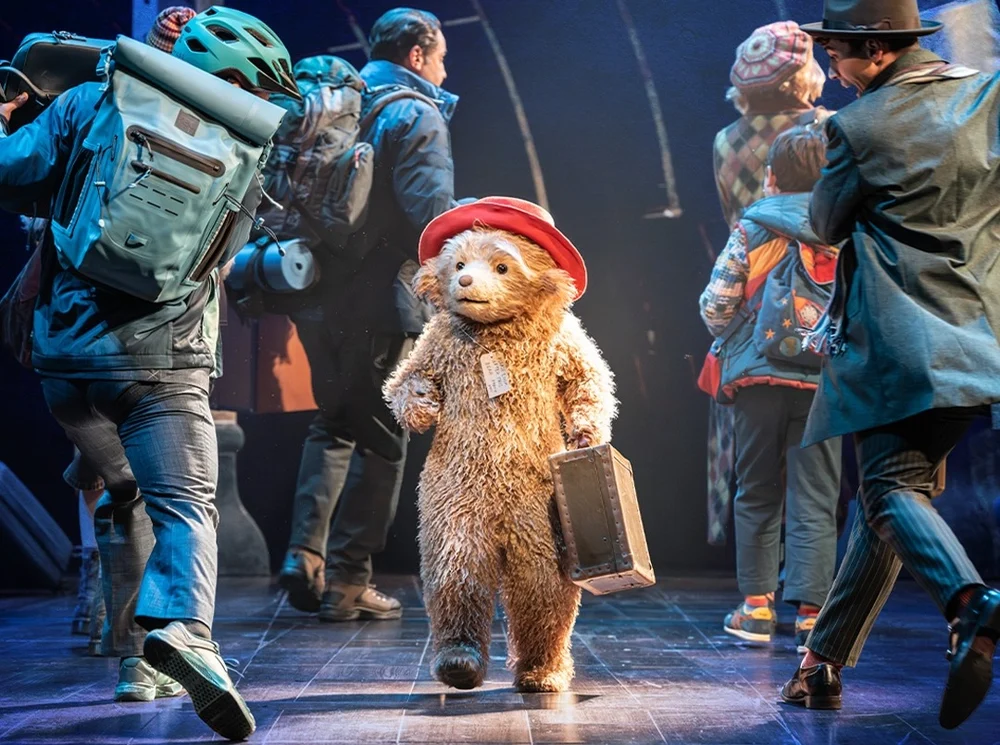
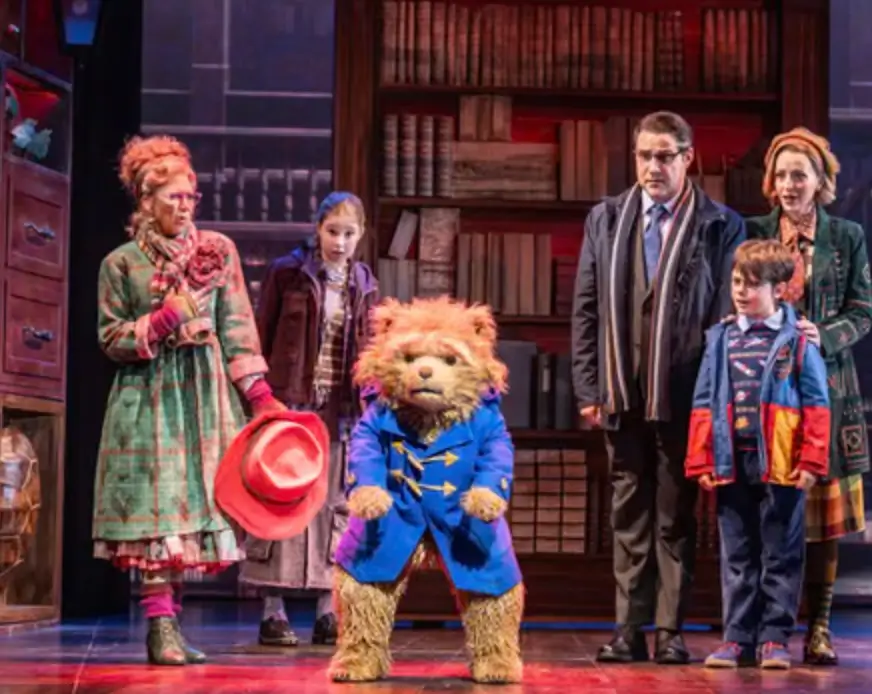
Every so often a theatrical production arrives that reminds audiences why live performance remains such a powerful form of storytelling. In 2026, that reminder came from an unlikely star: a polite bear in a red hat carrying a small suitcase and a jar of marmalade.
Paddington the Musical has quickly become one of the most talked-about productions in London theatre. Its rise reached a defining moment when the show dominated the WhatsOnStage Awards, winning an astonishing nine trophies in a single evening. The achievement marked one of the largest sweeps in the history of the ceremony and confirmed the production as one of the West End’s most beloved new musicals.
Staged at the historic Savoy Theatre, the show brings the story of Paddington Bear—created by Michael Bond—into a vibrant theatrical world. What began as a literary character in 1958 has now become a fully realized stage phenomenon, blending music, storytelling, and visual spectacle into a musical that feels both nostalgic and fresh.
The awards sweep did more than celebrate one production. It signaled that Paddington’s story—built on kindness, curiosity, and belonging—still resonates deeply with modern audiences.
View this post on Instagram
stir
The WhatsOnStage Awards occupy a special place in British theatre culture. Unlike many prestigious prizes, they are decided entirely by audiences. Theatre lovers across the United Kingdom vote for their favorite productions, performances, and creative achievements, making the ceremony a reflection of genuine public enthusiasm.
When the winners were announced in London’s legendary London Palladium, one production repeatedly returned to the stage: Paddington the Musical.
By the end of the ceremony, the show had collected nine awards—an extraordinary feat for a production still in its early West End run. The wins spanned multiple categories, including Best New Musical and several design and technical honors.
Such recognition suggests something rare in theatre: a show that succeeds not only because of its narrative but because every creative component works in harmony.
From set design to sound engineering, from casting choices to musical direction, Paddington the Musical impressed audiences across the entire spectrum of theatrical craft.
show
The journey from children’s book to West End stage is not a simple one. Paddington Bear has existed in many forms over the decades—illustrated stories, television adaptations, and most recently a beloved film franchise. Each version introduced the character to a new generation.
Yet transforming Paddington into a full-scale musical required more than nostalgia.
The creative team behind the show approached the adaptation with careful respect for Bond’s original stories. Instead of simply retelling familiar scenes, they expanded the narrative into a theatrical adventure designed for the scale of a musical production.
The writing partnership of Tom Fletcher and Jessica Swale crafted a script that balances humor, emotional warmth, and a sense of wonder. Their adaptation explores Paddington’s arrival in London, his discovery by the Brown family, and the series of accidental mishaps that inevitably follow him.
Director Luke Sheppard then translated that story into a dynamic stage experience. Known for visually inventive productions, Sheppard embraced theatrical imagination rather than strict realism.
The result is a musical where the city of London becomes a living character—full of movement, color, and unexpected surprises.
london
One of the most striking aspects of the production is its visual design. Theatre designer Tom Pye constructed a stage environment that transforms the Savoy Theatre into a stylized version of London.
Scenes flow from Paddington Station to the Brown family’s Windsor Gardens home, from bustling city streets to whimsical dreamlike sequences that echo the playful tone of Bond’s books.
Rather than attempting literal realism, the production embraces theatrical storytelling. Rotating platforms, miniature cityscapes, and layered architectural structures create a sense of constant motion.
The design reflects Paddington’s perspective: London appears vast, exciting, and occasionally overwhelming.
Costumes add another layer of visual character. Designers Gabrielle Slade and Tahra Zafar approached the wardrobe with a blend of contemporary fashion and storybook charm.
Paddington himself remains instantly recognizable—his blue coat and red hat carefully adapted into a costume that allows expressive movement on stage.
Meanwhile, Londoners appear in vibrant ensembles that evoke the diversity and rhythm of city life.
music
No musical succeeds without a compelling score. For Paddington the Musical, composer Tom Fletcher brought a melodic sensibility shaped by his background in pop music.
The songs range from energetic ensemble numbers celebrating the energy of London to quieter moments exploring Paddington’s feelings of homesickness and belonging.
Musical supervision by Matt Brind ensured that the score maintained theatrical richness while remaining accessible to younger audiences.
The music functions as the emotional thread of the production. Each song reveals a different dimension of Paddington’s personality: his optimism, his curiosity, and his ability to see goodness in others.
For families in the audience, the songs become the moments children remember long after the curtain falls.
View this post on Instagram
emotive
At the midst of Paddington the Musical lies a theme that feels increasingly relevant in modern society: the idea of welcoming strangers.
Paddington arrives in London as an outsider. He carries little with him beyond hope and politeness, yet he finds a home because people choose kindness over suspicion.
The Brown family’s decision to care for the small bear becomes the foundation of the story. Through their interactions with Paddington, the characters learn to see the world with greater empathy and curiosity.
On stage, these ideas unfold through humor and gentle storytelling rather than overt moralizing. Audiences laugh at Paddington’s mishaps—overflowing bathtubs, accidental disasters in kitchens—but beneath the comedy lies a message about compassion.
In a time when many societies grapple with questions of identity and belonging, the story’s optimism feels quietly powerful.
recept
The success of the musical is evident not only in its awards but also in the response of theatre audiences. Families, tourists, and longtime West End fans have all embraced the production.
Part of its appeal lies in its accessibility. The show introduces younger viewers to live theatre while still offering visual sophistication and storytelling depth for adult audiences.
This balance is difficult to achieve, yet Paddington seems uniquely suited to bridge generations.
Children recognize the bear from books or films, while adults connect with the emotional warmth of the narrative.
The result is a production that feels communal. Laughter ripples through the theatre, and moments of quiet tenderness hold audiences in collective silence.
what
Winning nine awards in a single ceremony is more than a symbolic achievement. It represents recognition of the countless creative professionals involved in producing a large-scale musical.
From designers and musicians to stage managers and technicians, theatre is built through union.
The awards acknowledged excellence across multiple disciplines:
-
direction
-
scenic design
-
costume design
-
sound engineering
-
musical supervision
-
casting
-
performance
Such broad recognition suggests that the production functions as a cohesive artistic vision rather than a collection of individual elements.
For the West End, this level of acclaim also signals the arrival of a new flagship musical—one that may continue attracting audiences for years.
leg
Paddington Bear has always represented something gentle and reassuring within British culture. The character emerged during a period when Britain was redefining itself in the post-war era.
Over the decades, Paddington’s adventures quietly reflected the values of kindness, hospitality, and curiosity.
The musical adaptation extends that legacy into a new artistic medium. By bringing Paddington onto the stage, the production introduces the character to audiences who may be encountering him for the first time.
It also demonstrates the enduring flexibility of Bond’s creation. A bear who once appeared only in illustrated books can now sing, dance, and travel across theatrical landscapes.
fwd
Following its award-winning success, speculation has already begun about the future of Paddington the Musical. West End hits often lead to international touring productions or transfers to other major theatre markets.
Given Paddington’s global recognition, the musical could easily find audiences far beyond London.
Producers are reportedly exploring possibilities for extended runs and international productions.
For theatre fans, the show’s success offers another reminder that original storytelling can still thrive on stage—even in an entertainment landscape dominated by digital media.
fin
When Michael Bond first introduced Paddington Bear to readers, he could hardly have imagined the journey the character would take.
From children’s books to films and now an award-winning musical, Paddington has evolved into a cultural icon whose appeal crosses generations.
Yet the essence of the character remains unchanged.
Paddington is still the small bear who arrives in London hoping for kindness.
The West End production celebrates that simplicity while transforming the story into a spectacle of music and theatre.
Winning nine awards may be a remarkable achievement, but the musical’s greatest accomplishment lies elsewhere: reminding audiences that warmth and curiosity still have a place at the center of storytelling.
And as the curtain falls each evening at the Savoy Theatre, the applause suggests that Paddington’s journey on stage is only just beginning.

No comments yet.


