The Rise, Air, & Fall of Halfpipes: Why Ski Resorts Are Letting Them Disappear

December 26, 2025
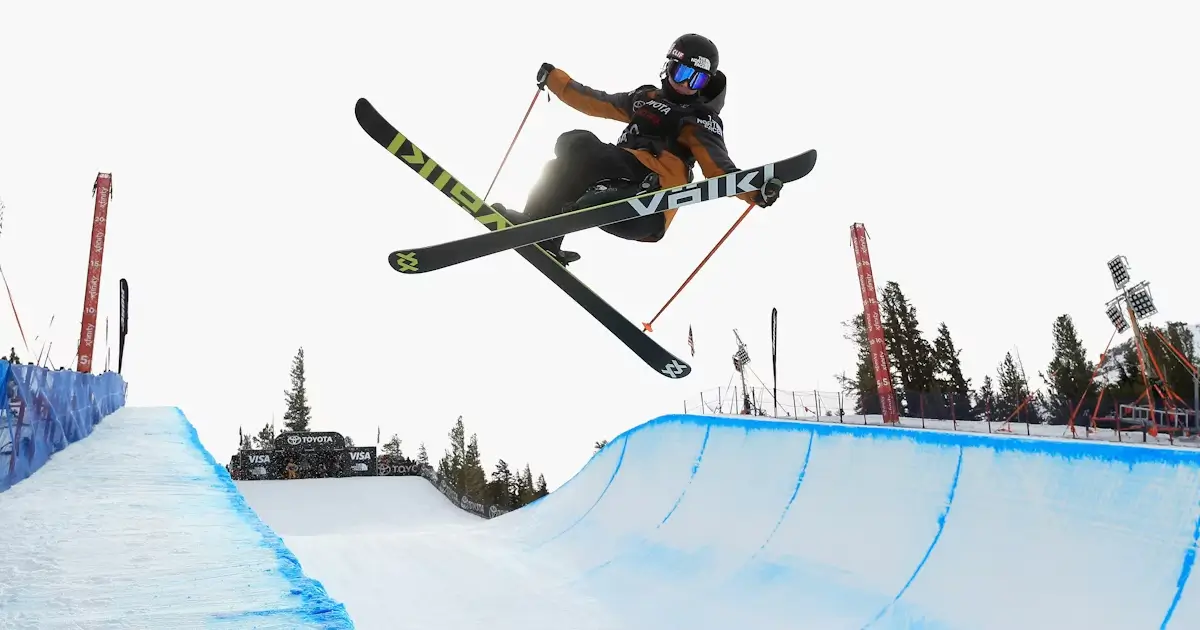
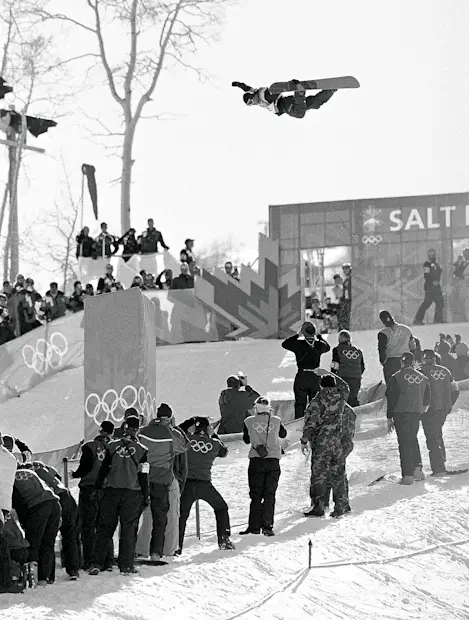
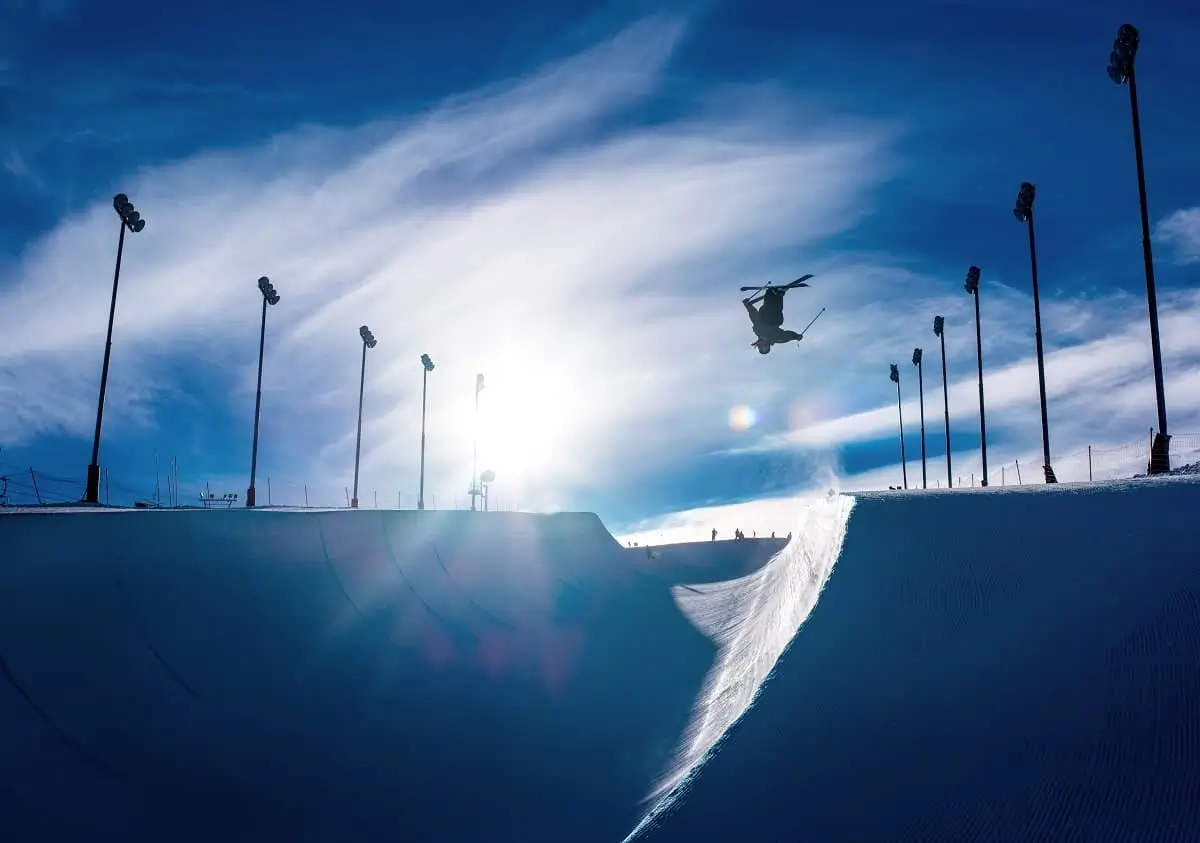
The halfpipe was once winter sports’ most cinematic arena. A carved corridor of snow rising like opposing waves, it framed athletes against the sky, turned tricks into punctuation marks, and gave freestyle skiing and snowboarding their most legible grammar. You didn’t need to understand rotations or grabs to feel it. You just watched someone disappear into a wall of snow and re-emerge higher, cleaner, louder. For years, the halfpipe was not just a discipline — it was the symbol of progression itself.
Today, it’s nearly gone.
Fewer than 6% of ski areas in the United States still maintain a halfpipe. What was once the crown jewel of freestyle terrain has become an exception, a relic, sometimes a novelty rolled out only for competitions or special events. To understand how that happened, you have to trace the rise, the air, and the slow, quiet fall of the halfpipe — and what its disappearance says about the evolution of action sports, economics, and culture.
rise
The modern halfpipe emerged in the late 1980s and early 1990s, shaped as much by skateboarding as by skiing. Snowboarders, excluded from many resorts at the time, carved makeshift pipes in natural gullies and drainage ditches, borrowing directly from the vertical ramps of skate culture. These early pipes were rough, uneven, and inconsistent — but they were revolutionary.
By the mid-1990s, resorts began formalizing the concept. Pipes grew taller, walls cleaner, transitions more uniform. Snowboarding exploded in popularity, and the halfpipe became its most visible stage. Events like the U.S. Open of Snowboarding and the X Games didn’t just showcase the pipe — they mythologized it. The camera angles were perfect. The progression was obvious. Each run told a story with a beginning, middle, and end.
For skiers, the halfpipe followed a parallel arc slightly later. Ski halfpipe didn’t truly come into its own until the late 1990s and early 2000s, but when it did, it brought a different kind of spectacle: amplitude combined with technical finesse, twin tips slicing into walls that had once been snowboard-only territory. By the time freestyle skiing and snowboarding entered the Olympics — snowboard halfpipe in 1998, ski halfpipe in 2014 — the pipe had become the sport’s most mainstream expression.
It was aspirational. It was televised. It was easy to understand. And for a generation of riders, it was the reason they showed up.
stir
The 2000s and early 2010s marked the halfpipe’s technical apex. Walls grew to standardized dimensions — 22 feet became the gold standard. Grooming technology evolved, with Zaugg pipe cutters capable of sculpting near-perfect symmetry. Resorts invested heavily in maintenance, sometimes running pipe cutters multiple times a day to keep transitions crisp.
This era produced icons. Shaun White, Kelly Clark, Hannah Teter, Danny Davis, Ayumu Hirano. On skis, athletes like David Wise and Gus Kenworthy helped legitimize pipe skiing at the highest level. Tricks escalated rapidly: double corks, then triples; spins multiplied; amplitude reached heights that looked almost physically impossible.
At its peak, the halfpipe felt inevitable. Bigger, cleaner, more technical every year. It was winter sports distilled into a single architectural form. Brands loved it because it photographed well. Broadcasters loved it because it was predictable and contained. Governing bodies loved it because it was measurable.
But that perfection carried a cost.
flow
A halfpipe is one of the most expensive features a ski resort can maintain. Unlike rails or jump lines, it isn’t modular. It requires constant grooming, specialized equipment, skilled operators, and enormous volumes of snow. Weather variability — warming temperatures, rain events, freeze-thaw cycles — makes pipes especially vulnerable.
For many resorts, especially smaller or mid-sized ones, the math stopped working.
A halfpipe might serve a small fraction of guests, but it demands resources comparable to entire terrain parks. When budgets tightened, pipe maintenance was often the first thing cut. It’s hard to justify a feature that requires daily attention when the majority of visitors want groomed runs, beginner terrain, or family-friendly amenities.
Insurance and liability also played a role. Halfpipes concentrate risk. High walls and high speeds mean higher consequences. As resorts faced rising insurance costs, features associated with serious injuries came under scrutiny.
By the late 2010s, many resorts quietly retired their pipes. Not with announcements or controversy, but with absence. One season it was there. The next, it wasn’t rebuilt.
culture
Economics alone don’t explain the halfpipe’s decline. Culture changed too.
Freestyle skiing and snowboarding moved away from singular arenas toward plural expression. Slopestyle, with its mix of rails and jumps, offered more creativity and accessibility. Backcountry freestyle blurred the line between competition and exploration. Urban skiing and snowboarding reframed progression around environment and improvisation rather than standardized features.
The halfpipe, by contrast, became rigid. Its dimensions fixed. Its judging criteria increasingly codified. Progression didn’t stop, but it narrowed. Spins went bigger, but style debates intensified. Critics argued that pipe riding was becoming homogenous — different athletes performing variations of the same few tricks.
For younger riders, the pipe began to feel less like a playground and more like a laboratory. A place for specialists, not generalists. You didn’t casually lap a 22-foot pipe. You trained for it.
At the same time, social media shifted how riding was consumed. A single viral clip from a rail spot in an unexpected location could generate more cultural impact than a perfectly executed pipe run. The halfpipe, once made for television, struggled to translate its grandeur to a phone screen.
rel
Ironically, the halfpipe remains one of the most visible freestyle disciplines in the world — because of the Olympics. Every four years, it returns to global prominence, reminding casual viewers of its power. But that visibility masks a growing disconnect.
Many Olympic-level halfpipe athletes now train at only a handful of dedicated facilities worldwide. Some travel internationally just to find consistent pipes. The discipline has become centralized, elite, and geographically limited.
For everyday riders, the pipe is no longer a progression pathway. You don’t “work up” to it the way previous generations did. You either commit fully, or you don’t touch it at all.
This bifurcation — Olympic spectacle versus resort reality — has hollowed out the halfpipe’s cultural middle ground. It exists at the top, but not in the ecosystem.
what
The loss of halfpipes isn’t just about a feature. It’s about what they represented.
Halfpipes taught flow. They taught timing, edge control, and spatial awareness in a way no other feature does. They forced riders to read terrain dynamically, to adapt in real time. They created shared viewing experiences — entire lift lines stopping to watch a single run.
They also democratized spectacle. You didn’t need to hike into the backcountry or navigate a complex park line. You stood at the deck and watched excellence unfold in front of you.
As pipes vanish, something communal disappears with them. Terrain parks fragment attention. Everyone is moving in different directions. The pipe was a focal point — literally and culturally.
fwd
A full-scale return to the pipe-dominated era is unlikely. The economics haven’t changed, and climate pressures will only intensify. But that doesn’t mean the halfpipe’s story is over.
Some resorts are experimenting with smaller, more playful pipes — mini-pipes that emphasize flow over danger. Others integrate pipe-like transitions into natural terrain, blending old-school riding with modern design philosophy. Events and festivals sometimes resurrect temporary pipes, reminding people what they feel like.
There’s also a growing nostalgia among riders who grew up during the pipe’s peak. As with many cultural forms, absence breeds reappraisal. What once felt overexposed now feels rare, even precious.
The halfpipe may never again be the centerpiece of freestyle skiing and snowboarding. But it doesn’t need to be. Its legacy is already embedded in how riders think about air, walls, and movement through space.
impression
The halfpipe’s rise was loud, televised, triumphant. Its fall has been quiet, almost invisible. No scandal. No single turning point. Just fewer pipes, fewer laps, fewer places to stand and watch someone fly.
What remains is memory — and influence. You see it in how riders approach transitions, how they value amplitude, how they understand rhythm. Even when the pipe is gone, its logic lingers.
Once the crown jewel, now a rare artifact, the halfpipe didn’t fail. It completed a cycle. It rose, it defined an era, and then it stepped aside as the culture moved on.
The snow walls may be disappearing, but the air they taught people to find is still very much alive.