The Sitina 1: A Revolutionary Open-Source Full-Frame Mirrorless Camera

October 3, 2024
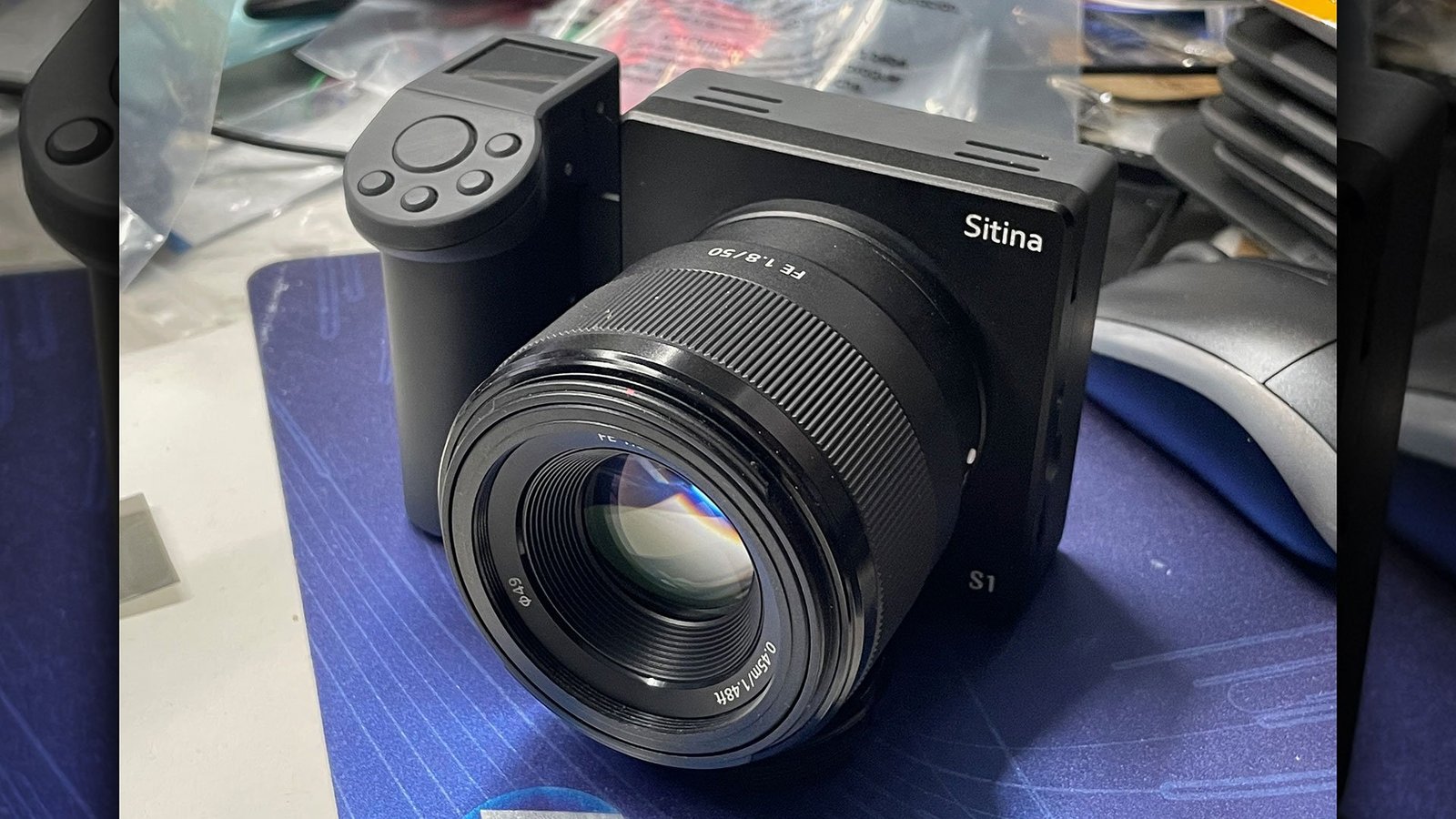
The world of photography and camera technology has traditionally been dominated by large corporations with closed ecosystems and proprietary designs. Yet, amidst the predictable cycles of yearly releases and incremental updates, a groundbreaking project has emerged that challenges the industry’s status quo—the “Sitina 1”, an open-source full-frame mirrorless camera. Created by engineer Wenting Zhang, the Sitina 1 represents a unique blend of innovation, community engagement, and the spirit of DIY electronics. This 35mm camera, entirely open-source in hardware and software, is making waves for its transparency, flexibility, and potential to disrupt the traditional camera market.
The Birth of an Idea: From Analog to Digital
The Sitina 1 began its journey not as a standalone camera but as a project to convert analog SLR cameras into digital ones. Wenting Zhang, a passionate DIY enthusiast with a background in electronics and software development, envisioned creating a digital back that could be retrofitted onto classic film cameras. This initial idea aimed to breathe new life into beloved analog cameras by offering photographers the option to shoot digitally while retaining the unique characteristics of their favorite film bodies.
However, as the project evolved, Zhang’s ambitions grew. Realizing the potential for a fully customizable and modular camera, he expanded the project into what is now known as the Sitina 1—a complete full-frame mirrorless camera with interchangeable lenses, built from the ground up with transparency and openness in mind. The design ethos was simple yet revolutionary: to empower users to understand, modify, and improve their camera, unencumbered by the restrictions of proprietary technology.
Technical Specifications: Building a Camera from Scratch
The Sitina 1 is packed with features that rival those of established brands, despite its DIY origins. At the heart of the camera is a 35mm interline CCD sensor, offering a sensor size of 36.0×24.0 mm with an effective resolution of 10.7 megapixels. The sensor itself is sourced from Kodak/ONsemi, providing high image quality and color accuracy. While 10.7 MP might seem modest compared to modern 50 MP sensors, it is more than adequate for most photographic applications and strikes a balance between resolution and file size.
The Sitina 1’s processing capabilities are driven by a Xilinx Zynq 7010 System on Chip (SoC), which includes a dual-core ARM Cortex-A9 CPU and FPGA (Field Programmable Gate Array). This configuration allows for real-time image processing and low-power consumption, making it suitable for extended shooting sessions. Complementing the SoC is 512MB of DDR3 RAM, providing sufficient memory for handling image data and camera operations.
One of the standout features of the Sitina 1 is its lens mount system. The camera uses an active E-mount, making it compatible with a wide range of lenses from Sony and third-party manufacturers. This choice of mount ensures that photographers have access to a diverse selection of high-quality optics, further enhancing the camera’s versatility.
In terms of connectivity, the Sitina 1 includes a USB Type-C port, an SD card slot, and a flash sync terminal. While it currently lacks video recording capabilities, it supports still image capture in DNG (RAW) and JPEG formats, offering flexibility for post-processing and editing.
The Open-Source Philosophy: Empowering Users and Creators
What sets the Sitina 1 apart from other cameras is its commitment to the principles of open-source development. The entire hardware design and software source code have been published on GitLab, allowing anyone with the technical know-how to build their own Sitina 1, modify its functionality, or even contribute to its development. This transparency is a stark contrast to the closed ecosystems of major camera manufacturers, who tightly control their hardware and software.
The open-source nature of the Sitina 1 means that it has the potential to become a platform for innovation. Users are free to experiment with new features, such as custom firmware, alternative sensor modules, or unique grip designs. This flexibility encourages collaboration and community-driven improvements, making the camera an ever-evolving project that can adapt to the needs and preferences of its users.
Zhang’s decision to make the Sitina 1 open-source was motivated by his passion for DIY electronics and his desire to share his work with others. As he mentioned in an interview, “This project is the most time-consuming one I’ve ever done, and it’s also the hardest to mass-produce and monetize. Frankly, it doesn’t seem like a very smart choice. But I did it for fun. I’m into DIY photography and electronics, so I thought it would be fun to make my own camera”.
The Challenges of Building and Mass-Producing the Sitina 1
While the Sitina 1 is an impressive technical achievement, it also faces significant challenges. First and foremost is the issue of mass production. Building a camera from scratch is a complex and labor-intensive process, requiring expertise in electronics, mechanics, and software development. As a one-person project, Zhang’s ability to scale production is limited, and the camera remains a niche product for hobbyists and enthusiasts rather than a mass-market competitor.
Another challenge is the cost and availability of components. Unlike established camera manufacturers who have access to custom-made parts and economies of scale, Zhang relies on commercially available components, which can be expensive and difficult to source. This limitation affects the final price of the Sitina 1, making it less competitive against other cameras in the same performance category.
Moreover, the lack of video recording capabilities and advanced autofocus systems, which are standard features in modern cameras, might deter potential users who expect a more comprehensive feature set. However, for photographers who prioritize still image quality and appreciate the DIY aspect of the Sitina 1, these limitations are secondary.
Implications for the Camera Industry: A New Paradigm?
The Sitina 1’s open-source nature has profound implications for the camera industry. It challenges the traditional model of proprietary technology and closed ecosystems, suggesting a future where users have greater control over their devices. If the Sitina 1 gains traction, it could inspire other developers and enthusiasts to create their own open-source cameras or modify existing designs.
Furthermore, the Sitina 1’s emphasis on transparency and user empowerment resonates with broader trends in technology, where open-source software and hardware are becoming more prominent. Projects like Raspberry Pi and Arduino have demonstrated the potential of open-source development to drive innovation and education. The Sitina 1 could be the start of a similar movement in photography, encouraging a new generation of tinkerers and creators to explore the possibilities of camera design.
A Camera Built for Creativity and Connection
The Sitina 1 is more than just a piece of hardware—it’s a testament to the power of creativity, curiosity, and community. While it may never reach the production numbers or feature sets of mainstream cameras, it has already made a significant impact by challenging conventions and offering a glimpse of what an open-source camera can be. As the project continues to evolve, it will be fascinating to see how the Sitina 1 influences the future of camera technology and inspires others to take a more active role in shaping the tools they use to capture the world.
For those willing to embrace the spirit of experimentation and collaboration, the Sitina 1 is a camera worth exploring—a reminder that sometimes, the best innovations come not from corporate labs, but from the workshop of a passionate individual who simply loves to create.