The World of JJJJound — Montreal’s Measured Approach to Modern Design

March 18, 2026
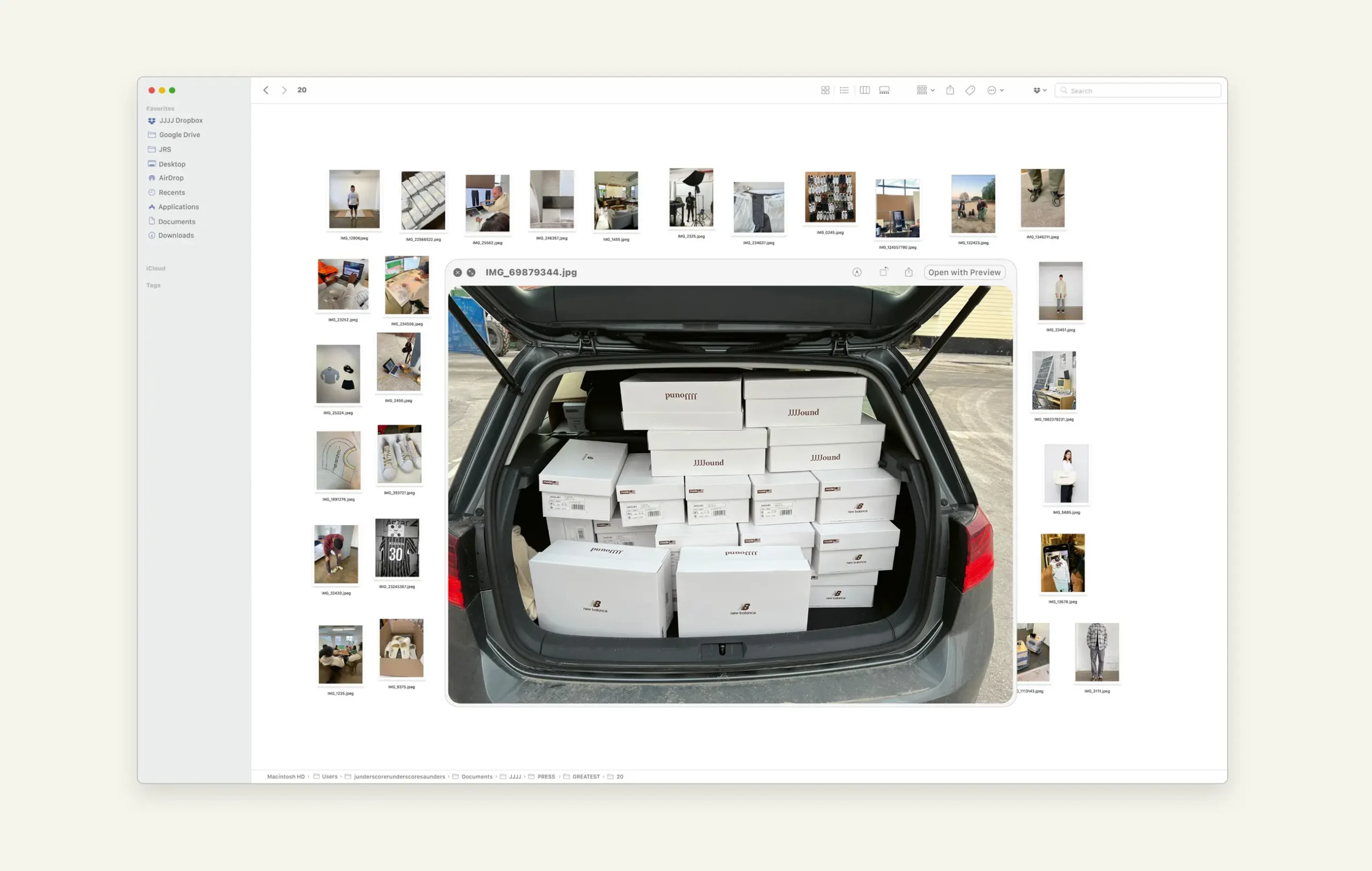
stu
Step inside the world of JJJJound and the first thing that registers is not what’s present—but what’s been intentionally removed. There is no visual clutter, no overstated branding, no unnecessary friction between object and purpose. What remains is clarity. And in 2026, clarity has become one of the rarest—and most valuable—currencies in design.
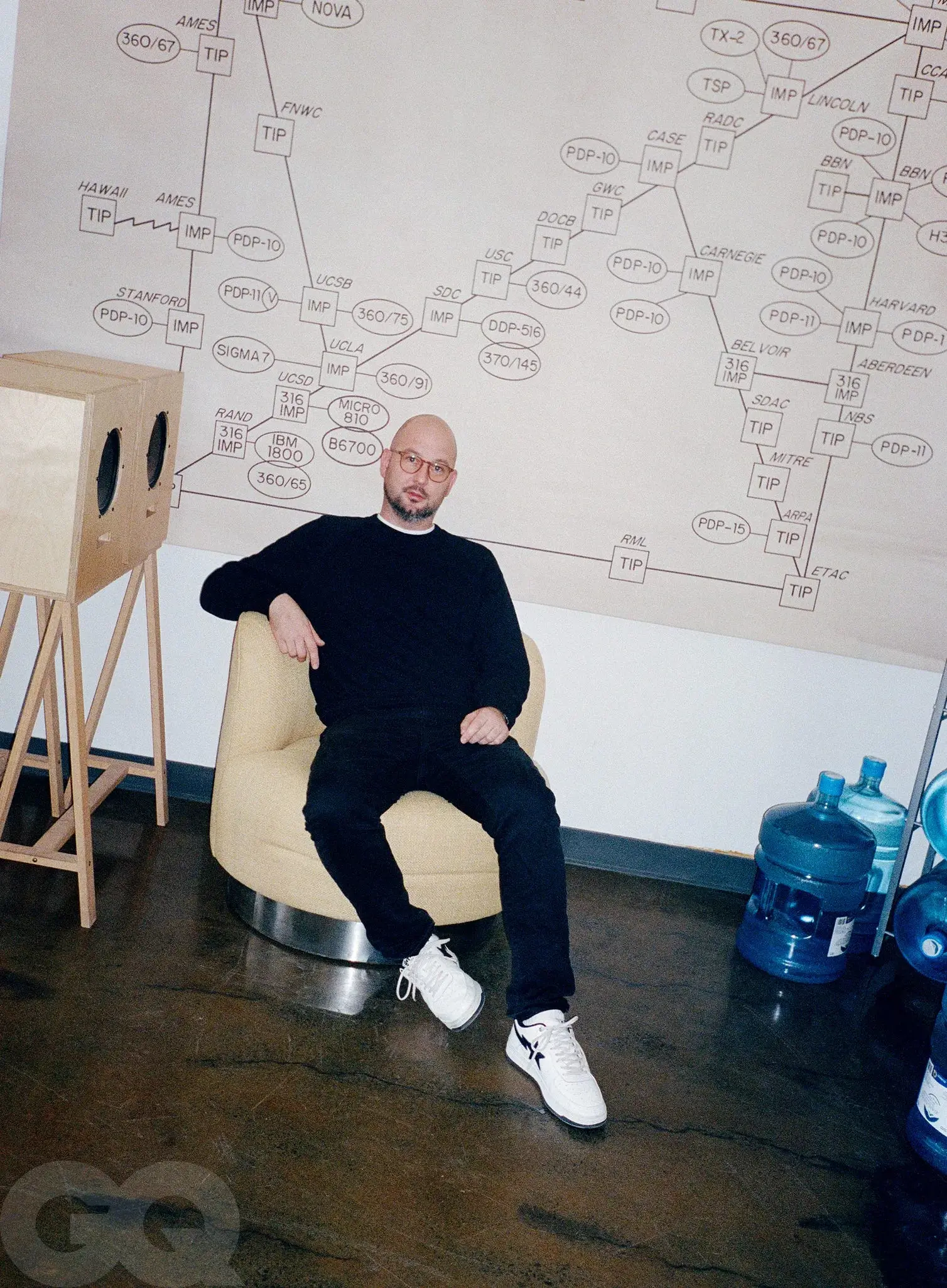
The Montreal-based studio, led by Justin Saunders, has spent over a decade refining a philosophy that resists acceleration. While the broader fashion and product ecosystem continues to chase immediacy, JJJJound operates on calibration. Every release, every collection, every image exists as part of a longer continuum rather than a momentary spike.
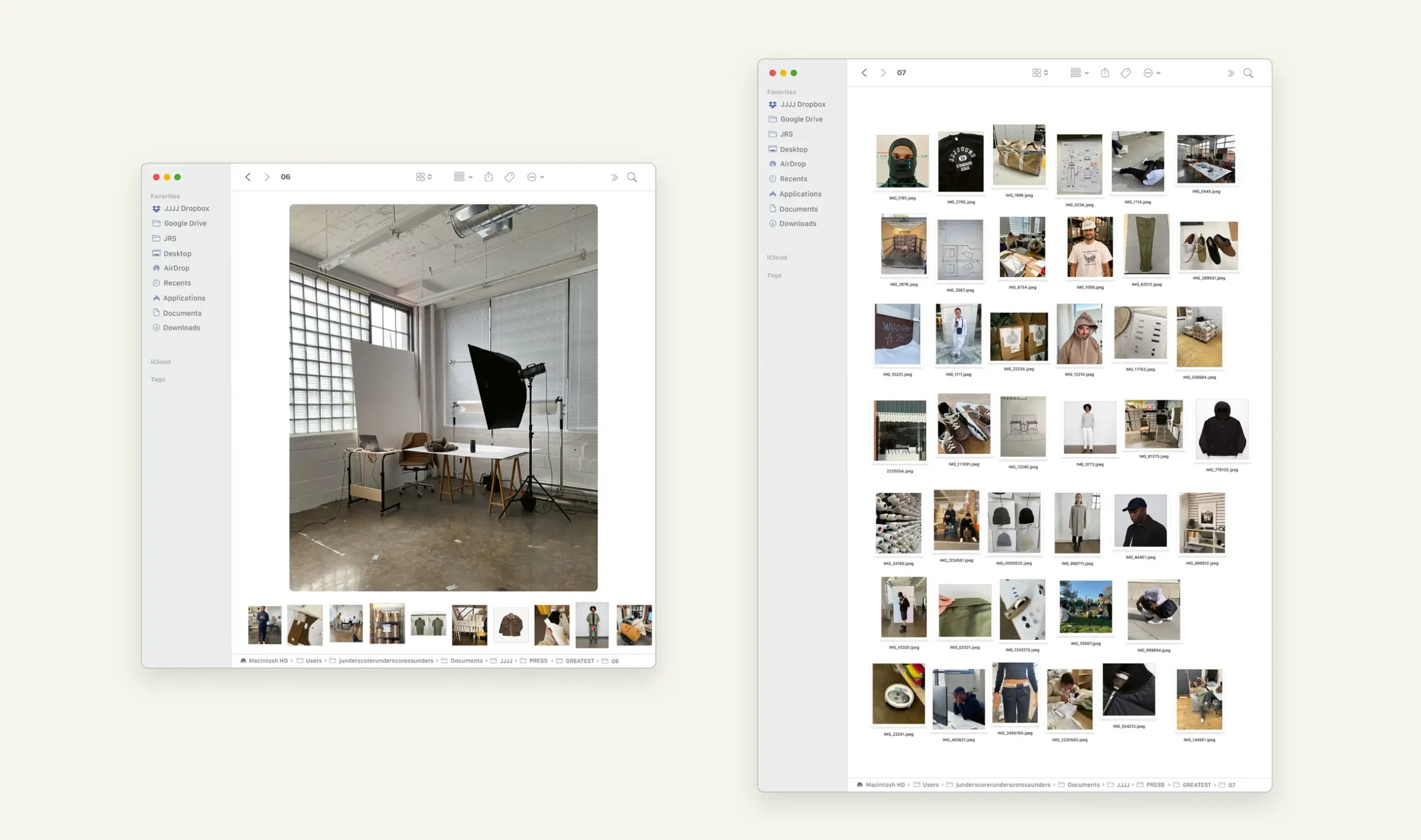
“The World of JJJJound,” as framed through the “Greatest 07” excerpt, is less about unveiling secrets and more about confirming what many suspected: the system is deliberate, the output is controlled, and the restraint is not accidental—it is engineered.
flow
Location, in the case of JJJJound, is not incidental. Montreal provides a distance that sharpens perspective. Removed from the constant churn of cities like New York City, Paris, or Milan, the studio operates without the pressure to respond in real time.
That separation produces a different rhythm. Ideas are not rushed into production; they are held, observed, refined. The environment fosters a kind of patience that has become increasingly rare across creative industries.
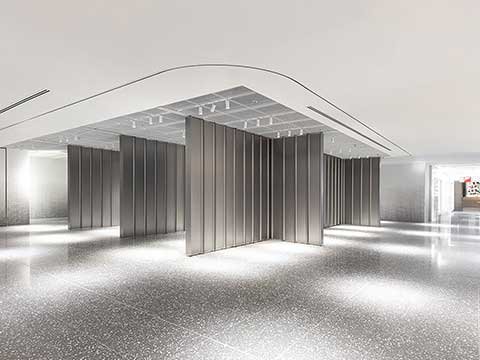
Inside the studio, this philosophy is tangible. Surfaces are clean, materials are honest, and objects feel selected rather than accumulated. The workspace reflects the output—disciplined, intentional, and quietly exacting.
Montreal, then, is not just a location. It is a filter.
View this post on Instagram
curation
Before JJJJound became synonymous with footwear collaborations and product design, it existed as a digital archive—a curated stream of imagery that mapped a specific visual language.
This origin still defines the studio’s approach in 2026.
JJJJound does not begin with invention. It begins with selection.
A chair, a sneaker, a garment—these are not treated as blank canvases, but as existing forms to be adjusted. The role of the studio is not to reinvent but to refine. This is where many misinterpret JJJJound’s minimalism. It is not about doing less for the sake of simplicity; it is about making fewer, more precise decisions.
That distinction has quietly reshaped how design is understood across categories.
show
Access to JJJJound has always been limited. Interviews are rare. Studio visits even rarer. This makes the “Greatest 07” moment significant—not because it exposes something radically new, but because it formalizes visibility on JJJJound’s own terms.
This reflects a defining behavioral shift in 2026: visibility is no longer constant—it is scheduled, framed, and authored.
Rather than participating in the endless cycle of content, JJJJound releases information in controlled intervals. What is shown is intentional. What is withheld is equally important.
The result is a form of transparency that feels considered rather than reactive. The audience is invited in—but only to the extent that the narrative remains intact.
stir
To understand JJJJound’s influence in 2026, one must look at how it approaches collaboration.
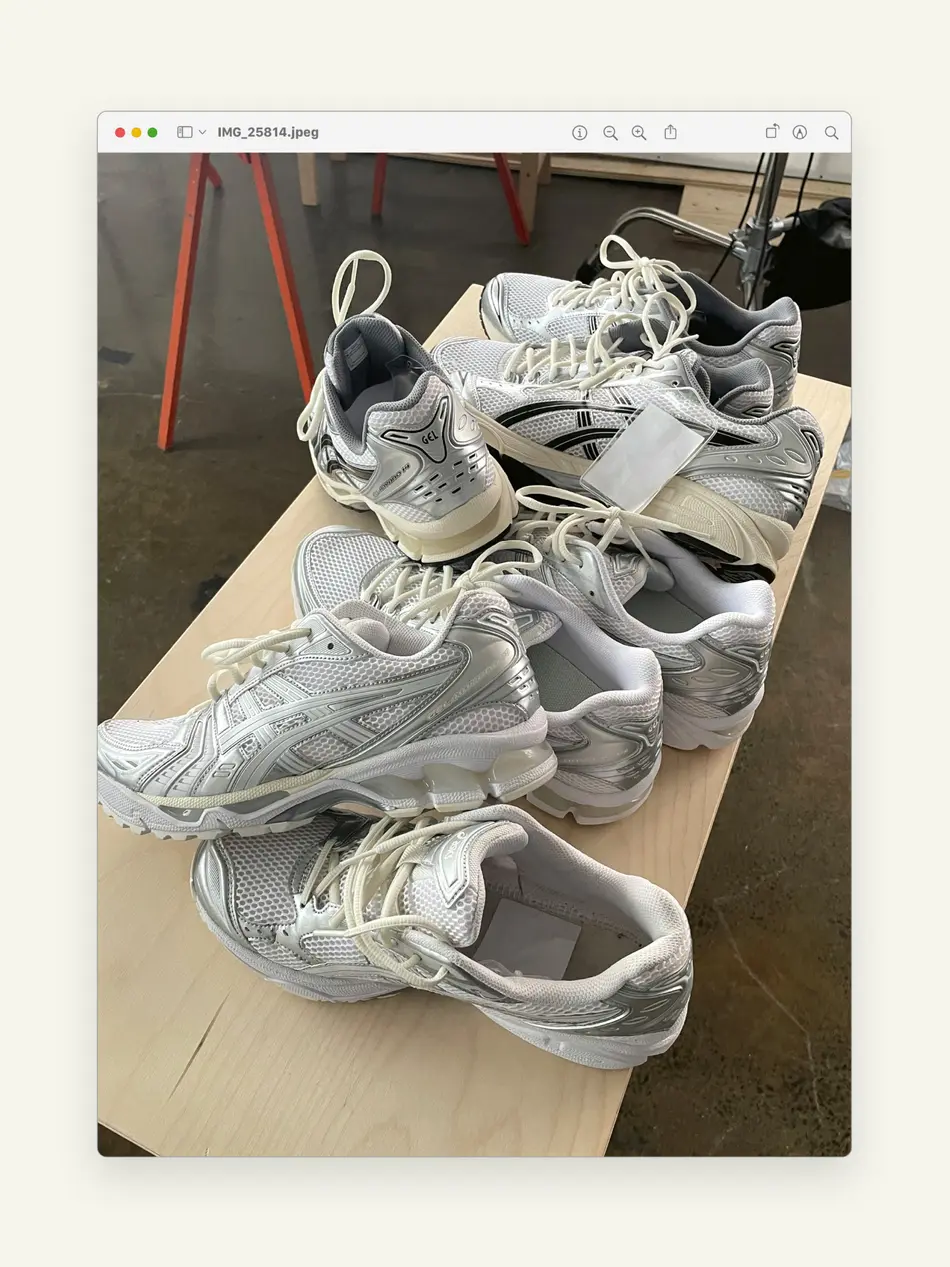
When the studio works with brands like New Balance, adidas, or Reebok, the goal is not transformation—it is alignment.
A silhouette remains familiar. A color palette is reduced. Materials are elevated. The changes are often subtle enough to be overlooked at first glance, yet they fundamentally alter how the object is perceived.
This has led to a broader industry shift: editing has become a legitimate form of authorship.
Design no longer requires maximal intervention to feel new. Precision—applied sparingly—can produce equal, if not greater, impact.
style
Across fashion, product design, and digital interfaces, restraint has evolved from aesthetic preference into cultural literacy.
Neutral tones dominate. Logos shrink. Shapes simplify.
But the difference between imitation and understanding is becoming more apparent.
Many brands replicate the surface language of JJJJound—beige palettes, clean lines—but fail to adopt the underlying discipline. True restraint requires decision-making rigor. It demands the removal of anything that does not serve the whole.
JJJJound’s influence lies not in its color schemes, but in its editing framework.
pattern
The union economy has reached saturation. Partnerships are constant, often driven by visibility rather than coherence.
JJJJound operates in opposition to this pattern.
Each connect feels like a continuation of the studio’s internal language. The partner adapts to JJJJound—not the other way around.
This introduces a critical shift: converges as extension, not collision.
Instead of merging identities, the process absorbs external elements into a singular, consistent framework. The result is recognizability without repetition.
discip
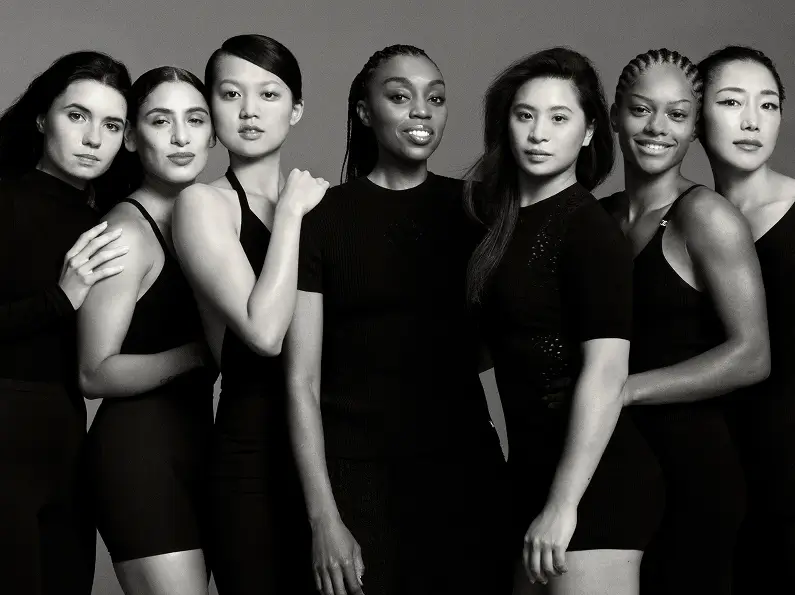
Though often associated with a singular vision, JJJJound operates through a team that shares a unified sensibility.
This is not a space for competing aesthetics. It is a space for alignment.
Designers, researchers, and collaborators work within a tightly defined framework. The goal is not to introduce variance, but to refine consistency.
This marks a broader shift in creative culture. Individual expression, while still valued, is increasingly balanced against collective clarity. The strongest outputs are those that feel cohesive rather than fragmented.
emotive
What began as a Tumblr feed has evolved into a fully realized system.
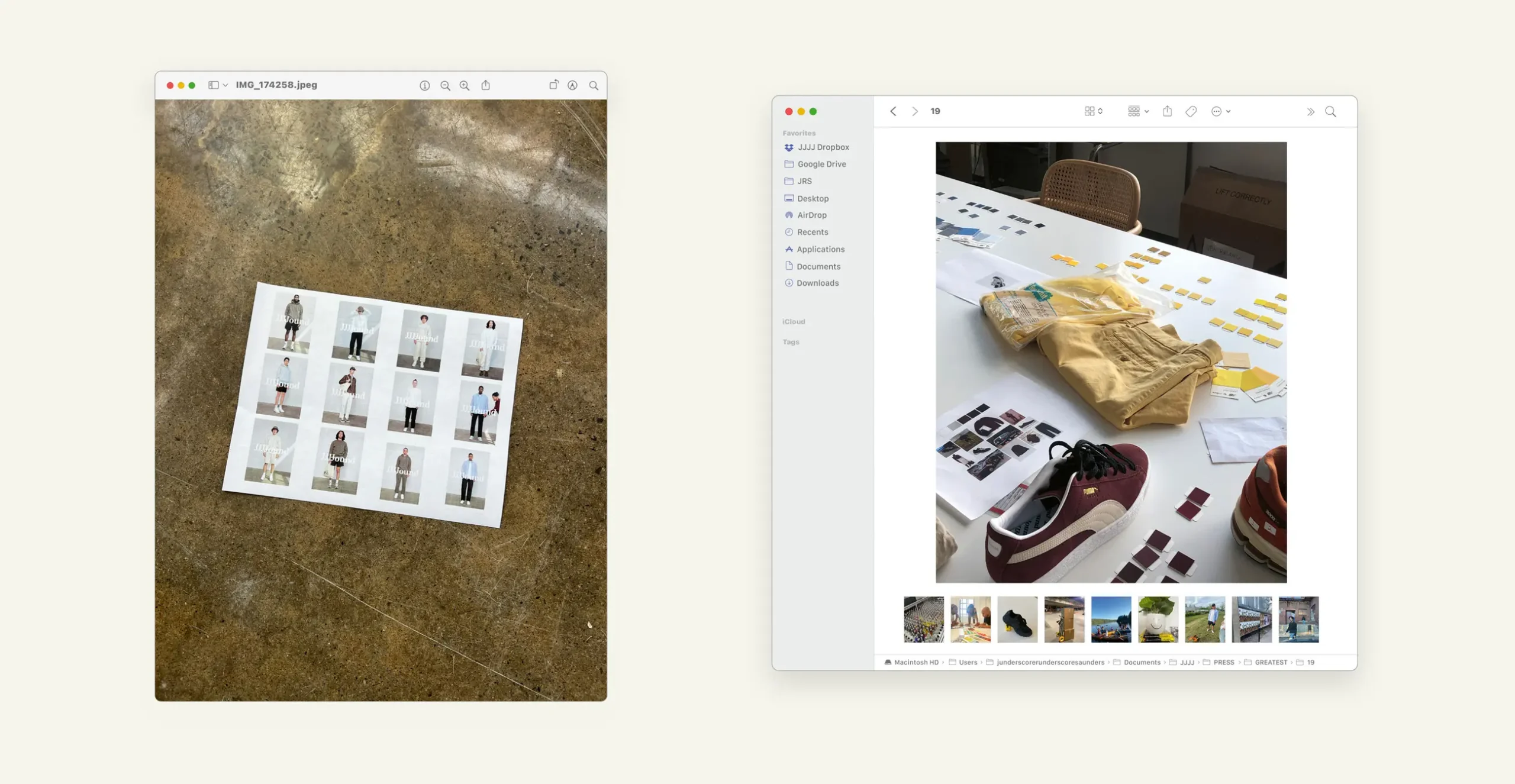
Moodboards are no longer static collections of inspiration. They function as living frameworks that guide decision-making across categories.
JJJJound’s long history of curation gives it a depth that newer brands struggle to replicate. Its references are not assembled quickly—they are accumulated over time.
In 2026, the most effective brands are those with this level of visual infrastructure. Consistency is no longer optional—it is expected.
rare
JJJJound releases remain limited, yet they avoid traditional hype mechanisms.
There are no excessive countdowns, no aggressive marketing cycles. Products appear, circulate, and disappear with minimal noise.
This creates a different relationship with scarcity. It feels organic rather than manufactured.
Consumers engage not because they are pressured, but because they recognize value.
This shift signals a broader fatigue with performative hype. Stability, in contrast, is becoming aspirational.