Their Greatest Hits (1971–1975): How the Eagles Captured the American Soul and Rewrote Music History

May 20, 2025
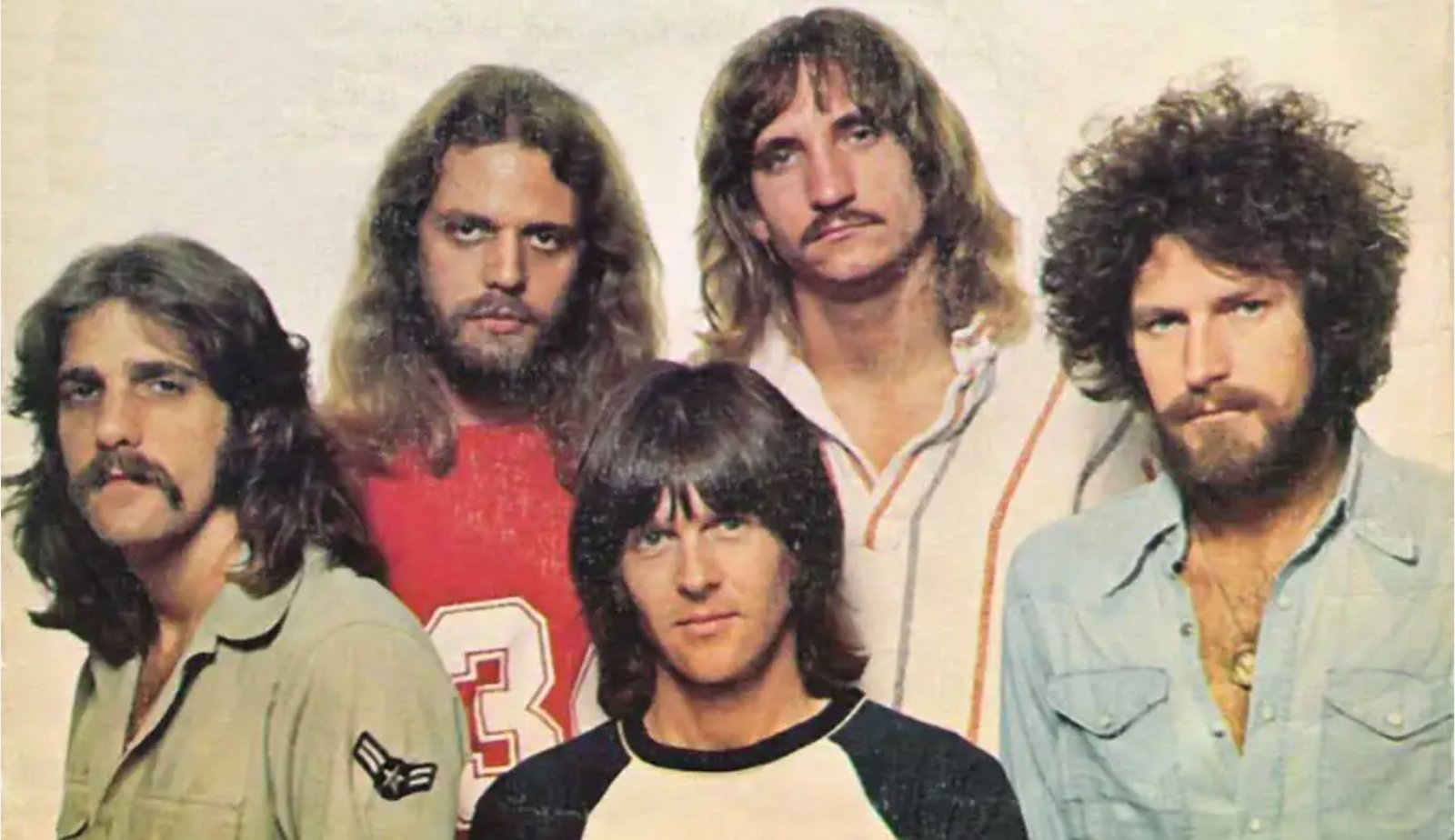
When the Eagles released Their Greatest Hits (1971–1975) on February 17, 1976, they did more than reflect on their first five years—they crystallized them into a single, timeless volume. The compilation would become the best-selling album in U.S. history, earning a monumental 38× Platinum certification, outpacing even Michael Jackson’s Thriller. But unlike many commercial juggernauts, its value lies not just in units sold but in what it preserved: the acoustic language of a generation adrift, soothed by the promises of harmony, freedom, and introspection.
This wasn’t just a greatest hits collection. It was a cultural artifact—a portrait of post-hippie America in ten tracks, delicately balancing optimism with melancholy, radio polish with lyrical depth. For many, it was the first album they ever owned. For others, it was the sound of long drives, high school heartbreaks, or California sunsets glimpsed through the lens of longing.
Their Greatest Hits became the people’s record, and in doing so, the Eagles—once session players weaving through the Laurel Canyon scene—became curators of the American condition.
The Genesis of a New American Sound
From Session Players to Supergroup
The story of the Eagles begins in 1971, in the fertile musical landscape of Los Angeles. Glenn Frey and Don Henley met while backing Linda Ronstadt and quickly formed an alliance, later joined by Bernie Leadon and Randy Meisner. Each brought distinctive influences: Frey’s Detroit grit, Henley’s poetic Texas melancholy, Leadon’s bluegrass virtuosity, and Meisner’s Midwestern soul.
Their early work was steeped in California country rock, an emerging genre that combined the storytelling of Nashville with the electric textures of the West Coast. But more than genre, it was tone that distinguished the Eagles—a mood of ease and edge, as if each song was written on a hotel balcony overlooking the desert.
The Rise of Harmony and Hooks
Their self-titled debut in 1972 yielded “Take It Easy,” a co-write with Jackson Browne that still functions as their mission statement. It captured the ethos of an itinerant America with its iconic first line—“Well, I’m a-runnin’ down the road tryin’ to loosen my load”—delivered with breezy vocal interplay and Byrds-like guitar chime.
Other early hits, like “Peaceful Easy Feeling” and “Witchy Woman,” demonstrated the band’s lyrical duality—alternating between serene sensuality and ominous mysticism. The Eagles understood that the 1970s weren’t purely light or dark; they existed in gradients. They gave listeners room to dream, to ache, and to drift.
As their albums progressed—Desperado (1973), On the Border (1974), and One of These Nights (1975)—the band’s sound matured, growing rockier, more assertive. Yet, they never lost their commitment to melody, vocal precision, or that unplaceable feeling of sunset introspection.
The Making of a Monument
Strategic Brilliance Disguised as a Compilation
In an era before algorithm-driven playlists, greatest hits albums served as cultural bridges. They summarized careers and educated new listeners. But Their Greatest Hits (1971–1975) was different—it wasn’t the end of a legacy, but a prelude to a masterpiece, released just months before Hotel California.
Its sequencing was methodical: the band curated a tracklist that felt like a singular album, not a shuffled retrospective. The songs flowed from one to the next with thematic and sonic coherence, moving from road-worn optimism to existential contemplation.
These were not filler tracks—they were standalone epics. Each one had already carved a space on FM radio, yet together they told a deeper story: of a band reflecting on the first chapter of its mythos, even as the next was about to explode.
A Tracklist That Read Like a Soundtrack
- “Take It Easy” – The breezy, endlessly quotable opener that introduced America to the band’s sound and ethos.
- “Witchy Woman” – All southern gothic and minor-key seduction, a precursor to their darker instincts.
- “Lyin’ Eyes” – A seven-minute novella of suburban discontent, delivered with aching clarity.
- “Already Gone” – The anthem of reclamation, its guitar solo slicing through heartbreak.
- “Desperado” – As haunting as it is iconic, a piano ballad soaked in loneliness and lawlessness.
- “One of These Nights” – A slinky groove that proved the Eagles could funk with finesse.
- “Tequila Sunrise” – The morning after a romantic collapse, gentle in arrangement but bruised in heart.
- “Take It to the Limit” – Randy Meisner’s moment of transcendence, a crescendo of fragile ambition.
- “Peaceful Easy Feeling” – Warm, unhurried, and immune to cynicism.
- “Best of My Love” – The closing note of vulnerability, soaring and broken in equal measure.
Every track is a narrative in miniature, often disguising emotional complexity within radio-friendly gloss. That duality gave the album an enduring richness—songs you could either live with in the background or sit with, lyric by lyric.
The Cultural Context: Why It Resonated Then—and Still Does
The Sound of 1970s America
The mid-1970s were a paradox: a country recovering from war and scandal, yet chasing pleasure and escape through music and leisure. Disco throbbed in nightclubs; punk simmered underground. The Eagles split the difference. Their music was accessible but literate, escapist but introspective.
For many, their songs were soundtracks to the search for meaning in an increasingly fragmented society. In a time when trust in institutions faltered, the Eagles offered a familiar compass: romance, roadways, regret, release.
Radio’s Golden Age and Word of Mouth
Their Greatest Hits exploded in an analog world. There was no social media, no YouTube—just radio DJs, record store clerks, and word-of-mouth enthusiasm. The album had infinite replay value, played endlessly in car stereos, on college campuses, in diners, and at home.
Listeners connected because it sounded like life—not high-concept or overproduced, but deeply human. And when the band toured, they delivered these songs with precision, never wavering from the crisp harmonies that defined their recordings.
Timelessness in a Transitional Era
The Eagles’ music lacked time-stamped production tricks. There were no disco strings, no synthesizer experiments. Instead, their arrangements relied on organic instrumentation, tight musicianship, and crystal-clear engineering.
As a result, Their Greatest Hits has aged without a wrinkle. In dorm rooms, dive bars, and desert drives, it still feels relevant—not retro. It’s one of the few albums whose emotional register can be grasped by both a 16-year-old discovering heartbreak and a 60-year-old remembering it.
The Legacy: Impressions, Influence, and Immortality
Reshaping Rock’s Center of Gravity
Prior to the Eagles, country and rock were often siloed. The Eagles blurred that line until it disappeared. They made banjos cool again. They gave twang a place in stadiums. They turned storytelling into pop structure, making songs like “Lyin’ Eyes” seven-minute chart-toppers.
Their influence is audible in:
- The alt-country boom of the 1990s (Wilco, The Jayhawks).
- Heartland rockers like Tom Petty and Bruce Springsteen.
- Modern country-pop acts like Keith Urban and Lady A.
Even bands outside their genre studied their craft. The Eagles weren’t about trends—they were about execution. And that made them unavoidable.
A Reunion That Felt Inevitable
In 1980, after internal tensions peaked, the band broke up. For years, fans held out hope. Then in 1994, the Hell Freezes Over tour reignited everything. Tickets sold out instantly. The new generation—raised on their parents’ vinyl—was now old enough to buy their own.
After Glenn Frey’s death in 2016, many believed the band’s story had closed. But with his son Deacon joining alongside Vince Gill, the Eagles endured, not as nostalgia, but as living heritage, performing to multi-generational audiences in arenas across the globe.
Institutional Recognition
In 2017, Their Greatest Hits was selected for preservation in the National Recording Registry by the Library of Congress—an honor reserved for works deemed “culturally, historically, or artistically significant.” That designation was more than symbolic. It recognized what fans always knew: this wasn’t background music. It was American canon.
Flow: Soul Searching Music
Their Greatest Hits (1971–1975) endures not because it chased trends, but because it captured truths. These were songs about relationships unraveling, about cities shining and fading, about yearning for escape but also fearing the cost. The melodies linger because they’re beautiful. The lyrics last because they’re true.
This album is not just a milestone in the band’s career—it’s a musical document of an era’s emotional intelligence. In just ten tracks, the Eagles told a nation what it needed to hear: that it was okay to long, to leave, to fail, to forgive.
Decades later, the songs still play—on cross-country highways, in jukeboxes and digital playlists, in headphones worn by kids who never knew the ‘70s. And every time they do, they tell us the same thing: we’re not alone in how we feel.