Hollywood Meets High Art: Timothée Chalamet and the Defense of Ballet and Opera

March 7, 2026
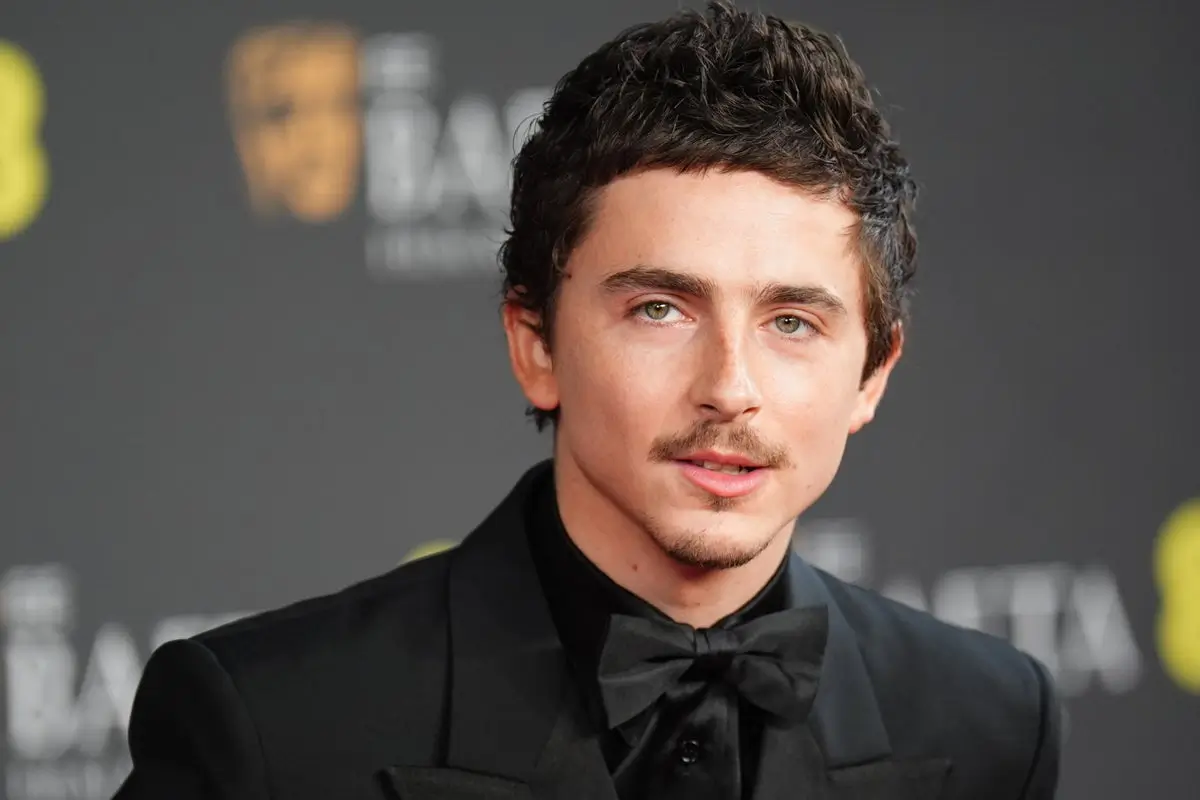
Every generation produces a cultural moment that feels strangely disproportionate. A sentence is spoken casually, perhaps even clumsily, and suddenly the internet behaves as if someone has kicked open the doors of a museum and insulted the paintings.
That moment arrived when Timothée Chalamet—arguably one of the most visible actors of his generation—remarked during a discussion about movie theaters that he would not want to work in ballet or opera, where institutions often seem to be trying to “keep something alive even though no one cares.”
It was a sentence tossed into the air with the kind of improvisational looseness that public conversations encourage. But it landed with the weight of a cultural insult.
Within hours, opera singers, ballet dancers, arts institutions, critics, and audiences began pushing back. To them, the statement sounded like a dismissal of centuries of artistic tradition, a casual shrug at forms of expression that have shaped global culture for hundreds of years.
Yet the reaction revealed something stranger than a celebrity controversy. It exposed a persistent anxiety about artistic relevance in the modern world.
The debate was not really about Timothée Chalamet.
It was about the uneasy question haunting every art form today:
Who still cares?
stir
Chalamet’s remark occurred during a discussion about the future of cinema—an industry that, ironically, is wrestling with the same existential fears he attributed to ballet and opera.
Movie theaters once stood as cultural cathedrals of the twentieth century. For decades they were the dominant arena where collective emotion unfolded in darkness: laughter, suspense, heartbreak, and awe projected onto a massive screen.
But the last fifteen years have fractured that experience.
Streaming platforms turned living rooms into miniature cinemas.
Social media reduced attention spans.
Algorithms reshaped how audiences discover stories.
Even blockbuster franchises—once the economic backbone of theatrical release—now compete with endless digital entertainment ecosystems.
In that context, Chalamet’s comment was intended less as a critique of ballet and opera and more as a warning about what cinema itself might become.
His fear, implicit in the remark, was simple:
What if film ends up fighting the same battle as classical performing arts—struggling to convince younger audiences that the experience still matters?
cont
Opera and ballet communities reacted quickly, and their response was not purely defensive. It was also philosophical.
Artists in these disciplines are intimately familiar with the narrative that their work is obsolete. They have heard it repeatedly for decades.
Opera has been called elitist, inaccessible, expensive, old-fashioned.
Ballet has been described as rigid, aristocratic, historically frozen.
And yet these art forms persist.
They survive through reinvention.
Modern ballet choreographers fuse classical technique with street dance, contemporary theater, and digital staging. Opera productions increasingly incorporate cinematic projection, experimental staging, and contemporary themes ranging from politics to climate change.
In other words, the art forms Chalamet mentioned have been evolving for generations precisely because artists refuse to let them become museum artifacts.
hx
The backlash became even more layered once observers pointed out something quietly ironic:
Chalamet himself grew up surrounded by the performing arts.
His childhood unfolded in Manhattan Plaza, a residential complex famous for housing actors, musicians, dancers, and theater professionals. The building has long functioned as a kind of unofficial artists’ village in New York City.
Even more striking is his family background. His mother, Nicole Flender, worked as a Broadway dancer and performer.
In other words, ballet and theater are not distant cultural abstractions in Chalamet’s life. They are part of his personal history.
This detail complicated the narrative.
The comment was no longer simply a movie star dismissing classical arts. It sounded more like someone casually criticizing a cultural ecosystem that helped shape his own artistic sensibility.
struct
Beneath the controversy lies an uncomfortable truth: modern culture quietly ranks artistic disciplines.
Some forms are considered contemporary and influential.
Others are treated as historical relics.
Film once replaced theater as the dominant storytelling medium. Television then disrupted cinema. Streaming platforms have begun reshaping television.
Meanwhile, older art forms are often framed as prestigious but peripheral.
Opera and ballet occupy this strange territory. They are widely respected but frequently described as niche.
Museums, symphony orchestras, and opera houses occupy similar positions. Their cultural importance is acknowledged, yet they are rarely discussed with the same urgency as emerging media platforms or blockbuster entertainment.
Chalamet’s comment unintentionally tapped into this hierarchy.
When he suggested that “no one cares,” he was echoing a widespread perception—even if that perception is not entirely accurate.
show
The idea that ballet and opera have lost their audiences is both true and false at the same time.
Large-scale productions still attract thousands of spectators every season in cities like New York, Paris, Milan, London, and Tokyo. International touring companies continue to sell out performances.
But the demographics have shifted.
The audiences attending classical performances today often skew older and wealthier than the general population. Ticket prices and institutional traditions can create barriers for younger spectators.
At the same time, digital culture has changed how people consume art.
A ballet performance might receive millions of views online through short clips on social media—yet far fewer people may attend the live show itself.
This paradox creates a strange situation:
The art form may be widely visible yet rarely experienced in its original setting.
cin
Ironically, cinema itself is beginning to face a similar paradox.
Film culture is arguably more visible than ever. Movies dominate streaming services, social media discussion, and global pop culture.
Yet the ritual of going to the theater has become less central to everyday life.
In the mid-twentieth century, attending the movies was a weekly habit for millions of people. Today, it often feels like a special occasion reserved for major releases.
The pandemic accelerated this transformation. Many viewers discovered they preferred watching new films at home.
Chalamet’s concern about keeping theaters alive reflects a broader anxiety shared by filmmakers, distributors, and theater owners around the world.
media
Part of the reason the controversy exploded so quickly lies in the structure of online discourse itself.
Social media thrives on conflict.
An ambiguous remark becomes a debate.
A debate becomes a viral narrative.
A narrative becomes a cultural battlefield.
Within hours, Chalamet’s comment was framed in competing ways:
Some argued he had insulted centuries of artistic tradition.
Others insisted critics were overreacting to a harmless exaggeration.
The result was a familiar digital spectacle in which nuance evaporated and positions hardened into slogans.
what
To understand why the backlash was so passionate, it helps to remember what these art forms represent historically.
Opera emerged in late Renaissance Italy as an attempt to recreate the theatrical storytelling of ancient Greece. It combined music, drama, stage design, and visual spectacle into a single immersive experience.
Ballet evolved in the royal courts of Europe before becoming one of the most technically demanding forms of physical expression in the arts.
Both disciplines require enormous dedication.
Opera singers train for decades to develop the vocal power needed to project over orchestras without amplification. Ballet dancers push their bodies through years of intense physical conditioning to achieve the illusion of effortless grace.
To practitioners, the suggestion that “no one cares” about these traditions can feel like a dismissal of the lifelong commitment required to sustain them.
gen
Part of the controversy may simply reflect a generational divide.
Younger audiences tend to encounter art through screens first and institutions second.
A teenager may discover dance through viral choreography videos long before seeing a classical ballet performance. Someone might hear opera through film soundtracks or streaming playlists rather than inside an opera house.
In this sense, the cultural context surrounding classical art has changed dramatically.
Opera and ballet are no longer the dominant entertainment mediums they once were. But they still influence the creative vocabulary of contemporary culture—from fashion to film scoring to stage design.
eco
Another reason the remark generated such strong reactions is that celebrities occupy powerful positions within cultural ecosystems.
When a widely admired actor speaks about art, the comment carries symbolic weight.
Chalamet has built his career on films that straddle the boundary between mainstream entertainment and independent cinema. Because of that reputation, audiences often expect him to champion artistic diversity rather than reinforce cultural hierarchies.
His words therefore resonated differently than they might have if spoken by someone outside the arts community.
resil
Despite constant predictions of decline, classical art forms have proven remarkably durable.
Opera survived the invention of the phonograph, radio, film, television, and the internet. Ballet adapted to modern choreography, experimental staging, and cross-disciplinary collaborations.
These traditions endure partly because they offer something digital media cannot replicate: the intensity of live performance.
A ballet dancer landing a leap or an opera singer holding a high note creates a physical presence that cannot be fully translated through screens.
The audience shares the same air as the performers. The experience is immediate, unpredictable, and communal.
fwd
In the end, the uproar surrounding Chalamet’s remark may prove less important than the conversation it sparked.
It reminded audiences that artistic ecosystems are interconnected. Film borrows from theater. Theater draws from dance. Music informs every discipline.
Rather than competing with one another, these forms exist in dialogue.
The survival of cinema does not require the disappearance of ballet.
The vitality of opera does not depend on rejecting modern media.
Art thrives when different traditions coexist and influence one another.
fin
The real question raised by the controversy is not whether ballet and opera are popular. It is who gets to decide what cultural relevance means in the first place.
Popularity fluctuates. Attention shifts. Technologies evolve.
Yet artistic traditions rarely vanish simply because someone declares them outdated.
They persist through communities that care deeply enough to keep performing, watching, listening, and arguing about them.
The fierce reaction to Chalamet’s comment demonstrates exactly that.
If no one cared about ballet and opera, the remark would have disappeared unnoticed.
Instead it ignited a global conversation about art, relevance, and the strange ways culture measures value.
And perhaps that reaction proves the opposite of what the original comment suggested.
People still care—sometimes passionately, sometimes defensively, but undeniably.
In the end, that may be the most powerful evidence that these art forms remain alive.

No comments yet.