Tommy Hilfiger Welcomes Travis Kelce, Marking a New Chapter in Modern Prep

March 30, 2026
1 minute ago
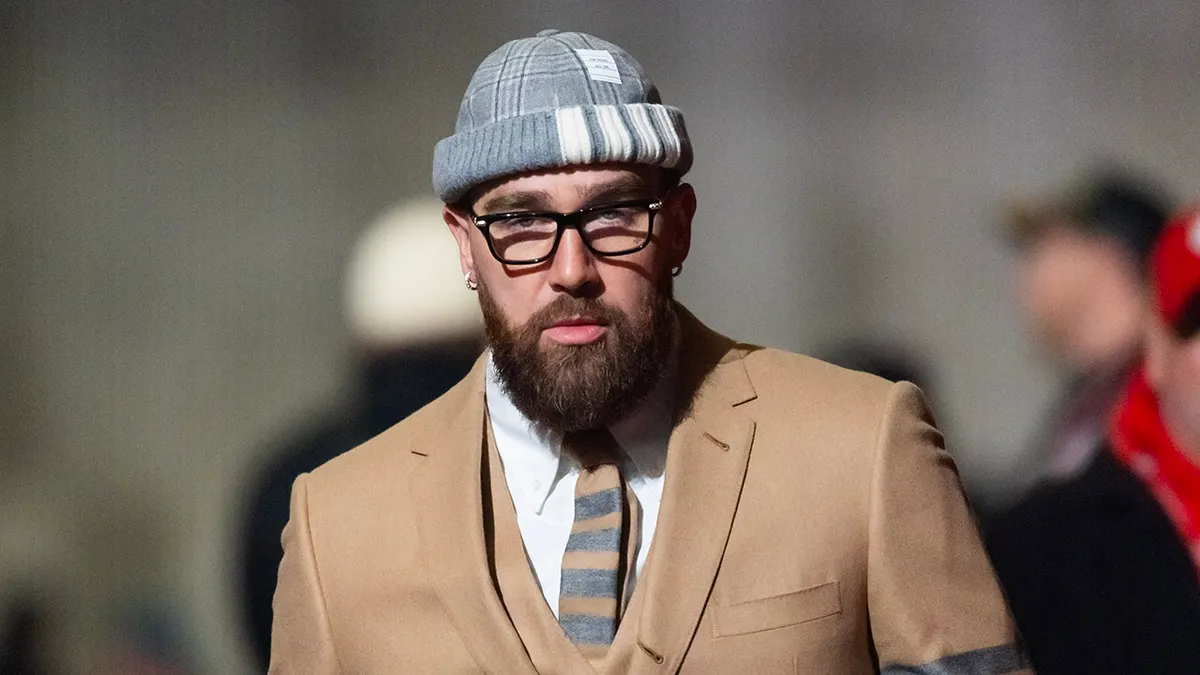
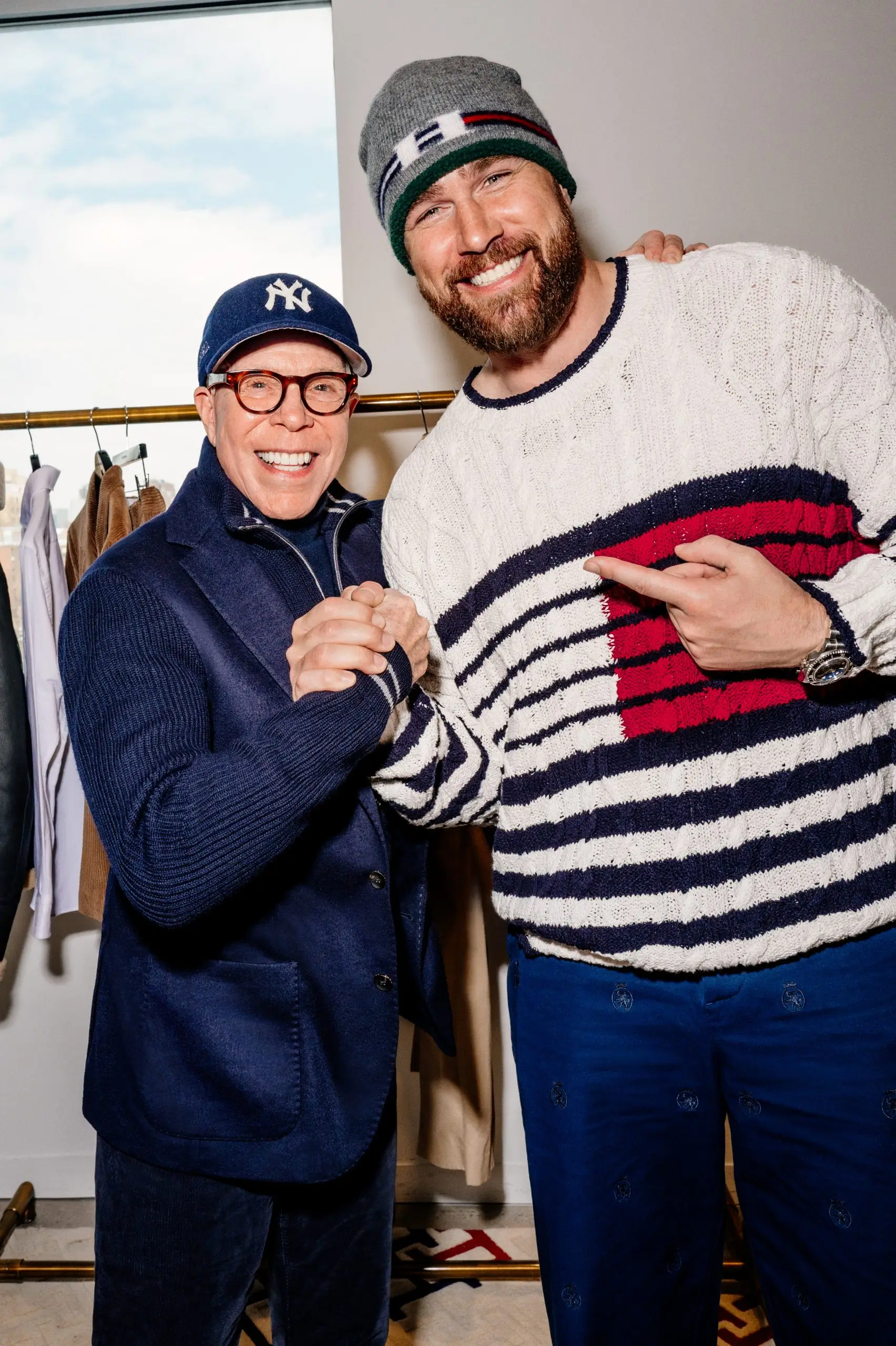
The appointment of Travis Kelce as Global Brand Ambassador for Tommy Hilfiger arrives not as a surprise, but as a precise calibration of cultural timing. Kelce, whose identity has steadily expanded beyond the gridiron into fashion, entertainment, and personality-driven media, becomes the latest figure to inhabit Hilfiger’s long-standing universe of American archetypes.
Where the brand historically codified a polished, collegiate aesthetic—rooted in East Coast prep, varsity codes, and a certain democratic optimism—Kelce introduces a different cadence. His presence is less about refinement in the traditional sense and more about charisma, looseness, and a distinctly contemporary fluency across cultural registers. This is not a departure from Hilfiger’s DNA so much as a recalibration of it.
The partnership, spanning Autumn/Winter 2026 through Spring 2027, signals a multi-season narrative rather than a one-off campaign. It positions Kelce not only as a face but as a convincer, tasked with reinterpreting the brand’s “Prep Made Current” ethos through lived experience rather than archival reverence.
frame
The proposed environment expected to emerge from this merge leans into contrasts: tailored versus relaxed, heritage versus immediacy, polish versus personality. Kelce’s own style history—often oscillating between sharply tailored suits and coltish, sometimes irreverent off-duty looks—offers fertile ground for reinterpretation.
In this context, Hilfiger’s red, white, and blue palette becomes less a static signature and more a framework for experimentation. The campaigns are likely to emphasize movement, spontaneity, and cultural layering, reflecting Kelce’s ability to navigate different worlds with ease.
This is a strategic evolution. Where earlier Hilfiger campaigns often leaned into idealized Americana—sunlit campuses, coastal leisure, aspirational simplicity—the Kelce era introduces friction and texture. The imagery becomes less about perfection and more about presence.
theory
The phrase “Prep Made Current” has long functioned as a mission statement for Tommy Hilfiger. Yet, in 2026, the concept requires continual reinterpretation to remain culturally relevant.
Kelce’s involvement reframes prep not as a fixed aesthetic but as a mutable language. His approach to dressing—mixing tailored silhouettes with athletic references, incorporating bold color, embracing statement pieces—expands the definition of what prep can signify.
Rather than adhering to rigid codes, the collaboration suggests a more inclusive, personality-driven interpretation. Prep becomes less about conformity and more about self-styling, less about heritage for its own sake and more about how that heritage can be activated in the present.
This shift aligns with broader movements within menswear, where traditional categories have blurred and the boundaries between formal and casual, sport and fashion, have dissolved.
View this post on Instagram
stir
The elevation of athletes into fashion’s upper tiers is no longer novel, but the nature of that elevation continues to evolve. Figures like Travis Kelce operate not merely as endorsers but as cultural conduits—individuals whose personal narratives carry weight across multiple industries.
Kelce’s visibility extends beyond the field. Appearances on red carpets, in media interviews, and across social platforms have cultivated a persona that feels both accessible and aspirational. His style choices—often discussed, dissected, and circulated—position him as an active participant in fashion discourse.
For Hilfiger, this represents an opportunity to tap into a form of authenticity that cannot be manufactured. Kelce’s influence is not imposed; it is observed, shared, and organically amplified.
idea
Central to the partnership is the promise of co-designed menswear and accessories for Spring 2027. This moves the collaboration beyond surface-level branding into the realm of creative dialogue.
The question becomes not simply how Kelce wears Hilfiger, but how his perspective reshapes it.
Design, in this context, is less about radical reinvention and more about nuanced adjustment—altering proportions, introducing unexpected details, rethinking color applications, and reimagining how garments function in everyday life.
Kelce’s input is likely to emphasize wearability with personality: pieces that retain the structural clarity of prep while incorporating elements of play and individuality. This could manifest in relaxed tailoring, hybrid garments that bridge sport and formalwear, and accessories that carry a sense of ease rather than strict utility.
flow
At its core, Tommy Hilfiger remains a heritage label. Its neutral codes—naval stripes, varsity jackets, crisp shirting, tailored blazers—are deeply embedded in the cultural imagination.
The Kelce partnership does not seek to dismantle these codes. Instead, it positions them as starting points for reinterpretation.
Expression becomes the operative word. Where heritage once dictated a certain uniformity, the new direction encourages variation. A blazer may be styled with athletic footwear, a rugby shirt paired with tailored trousers, a varsity jacket layered in unexpected ways.
This approach reflects a broader cultural shift toward personalization. Consumers are less interested in adhering to prescribed looks and more invested in constructing their own visual identities.
strad
The intersection of fashion and sport has become one of the defining dynamics of the 2020s. Collaborations between athletes and fashion houses are no longer peripheral; they are central to how brands communicate identity and relevance.
In this context, Travis Kelce embodies a particular kind of hybridity. His career as an elite athlete coexists with a growing presence in entertainment and style, creating a composite identity that resonates across different audiences.
For Tommy Hilfiger, this hybridity aligns with a long-standing interest in cultural crossover. The brand has historically engaged with music, film, and sport as extensions of its aesthetic universe.
The Kelce partnership continues this tradition while updating it for a new era.
move
The forthcoming Spring 2027 co-designed collection represents the culmination of this collaboration’s initial phase. It will serve as a tangible expression of the ideas explored throughout the partnership.
While specific details remain under wraps, the collection is likely to emphasize versatility and adaptability. Pieces may be designed to transition seamlessly between contexts—day to night, casual to formal, sport to leisure.
Accessories, often overlooked, could play a significant role. Items such as bags, footwear, and small leather goods offer opportunities for subtle experimentation, allowing Kelce’s influence to manifest in details rather than overt statements.
fwd
“Classic American Cool,” a phrase frequently associated with Tommy Hilfiger, undergoes a quiet transformation through this partnership.
In earlier decades, the concept was tied to a specific image: clean-cut, aspirational, and rooted in a particular vision of American life. Today, that image is more fluid, more inclusive, and more reflective of diverse experiences.
Kelce’s presence contributes to this evolution. His interpretation of cool is less about perfection and more about confidence, less about adherence and more about expression.
sum
The appointment of Travis Kelce as Global Brand Ambassador for Tommy Hilfiger is not merely a marketing decision. It is a cultural marker, indicative of broader shifts within fashion and society.
It reflects a moment in which heritage brands seek to remain relevant by engaging with contemporary voices, where athletes become central figures in style discourse, and where identity is increasingly defined by hybridity.
As the partnership unfolds—from Autumn/Winter 2026 campaigns to the Spring 2027 collection—it will offer a case study in how tradition and modernity can coexist, how established codes can be reinterpreted, and how a single collaboration can encapsulate the evolving narrative of American fashion.