Ultra Music Festival Celebrates 25 Years with Epic Sets, Surprise Guests & Global Fandom

May 7, 2025
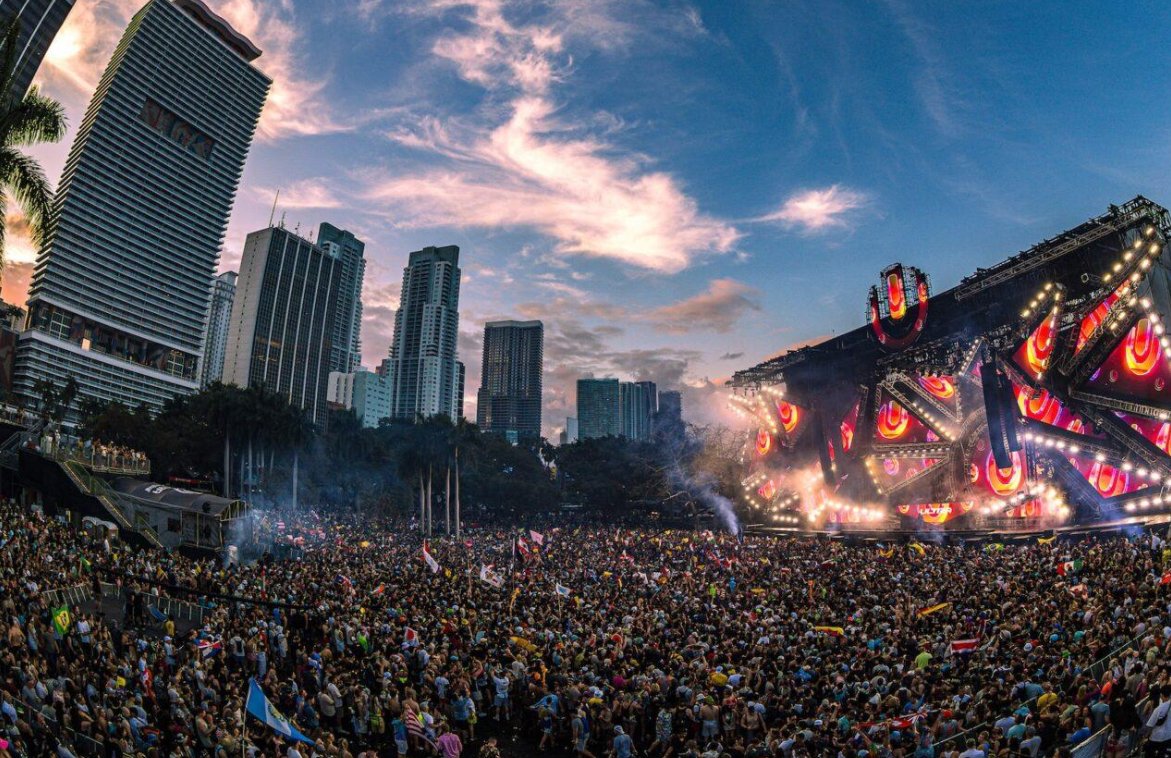
For a quarter of a century, Ultra Music Festival has been more than just a spectacle of flashing lights and bone-rattling bass. It has become a rite of passage for lovers of electronic music—a pulsating, transcendent communion that draws hundreds of thousands of revelers from every corner of the globe to the sun-splashed shores of downtown Miami. In 2025, Ultra celebrated its 25th anniversary not as a nostalgic reunion but as a defiantly forward-looking manifestation of what dance music culture has become: a boundless, borderless, technologically enhanced utopia.
The anniversary edition of Ultra was not merely a retrospective of its storied past, but a rapturous reaffirmation of its place in the present and future of music. With a line-up featuring titans of the genre, rare back-to-back performances, dazzling stage designs, and unexpected cameos, this year’s Ultra proved why it remains one of the most influential and emotionally charged events on the global festival calendar.
From Warehouse Dreams to Global Stage
Ultra’s origin story is one of underground spirit meeting global ambition. Born in 1999 on the sands of South Beach with just a handful of DJs and fewer than 10,000 attendees, Ultra was the product of a cultural moment when rave culture was breaking out of warehouses and into the mainstream. Over the years, it migrated from beach to bayfront, expanding its scope while still retaining a visceral connection to its underground roots.
What makes Ultra enduring isn’t just its sheer scale—it’s the way it has always remained attuned to the pulse of the electronic music underground. From hosting the first U.S. performances of rising international DJs to consistently booking legacy acts who shaped the genre, Ultra has never lost its sense of musical curation, even as it grew into a mega-festival.
This 25th edition captured that evolution. Ultra 2025 was held once again at Bayfront Park, its signature home nestled between the skyscrapers and Biscayne Bay, creating a surreal juxtaposition of natural beauty, urban density, and sonic euphoria. More than 170 artists performed across eight uniquely curated stages, representing the vast ecosystem of electronic music—from the euphoric peaks of trance to the grinding menace of techno, from the pop-accessible rise of melodic bass to the experimental mutations of IDM.
The Headliners: Reverence and Revelation
What stood out most during this anniversary was the careful balance of reverence for the past and hunger for the new. Headliners like Calvin Harris, Martin Garrix, and David Guetta brought arena-sized anthems that felt like generational touchstones. Guetta, in particular, performed a hybrid set that blended his early electro-house classics with his recent Future Rave collaborations, reminding audiences of his capacity to reinvent.
On the Ultra Main Stage, Swedish House Mafia made a triumphant return, unleashing a dramatic set filled with high-octane nostalgia and new material that hinted at their artistic evolution. Their set opened with a reworked version of “Miami 2 Ibiza,” drenched in cinematic strings and slowed-down tempo before erupting into its iconic chorus, creating one of the weekend’s most cathartic sing-alongs.
Meanwhile, Above & Beyond, veterans of emotional trance, performed a Sunday sunset set on the Live Stage that became a spiritual pilgrimage for fans. Messages like “You Are Not Alone” and “Life Is Made of Small Moments Like These” flashed on the screens—gentle reminders that amidst the chaos, Ultra has always been about connection and transcendence.
Surprise Guests and Unscripted Moments
But Ultra has never thrived on programming alone—it’s the unscripted, surreal moments that often make it legendary.
This year, Skrillex and Fred again.. appeared unannounced at the Resistance stage for a surprise back-to-back set that blurred genres and expectations. The crowd, already reeling from a preceding set by Amelie Lens, erupted into frenzied disbelief as the duo mixed everything from UK garage to minimalist techno, cutting between unreleased tracks and live vocal loops.
Another unforgettable surprise came when Missy Elliott joined Peggy Gou on stage during a high-concept audiovisual set on the Live Stage. The Korean DJ had teased a set that would defy genre boundaries, and Missy’s sudden entrance to perform a club-infused rendition of “Lose Control” turned the dancefloor into pure bedlam.
Deadmau5 also stunned fans with a collaboration featuring live visuals coded in real time by AI artist Refik Anadol, marking one of the first instances of generative art being used as a reactive stage element in a major live festival. The synchronization of music, data, and light created a moment of sheer audiovisual immersion that left the crowd in awe.
Resistance Rises: Techno’s Growing Territory
If the Main Stage delivered fireworks, it was the Resistance Island that offered fire. Techno has seen a meteoric rise in popularity over the last five years, and Ultra’s dedication to the genre—via the dedicated Resistance brand—has been critical to its revival in North America.
The Resistance lineup for 2025 featured a who’s who of techno royalty: Charlotte de Witte, Adam Beyer, Nina Kraviz, ANNA, and Carl Cox, who closed the Megastructure with a 3-hour hybrid live set that spanned acid techno, breakbeat, and minimal dub. His performance was a testament to how techno has evolved beyond purism, becoming a vehicle for narrative and experimentation.
Newcomers like Patrick Mason and Sama’ Abdulhadi brought not just fresh sounds but vital representation, highlighting how global and inclusive the techno scene is becoming. For many, Resistance wasn’t an alternative—it was the main event.
The Global Lens: Ultra Worldwide’s Expanding Empire
While Miami remains the spiritual nucleus of Ultra, its worldwide presence cannot be overstated. Over the past decade, Ultra has expanded into 30+ countries with Ultra-branded events from Seoul to São Paulo, Croatia to Cape Town. This anniversary edition served as a convergence point for global fans who’ve experienced Ultra in their home countries and now sought its origin.
Festival-goers flew in from over 100 nations, their flags waved like talismans of cultural unity. The language of Ultra has always been rhythm, and the universality of that rhythm was fully on display. Whether hearing hardstyle in Japanese, trance in Spanish, or house in Portuguese, it was clear that Ultra was no longer just an American phenomenon—it was an international movement.
Technology, Sustainability, and the Future
Ultra’s 25th wasn’t just about celebrating sounds—it was also about envisioning the future of festivals themselves. The festival partnered with Dolby Atmos to deliver spatial audio experiences at select stages, allowing DJs to control the perceived direction and movement of sound. Certain stages used LED flooring and drone-based light shows to create fully immersive environments that reacted to audience movement and biometric data from wristbands.
More notably, Ultra made sustainability a central part of its messaging. After years of scrutiny over its environmental impact, organizers introduced a zero-waste pledge, with biodegradable drinkware, water refill stations, and a digital-only ticketing system. More than 80% of food vendors signed on to composting protocols, and the festival claimed an 18% reduction in carbon output compared to its 2023 edition.
There were also modular “silent zones” throughout the festival grounds for sensory breaks, reflecting a growing industry trend toward inclusivity for neurodivergent attendees.
A Cultural Touchstone for the Next Generation
What makes Ultra’s 25th anniversary significant isn’t merely the scale of production or the number of A-list names—it’s the emotional resonance it maintains with every generation that passes through its gates. For those who came of age in the EDM boom of the early 2010s, Ultra represents a kind of musical Eden. For Gen Z, it is a beacon of innovation and inclusivity, where club culture intersects with digital identity and global citizenship.
As night fell on the final day, and the closing fireworks arced over the Miami skyline to the strains of Tiësto’s anthemic remix of “Adagio for Strings,” one could feel the collective heartbeat of 165,000 attendees pulsing in sync. Twenty-five years on, Ultra isn’t just a festival—it’s a feeling. A place where beats become memories, lights become lifelines, and the dancefloor becomes a world of its own making.
And if this anniversary is any indication, the next 25 years will be louder, brighter, and more boundless than ever. The rave, as it turns out, never ends—it only evolves.