Nine Artists Reimagine the Valentino Garavani DeVain Bag

November 21, 2025
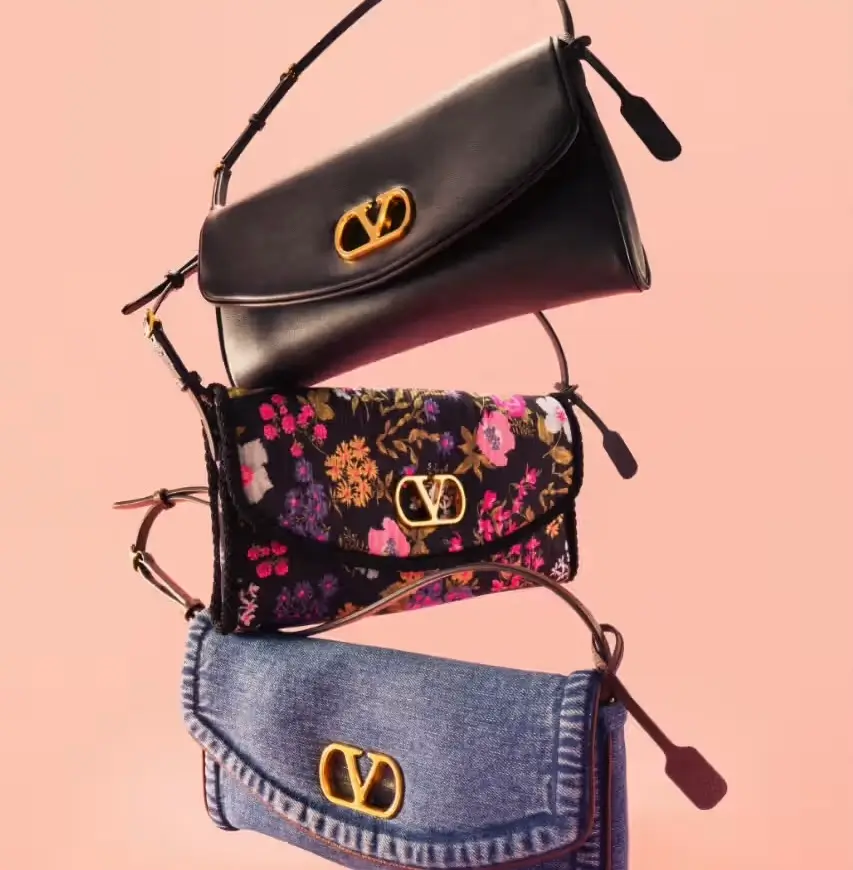
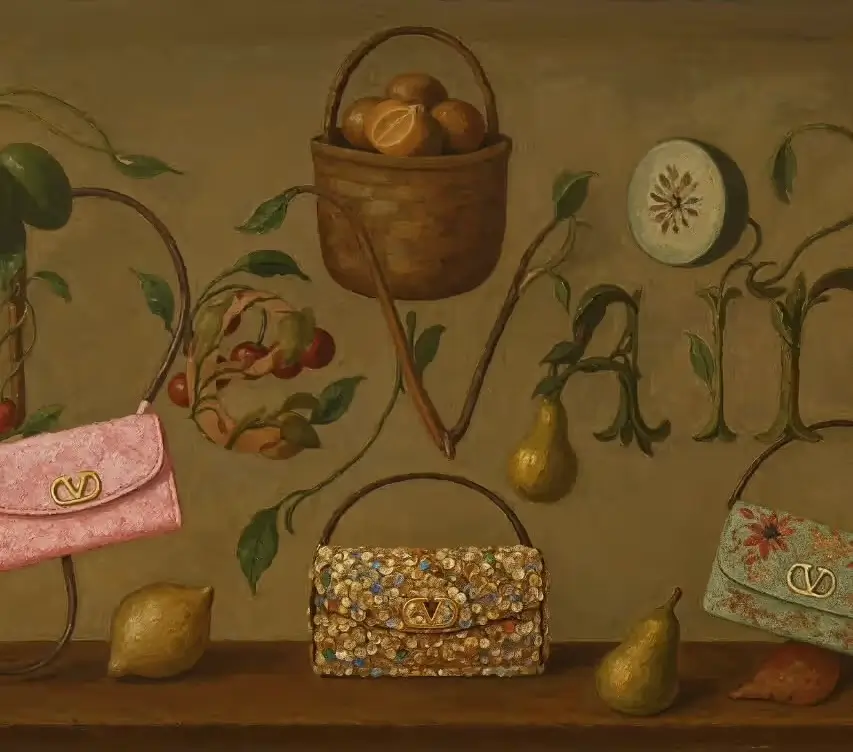
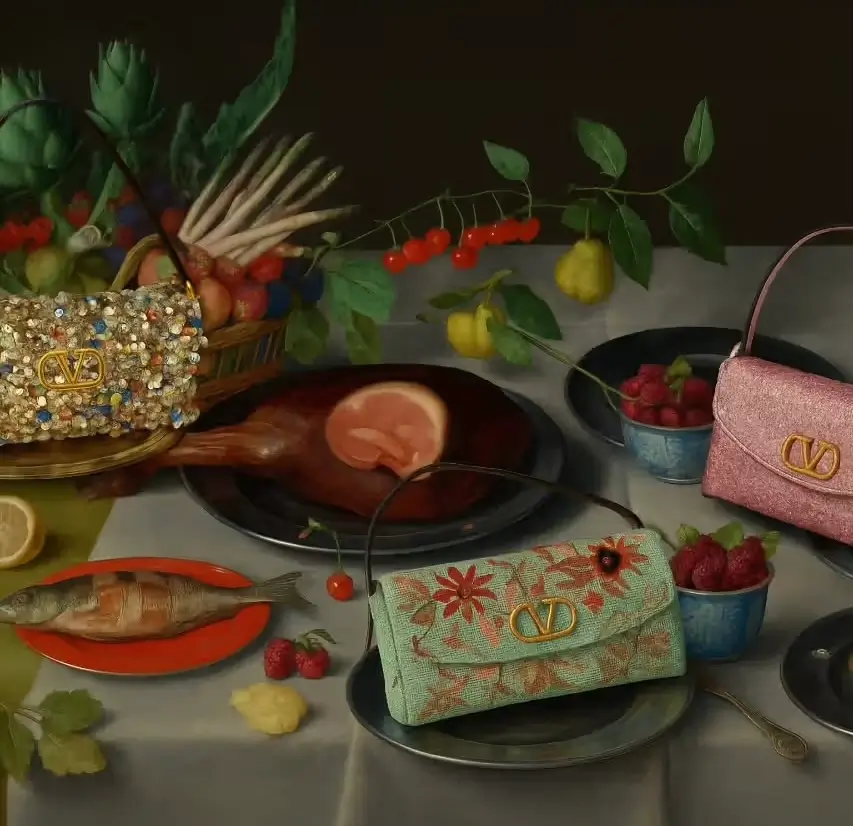
In the increasingly hybrid world of fashion, the tension between human artistry and technological possibility has never been more compelling. The conversation around artificial intelligence, digital craft, and the expanding boundaries of contemporary creativity has touched every corner of the fashion universe—from garment prototyping and runway staging to the way brands imagine, narrate, and visually manifest their identities. Yet few projects have navigated this intersection with as much elegance, curiosity, and conceptual cohesion as Maison Valentino’s latest digital initiative centered around the Valentino Garavani DeVain bag.
Rather than using technology as a shortcut or a spectacle, Valentino positions it as a canvas for dialogue: a space where human intuition, cultural memory, material sensibility, and digital experimentation meet. The Maison invited nine artists across the globe to reinterpret the DeVain bag—not as a product, but as a creative archetype, a conduit through which new meanings, moods, and metaphors could emerge. Their works unfold as a constellation of visual narratives, each one expanding the DeVain’s symbolic potential while reaffirming the power of collaboration between human ingenuity and machine-augmented imagination.
The project launched in stages, first unveiling five artists whose digital interpretations offer radically different visions of what a luxury object can become in the era of AI and virtual image-making. The remaining four artists will join the constellation in early December, completing the Maison’s most ambitious creative experiment to date.
What follows is an editorial exploration of this project—its philosophy, its participating artists, and the broader cultural questions it poses about authorship, craft, and the future of luxury storytelling.
flow
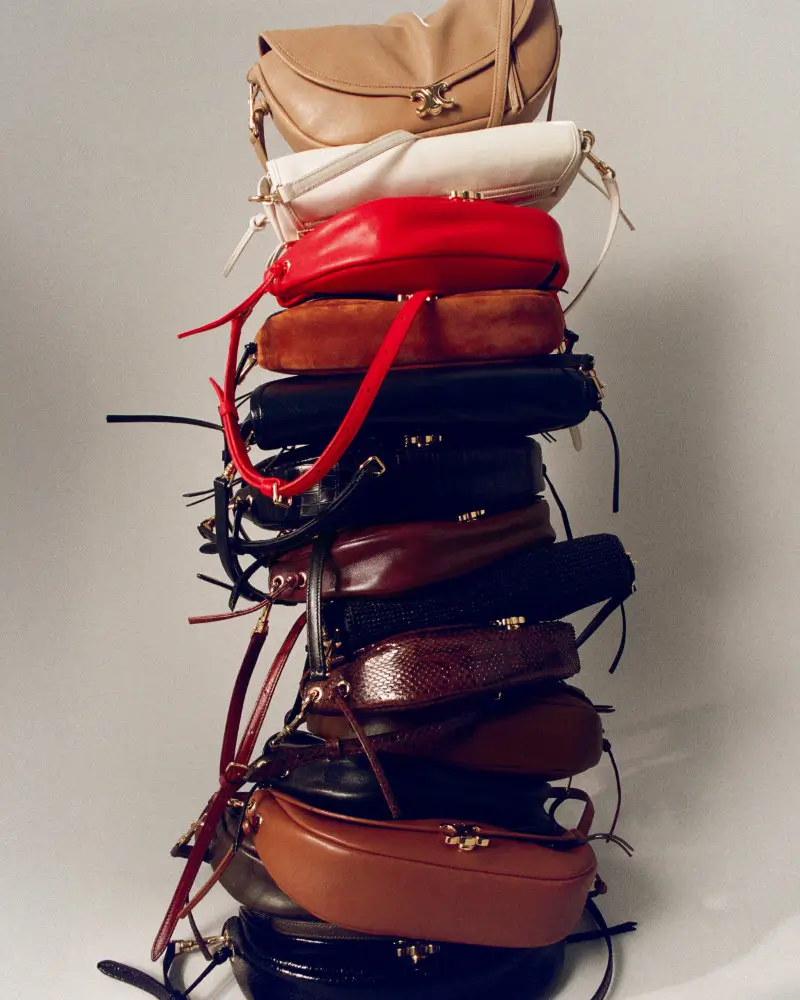
The Valentino Garavani DeVain bag has quickly become one of the Maison’s most emblematic objects: a sculptural yet intimate accessory, shaped by the Maison’s codes of elegance, sensuality, and architectural tension. Its sharp lines meet fluid curves, its compact form hides technical mastery, and its presence feels inherently cinematic—a perfect muse for a project rooted in digital imagination.
For the nine participating artists, the DeVain is not a static muse but a shape-shifting protagonist. In their hands it becomes a reflection, a fragment, a metaphor, a dream sequence, an avatar of elegance, or a vessel transporting the viewer to alternate dimensions. Valentino relinquishes authorship here—not entirely, but gracefully—allowing the bag’s form to be dismantled, abstracted, and reassembled through a new generation of creative visionaries.
The initiative’s true ambition is not to depict a bag, but to explore what luxury becomes when freed from physical constraints. Each artwork becomes a proof of concept for a future where craftsmanship extends beyond materials, stitching, and hardware, into a realm where the digital itself becomes a kind of couture.
View this post on Instagram
thomas albdorf
The project’s opening chapter begins with Thomas Albdorf, an Austrian visual artist known for his cerebral approach to photography and hybrid digital media. Albdorf has always been fascinated by the threshold between physical and virtual space, often manipulating real-world objects through digital distortions that feel both plausible and impossible. His contribution to the DeVain project is a meditation on perception itself.
In his video explorations, the bag becomes a mirrored apparition, refracted through reflective surfaces that distort scale, depth, and proximity. The result is a sculptural illusion—a choreography of surfaces that seem to fold, collapse, and regenerate. It is as though the DeVain has entered a hall of virtual mirrors and is learning new ways of existing.
Albdorf’s interpretation aligns beautifully with Valentino’s ethos: luxury as a form of play, elegance as a tension between what is revealed and what is concealed. Through his lens, the DeVain becomes a character caught between physical tactility and digital dreamspace.
the void
If Albdorf’s approach is grounded in perception, The Void ventures into the surreal. Known for constructing vast, atmospheric world-builds, The Void situates the DeVain within a dreamlike underwater hotel, a setting both serene and uncanny.
This submerged environment is not just a backdrop; it is a metaphor for emotional depth, memory, and subconscious exploration. The bag floats, drifts, or rests within these aqueous chambers like a cherished artifact in a submerged temple. The interplay of color, light, and liquidity reframes the DeVain as an object out of time—precious, symbolic, and hauntingly cinematic.
The Void’s interpretation underscores one of the project’s most compelling themes: the luxury object as a site of dream projection. Here, digital craft and surrealism intersect to create a narrative that feels more like a short film than a product visualization.
paul octavious
Chicago-based artist Paul Octavious brings an entirely different vocabulary to the project—one rooted in the historical lineage of portraiture. Known for his color-rich compositions and poetic interpretations of identity, Octavious turns to 16th-century portraiture as a visual anchor for his digital reinterpretation of the DeVain.
Using animated compositions inspired by Renaissance lighting, painterly silhouettes, and regal attire, he frames the bag as though it were part of an aristocratic tableau. Yet the movement—subtle animations, breathing textures, drifting shadows—signals a clear embrace of contemporary digital language. The result is an homage that feels reverent, yet newly alive.
Octavious bridges centuries in a single frame, suggesting that luxury objects have always been carriers of cultural symbolism. In his hands, the DeVain becomes not just an accessory, but an heirloom of digital classicism.
albert planella
Albert Planella, a rising artist whose work spans AI image synthesis and cinematic worldbuilding, approaches the DeVain as a shape in perpetual transformation. His contribution uses machine-guided generation to depict the bag morphing through various states—organic, mechanical, architectural, and abstract. Each frame feels like a mutation in progress, as though the DeVain were learning how to adapt to different digital ecosystems.
Planella’s interpretation reads like a visual allegory for contemporary fashion: everything in motion, everything evolving. His cinematic language pushes AI beyond gimmickry, instead framing it as a tool for visual speculation. Through his lens, the DeVain becomes a metamorphic entity, a luxury artifact capable of slipping between genres, textures, and temporalities.
His work raises a provocative question embedded at the core of Valentino’s project: What happens when a luxury code becomes fluid?
tina tona
The fifth unveiled artist, Tina Tona, delivers one of the project’s most dynamic contributions. A multimedia artist whose work oscillates between collage, motion graphics, and conceptual design, Tona infuses her DeVain interpretation with a sense of electrical energy.
Her animations splice together fragments of texture, typography, digital paint, and motion vectors, creating an aesthetic that feels both chaotic and precise. The DeVain is not simply depicted—it is constructed through movement, assembled from digital debris, color bursts, and kinetic layering.
Tona’s contribution introduces rhythm into the project. It highlights how the digital medium allows for compositions that cannot exist in the physical world—luxury as velocity, collage as choreography, objecthood as a constantly shifting imprint.
the four remaining artists
Valentino’s decision to release the artists in stages is not merely a structural choice. It is a narrative one. The delay until early December for the remaining creators creates anticipatory energy, treating the project not as a single release but as an unfolding creative season.
This cadence mirrors the emotional pacing of contemporary luxury: drops, reveals, teasers, and episodic storytelling. While the names of the final four artists have not yet been publicly shared, Valentino’s framing suggests a diverse group of digital thinkers whose practices will expand, contrast, and complicate the meanings already established.
Their arrival will complete the “visual constellation”—a term the Maison uses deliberately. It positions the project not as a linear narrative but as a map of interpretations, each star contributing to a larger cosmic architecture.
lens
This project arrives during a profound transformation in the fashion landscape. The rise of AI, the acceleration of digital craft, and the increasing fluidity between physical and virtual luxury worlds have created a field of tension that brands must navigate with sensitivity.
Valentino’s approach is noteworthy because it avoids the trap of technological determinism. It does not treat digital tools as replacements for human creativity, but as extensions of it. The nine artists are not anonymous prompts—they are individuals whose cultural perspectives, emotional histories, and artistic languages shape every pixel.
This insistence on human-centered digitality is crucial. In a cultural moment where AI often feels depersonalizing, Valentino repositions it as a space for creative amplification rather than erasure. The project becomes a case study in how luxury houses can engage with technology without abandoning their core values.
craft
By inviting each artist to reconstruct the DeVain through digital mediums, Valentino asks a deceptively simple question: What is the essence of a luxury object when freed from its physical form?
In the analog world, the DeVain’s value is tied to leather, hardware, craftsmanship, and silhouette. In the digital realm, its value becomes conceptual—tied to narratives, atmospheres, structures of feeling, and aesthetic imagination.
This opens new modes of authorship. A luxury object no longer needs to be held to be experienced. It can be inhabited, decoded, dreamed, or transformed. The DeVain becomes an idea, one that shifts depending on the artist interpreting it and the viewer encountering it.
This philosophical reframing positions Valentino not just as a fashion brand but as a cultural curator, mediating conversations at the intersection of craft, technology, and contemporary art.
fin
As Valentino prepares to unveil the final four artists in December, the DeVain project already stands as a landmark in contemporary digital fashion storytelling. It reframes the relationship between human craft and technological innovation not as a conflict, but as a collaboration—a duet rather than a duel.
By offering the DeVain bag to nine artists as a creative muse, Valentino demonstrates a deep understanding of where culture is heading: toward a world where luxury objects are narratives, where identity is multidimensional, and where creativity flows freely between the physical and the digital.
This initiative—rich with experimentation, emotional depth, visual poetry, and conceptual daring—signals a future where fashion becomes not just something to wear, but something to experience, imagine, and question.
A future where the bag is no longer an accessory, but a portal.