Review: Vincent van Gogh, Self-Portrait with Bandaged Ear, 1889

March 28, 2026
2 hours ago
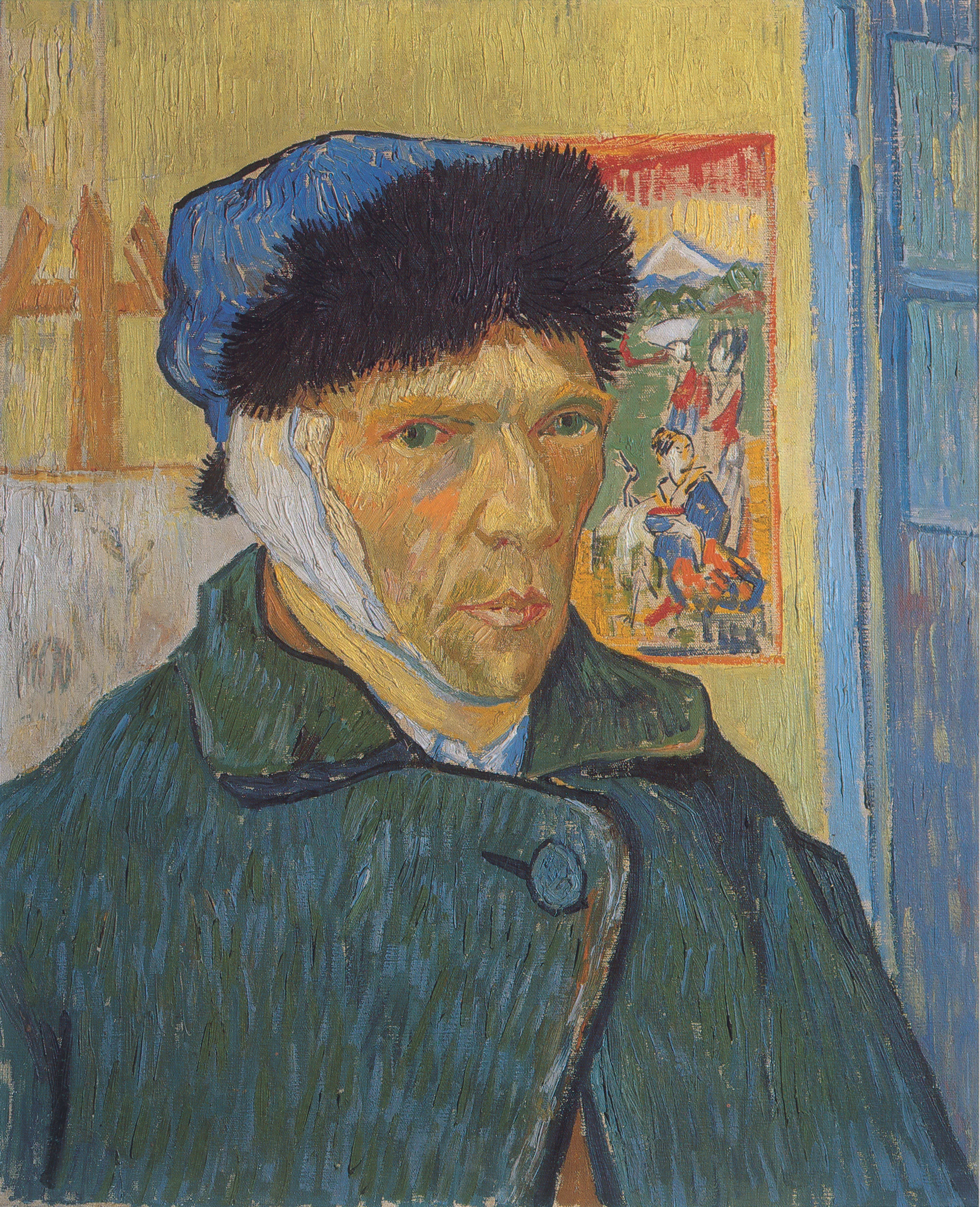
The Samuel Courtauld Trust (Courtauld Institute of Art Collection)
In January 1889, just days after the violent and psychologically destabilizing episode that led Vincent van Gogh to sever part of his left ear, the artist stood before a mirror and painted one of the most enduring images of self-scrutiny in Western art. Self-Portrait with Bandaged Ear is not simply a record of injury; it is a composed confrontation with fragility, identity, and survival. Now held by the Courtauld Institute of Art in London, the work belongs to the collection of The Samuel Courtauld Trust and remains one of the institution’s defining masterpieces.
Unlike the mythologized versions of van Gogh that tend to collapse his life into madness, this painting offers something quieter and more controlled. The wound is visible, yes—but the artist presents himself not as a spectacle, but as a subject reclaiming order. The bandage is carefully wrapped. The coat is buttoned. A pipe rests in his mouth. The gaze is steady, if slightly withdrawn. What unfolds is not chaos, but containment.
place
The painting emerges from van Gogh’s time in Arles, a period that remains one of the most productive and volatile in his career. Having moved there in early 1888, van Gogh envisioned Arles as a site of artistic renewal—a “Studio of the South” where he could work collaboratively with other painters. This dream briefly materialized with the arrival of Paul Gauguin in October of that year.
Yet the partnership was fraught. Gauguin’s temperament and theoretical approach to painting clashed with van Gogh’s immediacy and emotional intensity. Their arguments escalated, culminating in Gauguin’s departure and the infamous ear incident shortly thereafter. While the exact details remain contested, what is certain is that van Gogh entered a period of acute psychological crisis.
And yet, within this instability, he painted. The act of self-portraiture became not only a means of documentation but a strategy of self-reconstruction.
flow
The portrait’s composition is deceptively simple. Van Gogh positions himself slightly off-center, turned three-quarters toward the viewer. The background is divided into two distinct zones: a flat plane of green wall and a window or door frame through which a Japanese print is partially visible. The inclusion of the print—reflecting van Gogh’s fascination with Japonisme—is not incidental. It situates the artist within a broader aesthetic dialogue, even as his personal world fractures.
The green background plays a crucial role. It is neither neutral nor decorative; rather, it intensifies the contrast with the warm tones of van Gogh’s skin and the thick white of the bandage. The color relationships are carefully calibrated, suggesting an artist deeply aware of chromatic harmony even in moments of distress.
Van Gogh’s clothing further contributes to the composition’s sense of stability. The heavy coat and fur hat imply protection, insulation against both physical cold and psychological exposure. The pipe, often overlooked, adds another layer of composure—an everyday object signaling routine, perhaps even defiance.
stir
One of the most discussed aspects of the painting is the apparent discrepancy regarding which ear is bandaged. Because van Gogh painted from a mirror, the image reverses reality: the bandage appears on the right side of the canvas, though it was his left ear that was injured. This subtle inversion has generated both scholarly debate and symbolic interpretation.
The mirror, in this sense, becomes more than a practical tool. It introduces a layer of mediation between artist and image. What we see is not van Gogh directly, but van Gogh as he sees himself—filtered, reversed, reconsidered. The self-portrait becomes an act of translation rather than simple reflection.
bal
The surface of the painting reveals van Gogh’s characteristic brushwork, yet it is notably more controlled than in some of his other works from Arles. The strokes are deliberate, almost restrained. The bandage is rendered with thick, opaque paint, emphasizing its material presence. In contrast, the skin tones are built up through subtle variations of color—greens, yellows, and reds interwoven to create a sense of living flesh.
This interplay between control and vitality mirrors the psychological tension of the work. The painting does not abandon structure; instead, it channels emotion through it. Even the background, though relatively flat, carries a rhythmic quality in its application, preventing it from becoming inert.
show
Van Gogh painted numerous self-portraits throughout his career, often out of necessity—models were expensive, and he was frequently isolated. But these works are far from mere exercises. They function as ongoing investigations into identity, perception, and the role of the artist.
In Self-Portrait with Bandaged Ear, this investigation takes on a heightened urgency. The artist is not only depicting his appearance but negotiating his condition. The act of painting becomes a form of stabilization, a way to impose order on an experience that resists it.
It is worth noting that van Gogh created more than one version of this subject. Another self-portrait with a bandaged ear, now in a different collection, presents a slightly altered composition and palette. The repetition suggests an iterative process—an attempt to arrive at an image that could hold the weight of what had occurred.
frame
Behind van Gogh, the partially visible Japanese print introduces a crucial counterpoint to the inward focus of the portrait. Van Gogh was deeply influenced by Japanese woodblock prints, which he collected and studied extensively. He admired their clarity of line, bold color, and unconventional compositions.
The presence of the print in this painting serves multiple functions. It situates van Gogh within an artistic lineage, aligning him with a broader, transnational exchange of ideas. It also offers a visual escape—a glimpse of another world, ordered and harmonious, in contrast to his immediate reality.
In this way, the background becomes an extension of the artist’s psyche. It is not merely decorative but conceptual, reinforcing the painting’s layered structure.
sil
The narrative of van Gogh’s life has often been overshadowed by his mental health struggles, leading to reductive interpretations of his work. Self-Portrait with Bandaged Ear is frequently presented as evidence of madness, a visual shorthand for the “tortured artist” trope.
Yet this reading risks flattening the painting’s complexity. What the work actually demonstrates is not loss of control but its reassertion. Van Gogh does not depict himself in a moment of crisis but in its aftermath. The painting is measured, composed, and deeply intentional.
This distinction matters. It shifts the focus from pathology to practice, from spectacle to strategy. Van Gogh is not simply expressing suffering; he is working through it.
loc
Today, the painting resides in London under the care of the Courtauld Institute of Art, part of The Samuel Courtauld Trust. The Courtauld’s collection is renowned for its concentration of Impressionist and Post-Impressionist works, including pieces by Claude Monet, Paul Cézanne, and Édouard Manet.
Within this context, van Gogh’s self-portrait occupies a pivotal position. It bridges movements, connecting the observational focus of Impressionism with the more subjective, expressive tendencies that would define modern art. Its presence in the Courtauld collection underscores its art-historical significance while also situating it within a broader narrative of innovation.
pov
Color in this painting operates not merely as description but as structure. The juxtaposition of green and red, cool and warm, creates a dynamic equilibrium. Van Gogh was deeply interested in the emotional potential of color, often writing about its ability to convey mood and meaning.
Here, the green background might be read as stabilizing, even calming, while the warmer tones of the face and bandage draw the viewer’s attention. The palette is limited but carefully orchestrated, allowing each element to resonate.
This approach reflects van Gogh’s broader engagement with color theory, influenced in part by artists like Eugène Delacroix. Yet van Gogh’s application is distinctly his own—less about harmony in a classical sense and more about intensity and immediacy.
idea
Perhaps the most striking aspect of Self-Portrait with Bandaged Ear is its sense of presence. The painting does not dramatize; it does not seek to overwhelm. Instead, it holds the viewer in a steady, almost quiet exchange.
Van Gogh’s gaze is not confrontational but attentive. There is a slight distance, a suggestion of inward focus, yet it does not exclude the viewer. Rather, it invites a form of looking that is reciprocal. We observe him, and in doing so, become aware of our own act of observation.
This mutual awareness is central to the power of the work. It transforms the painting from an object into an encounter.
relev
Over a century after its creation, Self-Portrait with Bandaged Ear continues to resonate. Its relevance lies not only in its historical significance but in its ongoing capacity to engage with contemporary questions of identity, vulnerability, and representation.
In an era increasingly concerned with self-image and visibility, van Gogh’s portrait offers a counterpoint. It is neither performative nor curated in the modern sense. Instead, it is deliberate, reflective, and grounded in material practice.
The painting reminds us that self-representation can be an act of inquiry rather than assertion. It can hold contradiction, ambiguity, and restraint.
fin
To stand before Self-Portrait with Bandaged Ear is to encounter an artist at a threshold—between breakdown and recovery, isolation and connection, perception and reality. The painting does not resolve these tensions; it sustains them.
And in that sustained tension lies its enduring force.