Vanity Fair After Hours: Hollywood’s Most Exclusive Room – Hush

March 21, 2026
revise
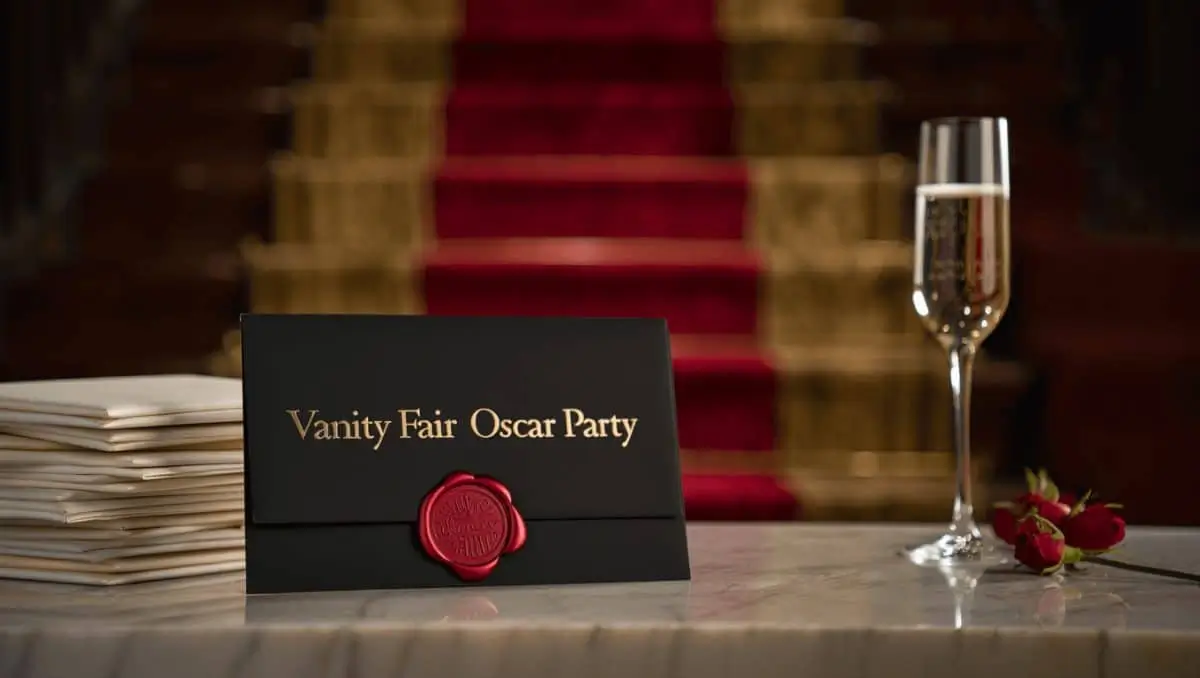
For decades, the Vanity Fair Oscar after-party has functioned as Hollywood’s unofficial epilogue—a second act where the rigid choreography of the Academy Awards dissolves into something more fluid, more revealing. It is where winners exhale, where non-winners reclaim narrative space, and where the industry’s carefully constructed hierarchies blur under flashbulbs and champagne.
Now, under the direction of Mark Guiducci, that institution is being recalibrated. The changes are structural rather than cosmetic: a relocation, a tightening of the guest list, and a redefinition of access. Together, these shifts signal a broader transformation—not just of an event, but of how visibility, privacy, and cultural capital are negotiated in contemporary Hollywood.
The question is no longer what the party represents. It is what it becomes when its boundaries are redrawn.
View this post on Instagram
after-party
Since its rise in the late 20th century, it has operated as a parallel stage to the Academy Awards itself.
Unlike the ceremony, which is governed by tradition and institutional protocol, the after-party has always been about image-making. The portraits—meticulously lit, editorially framed—have become as iconic as the awards handed out hours earlier. They offer a curated intimacy, a glimpse into Hollywood that feels both candid and constructed.
Attendance at the party has long functioned as a marker of relevance. To be invited is to be seen, and to be seen is to be validated within the industry’s evolving hierarchy. The guest list, though never public in full, has always been a carefully balanced equation of power, influence, and narrative timing.
In this sense, the after-party is not merely a celebration. It is a mechanism of cultural distribution.
edit
The arrival of Mark Guiducci as global editorial director introduces a new lens through which the event is being reconsidered. Known for his editorial precision and fashion-adjacent sensibility, Guiducci approaches the after-party not as a static tradition but as a living editorial product.
This distinction matters. Under his direction, the party becomes less about scale and more about narrative clarity. The tightening of the guest list is not simply an exercise in exclusivity; it is an attempt to refine the story the event tells.
In an era where visibility is ubiquitous—where social media flattens hierarchies and democratizes exposure—the value of selective access increases. By limiting attendance, the event reclaims a sense of scarcity, repositioning itself as a space where presence carries renewed meaning.
The relocation further reinforces this shift. While details remain closely held, the move suggests a desire to control not just who attends, but how the environment shapes interaction. Space, in this context, becomes editorial.
flow
One of the most immediate implications of these changes is a recalibration of celebrity privacy. The Vanity Fair Oscar party has always existed in a paradox: it offers access while maintaining a veneer of exclusivity.
In recent years, that balance has been disrupted. The proliferation of smartphones, live streams, and real-time content has eroded the boundaries that once defined the event. What was once a controlled environment has become increasingly porous.
By tightening access, the new model seeks to restore those boundaries. Fewer guests mean fewer points of exposure. A new venue allows for more deliberate control over movement, sightlines, and documentation.
Privacy, in this context, becomes a form of luxury—something that must be curated and protected. For attendees, this shift may offer a rare opportunity to engage without the constant mediation of public scrutiny.
For observers, it introduces a new dynamic: less access, but potentially more meaningful glimpses.
show
The restructuring of the after-party inevitably impacts media coverage. Historically, the event has been a content engine—producing images, interviews, and narratives that extend the life of Oscar night well into the following news cycle.
A more controlled guest list and environment may reduce the volume of content, but it could also elevate its quality. Fewer subjects mean more focused storytelling. A curated environment allows for more deliberate image-making.
This aligns with a broader shift in media strategy. In an age of content saturation, value is increasingly derived from curation rather than quantity. The Vanity Fair portraits, already iconic, may take on even greater significance as the primary visual output of the event.
At the same time, the reduction in access raises questions about transparency and representation. Who is included, and who is excluded? How are those decisions communicated, if at all?
These are not merely logistical considerations. They are editorial choices with cultural implications.
stir
The guest list has always been the most closely guarded element of the Vanity Fair Oscar party. It is a reflection of the industry’s internal dynamics—who holds power, who is ascending, and who is fading from relevance.
By tightening the list, the event amplifies its role as a gatekeeper. Inclusion becomes more significant, exclusion more conspicuous.
This shift may lead to a more defined hierarchy, but it also introduces the potential for tension. In an industry that thrives on visibility, being left out of such a high-profile event carries symbolic weight.
At the same time, a smaller, more focused guest list could foster deeper interactions. The party may become less about spectacle and more about connection—a space where conversations carry more weight than appearances.
xp
The decision to relocate the event is perhaps the most tangible manifestation of its transformation. While the after-party has traditionally been associated with specific venues, the move suggests a willingness to rethink the physical framework of the experience.
Location influences behavior. It shapes how guests move, where they gather, and how they are seen. A new venue offers the opportunity to redesign these dynamics from the ground up.
This is not merely a logistical adjustment. It is an architectural one—an attempt to align the physical space with the event’s evolving identity.
In this sense, the relocation is not just about where the party happens. It is about how it happens.
idea
The changes to the Vanity Fair Oscar party reflect a broader shift within Hollywood. As the industry grapples with the implications of digital visibility, the concept of access is being redefined.
Where once access was expanded to generate buzz, it is now being restricted to preserve value. This inversion reflects a growing awareness that ubiquity can dilute significance.
Events like the Vanity Fair party operate at the intersection of culture and commerce. They are both celebrations and strategic platforms. By recalibrating access, the event positions itself within a new paradigm—one that prioritizes depth over breadth.
clue
The Vanity Fair Oscar after-party has always been about more than celebration. It is a space where Hollywood negotiates its image, its hierarchies, and its narratives.
The changes introduced under Mark Guiducci mark a significant evolution. By tightening access and rethinking space, the event adopts a new grammar—one that reflects the complexities of contemporary visibility.
In this new framework, presence becomes more intentional, images more considered, and narratives more controlled. The after-party remains a stage, but it is one with newly defined boundaries.
And in those boundaries, a different kind of story begins to take shape.