Vector W8: The Fighter-Jet Supercar That Tried to Redefine American Performance

March 7, 2026
a supercar
In the mythology of supercars, the narrative often belongs to Europe. Italy has long claimed the stage with sculptural machines from Maranello and Sant’Agata Bolognese, while Germany refined performance engineering into near-surgical precision. Yet in the late twentieth century, an audacious American vision briefly challenged that hierarchy.
The Vector W8 Twin Turbo was not merely another sports car. It was an attempt to rewrite the rules of American performance design by merging aerospace engineering, digital technology, and brute horsepower into a machine that looked less like a road vehicle and more like a stealth aircraft ready for takeoff.
At the center of that vision stood designer Gerald Wiegert, a relentless dreamer who spent nearly two decades chasing the idea of building the first true American supercar. His goal was not incremental progress or domestic interpretation. Wiegert wanted to create something that could stand beside the most radical machines from Ferrari and Lamborghini and say, without hesitation, that the United States could play the same game.
The Vector W8 became that declaration.
stir
The story of the W8 begins in the 1970s, long before the car entered production. Gerald Wiegert was not an engineer emerging from Detroit’s traditional automotive pipelines. Instead, he approached design with an outsider’s imagination, blending automotive enthusiasm with inspiration drawn from aerospace technology and industrial design.
His early prototypes, often referred to as the Vector W2, were ambitious experimental machines built in limited numbers. These prototypes already displayed the visual language that would later define the W8: razor-sharp wedge shapes, low rooflines, and futuristic instrumentation.
Throughout the late 1970s and early 1980s, Wiegert tirelessly promoted the concept of Vector as America’s answer to the European supercar elite. His presentations were filled with bold claims about top speed, engineering innovation, and aircraft-inspired performance.
Many observers initially viewed the project with skepticism. The supercar world was dominated by legacy manufacturers with vast engineering resources. For a small independent operation in California to compete with them seemed improbable.
Yet Wiegert remained persistent. After years of development, refinement, and financial struggle, the project eventually evolved into a production car: the Vector W8 Twin Turbo, unveiled in 1989.
lang
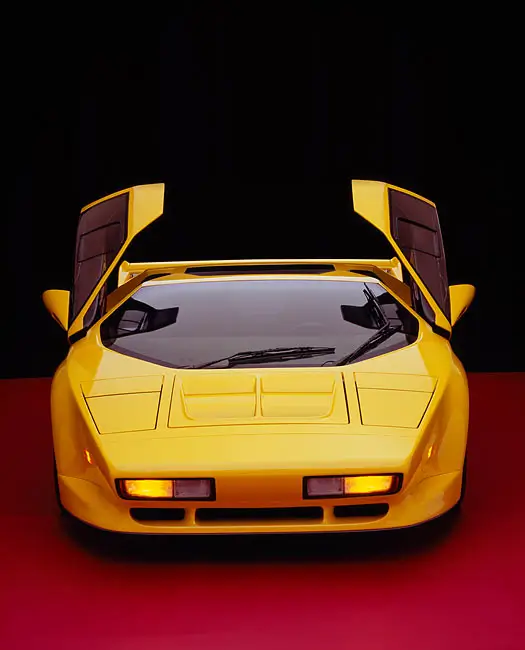
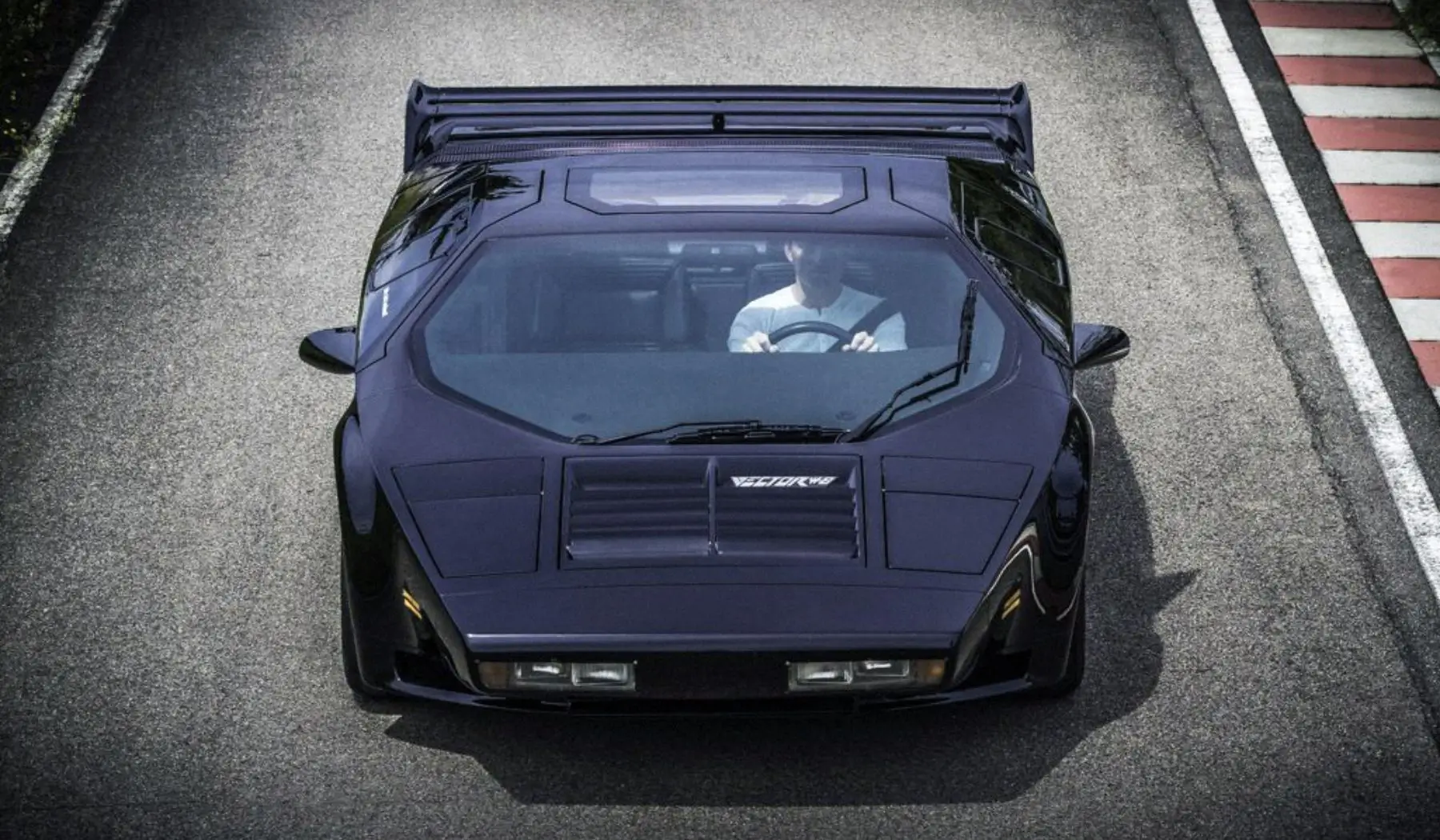
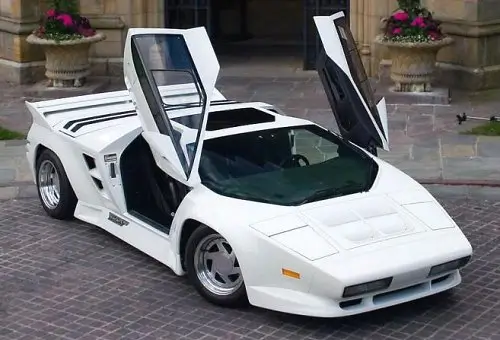
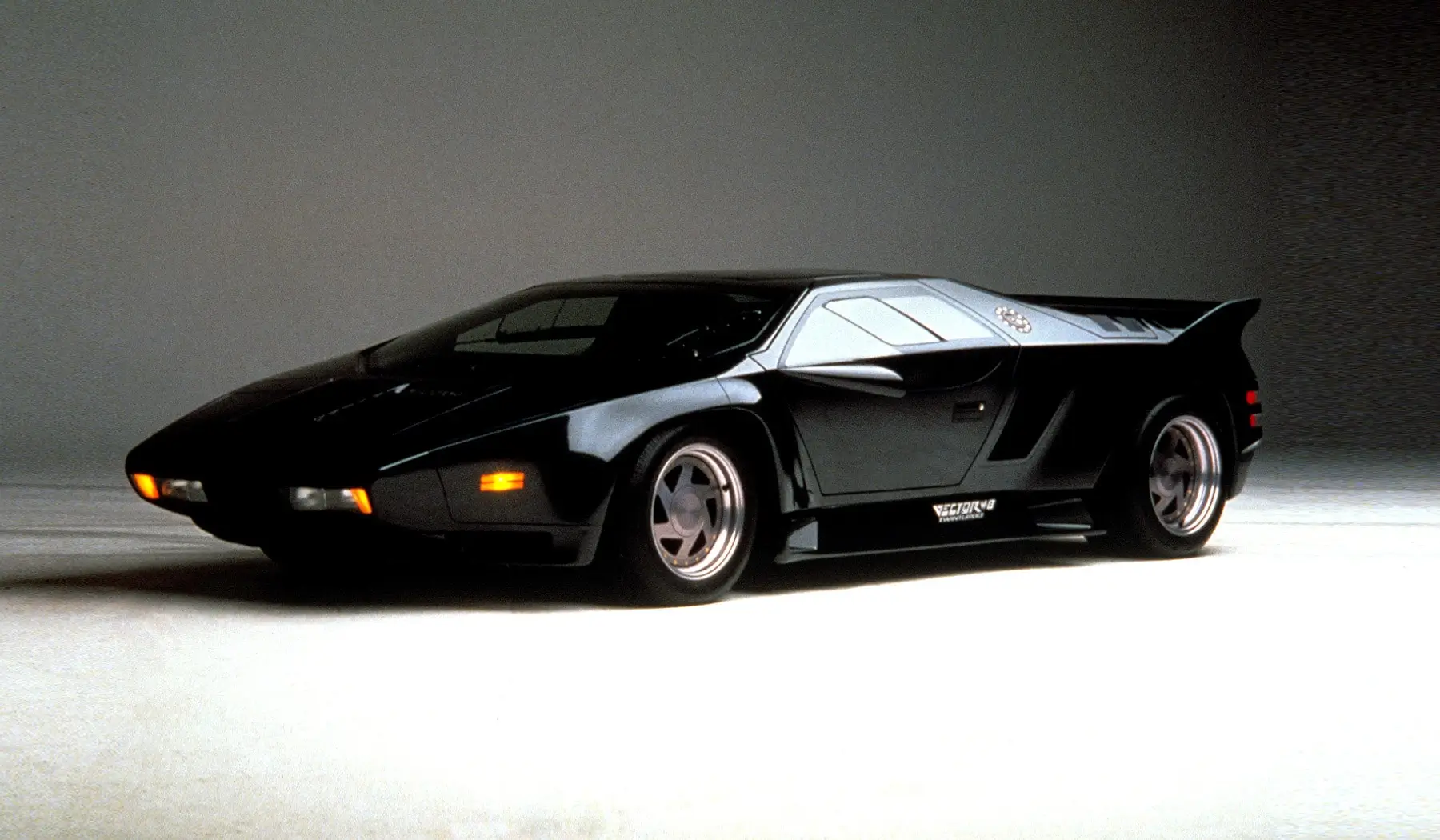
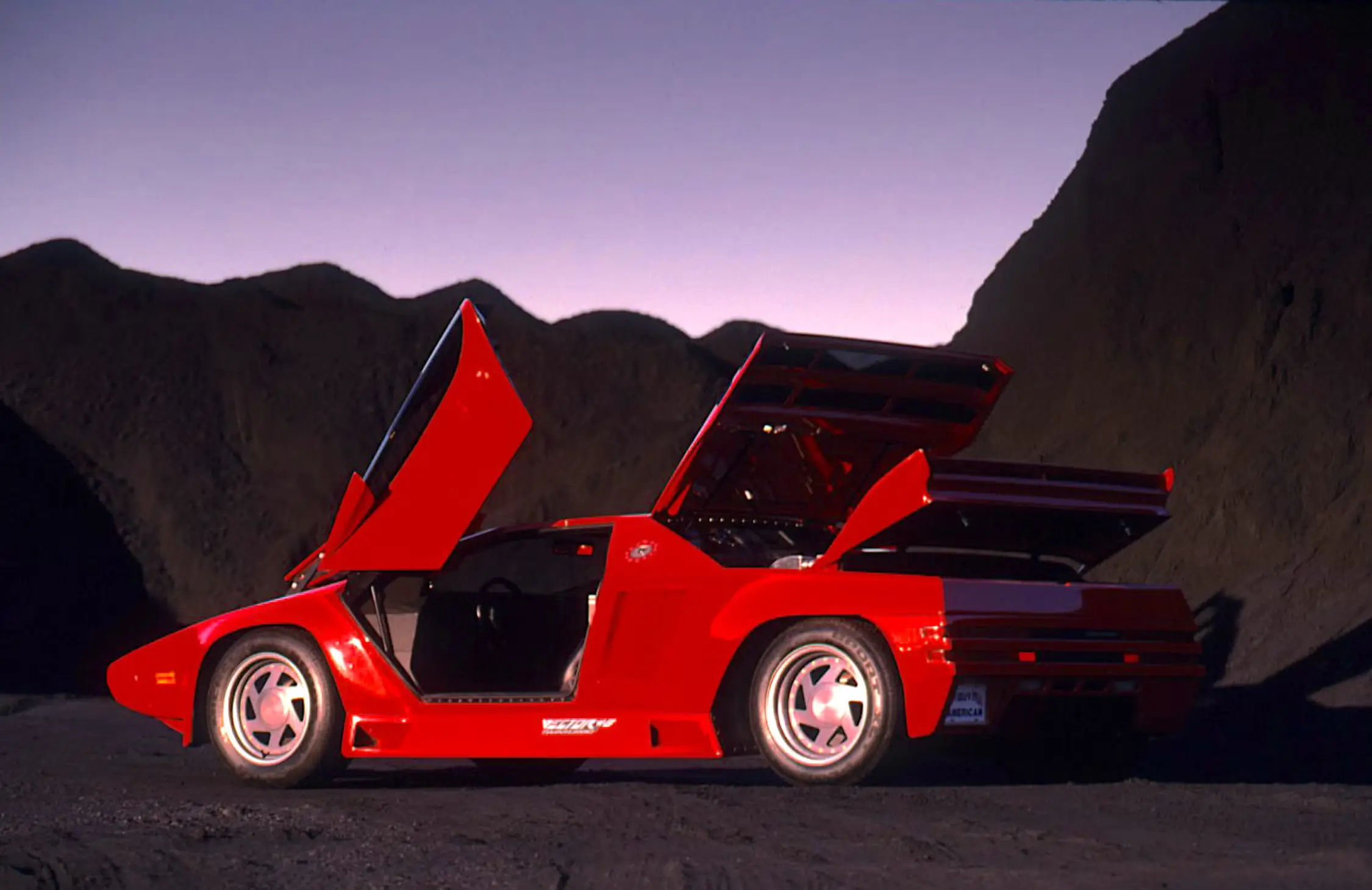
The Vector W8’s appearance was unlike anything else on the road at the time. Its silhouette resembled a stealth aircraft more than a conventional automobile.
The wedge profile was extreme even by the standards of the late 1980s, a period already known for angular supercar design. Sharp lines ran uninterrupted from nose to tail, forming a triangular stance that seemed designed to cut through air like a blade.
The influence of military aviation was unmistakable. Wiegert openly cited fighter jets such as the F-16 as inspiration for the vehicle’s design philosophy. The car’s low canopy-like windshield, sloping hood, and sharply angled rear surfaces reinforced this aviation aesthetic.
But the design was not only visual theater. The body structure incorporated materials more commonly associated with aircraft manufacturing.
The W8 featured:
-
Aluminum honeycomb chassis construction
-
Carbon fiber and Kevlar composite panels
-
Bonded structural architecture similar to aerospace techniques
These materials helped reduce weight while maintaining structural rigidity, an engineering approach that was far ahead of many production cars of its era.
At a time when most vehicles relied on steel monocoques, the Vector’s construction felt radically modern.
flow
If the exterior of the W8 looked futuristic, the mechanical core of the car delivered equally dramatic numbers.
The engine was a 6.0-liter twin-turbocharged V8, producing approximately 625 horsepower and 649 lb-ft of torque. In the context of the late 1980s, these figures were astonishing.
Many contemporary supercars struggled to cross the 500-horsepower threshold. The W8 surpassed that benchmark with confidence.
The engine itself was derived from American performance architecture but extensively modified for extreme output. Twin turbochargers delivered enormous power while maintaining durability under high boost pressures.
Power was sent to the rear wheels through a three-speed automatic transmission, an unusual choice for a supercar. Wiegert believed the automatic system provided superior strength and reliability compared with manual gearboxes capable of handling such torque.
Performance estimates suggested the car could exceed 240 mph, although such speeds were rarely tested publicly. Even conservative estimates placed the W8 firmly among the fastest road-legal vehicles of its time.
Acceleration figures were similarly impressive. With its immense torque output, the car could sprint from 0–60 mph in roughly four seconds, placing it within elite performance territory.
inside
Perhaps nowhere was the W8’s aviation inspiration more evident than inside the cabin.
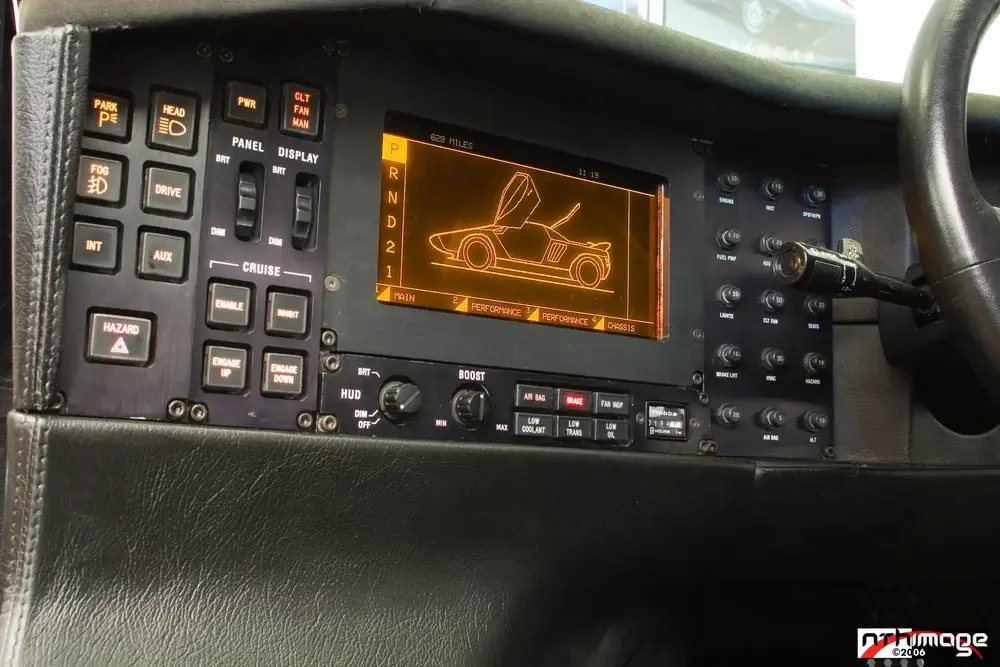
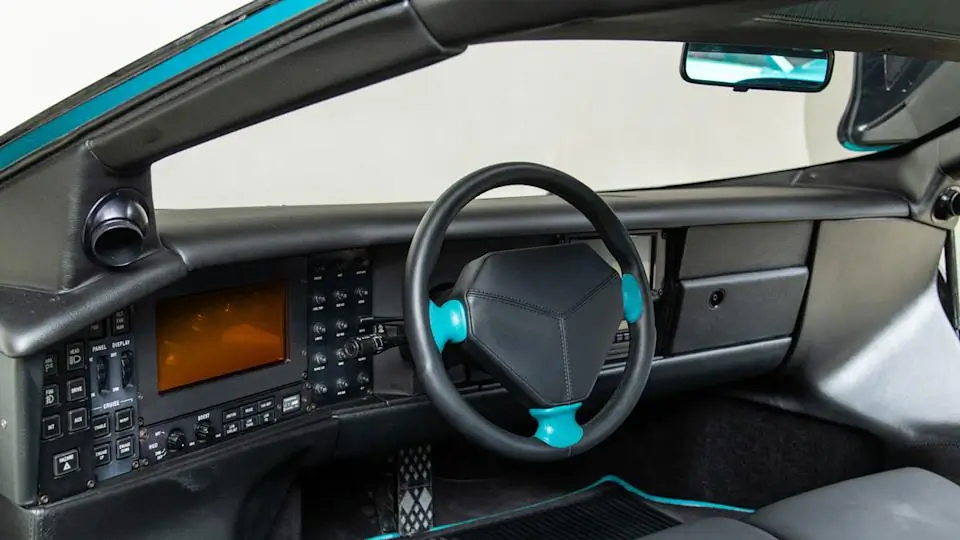
Rather than traditional analog gauges, the dashboard featured digital instrumentation, a rarity in high-performance vehicles of the era. Multiple displays presented engine data, speed information, and system diagnostics in a format reminiscent of aircraft monitoring panels.
Switchgear also followed an aviation logic. Toggle switches, labeled controls, and functional layouts reinforced the sense that the driver was operating something closer to a jet fighter than a luxury sports car.
The cockpit was narrow, purposeful, and focused entirely on the driver. Visibility was limited by the car’s dramatic wedge profile, but the sensation of sitting inside a futuristic control center more than compensated for the compromise.
Leather upholstery and premium materials added a degree of comfort, yet the overall impression remained highly technical.
Driving the W8 did not feel like entering a traditional automobile.
It felt like climbing into an experimental machine.
feed
Despite the ambition behind the Vector project, production numbers remained extremely limited.
Between 1989 and the early 1990s, only around seventeen customer cars were completed. Each vehicle required extensive hand assembly, specialized materials, and meticulous engineering work.
This exclusivity placed the W8 among the rarest supercars ever produced.
The price reflected this rarity. At launch, the W8 carried a price tag approaching $450,000, making it one of the most expensive cars in the world at the time.
Yet the high cost did not deter collectors fascinated by the vehicle’s radical design and extreme performance.
Early buyers included entrepreneurs, collectors, and automotive enthusiasts who saw the W8 not just as transportation but as a technological statement.
However, producing a supercar at such a small scale proved financially precarious.
burden
The Vector story is as much about business conflict as it is about engineering ambition.
Throughout the late 1980s and early 1990s, the company struggled with financial stability. Manufacturing a technologically advanced vehicle in such small quantities required enormous investment.
Eventually, corporate tensions emerged between Wiegert and external investors.
In the mid-1990s, a hostile takeover led by Indonesian company Megatech resulted in control of Vector shifting away from its founder. Wiegert was effectively removed from the company he had spent decades building.
The new management attempted to continue the brand through a successor model called the Vector M12, which used Lamborghini-derived mechanical components.
While the M12 represented a continuation of the Vector name, many enthusiasts considered it a departure from the original vision that had defined the W8.
For many collectors and historians, the W8 remains the purest expression of Wiegert’s concept.
fwd
To understand the W8’s significance, it helps to consider the broader context of the late twentieth-century supercar landscape.
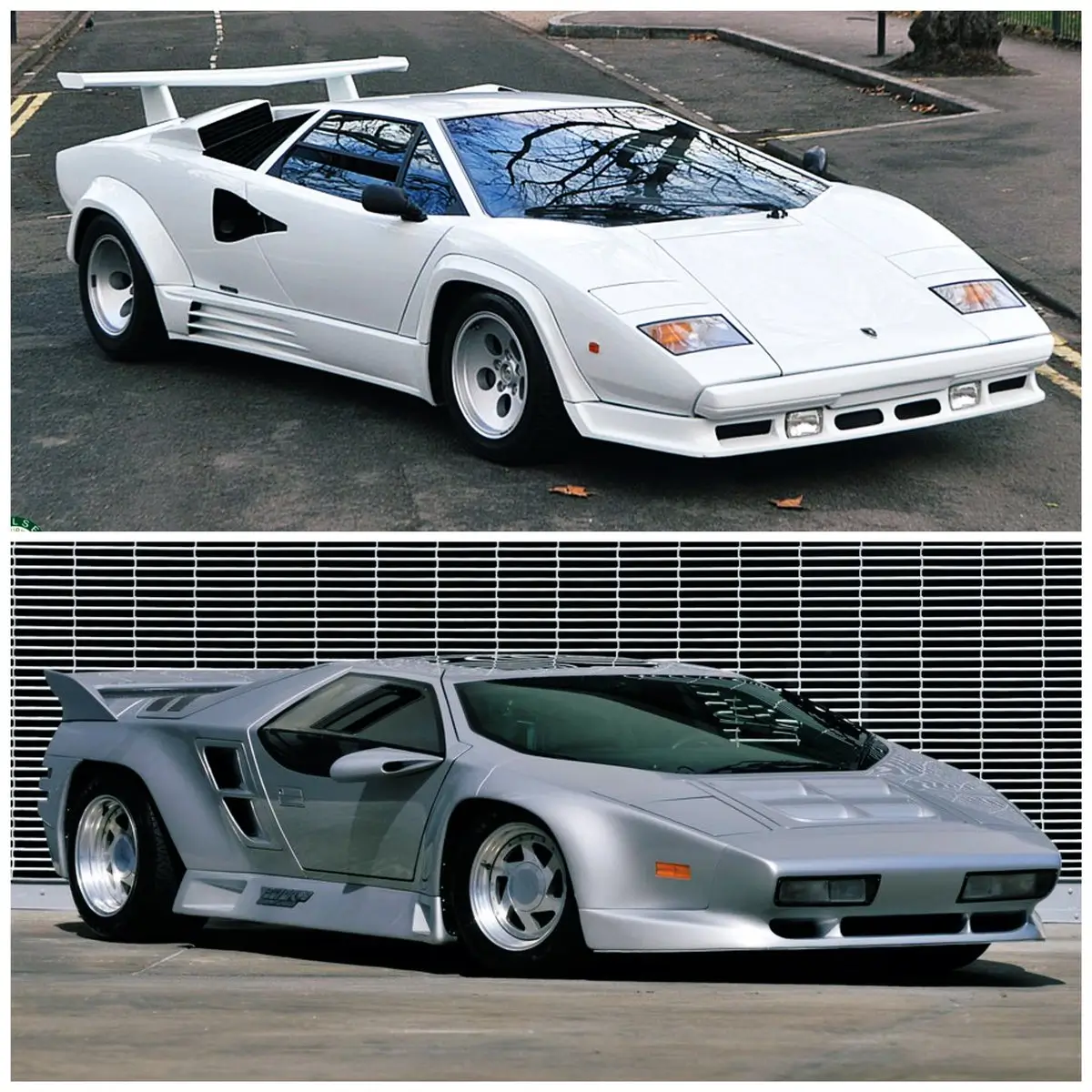
The late 1970s through early 1990s represented the golden age of wedge design. Supercars increasingly adopted angular profiles that prioritized aerodynamic efficiency and futuristic aesthetics.
Vehicles such as the Lamborghini Countach and Ferrari Testarossa embodied this design philosophy. Their dramatic silhouettes transformed exotic cars into rolling sculptures of speed.
The Vector W8 took this idea to its extreme conclusion.
Where Italian supercars balanced design with tradition, the Vector abandoned convention entirely. Its aesthetic felt closer to experimental aerospace prototypes than luxury automobiles.
In this sense, the W8 did not merely join the wedge era.
It amplified it.
concept
Looking back decades later, many of the Vector W8’s engineering concepts appear surprisingly forward-thinking.
Today, materials like carbon fiber and advanced composites are widely used in hypercars from brands such as McLaren and Ferrari. In the late 1980s, however, these materials were rarely seen outside motorsport or aerospace engineering.
The W8’s aluminum honeycomb chassis and composite body panels foreshadowed the construction techniques that would later define modern high-performance vehicles.
Similarly, the car’s digital instrumentation anticipated the fully electronic dashboards that now dominate contemporary automotive interiors.
Even its obsessive focus on aerodynamic efficiency reflected a philosophy that would later become standard practice among performance manufacturers.
In many ways, the Vector W8 functioned as a preview of technologies that would only become mainstream decades later.
myth
Because so few examples were built, the Vector W8 has become one of the most mysterious and sought-after vehicles in automotive history.
Each surviving car is treated almost like an artifact of experimental engineering. Collectors often speak of the W8 in the same breath as legendary supercars produced in similarly tiny numbers.
Auction appearances are rare, and prices can vary dramatically depending on condition, provenance, and historical documentation.
For enthusiasts, the car represents more than a collectible object. It symbolizes a moment when American automotive ambition briefly aimed for the stratosphere.
question
The Vector W8 also raises an interesting question within automotive culture: why has the United States historically produced relatively few exotic supercars compared with Europe?
American performance has traditionally focused on muscle cars, emphasizing large displacement engines and straight-line acceleration rather than lightweight engineering and exotic materials.
European manufacturers, by contrast, built reputations around high-revving engines, advanced aerodynamics, and track-focused design.
The Vector W8 attempted to bridge these philosophies.
It combined American V8 power with aerospace engineering and futuristic design. The result was neither muscle car nor European exotic.
It was something entirely different.
influ
Although the original Vector company struggled to survive, its influence can be seen in later American attempts to build world-class supercars.
Manufacturers such as Saleen, SSC, and Hennessey have pursued the same dream of producing American vehicles capable of rivaling Europe’s fastest machines.
Modern hypercars like the SSC Tuatara and Hennessey Venom F5 share a philosophical lineage with the Vector project: pushing extreme speed limits through advanced engineering.
While technology has evolved dramatically since the W8 era, the ambition behind these projects echoes Wiegert’s original vision.
America could build its own supercar.
idea
Gerald Wiegert spent nearly twenty years chasing the dream of building a machine that would prove American innovation could compete with the world’s most prestigious automotive brands.
The journey involved prototypes, financial challenges, engineering breakthroughs, and corporate conflicts.
Yet against all odds, the dream became reality—if only briefly.
Seventeen cars left the factory.
Seventeen proof-of-concept machines demonstrating what could happen when imagination, engineering, and stubborn ambition collided.
Today, the Vector W8 stands as one of the most fascinating anomalies in automotive history.
It was radical, expensive, impractical, and technologically daring. Its design looked like something from a science-fiction future that never quite arrived.
But perhaps that is precisely why the car remains so compelling.
It represents a moment when automotive design dared to reach beyond convention and imagine a different path for performance engineering.
A supercar not inspired by European tradition.
But by fighter jets, aerospace laboratories, and the idea that the future could be built in aluminum, Kevlar, and turbocharged horsepower.
The Vector W8 may never have transformed the supercar world in the way its creator hoped.
Yet decades later, its legend continues to grow.
Because sometimes the boldest machines are not the ones that succeed commercially.
They are the ones that dare to exist at all.



No comments yet.