VITURE 2026: From XR Hardware to a Spatial Computing Platform

March 31, 2026
25 minutes ago
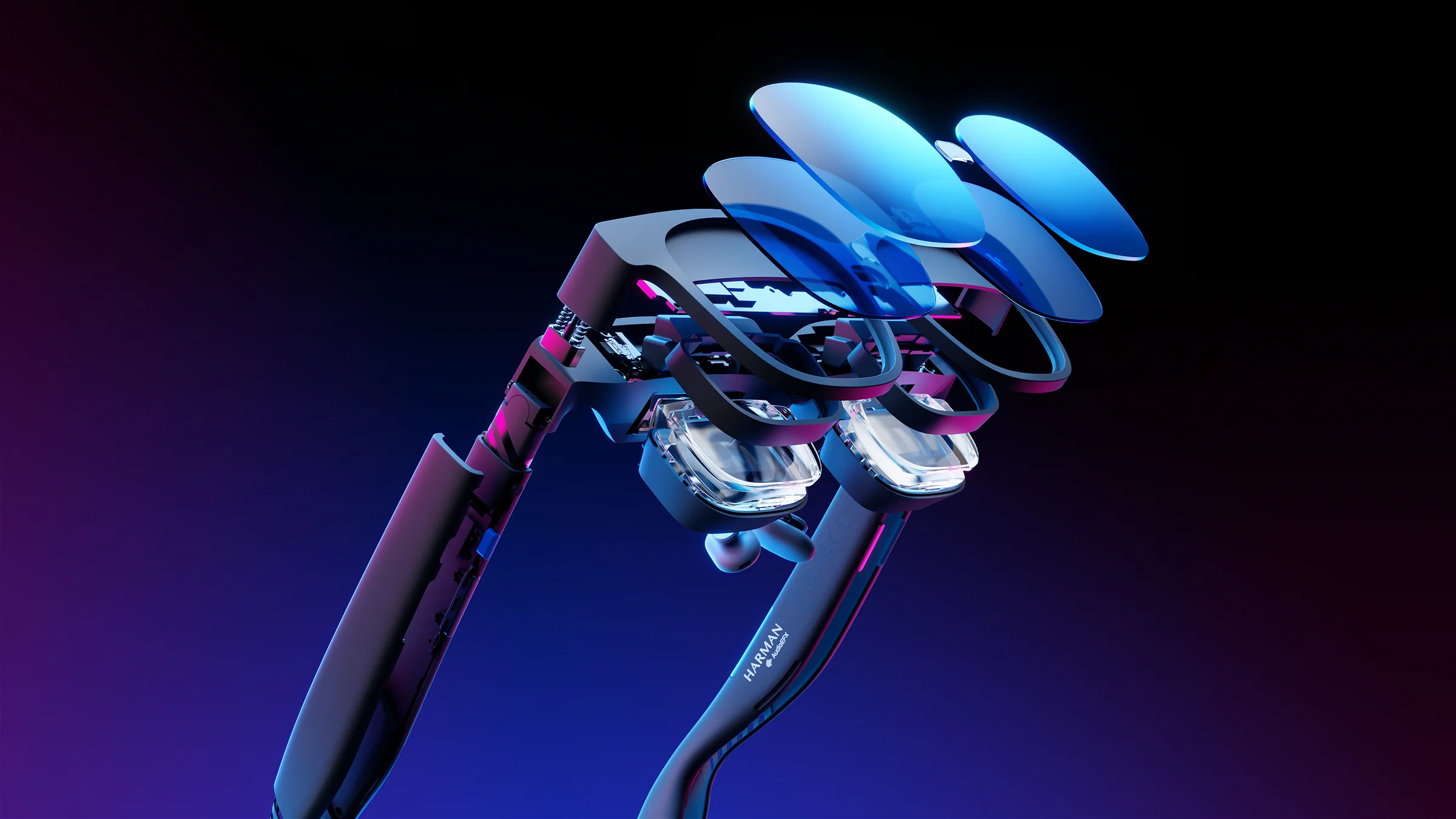
The chit-chat surrounding extended reality has shifted. Where once XR existed as a speculative category—tethered to prototypes, developer kits, and cycles of inflated expectation—it now finds itself in a more grounded phase. The conversation has narrowed, sharpened, and, crucially, become infrastructural.
Within this recalibrated landscape, VITURE enters 2026 with a posture that feels less like arrival and more like alignment. The company’s trajectory—marked by exponential year-over-year growth and increasingly visible institutional backing—positions it not simply as a manufacturer of XR hardware, but as an emergent platform shaping how spatial computing integrates into daily life.
This distinction matters. Hardware, by itself, rarely defines the future. Platforms do.
flow
VITURE’s early identity was anchored in product—lightweight XR glasses designed to bridge portability with immersion. These devices offered a compelling alternative to bulkier headsets, emphasizing usability over spectacle.
The design language—compact, precise, and quietly technical—signaled an understanding that adoption would depend less on novelty and more on integration. XR would not succeed by demanding attention; it would succeed by folding seamlessly into existing behaviors.
By 2026, that philosophy has expanded. VITURE is no longer defined solely by what it produces, but by how its products connect. The shift from device to system is subtle, yet foundational.
A spatial computing platform requires more than hardware. It demands an ecosystem: software layers, content pipelines, AI integration, and a coherent user experience that persists across contexts. VITURE’s evolution suggests a deliberate move toward this architecture.
shift
The notion of a “platform” in technology is often overused, yet in VITURE’s case, it reflects a tangible shift.
At its core, a platform organizes interaction. It creates a space—both literal and conceptual—where users, developers, and services converge. For VITURE, this convergence occurs within the spatial layer: a digital interface that exists not on a screen, but within the user’s field of view.
This spatial layer reframes familiar activities. Work becomes multi-dimensional, extending beyond the confines of a laptop display. Entertainment becomes immersive without requiring isolation. Communication becomes contextual, embedded within shared environments rather than confined to windows or tabs.
What distinguishes VITURE’s approach is its emphasis on continuity. Rather than constructing entirely new behaviors, it augments existing ones. The platform does not replace the screen; it repositions it.
grow
The company’s exponential growth—often cited in year-over-year metrics—functions less as a milestone and more as a signal. It indicates a convergence of factors: product-market fit, timing, and a broader readiness for XR adoption.
Yet growth alone does not guarantee longevity. The history of technology is populated with companies that scaled rapidly only to plateau or disappear.
For VITURE, the significance of its growth lies in how it is leveraged. Institutional backing, while providing stability, also introduces expectations—of scalability, of defensibility, of sustained relevance.
The transition into a platform model addresses these expectations. By expanding beyond hardware, VITURE increases its capacity to capture value across multiple layers of the ecosystem.
configure
One of the most immediate implications of spatial computing lies in the domain of work.
The traditional workspace—defined by a fixed screen, a desk, and a set of physical constraints—has already begun to dissolve. Remote work, hybrid models, and mobile productivity have redefined where and how work occurs.
VITURE’s platform extends this transformation into the spatial dimension.
Through wearable displays, users can generate multiple virtual screens, arranging them within their field of view. This reconfiguration is not merely aesthetic; it alters the logic of productivity. Information is no longer constrained by physical space. It becomes fluid, scalable, and context-dependent.
The implications are both practical and psychological. A portable, spatial workspace reduces reliance on physical infrastructure while also reshaping how individuals perceive focus, multitasking, and presence.
idea
XR has often been associated with immersion as escape—a departure from reality into fully virtual environments. VITURE’s approach suggests a different trajectory: immersion without isolation.
Rather than enclosing the user, its devices allow for a layered experience in which digital content coexists with the physical world. This coexistence is critical. It preserves awareness, enabling users to engage with media while remaining connected to their surroundings.
In practical terms, this translates to a portable cinema, a personal gaming environment, or a dynamic interface for streaming—all accessible without the need for dedicated hardware beyond the glasses themselves.
The experience is less about replacing traditional entertainment systems and more about decentralizing them.
tech
Perhaps the most consequential layer of VITURE’s platform is its integration with artificial intelligence.
AI, increasingly, functions as an interface rather than a tool. It mediates interaction, anticipates needs, and contextualizes information. Within a spatial computing environment, this mediation becomes even more significant.
Instead of navigating menus or applications, users interact with systems that respond to context—location, activity, intent. AI becomes the connective tissue that binds the platform together.
For VITURE, this integration positions its ecosystem within a broader technological shift. XR provides the spatial layer; AI provides the cognitive layer. Together, they redefine how users access and process information.
restrain
One of the more understated aspects of VITURE’s trajectory is its approach to design.
In a category often driven by maximalism—bold visuals, exaggerated features, and overt demonstrations of capability—VITURE’s products adopt a more restrained aesthetic.
This restraint is strategic. It signals a prioritization of usability and longevity over immediate impact. Devices designed to integrate into daily life must avoid becoming obtrusive.
The result is a design language that emphasizes clarity: lightweight forms, minimal interfaces, and an absence of unnecessary complexity.
This acknowledgment extends to the platform itself. A successful spatial computing system must feel intuitive, even invisible. Complexity is managed behind the scenes, allowing the user experience to remain fluid.
base
The presence of strong institutional backing introduces a layer of stability that is often absent in emerging technology companies.
While the specifics of VITURE’s investors may vary, the broader implication is clear: confidence in the company’s long-term potential.
This backing enables sustained investment in research, development, and ecosystem expansion. It also provides a buffer against the volatility that characterizes the XR market.
At the same time, it imposes discipline. Growth must be managed, strategies must be coherent, and the transition from hardware to platform must be executed with precision.
day
The most compelling aspect of VITURE’s trajectory is its potential to transition from product to infrastructure.
Infrastructure, in this context, refers to systems that become so embedded in daily life that they are no longer perceived as distinct technologies. They simply exist, facilitating interaction without demanding attention.
For XR and spatial computing, this represents the ultimate stage of adoption.
VITURE’s platform-oriented strategy suggests an awareness of this endpoint. By building an ecosystem that integrates hardware, software, and AI, the company moves closer to becoming a foundational layer within the digital landscape.
culture
Technology does not exist in isolation; it is shaped by—and in turn shapes—cultural behavior.
VITURE’s emphasis on portability, integration, and subtlety aligns with broader cultural shifts toward flexibility and personalization. Users increasingly seek technologies that adapt to their lives rather than requiring adaptation in return.
This alignment enhances the company’s relevance. It positions VITURE not merely as a provider of tools, but as a participant in the ongoing redefinition of how individuals interact with digital environments.
fin
As 2026 unfolds, VITURE occupies a position that is both promising and precarious.
The company’s growth and strategic direction suggest a clear trajectory toward becoming a significant player in spatial computing. Yet the challenges remain substantial. Execution, differentiation, and sustained relevance will determine whether this trajectory is realized.
What is evident, however, is that VITURE has moved beyond the confines of XR hardware. It is constructing a platform—one that integrates spatial computing, AI, and everyday functionality into a cohesive system.
This shift, while gradual, marks a defining moment.