Why Severed Hands Are Haunting Contemporary Art

October 21, 2024
1 year ago
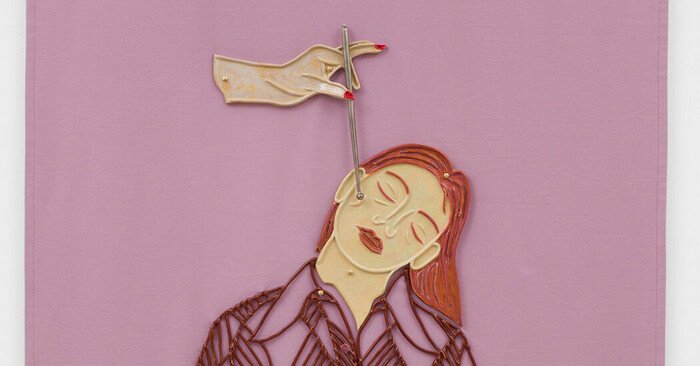
In recent years, contemporary art has seen a growing prevalence of severed hands as a central motif. This eerie image, often depicted as detached from the body and rendered with either brutal realism or symbolic abstraction, has become a recurring theme that draws the viewer’s gaze. Severed hands, an evocative and unsettling symbol, can be found across various mediums, from sculpture and painting to performance art and digital installations. This essay seeks to explore why artists are repeatedly drawn to this particular body part, analyzing its deeper implications within the cultural, social, and political landscapes of our time.
The severed hand has long been a powerful symbol in art, religion, and mythology, often representing punishment, justice, or sacrifice. In ancient cultures, the hand was a potent symbol of agency and control, with its removal signifying a loss of power. For example, in medieval iconography, depictions of saints’ severed hands often signified martyrdom, while in ancient Egyptian mythology, the severed hand was used in rituals to mark victories in battle.
In contemporary art, these connotations persist, but they have evolved to reflect modern anxieties around disempowerment, alienation, and the fragmentation of identity. As globalization, technological advancement, and political instability continue to shape the human experience, the severed hand becomes an apt metaphor for the disconnection and loss of agency many feel in an increasingly disembodied world.
One of the most compelling reasons for the resurgence of severed hands in contemporary art is the digital age’s transformation of human labor and creativity. In a world where so much of our work is performed via keyboards and touchscreens, the hand, historically a symbol of manual labor, craftsmanship, and self-expression, is rendered almost obsolete. This disembodiment of the hand is particularly potent in works like Oliver Laric’s “Versions” (2010), where the physical hand is replaced by virtual interactions. Here, the severed hand serves as a critique of digital labor, highlighting the alienation that comes from the removal of tactile engagement with the world.
Similarly, artist Sarah Lucas’ use of dismembered hands in her sculpture “Larger Than Life” (2018) evokes a sense of estrangement. These disembodied hands, suspended in space, suggest a loss of control over one’s body and labor in a world where work is increasingly outsourced to machines. In this context, the severed hand functions as a metaphor for the worker who has been rendered powerless and replaced by technology, disconnected from their physicality and the sense of fulfillment that manual labor once provided.
The severed hand is also an important motif in the context of contemporary political and social discourse. As issues of bodily autonomy, migration, and violence come to the forefront of global consciousness, artists have turned to the fragmented body to express the trauma and violence inflicted upon marginalized communities.
In works such as Kara Walker’s “Fons Americanus” (2019), a monumental fountain sculpture presented at Tate Modern, severed hands are part of a broader commentary on the legacy of colonialism and its continuing impact on Black bodies. Here, dismembered hands symbolize the violence of slavery, with Walker drawing on the brutal history of punishment in colonial plantations, where the hands of enslaved people were often mutilated or severed as punishment for disobedience. This use of the severed hand as a symbol of historical trauma forces viewers to confront the physical and psychological violence embedded in the colonial past.
Artists like Kader Attia similarly explore the consequences of colonial violence in their work. In his piece “The Repair From Occident to Extra-Occidental Cultures” (2012), Attia presents severed hands alongside other mutilated body parts, juxtaposing traditional African masks with prosthetic limbs used by veterans of colonial wars. Attia’s work speaks to the lasting scars of colonialism, where the body itself becomes a battleground for cultural identity and historical memory.
The severed hand in contemporary art is also a powerful metaphor for the violence inflicted on women and marginalized genders. Artists such as Marina Abramović have long explored the theme of bodily disempowerment in their work, often using the hand as a symbol of agency and its violation. In her performance piece “Rhythm 0” (1974), Abramović placed a variety of objects, including a knife, on a table and invited the audience to use them on her body as they wished. As the performance progressed, one participant used a knife to cut her, threatening to sever her hand, symbolizing the ultimate violation of bodily autonomy and agency.
The work of contemporary artist Camille Henrot also grapples with these themes. In her video installation “Grosse Fatigue” (2013), Henrot combines images of hands performing various tasks with an overarching narrative about the creation of the universe, exploring the intersection between creation, control, and destruction. The hand, in this context, becomes a symbol of the artist’s role as both creator and victim, highlighting the tension between artistic agency and external forces that seek to control or suppress creative expression.
In addition, the severed hand is increasingly used to explore the ways in which gender violence is perpetrated and normalized in society. For example, Monica Bonvicini’s installation “She Lies” (2010) features a giant severed hand, floating ominously on the water, invoking the fragmented female body as a symbol of the pervasive nature of violence against women. The hand, detached from the body, symbolizes both the physical and psychological fragmentation that occurs in the wake of such violence, a haunting reminder of the body’s vulnerability.
The fascination with severed hands in contemporary art is further amplified by their recurring presence in popular culture and media. From horror films to video games, the dismembered hand is a ubiquitous symbol of fear and violence. In “The Addams Family”, the character Thing, a disembodied hand, embodies a playful yet eerie disruption of the body’s wholeness, a motif that many contemporary artists have adopted to reflect societal fragmentation.
In this way, the severed hand in contemporary art can be seen as a reflection of broader cultural obsessions with the body and its disintegration. In a world where bodies are increasingly commodified and dissected—whether through social media, cosmetic surgery, or virtual reality—the severed hand serves as a powerful metaphor for the disjointed nature of human identity in the modern age.
While the severed hand can often be read as a symbol of disempowerment and violence, contemporary artists are also reclaiming the motif as a symbol of resistance and empowerment. In the work of feminist artists such as Ana Mendieta, the dismembered hand is reinterpreted as a symbol of agency and self-determination. In her “Silueta Series” (1973-1980), Mendieta used her own body to create imprints in the earth, often including her hands as a symbol of her connection to the land and her assertion of autonomy.
This reclamation of the severed hand as a symbol of empowerment is echoed in the work of Indigenous artists like Rebecca Belmore, whose installation “Ayum-ee-aawach Oomama-mowan: Speaking to Their Mother” (1991) features a large megaphone shaped like a hand, inviting viewers to speak to the land and assert their connection to it. The hand, in this context, becomes a tool for reclaiming voice and agency, subverting its historical connotations of disempowerment and mutilation.
In contemporary art, the severed hand has emerged as a powerful symbol, resonating with multiple layers of meaning. It serves as a metaphor for disempowerment and alienation in the digital age, a reminder of the historical violence of colonialism and gendered violence, and a reflection of our cultural obsession with the fragmented body. Yet, it is also a symbol of resistance, autonomy, and the reclamation of agency in a world where bodies are increasingly commodified and controlled.
As contemporary artists continue to explore the themes of identity, agency, and trauma, the severed hand will likely remain a haunting presence in their work, compelling viewers to confront the fragmented and disjointed realities of the human condition in the 21st century. In this way, the motif of the severed hand functions not just as a symbol of violence or loss, but as a space for critical reflection and transformative possibility in contemporary art.