Women’s Final Four 2026: Precision at the Summit of March Madness

March 31, 2026
1 hour ago
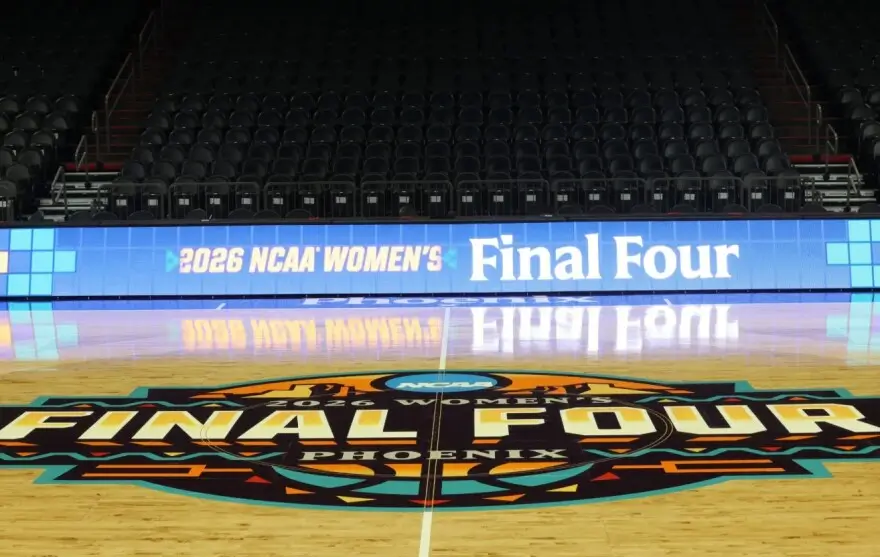
The 2026 edition of the NCAA Division I Women’s Basketball Tournament has distilled a month of volatility, upsets, and top-seed dominance into a Final Four defined by power, pedigree, and parity at the highest level.
Final Four teams (all No. 1 seeds):
- South Carolina Gamecocks women’s basketball
- UConn Huskies women’s basketball
- Texas Longhorns women’s basketball
- UCLA Bruins women’s basketball
This is a rare chalk-heavy Final Four—four No. 1 seeds, signaling both the strength of elite programs and the widening gap between top-tier rosters and the rest of the field.
stir
- South Carolina vs. UConn
- Texas vs. UCLA
Both games are scheduled for Friday night, with the winners advancing to the national championship on Sunday.
This configuration sets up a collision of eras and identities: dynasty vs. resurgence, defensive discipline vs. offensive flow, legacy vs. arrival.
sc
South Carolina Gamecocks women’s basketball continues to operate as the tournament’s most structurally complete team. Their Elite Eight win over TCU reinforced a familiar pattern—dominant interior control, suffocating defense, and a system that minimizes volatility.
The Gamecocks’ presence here is less a surprise and more an expectation. Their program has redefined consistency in the modern women’s game, and 2026 is another chapter in that sustained dominance.
uconn
UConn Huskies women’s basketball returns to the Final Four with a statement win over Notre Dame. The margin wasn’t just numerical—it was stylistic. UConn looked composed, clinical, and efficient, embodying the program’s long-standing identity.
This run signals a recalibration rather than a comeback. UConn’s tournament DNA—execution under pressure, spacing, shot selection—remains intact, and perhaps newly sharpened.
tx
Texas Longhorns women’s basketball powered through Michigan in the Elite Eight, showcasing one of the tournament’s most imposing profiles: size, rebounding, and defensive pressure.
Texas enters the Final Four as a team that imposes its will rather than adapts. Their ability to control tempo and dominate the paint has made them one of the most difficult matchups left in the field.
ucla
UCLA Bruins women’s basketball secured its place by defeating Duke, completing a run defined by balance—scoring distribution, defensive versatility, and composure late in games.
Unlike programs with decades of Final Four expectation, UCLA’s presence carries a different energy: not just validation, but arrival. This is a team peaking at the right moment.
tour
The 2026 tournament followed the traditional format of the NCAA:
- First Four: March 18–19
- First Round: March 20–21
- Second Round: March 22–23
- Sweet 16: March 27–28
- Elite Eight: March 29–30
- Final Four: Early April
- National Championship: Sunday (April)
The rhythm remains unchanged, but the outcomes reflect a season where elite teams largely held form deep into March.
flow
All four No. 1 seeds advancing is statistically rare. It underscores:
- Strong seeding accuracy
- Limited upset volatility in later rounds
- A clear separation between tiers
Unlike tournaments defined by Cinderella runs, 2026 is about institutional strength:
- South Carolina’s system
- UConn’s legacy execution
- Texas’ physical dominance
- UCLA’s modern balance
Each team represents a distinct philosophy rather than a surprise narrative.
pre
This is the centerpiece game—arguably the true final before the final.
- South Carolina brings depth and interior control
- UConn counters with spacing, tempo, and efficiency
Expect a contrast between physical imposition and surgical execution.
A study in pressure vs. poise:
- Texas thrives on disruption and rebounding
- UCLA relies on fluid offense and composure
The outcome may hinge on whether UCLA can neutralize Texas’ physical edge.
potential
Three possible narratives define the title game:
- South Carolina vs. Texas → power vs. power
- UConn vs. UCLA → skill and flow
- Hybrid matchup → system vs. adaptability
What remains consistent is the absence of randomness. This championship will likely be decided by execution—not surprise.
show
The 2026 women’s tournament reinforces a broader shift in college basketball:
- Elite programs are deeper and more stable
- Player development pipelines are stronger
- Tactical sophistication continues to rise
Rather than chaos, this year’s bracket delivered clarity. The best teams didn’t just survive—they separated.
fin
The 2026 Women’s Final Four NCAA is not defined by unpredictability, but by precision at the top of the sport.
Four No. 1 seeds. Four distinct identities. One championship.
And as the tournament closes, the question isn’t who got hot—it’s which system proves most complete under pressure.